
A keel-shaped base ties this Union Street stone to Aberdeenshire's recumbent circles — raised around 3000 BC, before writing reached Britain — long before it became a city boundary marker.
Tucked into a recess at the corner of a granite building on Langstane Place, a solitary standing stone rises out of the pavement almost close enough to touch as pedestrians round the corner from Union Street. At 1.8 metres tall and carved from grey granite, it looks at first glance like an architectural afterthought, a piece of street furniture wedged into brickwork, until its age becomes clear: this stone has stood on or near this spot since long before Union Street, or the building around it, existed.
The stone’s base is carved into a distinctive keel shape, a hallmark of the recumbent stone circles (a form of prehistoric monument with one large stone lying on its side between two uprights) that once dotted the hills and farmland of Aberdeenshire, generally dated to around 3000 BC. That shape is the strongest surviving clue that the Lang Stane began its life not as a boundary post on a city street but as one upright of a much larger prehistoric circle, long since dismantled or lost beneath later farmland and building.
By the time its position was recorded on Paterson’s 1746 map of Aberdeen, the stone already stood close to where it stands today, decades before Langstane Place itself was built around it. Its name has since spread far beyond this one corner, attached to a former city ward, a church, a printworks and a housing association, so that “Langstane” has become one of Aberdeen’s more persistent place-names, all tracing back to this single upright block of granite.
What follows is drawn from published sources, with each claim labelled by how firmly it is established.
The name
The name is Scots for "long stone," a plain description of its tall, upright form. It recurs across Aberdeen, giving its name to a former political ward, a church, a printworks and a housing association, and to at least two other standing stones elsewhere in the city.
History
Long before Aberdeen's granite streets existed, the stone likely stood as part of a recumbent stone circle, the type of monument common across Aberdeenshire and usually dated to around 3000 BC. Its base was carved into a keel shape, a distinctive feature of Aberdeenshire recumbent circles, and that carving survives today as the strongest evidence for this original setting, even though no trace of the circle itself remains.
In 1571 the surrounding land, known as Craibstone Croft, was the site of the Battle of Craibstone, and both the Lang Stane and the nearby Crabstane are thought to have served afterwards as boundary markers for that same croft. The stone's current position lies close to that old boundary line but is unlikely to be its exact original spot, since later building work on Union Street would have required moving it.
By 1746, when Paterson's Map of the Burgh of Aberdeen was printed, the stone already stood in approximately its present location, well before Langstane Place itself was built. Notably, the map does not depict it as part of any stone circle, suggesting that if a circle had once surrounded it, it had already vanished from the landscape by the mid-eighteenth century.
The construction of Union Street and its surrounding infrastructure reshaped this corner of Aberdeen, and it was likely during this period of building that the stone was moved from any earlier boundary position into its current recessed alcove at the south-east corner of 10 Langstane Place, just off the new thoroughfare.
The stone's name has echoed across the city ever since, attached to the former Langstane political ward, the Langstane Kirk (later reopened as the venue Soul), Langstane Press and the Langstane Housing Association. Other stones bearing the same name stand elsewhere around Aberdeen, including the Lang Stane of Hilton and the Lang Stane of Auquhollie to the south.
Cultural influences
-
Aberdeenshire recumbent stone circles
Its keel-shaped base is characteristic of Aberdeenshire’s recumbent stone circles, the regional monument tradition from which the isolated stone is thought to survive.
Connections
-

Photo: Colin Smith / Wikimedia Commons / CC BY-SA 2.0 Crabstane, Aberdeen
Standing nearby, it is thought to have served alongside the Lang Stane as a boundary marker for Craibstone Croft, site of the 1571 Battle of Craibstone.
-

Photo: Bill Harrison / Wikimedia Commons / CC BY-SA 2.0 One of several other standing stones in Aberdeen that share the same name, this one found in the Hilton area of the city.
-
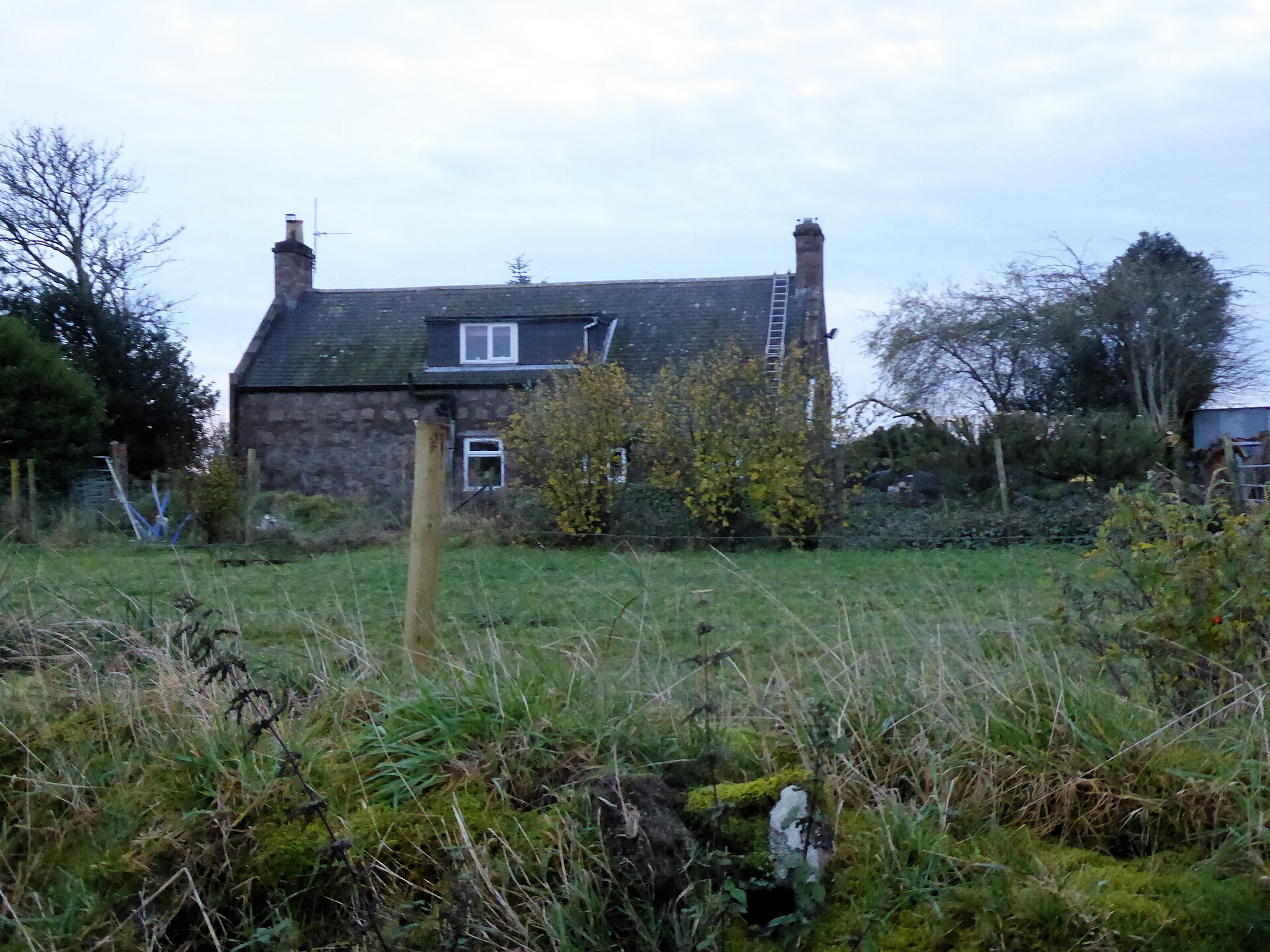
Photo: Stanley Howe / Wikimedia Commons / CC BY-SA 2.0 Another standing stone bearing the same name, located just south of Aberdeen.
-
Aberdeenshire recumbent stone circles
The stone's keel-shaped base matches the form typical of these circles, suggesting it was originally part of one before being isolated at its present site.
Discovery & excavation
The stone was shown in roughly its present position on Paterson’s 1746 map of Aberdeen, providing the earliest documented record of its later city-centre setting.
What to look for
-
The recessed alcove setting
The stone stands recessed into an alcove at the south-east corner of 10 Langstane Place, just off Union Street, built into the corner of the property rather than standing free in open ground.
-
Its granite form and dimensions
Carved from granite, the stone rises 1.8 metres high, measures 0.68 metres across and is around 0.3 metres thick.
-
The keel-shaped base
The base of the stone has been carved into a keel shape, a feature typical of the recumbent stone circles once common across Aberdeenshire.
Plan your visit
- Location
- 57.1446°N · 2.1046°W
- Nearest settlement
- Aberdeen
- Access
- Open access
- Terrain
- Easy going
- Time needed
- About 10 minutes
- What survives
- A 1.8-metre granite standing stone survives, recessed into an alcove at the corner of Langstane Place.
- Start point
- Langstane Place street-side position — The stone is recessed into the building corner.
Opening & admission
Free to view at any time — check locally for any access changes before visiting.
- Set into an alcove on a city-centre building corner, visible from the street
- Level, easy street-side access
Nearby places
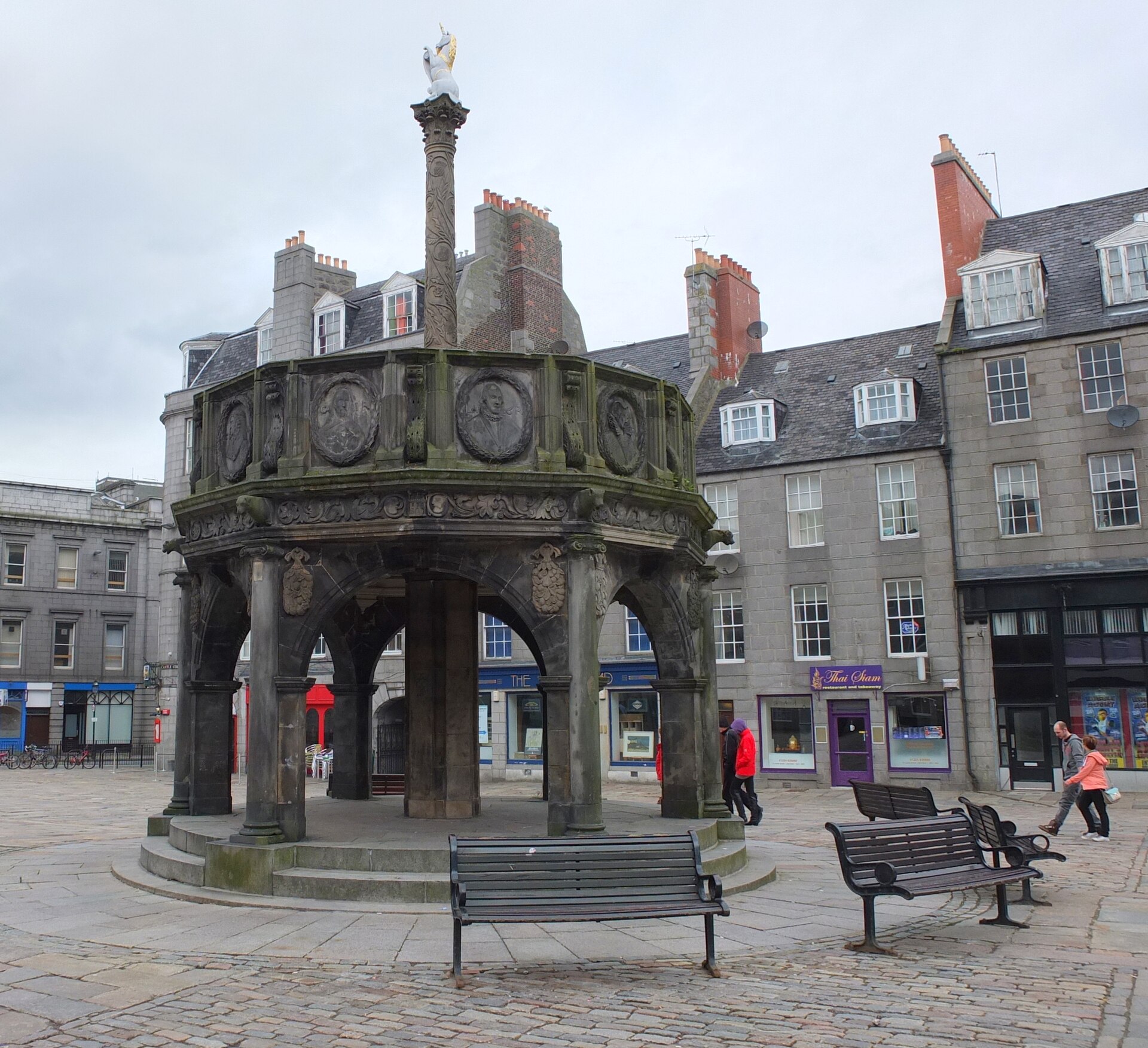
Minor monument · Medieval
Market Cross, Castle Street, Aberdeen
Aberdeen City
Aberdeen’s 1686 market cross combines royal and civic carving with a gilt unicorn, preserving the burgh’s public trading and ceremonial centre thro…
- Near Aberdeen
- Easy path
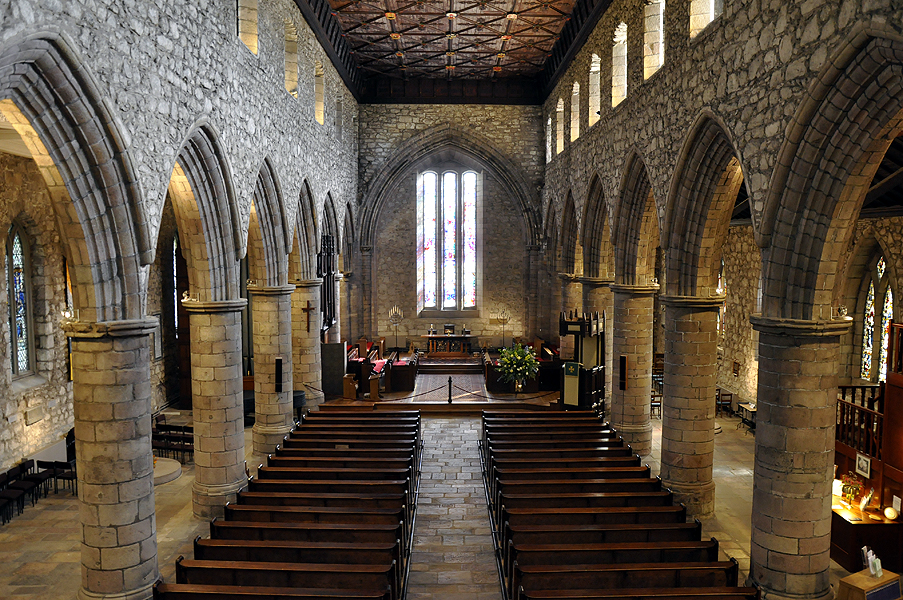
Building or ruin · Medieval
St Machar's Cathedral
Aberdeen City
A working Church of Scotland kirk that still keeps William Wallace's quartered remains in its walls and a ceiling of 48 royal and episcopal coats o…
- Easy path
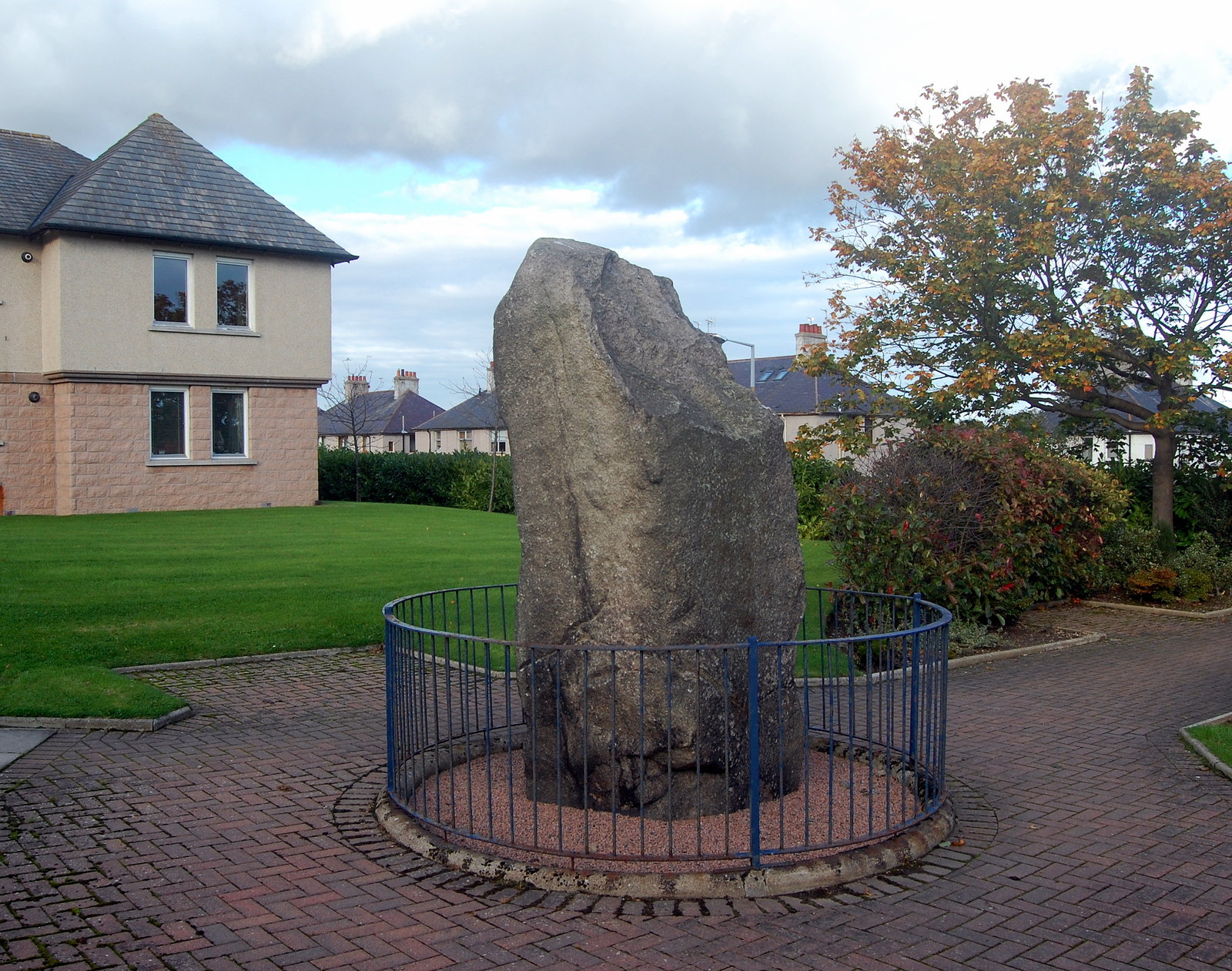
Sacred place · Prehistoric
Lang Stane of Hilton
Aberdeen City
A granite monolith nearly three metres tall standing in Hilton, one of several Aberdeen stones sharing the name Lang Stane: Scots for long stone.
- Near Aberdeen
- Easy path
Tomb or burial place · Prehistoric
Tullos Cairn
Aberdeen City
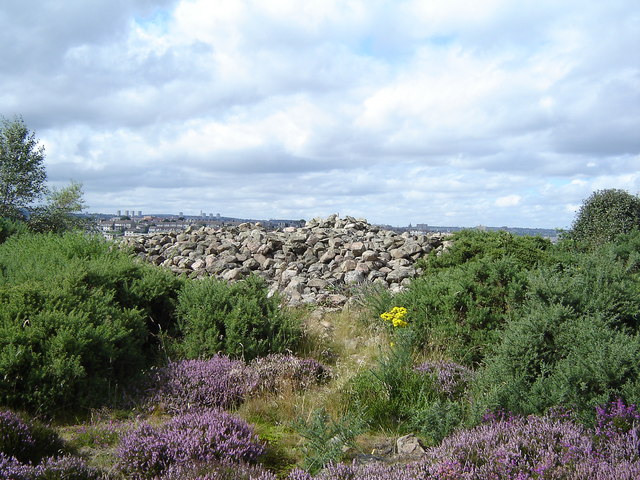
One of four stone burial mounds sharing Tullos Hill, raised in the Bronze Age: roughly 2500 to 800 BC, when metal tools first spread: and still out…
- Near Aberdeen
- Easy path
Questions people ask
- What is the Lang Stane in Aberdeen?
- A granite standing stone recessed into a building corner on Langstane Place, near Union Street, likely originally part of a recumbent stone circle before being isolated at this site.
- How old is the Lang Stane?
- Its keel-shaped base links it to Aberdeenshire's recumbent stone circles, typically dated to around 3000 BC, though its current street setting dates only from later building work.
- Why is the stone built into a building?
- Union Street's construction reshaped this part of Aberdeen, and the stone was likely moved into its recessed alcove at 10 Langstane Place during that redevelopment.
- Was the Lang Stane a boundary marker?
- It has been suggested that the Lang Stane and the nearby Crabstane marked the boundary of Craibstone Croft, site of the 1571 Battle of Craibstone.
- Are there other Lang Stanes in Aberdeen?
- Yes, other stones of the same name stand at Hilton and at Auquhollie just south of the city, and the name survives in several local institutions.
Sources
- Wikipedia: Lang Stane, Aberdeen
- Wikidata: Lang Stane, Aberdeen
- Wyness, J F (1965). City by the grey North Sea: Aberdeen.
Explore more: Sacred places · Prehistoric · Aberdeen City
The Ancient Codex, in your pocket
Get the Pocket Codex app
Carry the directory with you — Lang Stane, Aberdeen and thousands of ancient places across Britain and Ireland, offline, wherever you roam.