The castle Edward I kept bombarding after it had already surrendered, because he wanted to try out his new trebuchet.
In July 1304 the garrison of Stirling Castle surrendered and Edward I sent them back inside. He had brought at least seventeen siege engines north, and his newest — a great trebuchet called Warwolf — had not yet been used. The Scots under William Oliphant gave up on 20 July; part of the garrison were ordered back into the castle so that Edward could see what his machine would do. Warwolf destroyed the gatehouse.
That episode is a fair measure of what Stirling was worth. The castle sits on an intrusive crag, part of the Stirling Sill, a quartz-dolerite formation some 350 million years old that glaciation shaped into a crag and tail. Cliffs on three sides make it strong, but the real value lay below: until the 1890s this was the farthest downstream crossing of the River Forth. Whoever held Stirling held the passage between the north and south of Scotland, and there have been at least eight sieges here.
Its early history is thinner than the legends attached to it. The first record dates from around 1110, when Alexander I dedicated a chapel; the king died here in 1124, which suggests an established royal centre by then. Hector Boece claimed the Romans fortified Stirling under Agricola, and that Kenneth MacAlpin besieged a castle here in the ninth century, but Boece is considered an unreliable historian. William Worcester associated the rock with the court of King Arthur. There is no archaeological evidence for occupation of Castle Hill before the late medieval period at all.
The Wars of Scottish Independence turned the castle over repeatedly. Edward I invaded in 1296 and found Stirling abandoned and empty. The English were dislodged the next year after Andrew Moray and William Wallace won at Stirling Bridge, their commanders retreating into the castle and being starved out. It changed hands again after Falkirk, was besieged in 1299 by forces including Robert Bruce, and by 1303 was the last castle in Scottish hands — which is what brought Edward and Warwolf north.
The decisive reversal came within sight of the walls. On 23 June 1314 King Robert’s forces met the English at Bannockburn. Edward II tried to take refuge in the castle afterwards and was refused, and King Robert then ordered Stirling slighted, its defences destroyed so the English could not use them again.
Almost everything standing today was built afterwards, between 1490 and 1600, when James IV, James V and James VI developed Stirling as a principal royal residence. The Great Hall, built by James IV and being plastered by 1503, has been described as the grandest secular building erected in Scotland in the late Middle Ages — 42 metres by 14.25, with five fireplaces and large windows lighting the dais where the king sat. His Forework gatehouse of around 1506 was probably intended more for display than defence, and its triple entrance, a carriage passage flanked by two for pedestrians, was unusual enough that Classical triumphal arches have been suggested as the source.
The Royal Palace is the centrepiece. Begun in the 1530s by James V and largely finished by the late 1540s, it is the first Renaissance palace in the British Isles — French-inspired in its architecture, German in its decoration, with sources for its statues traced to the engraver Hans Burgkmair. Among the full-size figures around the principal floor are James V himself, the Devil and St Michael. The Master of Works until his execution in 1540 was Sir James Hamilton of Finnart, who financed part of the building himself in return for land and favours from the king.
Odder things happened here too. If a satirical account in two poems by William Dunbar rests on fact, the castle walls saw an attempt at human-powered flight around 1509 by the Italian alchemist John Damian, abbot of Tongland. The Captain of the Castle kept another alchemist maintaining a furnace for quinta essencia, the mythical fifth element.
The castle is a Scheduled Ancient Monument, managed by Historic Environment Scotland and open year-round; 609,698 people visited in 2019. The esplanade has served as an open-air concert venue for acts including R.E.M., Bob Dylan and Rod Stewart, and hosts the city’s Hogmanay celebrations. The Regimental Museum of the Argyll and Sutherland Highlanders occupies the King’s Old Building.
What follows is drawn from published sources, with each claim labelled by how firmly it is established.
History
Stirling Castle sits atop an intrusive crag forming part of the Stirling Sill, a quartz-dolerite formation around 350 million years old, modified by glaciation into a crag and tail. Cliffs on three sides give it a strong defensive position, and it guarded what was until the 1890s the farthest downstream crossing of the River Forth. The first record of the castle dates from around 1110, when Alexander I dedicated a chapel there. It appears to have been an established royal centre by then, as Alexander died at Stirling in 1124. There is no archaeological evidence for occupation of Castle Hill before the late medieval period.
In 1296 Edward I invaded Scotland, beginning the Wars of Scottish Independence. The English found Stirling Castle abandoned and empty and occupied it, and were dislodged the following year after Andrew Moray and William Wallace won at the Battle of Stirling Bridge, the English commanders retreating into the castle and being starved into surrender.
By 1303 Stirling was the last castle in Scottish hands. Edward's army arrived in April 1304 with at least seventeen siege engines. The Scots under William Oliphant surrendered on 20 July, but part of the garrison were ordered back inside because Edward had not yet deployed his latest engine, Warwolf — a large trebuchet, which then destroyed the gatehouse. On 23 June 1314 King Robert's forces met the English at the Battle of Bannockburn, within sight of the castle walls. The English defeat was decisive, Edward II was refused refuge in the castle, and King Robert ordered its defences destroyed to prevent reoccupation by the English.
Almost all the present buildings were constructed between 1490 and 1600, when Stirling was developed as a principal royal centre by James IV, James V and James VI. Their architecture mixes English, French and German influences, reflecting the international ambitions of the Stewart dynasty. There have been at least eight sieges of Stirling Castle, several during the Wars of Scottish Independence, with the last in 1746 when Bonnie Prince Charlie unsuccessfully tried to take it. Several Scottish kings and queens were crowned here, including Mary, Queen of Scots, in 1542.
The castle is a Scheduled Ancient Monument and is now managed by Historic Environment Scotland. According to figures from the Association of Leading Visitor Attractions, 609,698 people visited in 2019.
People
-
James IV
Built the Great Hall and Forework as part of Stirling’s renewal as a principal royal centre.
-
James V
Began the Renaissance Royal Palace in the 1530s.
-
Robert I
Ordered the castle defences destroyed after Bannockburn to deny their use to the English.
Cultural influences
-
Stewart royal internationalism
The palace and royal buildings combine English, French and German influences, expressing the Stewart court’s European ambitions between 1490 and 1600.
Connections
-
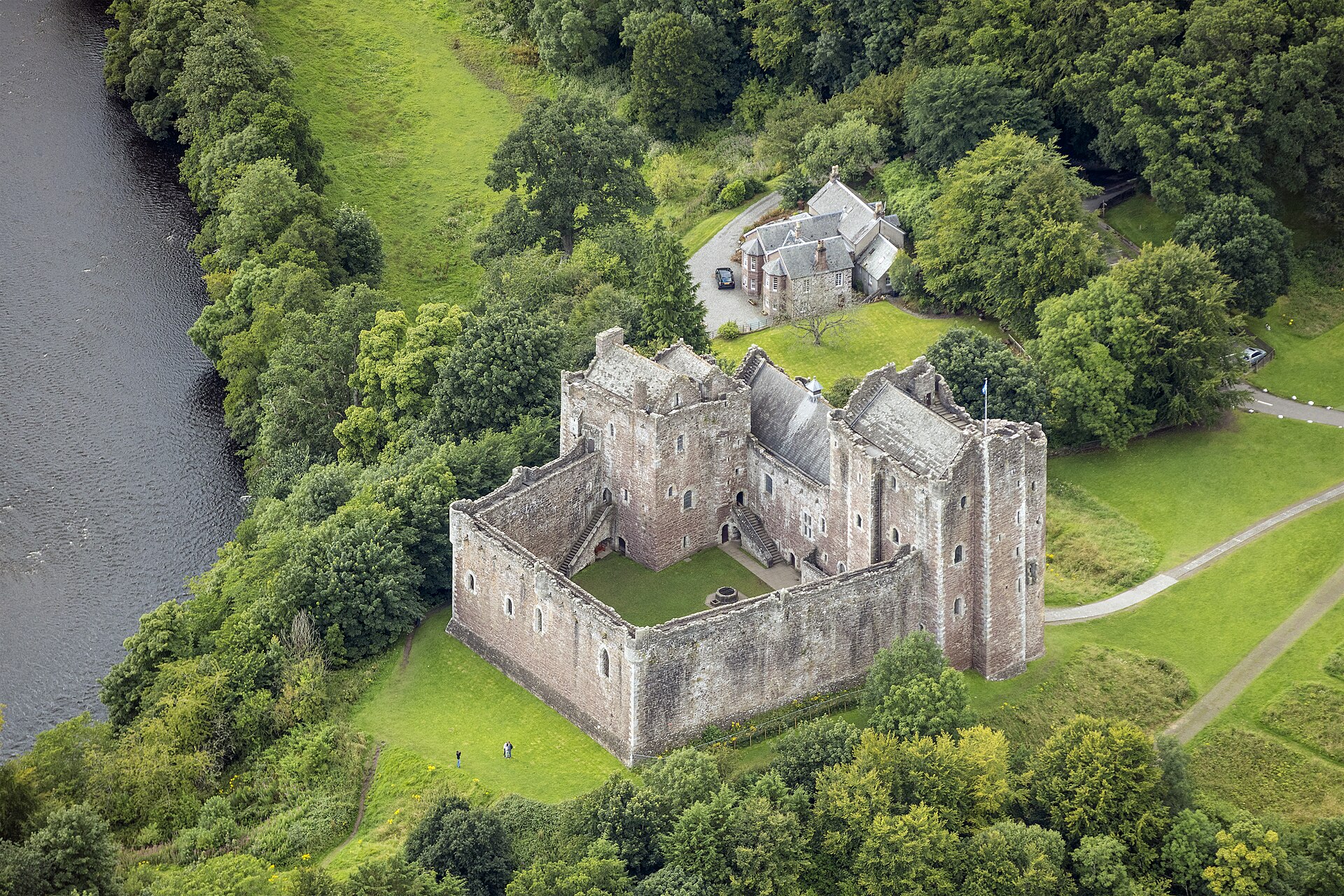
Photo: Godot13 / Wikimedia Commons / CC BY-SA 4.0 A related medieval castle in the wider central Scotland landscape.
-
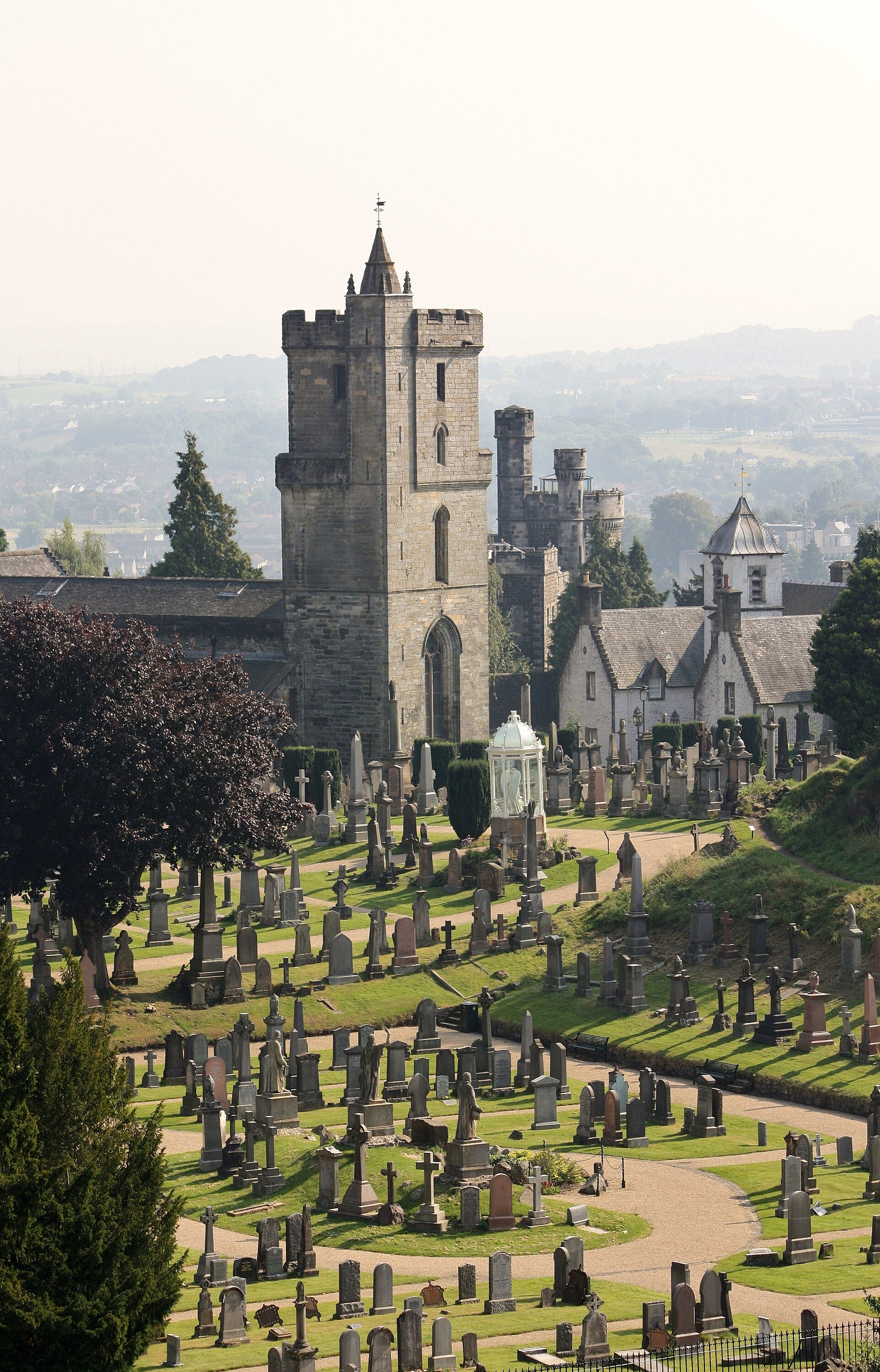
Photo: Postdlf / Wikimedia Commons / CC BY-SA 3.0 The historic parish church beside Stirling Castle, closely linked to the royal complex.
Discovery & excavation
The castle survives as a major fortified royal residence above Stirling, with substantial medieval and later buildings.
What to look for
-
The Royal Palace
The first Renaissance palace in the British Isles, begun in the 1530s by James V and largely complete by the late 1540s. French-inspired architecture with German decoration — sources for the statues have been traced to the engraver Hans Burgkmair — and among the figures are James V himself, the Devil and St Michael.
-
The Great Hall
Built by James IV and being plastered by 1503, described as the grandest secular building erected in Scotland in the late Middle Ages. It measures 42 by 14.25 metres, with five fireplaces and large side windows lighting the dais end where the king sat.
-
The Forework
James IV's gatehouse, probably completed around 1506, now standing at less than half its original height. Its triple entrance — a central passage flanked by two pedestrian ones — was unusual, and Classical triumphal arches have been suggested as an influence.
-
The north gate
Built on foundations of the 1380s laid by Robert Stewart, Earl of Menteith. This is the earliest surviving masonry in the castle.
-
The French Spur
Part of the outer defences, dating back to the regency of Mary of Guise in the 1550s. It was originally an ear-shaped bastion known as an orillon, holding gun emplacements that protected the main spur.
Plan your visit
- Location
- 56.1239°N · 3.9478°W
- Time needed
- About 120 minutes
- What survives
- The castle is an extensive managed monument, with major royal and defensive buildings surviving from the fifteenth and sixteenth centuries.
Nearby places
Sacred place · Medieval
Church of the Holy Rude
Stirling
One of only three churches still in use in Britain where a monarch has been crowned: and for 280 years it was two churches, divided by a wall down…
- Near Stirling
Fortified place · Medieval
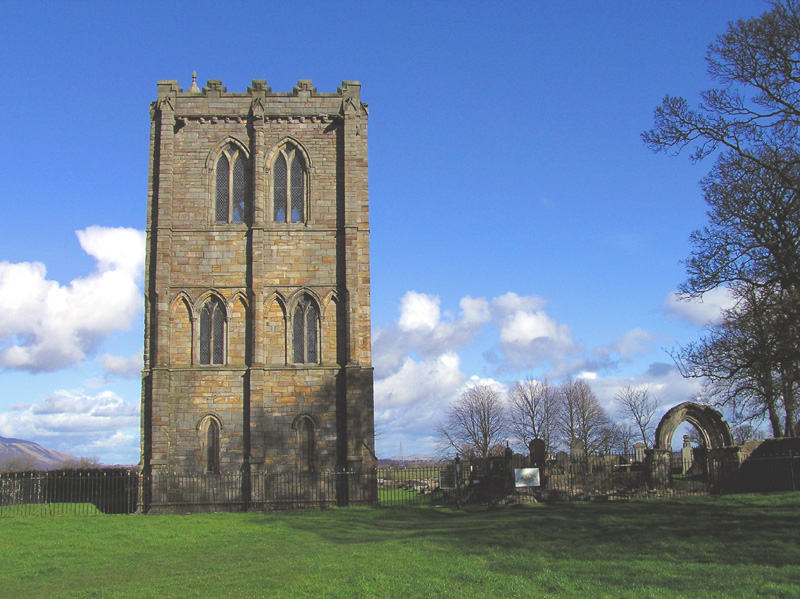
Cambuskenneth Abbey
Stirling
Cambuskenneth Abbey, a provostry of canons regular on land enclosed by a meander of the River Forth near Stirling, was founded by order of King Dav…
- Near Stirling
- 263 metres from car park
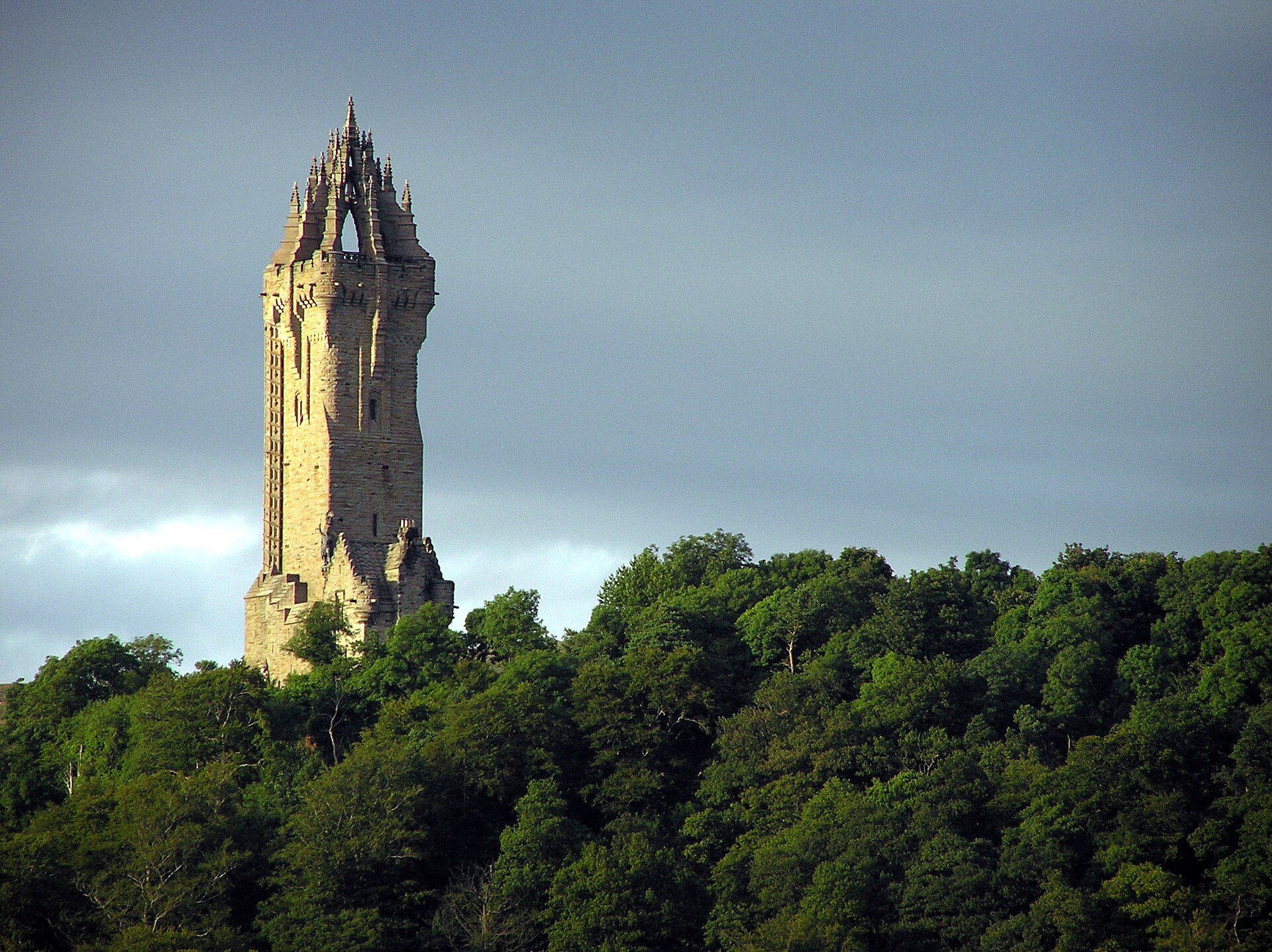
Building or ruin · Medieval
Wallace Monument
Stirling
Garibaldi helped pay for it. A statue of Wallace with Mel Gibson's face stood at the foot of the crag until the public loathing became unmanageable.

Fortified place · Iron Age
Dumyat
Clackmannanshire
Dumyat’s Castle Law preserves an excavated hill fort with evidence for occupation from around 500 BC and again in the fifth to seventh centuries AD.
- Near Alloa
- Rough ground
Questions people ask
- Why was Stirling so important?
- Its position. The castle stands on a crag with cliffs on three sides, guarding what was until the 1890s the farthest downstream crossing of the River Forth.
- How many times was it besieged?
- At least eight, several during the Wars of Scottish Independence. The last was in 1746, when Bonnie Prince Charlie unsuccessfully tried to take it.
- What was Warwolf?
- A large trebuchet built for Edward I. When the Scots under William Oliphant surrendered on 20 July 1304, Edward ordered part of the garrison back into the castle because he had not yet deployed it. Warwolf then destroyed the castle's gatehouse.
- How old are the buildings?
- Almost all date from between 1490 and 1600, under James IV, James V and James VI. A few structures remain from the fourteenth century, the outer defences fronting the town date from the early eighteenth, and the earliest surviving masonry is the north gate, on foundations of the 1380s.
Sources
The Ancient Codex, in your pocket
Get the Pocket Codex app
Carry the directory with you — Stirling Castle and thousands of ancient places across Britain and Ireland, offline, wherever you roam.