
One of only three churches still in use in Britain where a monarch has been crowned — and for 280 years it was two churches, divided by a wall down the middle.
For 280 years this was two churches. A dispute over who should succeed the minister James Guthrie split the congregation after 1651, and in 1656 a wall was built straight across the interior; each side was thereafter treated as a separate church. The wall was not taken down until 1936.
The parish is much older than the building. It was founded in 1129 under David I and named for the Holy Rood, the relic of the True Cross. Fire destroyed that early church in 1405 and nothing of it survives. Work on the new nave, the long body of the church, was under way by 1414, and carved heraldry dates its vault to somewhere between 1440 and 1480. The chancel, the part around the altar, was not begun until 1507 and took until about 1530, by which time the west tower had been carried up to the height it stands at now. That makes this the second oldest building in Stirling, after the castle on the ridge above.
Proximity to that castle shaped the church’s history. Stirling was a favoured royal residence, rebuilt as a Renaissance palace by the later Stewart kings, and the parish church beside it took on royal work — baptisms, and on 29 July 1567 the coronation of James VI, with Adam Bothwell, Bishop of Orkney, officiating and John Knox preaching. Three churches still in use in Britain have hosted a coronation, and this is one of them.
The pockmarks on the stonework are usually attributed to General Monk’s siege of the castle in 1651. The evidence argues otherwise. Every mark faces the castle’s south rampart, and they cluster around the slot windows; shot from an attacking force would have struck the south side instead. What the pattern more likely records is soldiers on the castle wall competing to put a ball through a slot.
The graveyard holds a stone found nowhere else in its subject. Mary Stevenson was buried in November 1822 and taken from her grave two days later by James McNab, the gravedigger who had buried her, with the help of Daniel Mitchell; the body went to John Forrest for dissection. Both men were caught, both were released on technicalities, a riot followed, and Mary was reburied under a stone carved with the theft itself.
The church was restored in 1940, when the oak beam roof was re-exposed. Its late nineteenth-century glass includes work by Ballantine and Co., Adam and Small, and Cottier and Co., and its semi-octagonal apse was the model for the one at St Leonard’s-in-the-Fields in Perth.
What follows is drawn from published sources, with each claim labelled by how firmly it is established.
The name
The church is named after the Holy Rood, the relic of the True Cross on which Jesus was crucified; its Gaelic name is Eaglais na Crois Naoimh.
History
The parish church was founded in 1129, during the reign of David I, and named after the Holy Rood — the relic of the True Cross on which Jesus was crucified. Its Gaelic name is Eaglais na Crois Naoimh. A fire in 1405 destroyed the early structure, and nothing of it now remains. Work on the new nave, the main body of the church where the congregation sits, had begun by 1414. On the evidence of carved heraldry, its vault was completed between 1440 and 1480. This makes the church the second oldest building in Stirling after the castle, parts of which date from the later fourteenth century.
Work on the chancel, the part around the altar, did not begin until 1507 and was finished around 1530, which was also when the west tower was carried up to its present height. Hew Scott's summary gives a different account, describing the parish church as built in 1500 to replace the church of St Modan, which had burned down.
On 29 July 1567 James VI was crowned King of Scots in the church. Adam Bothwell, Bishop of Orkney, performed the ceremony, and John Knox preached the sermon. Standing next to a castle that Scottish monarchs favoured as a residence and rebuilt as a Renaissance palace, the church took on the same royal associations, hosting baptisms as well as coronations. It is one of only three churches still in use in Britain to have been the site of a coronation.
A second charge — a second ministerial post — was secured for the parish of Stirling in 1607, and a third was founded in 1731. The third congregation grew until the North Church was built for its services in 1840.
It has been suggested that the church and churchyard were damaged by musket fire during General Monk's siege of Stirling Castle in 1651, in the Wars of the Three Kingdoms, and the marks are still visible. The evidence points elsewhere. All the damage faces the south rampart of the castle, and it clusters around the slot windows; an attacking force would have left its marks on the south side. It looks more like the remains of a game, soldiers firing from the castle to put a ball through a slot.
James Guthrie, later executed, was minister at the time. Soon after, he and two or three elders appointed Robert Rule as his successor, which split the congregation. In 1656 a dividing wall was built across the church and each side treated as a separate church. That wall stood until 1936. The church was restored in 1940 and the oak beam roof re-exposed. In 2023 it announced a partnership with Stirling District Tourism Ltd, aiming to promote the site as a visitor destination.
The old graveyard holds a stone unique in its subject, carved to record a body-snatching. Mary Stevenson, who lived from 1767 to 1822, was stolen from her grave on 16 November 1822 by James McNab, the local gravedigger who had buried her two days earlier, helped by Daniel Mitchell. The body was passed to John Forrest for dissection. Both men were caught and then released on legal technicalities, a riot followed, Mary was reburied, and the stone was carved to mark it.
People
-

Portrait: John de Critz / Wikimedia Commons / Public domain James VI
Crowned King of Scots in the church on 29 July 1567.
-
.jpg?width=320)
Portrait: William Holl / Wikimedia Commons / Public domain John Knox
Preached the sermon at the coronation of 1567.
-

Portrait: Unknown photographer / Wikimedia Commons / Public domain James Guthrie
Minister at the time of the 1651 siege, later executed; the appointment of his successor split the congregation.
-

Portrait: Hill & Adamson / Wikimedia Commons / Public domain Alexander Handyside Ritchie
Sculptor of the series of Reformation figures in the Valley Cemetery, created when the churchyard was extended in 1851.
Connections
-
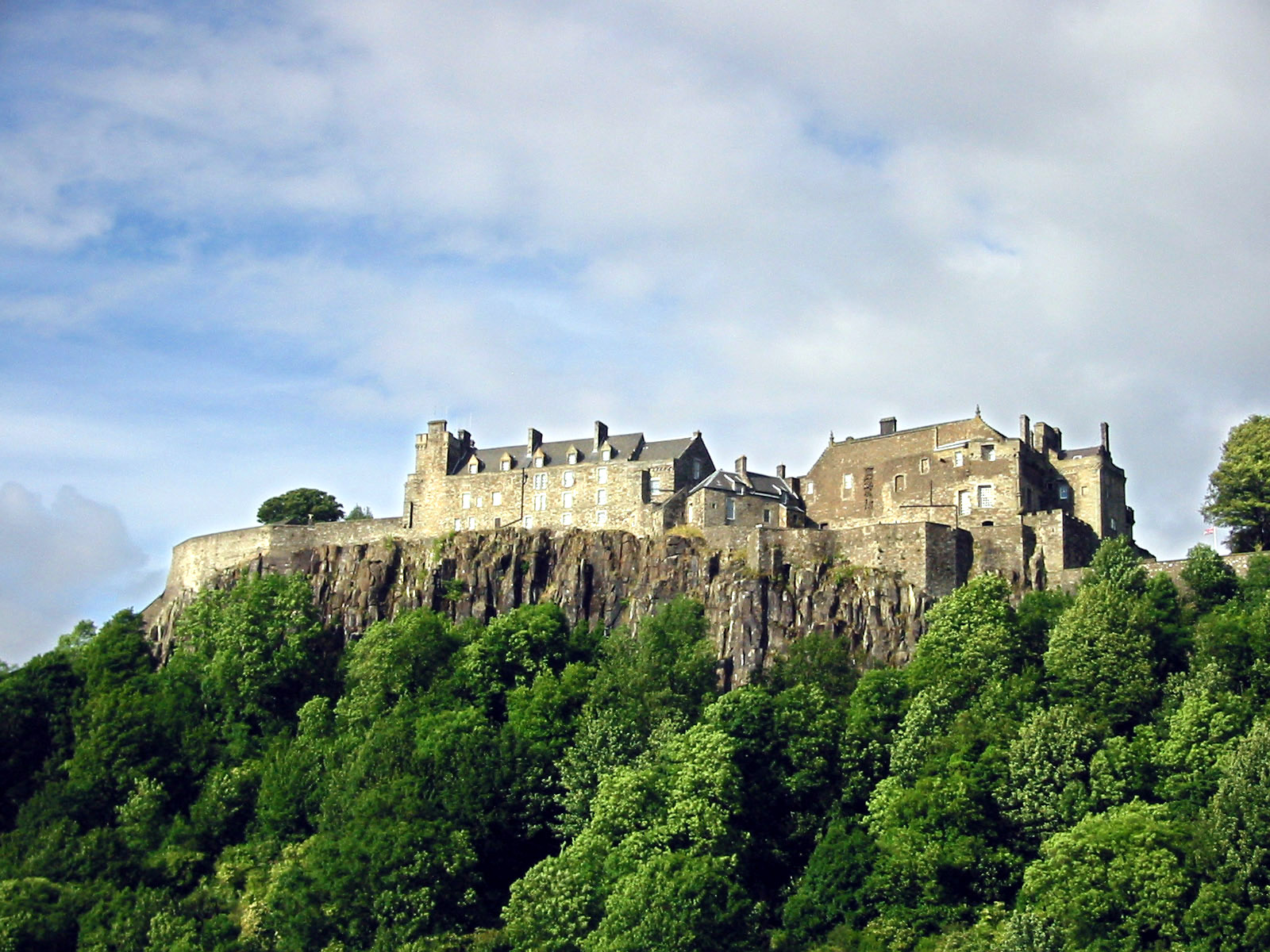
Photo: Unknown / Wikimedia Commons / CC BY-SA 3.0 The adjacent royal residence, whose associations the church shares; parts of it are older, making the church the second oldest building in Stirling.
-
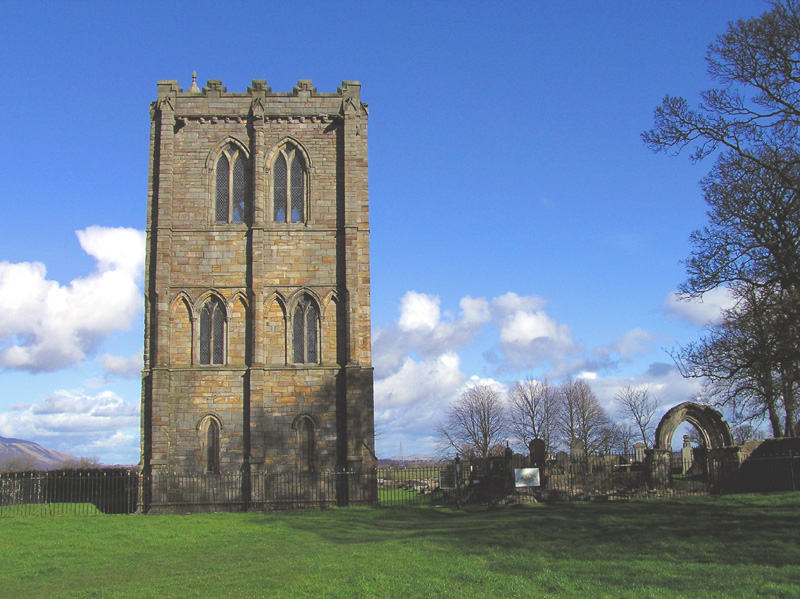
Photo: Unknown / Wikimedia Commons / CC BY-SA 3.0 Augustinian abbey founded by David I in 1147 in the same parish, on the left bank of the Forth, where James III and Margaret of Denmark are buried.
-
St Leonard's-in-the-Fields Church, Perth
Its apse was modelled on the semi-octagonal apse here.
What to look for
-
The oak beam roof
Re-exposed in the restoration of 1940, above a nave vaulted between about 1440 and 1480.
-
The stained glass
Mainly late nineteenth-century, including work by Ballantine and Co., Adam and Small, and Cottier and Co.
-
The semi-octagonal apse
The rounded end of the chancel, which was the model for the apse of St Leonard's-in-the-Fields in Perth.
-
The body-snatcher's stone
In the old graveyard, carved with a depiction of the theft of Mary Stevenson's body in 1822 — a subject found on no other stone.
-
The Valley Cemetery statues
Figures from the Reformation by Alexander Handyside Ritchie, in the extension of 1851, divided from the old ground by a path.
What is said
Folklore and tradition, recorded as what is said — not as established fact.
-
The musket marks
The damage to the church and churchyard is said to date from General Monk's siege of Stirling Castle in 1651. Its position and clustering suggest instead that soldiers were firing from the castle at the slot windows for sport.
Plan your visit
- Location
- 56.1208°N · 3.9445°W
- Nearest settlement
- Stirling
- Time needed
- About 45 minutes
- What survives
- An active medieval parish church: the fifteenth-century nave, early-sixteenth-century chancel and west tower survive after restoration, with the oak beam roof re-exposed in 1940.
Nearby places
Fortified place · Medieval
Stirling Castle
Stirling
The castle Edward I kept bombarding after it had already surrendered, because he wanted to try out his new trebuchet.
Fortified place · Medieval
Cambuskenneth Abbey
Stirling
Cambuskenneth Abbey, a provostry of canons regular on land enclosed by a meander of the River Forth near Stirling, was founded by order of King Dav…
- Near Stirling
- 263 metres from car park
Building or ruin · Medieval
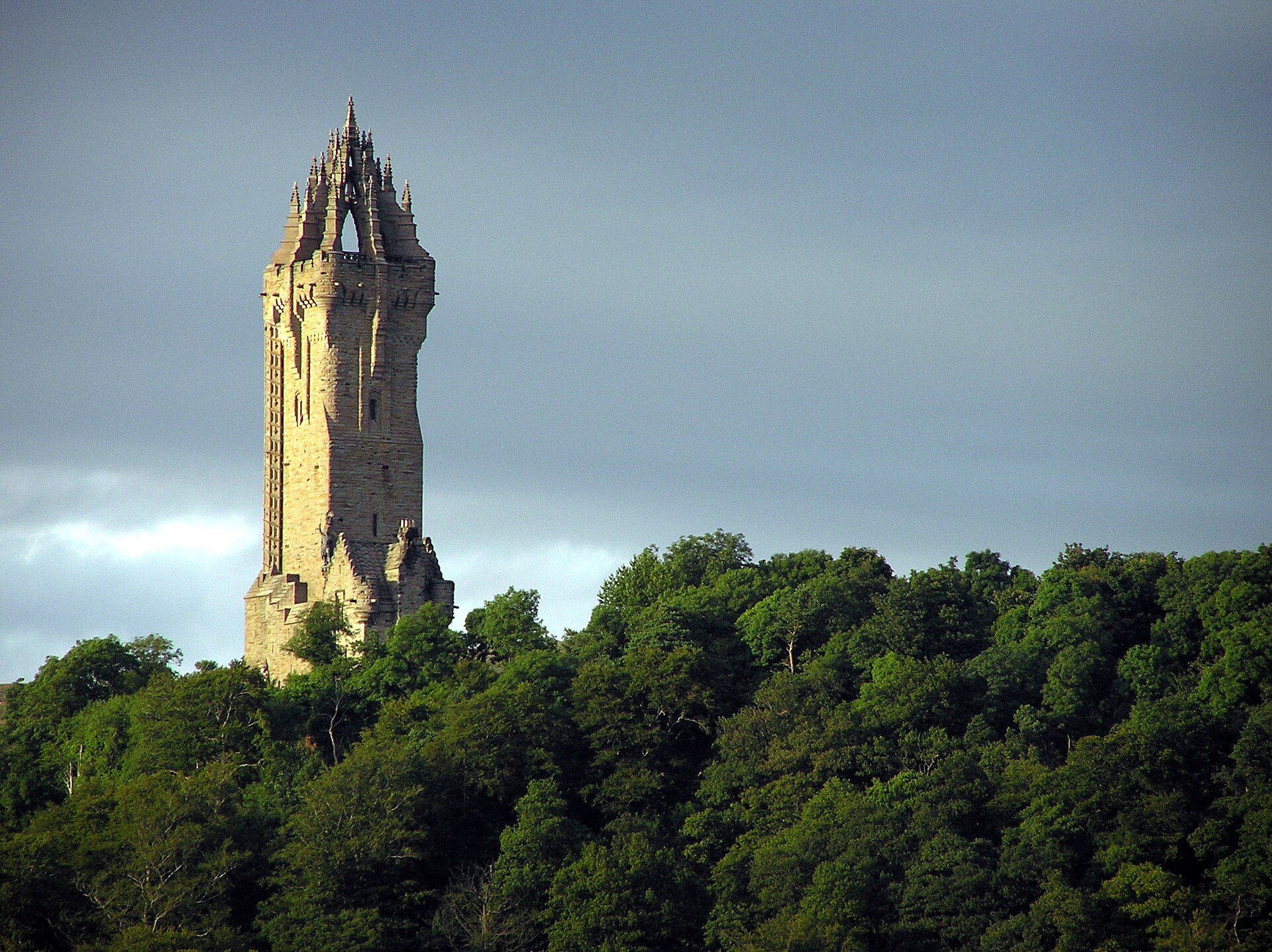
Wallace Monument
Stirling
Garibaldi helped pay for it. A statue of Wallace with Mel Gibson's face stood at the foot of the crag until the public loathing became unmanageable.

Fortified place · Iron Age
Dumyat
Clackmannanshire
Dumyat’s Castle Law preserves an excavated hill fort with evidence for occupation from around 500 BC and again in the fifth to seventh centuries AD.
- Near Alloa
- Rough ground
Questions people ask
- Who was crowned here?
- James VI, on 29 July 1567, in a ceremony performed by Adam Bothwell, Bishop of Orkney, with a sermon from John Knox. It is one of three churches still in use in Britain to have hosted a coronation.
- How old is the building?
- The parish was founded in 1129, but fire destroyed that church in 1405. The nave was begun by 1414, the chancel from 1507, and the tower reached its present height around 1530.
- Why was the church divided in two?
- A dispute over the appointment of a successor to the minister James Guthrie split the congregation. In 1656 a wall was built across the church and each side treated as a separate church. It stood until 1936.
- Are the musket marks from the siege of 1651?
- Probably not. All the damage faces the castle's south rampart and clusters around the slot windows, whereas an attacking force would have left marks on the south side. It more likely records soldiers firing from the castle for sport.
- What is in the graveyard?
- Stones from the sixteenth century, a carved record of the 1822 theft of Mary Stevenson's body, and, in the Valley Cemetery of 1851, statues of Reformation figures by Alexander Handyside Ritchie.
Sources
The Ancient Codex, in your pocket
Get the Pocket Codex app
Carry the directory with you — Church of the Holy Rude and thousands of ancient places across Britain and Ireland, offline, wherever you roam.