
Fortified place · Roman · South Lanarkshire
Lanark Castle
A royal castle that gave Lanark its shape and then vanished entirely — leaving a hill, a name and a town plan.
Nothing of Lanark Castle survives above ground, and the town is its monument. Lanark grew up outside the castle walls, so the plan of the burgh is a consequence of a building that is no longer there.
The position was chosen and re-chosen. The castle stood high on the east bank of the River Clyde, near the confluence with the Mouse Water, on ground still called Castle Hill, south-west of the modern town centre — a key strategic high point over the Clyde Valley. The Romans fortified it first, and after their brief occupation of southern Scotland came to an end, other fortifications were built on the same site. Whoever wanted to hold this stretch of the Clyde came back to the same hill.
The castle proper was most likely built during the reign of David I and probably completed by 1144, the year the town became a Royal Burgh. Those two facts belong together: a royal castle and a royal burgh established at effectively the same moment, the one creating the conditions for the other. It served as a royal residence for David I and later for William the Lion.
One claim about the site should be treated carefully. Some records state that Kenneth II held a parliament at Lanark Castle in 978. That is most likely not accurate. At that date Lanark lay within the Kingdom of Strathclyde rather than in Scotland, and the castle itself had almost certainly not yet been built — the parliament, if it happened, did not happen here.
The site is designated a scheduled monument.
What follows is drawn from published sources, with each claim labelled by how firmly it is established.
History
Lanark Castle was the origin and heart of what later became the royal burgh of Lanark, with the town growing up outside the castle walls. Long since demolished, the castle lay high on the east bank of the River Clyde, near its confluence with the Mouse Water. As a key strategic high point over the Clyde Valley, the Romans built a fortification on what is still known as Castle Hill, south-west of the modern town centre. Other fortifications were built on the site after the Romans' brief occupation of southern Scotland came to an end.
The castle was used as a royal residence by David I and by William the Lion, so it served the Scottish crown directly rather than a local lord. Some records claim that Kenneth II held a parliament at Lanark Castle in 978. This is most likely not accurate — at that time Lanark was part of the Kingdom of Strathclyde rather than of Scotland. Lanark Castle was most likely built during the reign of David I, and was probably completed by 1144, when the town became a Royal Burgh. The castle and the burgh therefore arrive together in the record. The site is designated a scheduled monument. Nothing of the castle itself survives above ground.
People
-
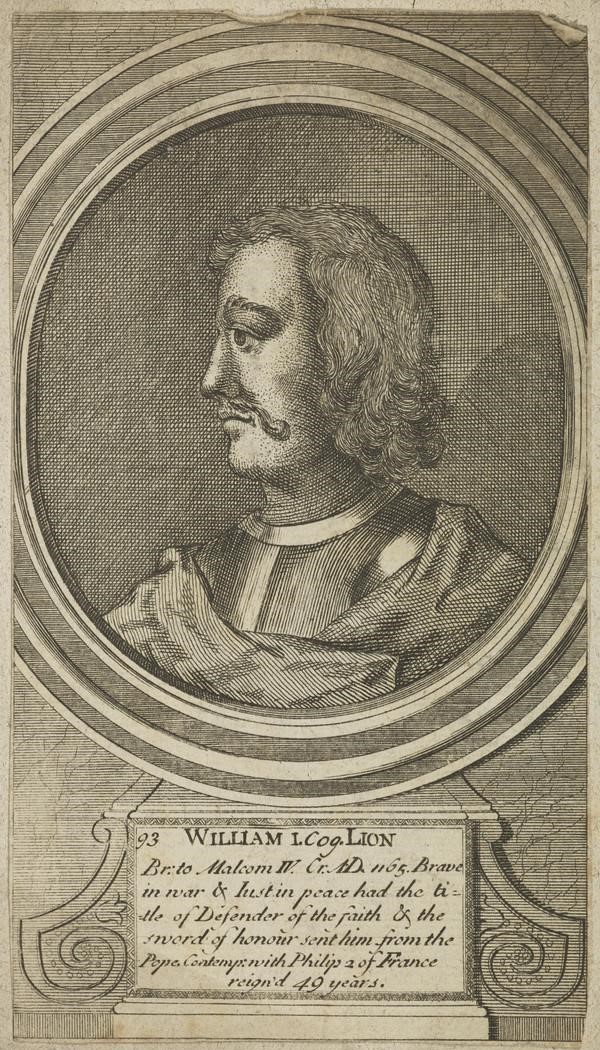
Portrait: Richard Cooper, the elder / Wikimedia Commons / Public domain William the Lion
William the Lion used Lanark Castle as a royal residence after the castle had helped establish the burgh under David I. His use confirms that this now-demolished hilltop remained a direct possession of the Scottish crown.
Cultural influences
-
A royal burgh built around a castle
The castle and Lanark’s royal burgh emerged together under David I, with the town growing outside the walls of the high ground held above the Clyde and Mouse Water.
Connections
-

Photo: Johnny Durnan / Wikimedia Commons / CC BY-SA 2.0 A Roman military site in the wider South Lanarkshire landscape.
-
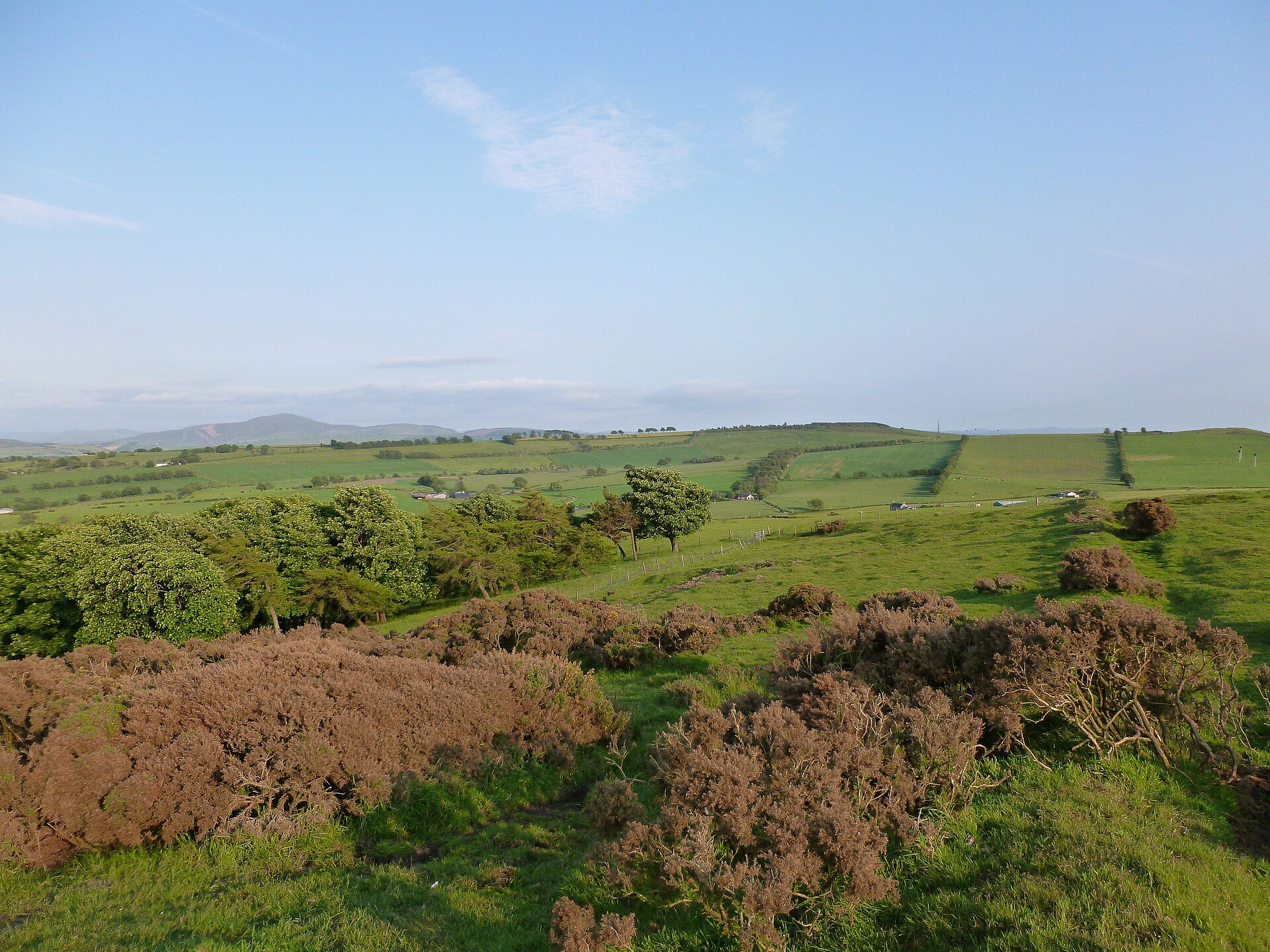
Photo: Alan O'Dowd / Wikimedia Commons / CC BY-SA 2.0 Black Hill (South Lanarkshire)
A prehistoric defended hilltop in the surrounding landscape.
-
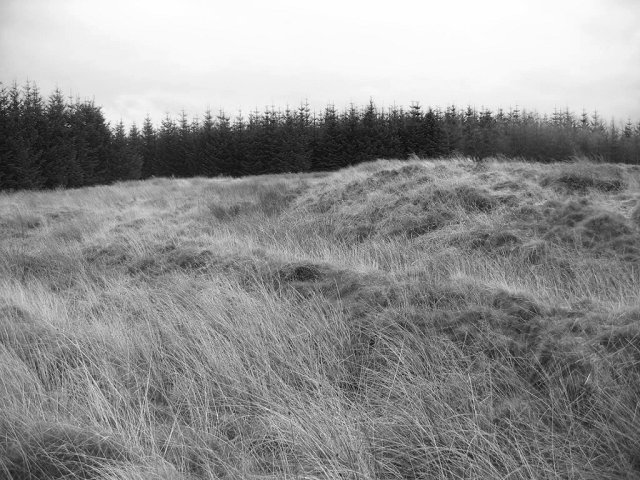
Photo: Richard Webb / Wikimedia Commons / CC BY-SA 2.0 Another Roman fort in the wider South Lanarkshire landscape.
-
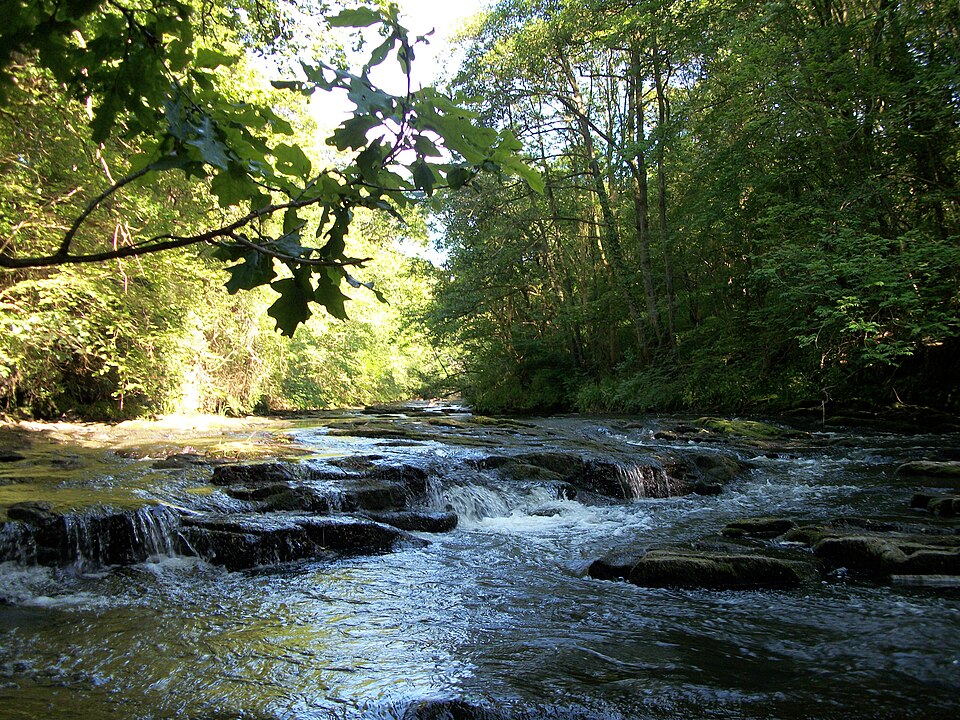
Photo: tb240904 / Wikimedia Commons / Public domain Mouse Water
Mouse Water meets the Clyde directly below Castle Hill, the high ground used first for a Roman fortification and later for Lanark Castle. The confluence helps explain why successive defences and the royal burgh occupied this point, even though the castle has been demolished.
What to look for
-
Castle Hill
The high ground south-west of the modern town centre, still carrying the name. The Romans fortified it first, and later builders returned to the same point.
-
The confluence below
The castle stood high on the east bank of the Clyde near its meeting with the Mouse Water — the junction that made the position worth holding.
-
The shape of the town
Lanark grew up outside the castle walls, so the burgh's plan is a consequence of a building that no longer exists.
Plan your visit
- Location
- 55.6703°N · 3.7837°W
- Access
- Open access
- Terrain
- Moderate walking
- Time needed
- About 30 minutes
- What survives
- No castle masonry survives above ground; the place is legible through Castle Hill, its position above the river confluence and the plan of the burgh.
Opening & admission
- The castle has long since been demolished.
- The scheduled site lies high on the east bank of the River Clyde near Mouse Water.
- Castle Hill lies south-west of the modern town centre.
Nearby places
Fortified place · Iron Age
Black Hill (South Lanarkshire)
South Lanarkshire
A hill valued as a viewpoint for four thousand years: with a cairn, a mound of piled stones often covering a burial, that may line up on Tinto to f…
- Some walking

Fortified place · Roman
Bothwellhaugh Roman Fort
North Lanarkshire
Bothwellhaugh Roman Fort reveals how a crossing of the South Calder linked soldiers, cavalry, bathing and the wider Antonine frontier landscape.
- Some walking
Fortified place · Roman
Castle Greg
West Lothian
One of the best-preserved Roman earthworks in Scotland: under an acre, with two ditches that were once fifteen feet deep.
- Some walking

Fortified place · Medieval
Bothwell Castle
South Lanarkshire
A large medieval castle on a high, steep bank above a bend in the Clyde, between Bothwell and Uddingston.
The setting
A house at Castle Park, Lanark; the demolished castle is not visible.
Photo: KP9569 / Wikimedia Commons / CC BY-SA 4.0
Delves Park, Lanark; the demolished castle is not visible.
Photo: Adam Black / Wikimedia Commons / CC BY-SA 4.0
Delves Park, Lanark; the demolished castle is not visible.
Photo: Adam Black / Wikimedia Commons / CC BY-SA 4.0
Questions people ask
- Where was Lanark Castle?
- High on the east bank of the River Clyde near its confluence with the Mouse Water, on what is still called Castle Hill, south-west of the modern town centre. It has long since been demolished.
- Did Kenneth II hold a parliament there in 978?
- Most likely not. Some records claim it, but at that time Lanark was part of the Kingdom of Strathclyde, and the castle was most likely built during the reign of David I, probably completed by 1144.
- Who used the castle?
- It was used as a royal residence by David I and by William the Lion.
Sources
- Wikipedia: Lanark Castle
- Wikidata: Q6482906
- Canmore 46574 — LANARK CASTLE (castle (medieval)) (accessed 2026-08-03)
Explore more: Fortified places · Roman · South Lanarkshire
The Ancient Codex, in your pocket
Get the Pocket Codex app
Carry the directory with you — Lanark Castle and thousands of ancient places across Britain and Ireland, offline, wherever you roam.