Built by unpaid workers summoned from the parishes of Shetland, for an earl who was executed for misrule eight years after it was finished.
Earl Patrick Stewart built this castle with unpaid labour, summoning workers from the parishes of Shetland to do it. It was finished around 1607. In 1609 the Shetland lairds complained to the king about his misrule of the islands, and in 1615 he was executed.
The family had form. Patrick’s father Robert, illegitimate son of James V, was granted lands in Orkney and Shetland in 1564 and made himself powerful there by seizing land and misusing taxes. Complaints against him were numerous, and James VI made him Earl of Orkney and Lord of Shetland anyway — until the lairds turned the king against him. His earldom was revoked in 1587 and he died impoverished in 1593.
Patrick had been on unfriendly terms with his father and stayed in the king’s favour, becoming Lord of Shetland in 1590 and effectively succeeding to Orkney on Robert’s death. He then did exactly what his father had done: appropriated lands and feuded with the lairds, chief among them Laurence Bruce of Cultmalindie — himself the son of Robert Stewart’s old ally.
The building history contains a nice irony. Patrick’s master of works was Andrew Crawford, who probably also built the Earl’s Palace at Kirkwall for Patrick, and Muness Castle on Unst for Bruce of Cultmalindie. The same man was very likely raising castles for both sides of the feud.
Scalloway was never Patrick’s home — his main residence was his father’s Earl’s Palace on Birsay, and this castle housed his representative in Shetland. It did serve as the meeting place for the thing, Shetland’s parliament, during his ascendancy. After his fall, control of the islands went to James Law, Bishop of Orkney, who held his first court here in August 1612.
Troops were stationed in the castle in 1653. By the early eighteenth century its condition was described as poor, and some of the ornamental stonework was taken away to be built into the Haa of Sand, a house north-west of Scalloway. The ruins were placed in state care in 1908, and excavations in 1979 and 1980 uncovered seventeenth-century outbuildings to the north of the tower.
What follows is drawn from published sources, with each claim labelled by how firmly it is established.
History
In 1564 Robert Stewart, illegitimate son of King James V, was granted lands in Orkney and Shetland and established himself as a powerful but unscrupulous figure in the islands. Despite numerous complaints against him for seizing lands and misusing taxes, he was later made Earl of Orkney and Lord of Shetland by James VI. Stewart remained unpopular with the local lairds, who turned the king against him. He died impoverished in 1593, his earldom having been revoked in 1587 — so the title survived him by rather less than he did.
His son Patrick, who had been on unfriendly terms with his father, remained in the king's favour and was created Lord of Shetland in 1590. He effectively succeeded as Earl of Orkney on his father's death, though this was not formalised until 1600, and in Shetland he continued to appropriate lands and to feud with the lairds. Laurence Bruce of Cultmalindie, son of Robert Stewart's ally, became Patrick's chief opponent. Following his charter of the earldom in 1600, Patrick began the construction of Scalloway Castle, which was completed around 1607.
Construction was undertaken by unpaid workers summoned by Patrick from the parishes of Shetland, and overseen by his master of works Andrew Crawford. Crawford was probably also responsible for Patrick's Earl's Palace in Kirkwall, and for Muness Castle on Unst, built for Bruce of Cultmalindie — so the same hand built for both sides of the feud. Patrick's main residence was the Earl's Palace built by his father on Birsay in Orkney, and Scalloway was used by his representative in Shetland. The new castle also served as a meeting place for the thing, the parliament of Shetland, during Earl Patrick's ascendancy.
In 1609 the Shetland lairds complained to the king of Earl Patrick's misrule. He was imprisoned at Edinburgh Castle and executed in 1615 for encouraging his son Robert to retake his Orkney possessions — eight years after the castle was finished. Control of the islands passed to James Law, Bishop of Orkney, who held his first court at Scalloway Castle in August 1612. Troops were stationed in the castle in 1653, and by the early eighteenth century its condition was described as poor.
Some of the ornamental stonework was removed to be incorporated into the Haa of Sand, an eighteenth-century house north-west of Scalloway. The ruins were placed into state care in 1908, and excavations in 1979 and 1980 uncovered the remains of seventeenth-century outbuildings to the north of the tower.
People
-
Patrick Stewart, Earl of Orkney
Began the castle after his charter of the earldom in 1600; executed in 1615 for encouraging his son to retake the Orkney possessions.
-
Andrew Crawford
Patrick's master of works, who oversaw construction and probably also built the Earl's Palace at Kirkwall and Muness Castle for Patrick's chief opponent.
-
James Law
Bishop of Orkney, given control of the islands after Patrick's fall; held his first court at Scalloway Castle in August 1612.
Connections
-

Photo: Van de Beek / Wikimedia Commons / CC BY-SA 3.0 Built on Unst for Laurence Bruce of Cultmalindie, Earl Patrick's chief opponent, probably by the same master of works.
-
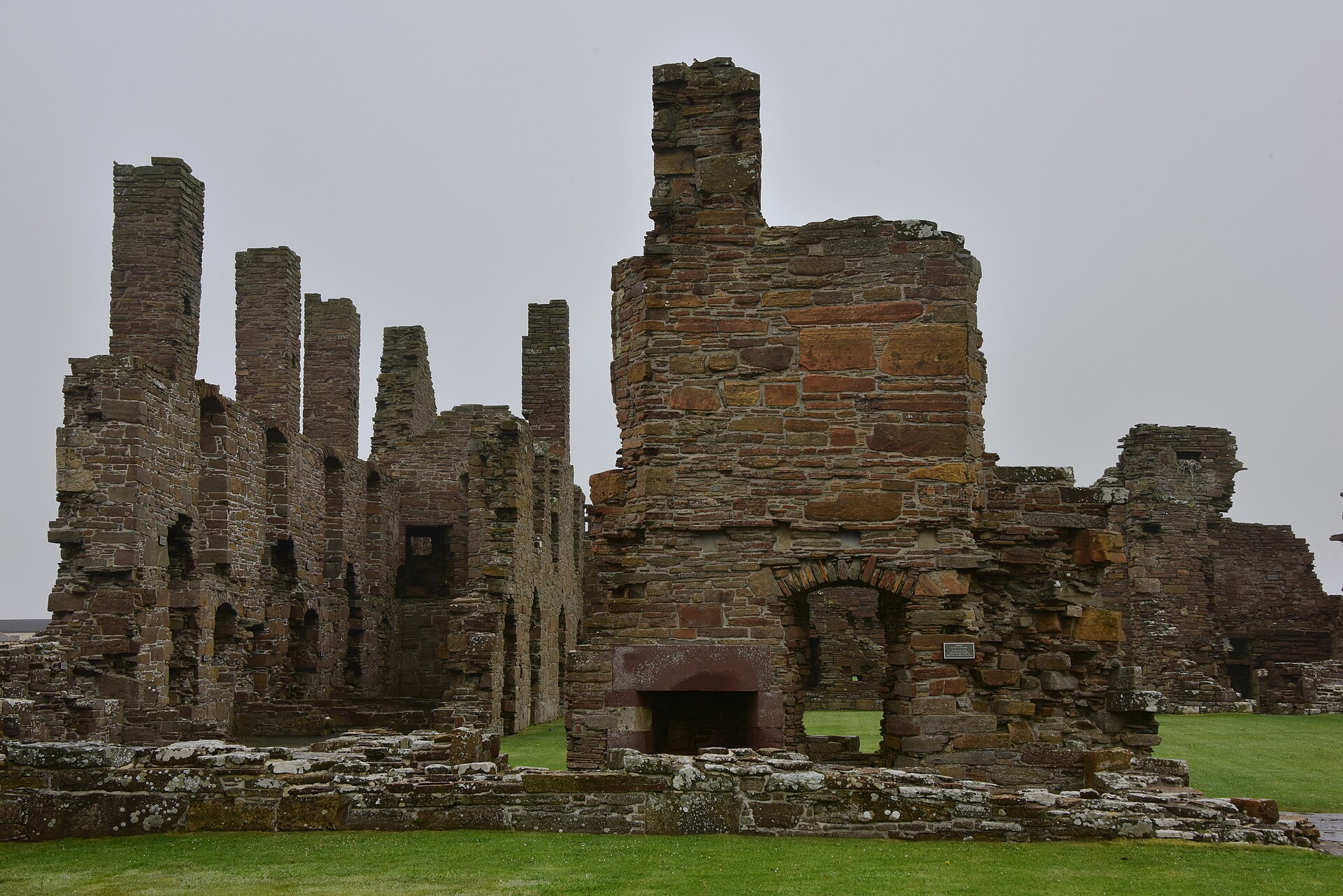
Photo: August Schwerdfeger / Wikimedia Commons / CC BY 4.0 Built by Robert Stewart and Patrick's main residence, Scalloway being used by his representative in Shetland.
What to look for
-
The missing ornamental stonework
Some was removed to be built into the Haa of Sand, an eighteenth-century house north-west of Scalloway.
-
The outbuilding remains
Seventeenth-century structures north of the tower, uncovered by excavation in 1979 and 1980.
Plan your visit
- Location
- 60.1363°N · 1.2743°W
- Time needed
- About 45 minutes
Nearby places
.jpg?width=800)
Fortified place · Iron Age
Broch of Clickimin
Shetland Islands
On a small promontory jutting into the Loch of Clickimin, three-quarters of a mile south-west of Lerwick on the road to Sumburgh, stands one of the…
- Some walking

Carved stone · Pictish & early medieval
Papil Stone
Shetland Islands
Carved on a single face of stone left otherwise plain, the Papil Stone rises to a large, long-stemmed cross shaped like a fan, its shaft crowded be…
- Easy path

Fortified place · Iron Age
Broch of Cullingsburgh
Shetland Islands
Very little survives above ground of the broch (a tall circular tower of unmortared stone, found only in Scotland) that once stood on a shoulder of…
- Some walking
Tomb or burial place · Prehistoric
Catpund
Shetland Islands
Along the bank of a burn on Shetland Mainland, the rock face at Catpund still carries the scars of centuries of quarrying, row upon row of hollows…
- Easy path
Questions people ask
- Who built Scalloway Castle?
- Patrick Stewart, Earl of Orkney, beginning after his charter of the earldom in 1600 and completing it around 1607, using unpaid workers summoned from the parishes of Shetland.
- What happened to Earl Patrick?
- The Shetland lairds complained to the king of his misrule in 1609. He was imprisoned at Edinburgh Castle and executed in 1615 for encouraging his son Robert to retake his Orkney possessions.
- What was the castle used for?
- It housed the earl's representative in Shetland, and served as a meeting place for the thing, the parliament of Shetland. Bishop James Law held his first court there in August 1612.
- What became of the building?
- Troops were stationed there in 1653, its condition was poor by the early eighteenth century, and some ornamental stonework was taken for the Haa of Sand. The ruins went into state care in 1908.
Sources
The Ancient Codex, in your pocket
Get the Pocket Codex app
Carry the directory with you — Scalloway Castle and thousands of ancient places across Britain and Ireland, offline, wherever you roam.