Robert Stewart’s fortress-palace embodies the political ambition of James V’s illegitimate son, combining ceremonial halls with gun-holed defences on a former bishop’s site.
The ground floors of this palace have gun-holes and very small windows. The large windows are all upstairs. That arrangement — comfort above, defence below — is the clearest thing the ruin still says about the man who built it and the place he was governing.
Robert Stewart, 1st Earl of Orkney, was an illegitimate son of James V, and he raised the palace at Birsay in two campaigns. The first, begun in the 1570s, gave him a great hall in the south range above the main door with his own private chamber in the corner tower beside it; an inscription over the entrance carries the date 1574. The second, finished in the 1580s, added another range with a hall and chamber on the north side of the courtyard, and it probably followed his acquisition of the earldom itself in 1581.
There had been a house here before him. Adam Bothwell, Bishop of Orkney, called his the place of Birsay, and in December 1560 it was seized and occupied by Henry Sinclair of Strom, son of the Sheriff of Orkney — an early indication of how contested this ground was.
What Robert built was two storeys around a central courtyard and a well, with stone towers at three of the four corners, and musketeers able to cover every approach from the ground floor. It was as much a fortress as a residence.
Very little of its contents or layout is recorded. The Reverend John Brand published an account of Orkney in 1701 that included a description of the palace, written just as it was beginning to deteriorate badly. It had not been lived in since the middle of the previous century. Historic Environment Scotland now holds it as a scheduled ancient monument.
What follows is drawn from published sources, with each claim labelled by how firmly it is established.
History
Adam Bothwell, Bishop of Orkney, had a house at Birsay which he called the place of Birsay. In December 1560 it was seized and occupied by Henry Sinclair of Strom, an Orkney landowner and a son of Edward Sinclair, the Sheriff of Orkney — an early sign of how contested this ground was. The palace proper was built by Robert Stewart, 1st Earl of Orkney, who lived from 1533 to 1593 and was the illegitimate son of King James V by his mistress Euphemia Elphinstone. The building is the physical expression of that inheritance.
It went up in two phases. The first, begun in the 1570s, produced the great hall in the south range above the main door, with Lord Orkney's private chamber in the south-eastern corner tower. An inscription above the entrance, dated 1574, records that work. The second phase was completed in the 1580s and added a new range on the north side of the courtyard, containing a great hall and chamber. It probably followed Robert's acquisition of the Earldom of Orkney in 1581 — a larger title requiring a larger house.
The building was as much a fortress as a residence. Two storeys around a central courtyard and well, with large stone towers at three of the four corners; only the upper floors had large windows, while the accessible ground floors carried small openings and an array of gun-holes covering every side. After Robert Stewart's death the palace was used only occasionally by later earls of Orkney, and it was not occupied at all after the middle of the seventeenth century. By 1701 it had begun to deteriorate badly.
Very few records survive to describe its contents or its layout. The Reverend John Brand published a book about Orkney in 1701 which included a description of the palace, and it remains one of the very few accounts of the interior written while there was still an interior to describe. The palace is now in the care of Historic Environment Scotland as a scheduled ancient monument, which is why the shell of a building that has stood empty since the seventeenth century is still standing at all.
People
-
Robert Stewart, 1st Earl of Orkney
Builder of the palace, begun in the 1570s and enlarged after he acquired the earldom in 1581.
-
Adam Bothwell
Bishop of Orkney whose Birsay house preceded the palace.
Cultural influences
-
The palace combines a late-16th-century noble residence with defensive planning: gun-holes protected the accessible ground floor while the grand rooms occupied the upper levels.
Connections
-
Birsay
Earl's Palace stands in Birsay, Orkney.
-
Strom
The palace was occupied by Henry Sinclair of Strom in 1560.
What to look for
-
The 1574 inscription
An inscription above the entrance, dated 1574, marks the first phase of building — the great hall in the south range with Lord Orkney's private chamber in the south-east corner tower.
-
Two phases, ten years apart
The second phase, completed in the 1580s, added a range with a great hall and chamber on the north side of the courtyard, probably following Robert Stewart's acquisition of the Earldom in 1581.
-
Built by a king's son
Robert Stewart, 1st Earl of Orkney, was the illegitimate son of James V and his mistress Euphemia Elphinstone. The palace is the physical expression of that inheritance.
Plan your visit
- Location
- 59.1300°N · 3.3200°W
- Time needed
- About 45 minutes
Nearby places
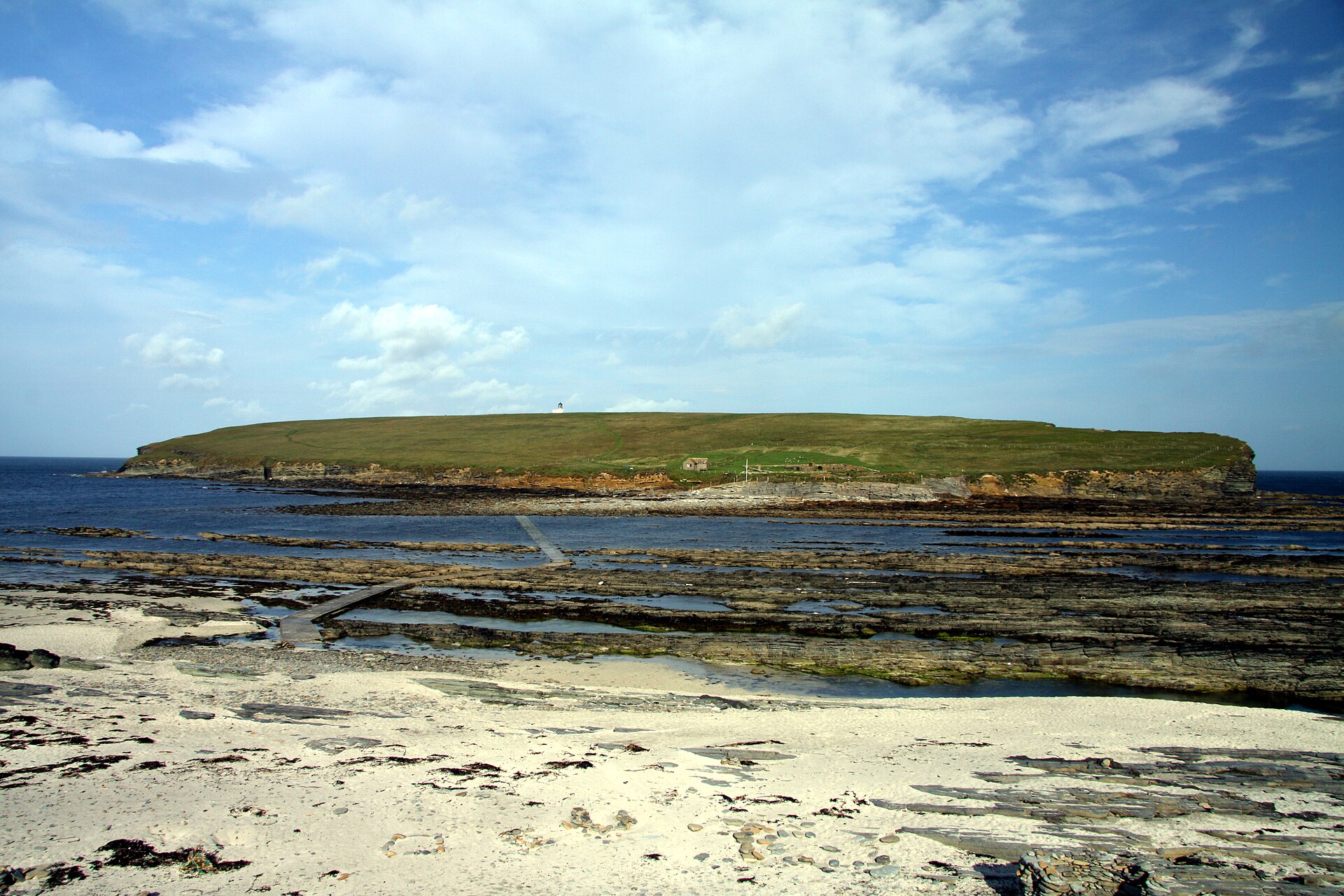
Settlement · Pictish & early medieval
Brough of Birsay
Orkney Islands
A tidal island where Pictish metalworkers: people of northern and eastern Scotland from about AD 300 to 900: Norse rulers and medieval pilgrims suc…
- Near Birsay
- 625 metres from car park
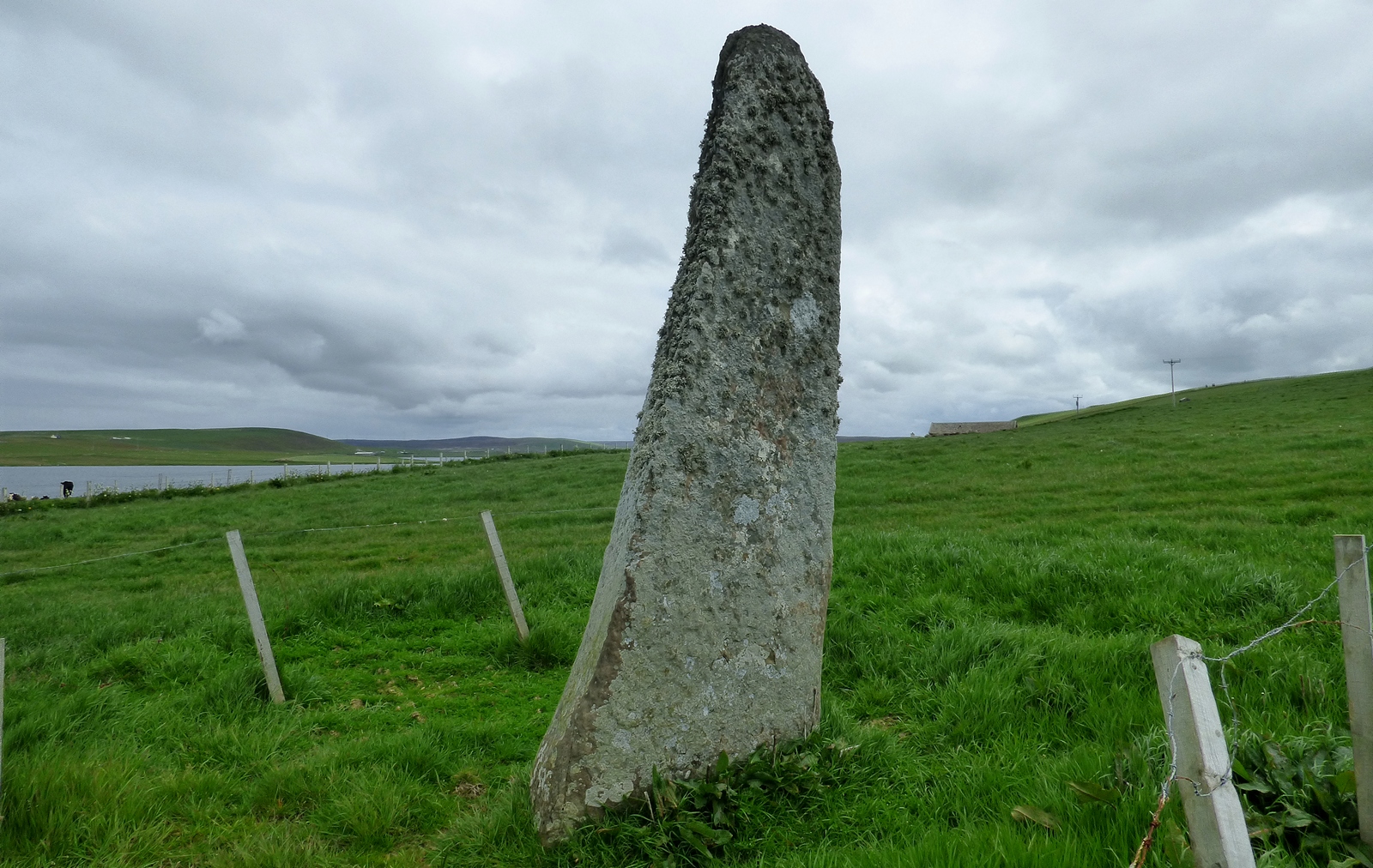
Sacred place · Prehistoric
Wheebin standing stone
orkney-islands
Livestock have polished the lower half of this stone smooth by rubbing against it; a deep crevice runs from the middle to the top.
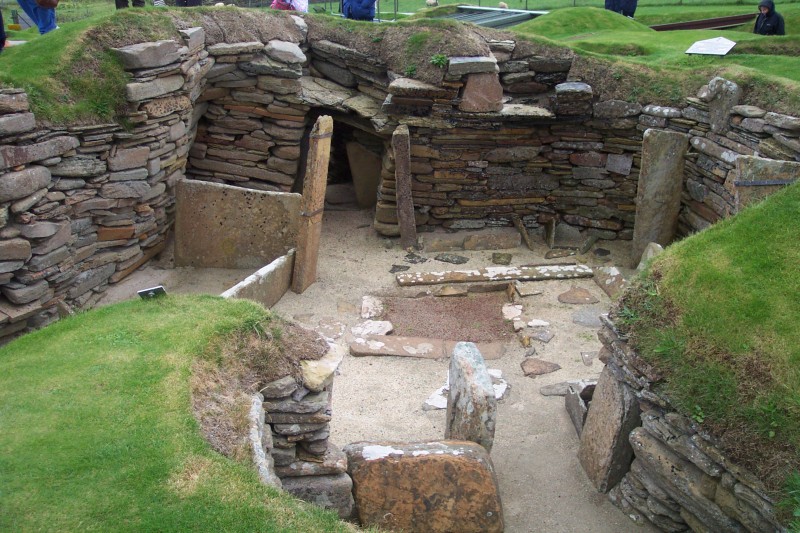
Settlement · Prehistoric
Skara Brae
Orkney Islands
Ten roofless stone houses survive at Skara Brae with their built-in furniture still in place: hearths, dressers and box-beds. Occupied for roughly…
- Near Stromness
- 5 min walk from car park
- Some walking

Fortified place · Iron Age
Broch of Borwick
Orkney Islands
The Broch of Borwick is a tall circular tower of unmortared stone, a type of building found only in Scotland, whose remains illuminate changing com…
- Rough ground
Questions people ask
- Who built the palace?
- Robert Stewart, 1st Earl of Orkney, the illegitimate son of King James V and his mistress Euphemia Elphinstone.
- When was it built?
- In two phases. The first, begun in the 1570s, produced the great hall in the south range with Lord Orkney's chamber in the corner tower — an inscription above the entrance is dated 1574. The second, in the 1580s, added a range with a great hall and chamber on the north side of the courtyard.
- What prompted the second phase?
- Probably Robert's acquisition of the Earldom of Orkney in 1581.
- What happened afterwards?
- The palace was used only occasionally by later earls of Orkney. It is now in the care of Historic Environment Scotland as a scheduled ancient monument.
Sources
The Ancient Codex, in your pocket
Get the Pocket Codex app
Carry the directory with you — Earl's Palace, Birsay and thousands of ancient places across Britain and Ireland, offline, wherever you roam.