A single L-plan tower rebuilt almost nowhere else in its 750-year life, whose carved archway still names both families that shaped it — the Hays' goat's head and the Frasers' strawberries.
The tower rises tall and narrow where the Tweed swings below it, its corners rounded rather than square, its few windows still gripped by the iron bars fitted to keep out an old danger. Inside, a vaulted basement and a vaulted first-floor hall were later divided by a wooden floor into two separate storeys, a change that speaks to centuries of families adapting one stubborn stone shell to new needs rather than starting again.
That single shell has outlasted sieges, bankruptcies, and at least one poet’s fury. It has changed hands by marriage, by sale, and by inheritance, moving between the Fraser, Hay, Douglas and Wemyss families without ever being abandoned outright, even when, by 1790, part of it stood roofless and collapsing. An archway carved with the Hays’ goat’s head and the Frasers’ strawberries is the clearest surviving signature of that long chain of ownership.
Today the castle is a private wedding venue and occasional film set, viewable by appointment rather than as an open ruin — a working building, not a museum piece, which is itself a rare survival for a Scottish tower house of this age.
What follows is drawn from published sources, with each claim labelled by how firmly it is established.
History
Around 1263 to 1266, while serving as High Sheriff of Tweeddale, Simon Fraser of Oliver Castle probably raised the first stronghold on this ridge above the River Tweed. In the early 14th century the barony passed by marriage to the Hay family, when Margaret, granddaughter of that sheriff, married into the line. Sir William de Haya, who died around 1390, is thought to have built the tower house that still stands today, in the late 14th century.
The Hays held Neidpath until the 17th century, even after Sir William's son Sir Thomas Hay married the heiress of Sir Hugh Gifford of Yester and so acquired Yester Castle, which became the family's principal seat while Neidpath remained in use. The castle received two notable visitors: Mary, Queen of Scots called in 1563, and her son James VI followed in 1587, underlining its standing as a working seat of the Hay lords rather than a forgotten outpost.
In 1645 Neidpath was garrisoned against the Royalist army of James Graham, 1st Marquess of Montrose, though within a year John Hay of Yester had switched to the King's side and was created 1st Earl of Tweeddale by Charles II. Oliver Cromwell's forces attacked the castle during the 1650 invasion of Scotland; accounts differ on whether it surrendered without a fight or endured the longest siege of any stronghold south of the River Forth, and later writers record that artillery brought down the 13th-century tower and damaged the west wing.
During the 1660s the 2nd Earl of Tweeddale remodelled the castle, added outbuildings, and planted an avenue of yew trees along one side, of which part still survives. His improving ambitions as an agricultural reformer outran his finances, however, and bankruptcy forced him to sell Neidpath in 1686 to William Douglas, 1st Duke of Queensberry.
In 1693 Queensberry passed the castle to his second son, William Douglas, later 1st Earl of March, whose own son made further alterations to the building in the 18th century. The 3rd Earl, who inherited the Queensberry dukedom in 1778, let Neidpath to tenants including the philosopher and historian Adam Ferguson, but neglect took its toll and by 1790 the upper storeys of one wing had collapsed.
William Wordsworth and Walter Scott both visited in 1803; Wordsworth, dismayed at the recent felling of the estate's old trees, wrote a sonnet condemning 'Degenerate Douglas!' as an unworthy lord. When the Duke of Queensberry died in 1810, the earldom of March and Neidpath passed to the Earl of Wemyss rather than to the Scotts of Buccleuch, who inherited only the dukedom, and the castle remains with the Wemyss family, whose heir still takes the courtesy title Lord Neidpath from it.
People
-
Simon Fraser of Oliver Castle
High Sheriff of Tweeddale who probably built the first stronghold on the site between 1263 and 1266.
-
Sir William de Haya
Hay laird, died around 1390, thought to have built the present tower house in the late 14th century.
-

Photo: Unidentified painter / Wikimedia Commons / Public domain Mary, Queen of Scots
Visited Neidpath Castle in 1563.
-
James VI
Visited Neidpath Castle in 1587, following his mother's earlier visit.
-
John Hay, 1st Earl of Tweeddale
Held Neidpath during the 1645 siege and was created Earl of Tweeddale by Charles II in 1646 for joining the Royalist cause.
-
William Douglas, 1st Duke of Queensberry
Bought Neidpath from the bankrupt 2nd Earl of Tweeddale in 1686.
-
Adam Ferguson
Philosopher and historian who was a tenant of Neidpath under the 3rd Earl of March.
-
William Wordsworth
Visited in 1803 and wrote a sonnet condemning the felling of the castle's old trees.
-
Walter Scott
Visited Neidpath in 1803 and later referred to the castle's ghost story, 'the Maid of Neidpath', in verse.
Connections
-
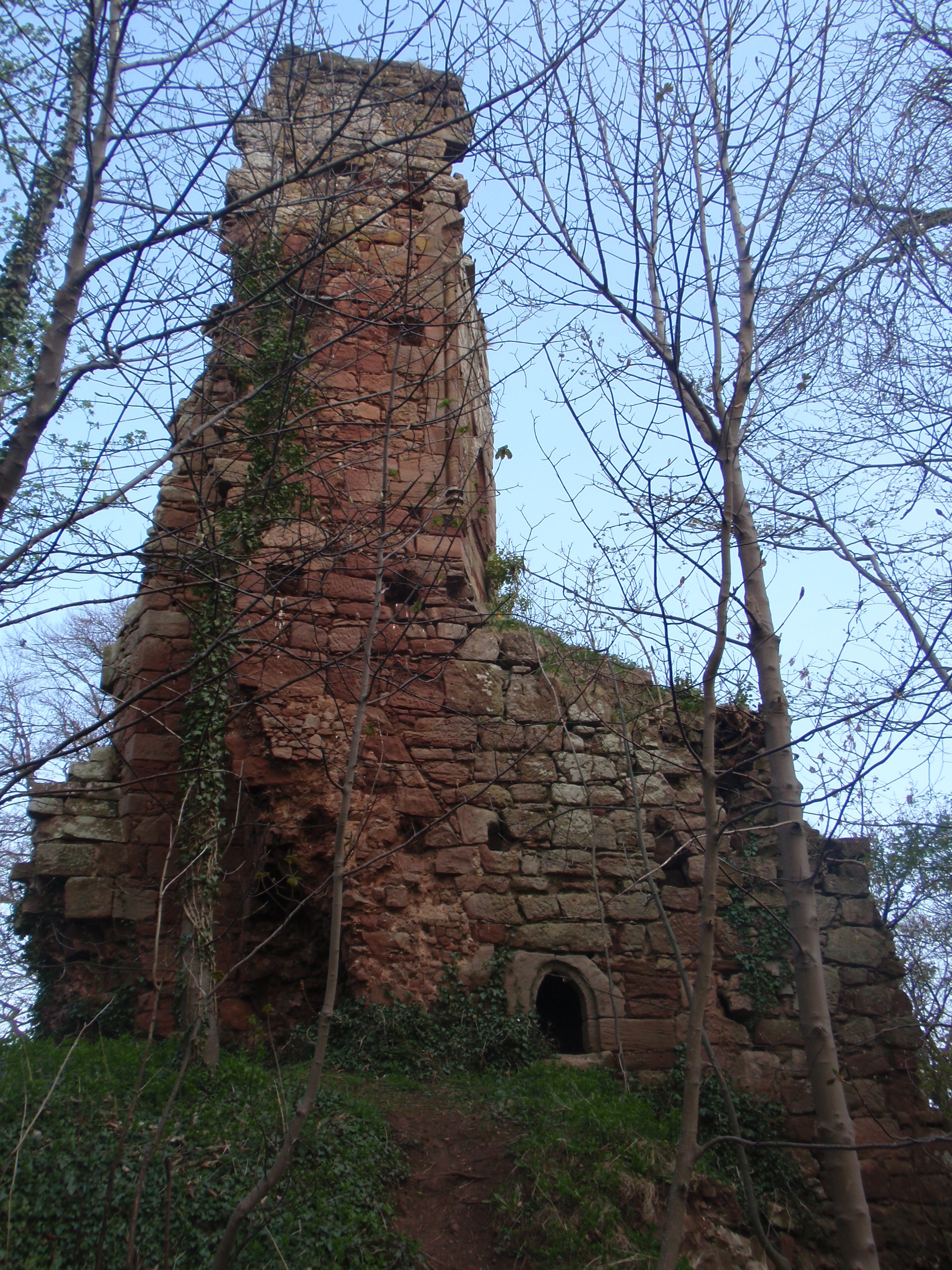
Photo: Brendandh / Wikimedia Commons / CC BY-SA 3.0 Became the Hay family's principal seat in the late 14th century after Sir Thomas Hay married its heiress, though Neidpath continued to be used.
-
Oliver Castle
Original seat of Simon Fraser, the sheriff thought to have built the earliest stronghold at Neidpath.
-
Neidpath, Saskatchewan
A hamlet in western Canada named after Neidpath Castle.
In culture
-
Merlin: The Quest Begins (1997)
The castle was used as a filming location for this television production, starring Jason Connery and directed by David Winning, shot in September and October 1997.
-
Sam and Colby (2019)
Neidpath featured as a location for this online video series.
-
Wordsworth's sonnet
William Wordsworth's poem beginning 'Degenerate Douglas! oh, the unworthy Lord' was written after his 1803 visit, in protest at the felling of the estate's mature trees.
What to look for
-
L-plan tower with rounded corners
The tower house is built on an L-plan with one very short leg, its corners rounded rather than squared off.
-
Roofed battlements and balustraded sentry walk
The battlements are roofed over, and the sentry walk running around them takes the form of a balustraded balcony.
-
Iron-barred windows
Two of the castle's few windows still retain their original iron bar protection.
-
Vaulted basement and divided hall
The basement and the first-floor hall are both stone-vaulted; the hall was later subdivided by an inserted wooden floor into two storeys.
-
Pit dungeon
A pit dungeon survives within the castle, along with small displays of artefacts found in the surrounding area.
-
Carved archway
An archway is decorated with both the Hay family's goat's head emblem and the Fraser family's strawberries, recording the two lines who built and inherited the castle.
-
Garden terraces
Five terraces set at roughly 8-metre intervals lie to the south-east and east of the castle, remnants of ornate garden terracing first walled in the 16th century and remodelled between 1682 and 1686 with a summer house.
What is said
Folklore and tradition, recorded as what is said — not as established fact.
-
The Maid of Neidpath
The castle is said to be haunted by the ghost of Jean Douglas, youngest daughter of William Douglas, Earl of March, who tradition holds was forbidden to marry the son of the laird of Tushielaw because he was considered below her station. It is said she wasted away with grief while he was sent away, and that when he returned he no longer recognised her, so that she died of a broken heart. She is reputed to appear clad in a full-length brown dress with a large white collar, a story Walter Scott referred to in verse.
Plan your visit
- Location
- 55.6519°N · 3.2154°W
- Time needed
- About 45 minutes
Opening & admission
- The castle is a private wedding and filming venue; viewings are by appointment.
Nearby places
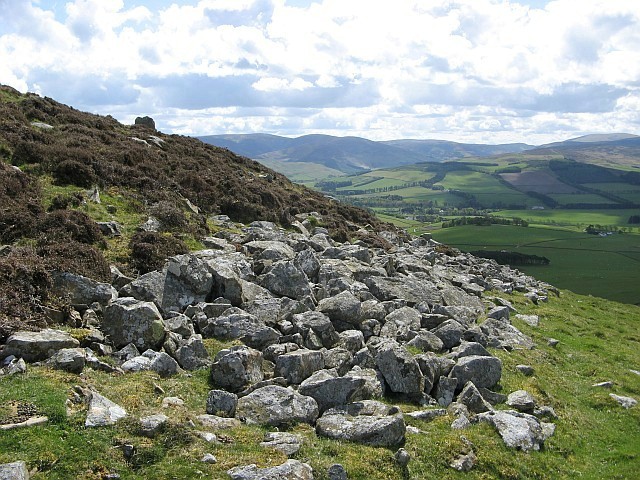
Fortified place · Iron Age
White Meldon
Scottish Borders
Four concentric rampart (the raised bank thrown up around a fortified enclosure) lines and at least 29 round-house platforms make this one of the l…
- Rough ground

Fortified place · Iron Age
Black Meldon
Scottish Borders
A hillfort whose seven round houses survive as ring-grooves: and five of them stand in a deliberate straight line.
- Rough ground
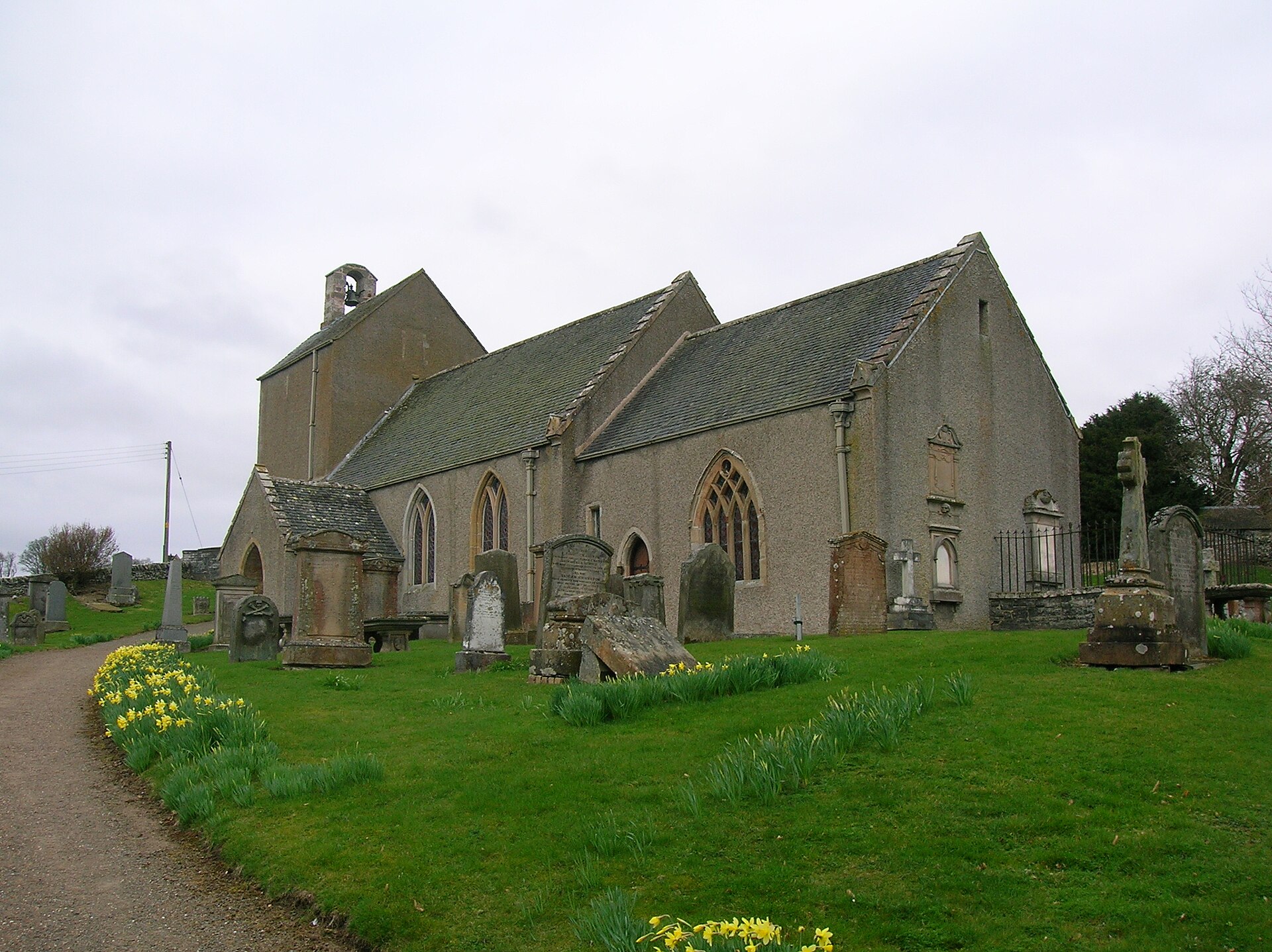
Fortified place · Iron Age
Cademuir Hill Fort
Scottish Borders
Two Iron Age forts crown the Cademuir ridge. The larger, Cademuir I, on the summit, enclosed about 2.25 ha within a single 3 m thick stone wall and…
- Near Peebles
- 4.4 km from car park
- Some walking

Fortified place · Iron Age
Milkieston Rings
Scottish Borders
A small hillfort of the Iron Age, roughly 800 BC until the Roman conquest: a settlement defended by banks and ditches on high ground: with up to si…
- Rough ground
Questions people ask
- Who built Neidpath Castle?
- An early castle was probably raised by Simon Fraser of Oliver Castle between 1263 and 1266; the present L-plan tower is thought to have been built by Sir William de Haya in the late 14th century.
- Which royals visited Neidpath Castle?
- Mary, Queen of Scots visited in 1563, and her son James VI visited in 1587.
- What happened to Neidpath during Cromwell's invasion?
- The castle was attacked in 1650; sources disagree on whether it surrendered without a fight or endured an unusually long siege, and its 13th-century tower was reportedly damaged by artillery.
- Is Neidpath Castle haunted?
- Tradition holds that the ghost of Jean Douglas, the 'Maid of Neidpath', haunts the castle after reputedly dying of a broken heart when forbidden to marry beneath her station.
- Can Neidpath Castle be visited today?
- It functions as a wedding venue and filming location and can be viewed by appointment.
Sources
- Wikipedia: Neidpath Castle
- Coventry, Martin — The Castles of Scotland (2001, Goblinshead)
- Salter, Mike — The Castles of Lothian and the Borders (1994, Folly Publications)
Explore more: Fortified places · Medieval · Scottish Borders
The Ancient Codex, in your pocket
Get the Pocket Codex app
Carry the directory with you — Neidpath Castle and thousands of ancient places across Britain and Ireland, offline, wherever you roam.