Kelso Abbey was founded at Roxburgh in 1128 by Tironensian monks from Tiron, near Chartres in France. The community had first entered Scotland c. 1113 under the patronage of David I as Prince of the…
Kelso Abbey occupies ground overlooking the confluence of the Tweed and the Teviot, the site of what was once the Royal Burgh of Roxburgh and the intended southern centre of the developing Scottish kingdom. The abbacy that grew here became pre-eminently powerful in the heart of the Borders.
Monks of the Tironensian order, from Tiron near Chartres, founded the house at Roxburgh in 1128. The community had first come to Scotland around 1113 under the patronage of David I, then Prince of the Cumbrians during his brother Alexander I’s reign, with a commission to establish themselves near Selkirk. Why they abandoned that first site in 1128 is not known for certain, though David — by then King of Scots — was developing Roxburgh as a major economic and administrative centre for southern Scotland, and established the royal mint there among other institutions.
The abbey stood within sight of Roxburgh Castle across the Tweed and soon became one of the wealthiest and grandest in Scotland, much of its income drawn from vast estates in the Border country. John, abbot from 1160 to 1180, was the first abbot in Scotland granted the mitre.
After the Scottish royal dynasty lost the overlordship of Northumbria during the reign of William I, David’s southern capital found itself close to the English border and subject to attack throughout the Wars of Scottish Independence. The abbot in 1299 was an English appointee, Thomas de Durham, but the abbey defended its Scottish identity. Roxburgh Castle and Berwick upon Tweed, the major port serving the area, were frequently under English occupation through this period, and whenever the abbey was attacked the monks repaired the damage.
James II was killed within sight of the abbey in 1460, in a fatal accident during the campaign that recovered Roxburgh Castle that same year, and the hasty coronation of the infant James III followed here shortly afterwards. Between 1460 and 1513 control of the area was more stable and life at the abbey probably settled. After 1517 it came under English attack again.
The house effectively ceased to function through a combination of events in the mid sixteenth century. In the 1540s the buildings sustained major damage in attacks ordered by Henry VIII during the Rough Wooing, in which most of southern Scotland’s abbeys — Melrose, Dryburgh and Jedburgh among them — were targeted by forces under the Earl of Hertford. Plans to convert the abbey into a bastion fort were drawn up by Archangelo Arcano, an Italian military engineer in Henry’s service.
Mary of Guise, as Regent, sent building lime from Cousland in 1554, stored in the monks’ vaults — possibly intended for the fort rather than the abbey. The Reformation of 1560 brought monastic disestablishment, and the Tironensian community was no longer officially recognised. A small contingent of monks may have remained for some years, but after further attacks the abbey was declared officially derelict in 1587. Francis Stewart, fifth Earl of Bothwell, kept a house at the abbey, and James VI visited in January 1591. By the late sixteenth century the former monastic estates were in fully secular hands, and in 1607 they were granted as a secular lordship, titled Holydean, to the last commendator, Robert Ker of Cesford.
Between 1647 and 1771 part of the ruins was occupied by a parish kirk, while other parts were dismantled for stone by townspeople. That post-Reformation kirk appears to have been a compact vaulted structure inserted within the west transepts around 1748, and it included a vaulted gaol.
The site has never been fully excavated in modern times, but the evidence suggests a major building with two crossings. Only the west tower crossing and part of the infirmary stand today. The massive design and solid Romanesque manner of the tower indicate a very large building of formidable, almost semi-military appearance — a measure of how Roxburgh was regarded when the abbacy stood at the height of its power.
What follows is drawn from published sources, with each claim labelled by how firmly it is established.
History
Kelso Abbey was founded at Roxburgh in 1128 by Tironensian monks from Tiron, near Chartres in France. The community had first entered Scotland c. 1113 under the patronage of David I as Prince of the Cumbrians, settling near Selkirk before relocating to Roxburgh as David, by then King of Scots, developed it as a major economic and administrative centre. Construction began at once; by 1143 the building was advanced enough to be dedicated to the Blessed Virgin Mary and Saint John. David I's son Henry, Earl of Northumbria, was interred in the abbey in 1152.
John, abbot of Kelso from 1160 to 1180, was the first abbot in Scotland to be granted the mitre. The abbey grew to be one of the wealthiest and grandest in Scotland on income from its vast Border estates. In 1460 James II was killed within sight of the abbey during the campaign that recaptured Roxburgh Castle, and the infant James III was hastily crowned at Kelso Abbey soon after.
In the 1540s the abbey was badly damaged in attacks ordered by Henry VIII during the Rough Wooing, under the Earl of Hertford. Henry's Italian engineer Archangelo Arcano drew up plans to convert the abbey into a bastion fort. After the Reformation of 1560 the Tironensian community was no longer recognised; the abbey was declared officially derelict in 1587, and its estates were granted as the secular lordship of Holydean to Robert Ker of Cesford in 1607.
Between 1647 and 1771 part of the ruins was occupied by a parish kirk — a compact vaulted structure intruded into the west transepts around 1748, including a vaulted gaol. In 1805 huge parts of the ruins, including the parish church and gaol, were cleared away, leaving only the west tower and transept standing today.
People
-
David I
Patron who brought the Tironensian monks to Scotland and refounded the community at Roxburgh
-
Henry, Earl of Northumbria
Son of David I, interred in the abbey in 1152
-
Abbot John (1160–1180)
First abbot in Scotland to be granted the mitre
-
James II
King killed within sight of the abbey in 1460 during the Roxburgh campaign
-
James III
Infant king hastily crowned at Kelso Abbey in 1460
-
Archangelo Arcano
Italian military engineer who drew up plans to convert the abbey into a bastion fort for Henry VIII
-
Robert Ker of Cesford
Last commendator; granted the abbey estates as the secular lordship of Holydean in 1607
Cultural influences
-
Founded by the Tironensian order from Tiron near Chartres — the first such community in Scotland, brought under royal patronage during the reign of Alexander I.
-
Its prominence reflected royal ambition for Roxburgh as David I's southern 'capital'; the abbey stood in sight of Roxburgh Castle, near the royal mint and the intended administrative centre of the kingdom.
-
Architecturally exceptional: Vatican archives of 1517 indicate a double-cruciform plan with two crossings and towers, west and east — a design relatively rare in Europe; the massive Romanesque west tower has a formidable, semi-military character.
Connections
-
Roxburgh Castle and the Royal Burgh of Roxburgh
Stood across the Tweed; David I's intended southern centre, with which the abbey's fortunes were bound
-
Melrose, Dryburgh and Jedburgh abbeys
Fellow southern-Scotland abbeys targeted for destruction in the Rough Wooing under the Earl of Hertford
-
Abbey of Tiron, near Chartres
Mother house of the Tironensian order that founded Kelso
-
Selkirk
Site of the community's first Scottish settlement (c. 1113) before relocating to Roxburgh in 1128
What to look for
-
The west tower
The surviving west tower and its crossing — strong and fortress-like, showing the formidable Romanesque character of the once-vast abbey.
-
The transept gable
The gable of the north transept of the west tower crossing, the most intact surviving face of the building.
-
The earliest arcade
The two bays of the south arcade of the nave with rounded arches dating from about 1128 — the earliest remains — surmounted by a late-12th-century triforium and a clerestory arcade, with no regular vertical pattern between the three levels (a feature unique in Scotland or England).
-
The Roxburghe Aisle
The Roxburghe Aisle, a 20th-century burial vault of the Dukes of Roxburghe, and a 1933 memorial cloister to the 8th Duke designed by Reginald Fairlie in the abbey's original style.
Plan your visit
- Location
- 55.5962°N · 2.4309°W
- Nearest settlement
- Kelso
- Access
- Open access
- Start point
- In Kelso.
- Time needed
- About 45 minutes
- Best time
- Find out more about our conservation work** Admission Kelso Abbey is free to visit. Due to access restrictions in place as a precautionary measure while we undertake high level masonry inspections, there is currently no visitor access to this site.
- What survives
- The surviving fabric is concentrated in the massive west tower and the adjoining west transept crossing.
- Start point
- The Knowes Car and Coach Park, Kelso — Public town-centre car park about 140 m from the abbey ruin. Note: HES report visitor access to the abbey itself may be restricted during masonry inspections — check current status.
Opening & admission
Free entry
- Find out more about our conservation work** Admission Kelso Abbey is free to visit.
- Due to access restrictions in place as a precautionary measure while we undertake high level masonry inspections, there is currently no visitor access to this site.
Nearby places
Fortified place · Medieval
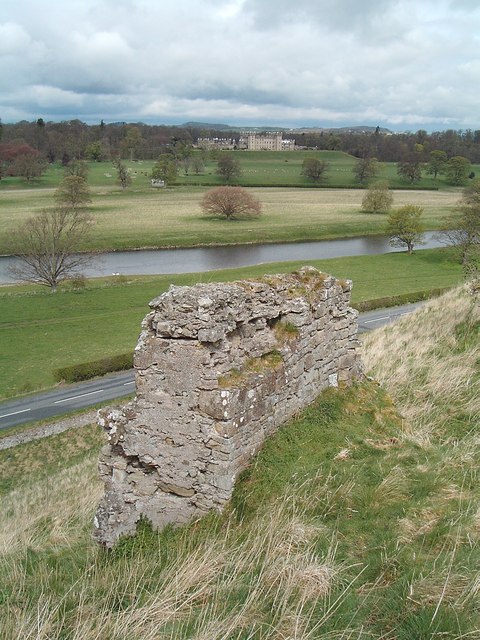
Roxburgh Castle
Scottish Borders
A grassy mound is nearly all that remains of what was once one of the most fought-over fortresses on the Anglo-Scottish border, changing hands at l…
Fortified place · Medieval
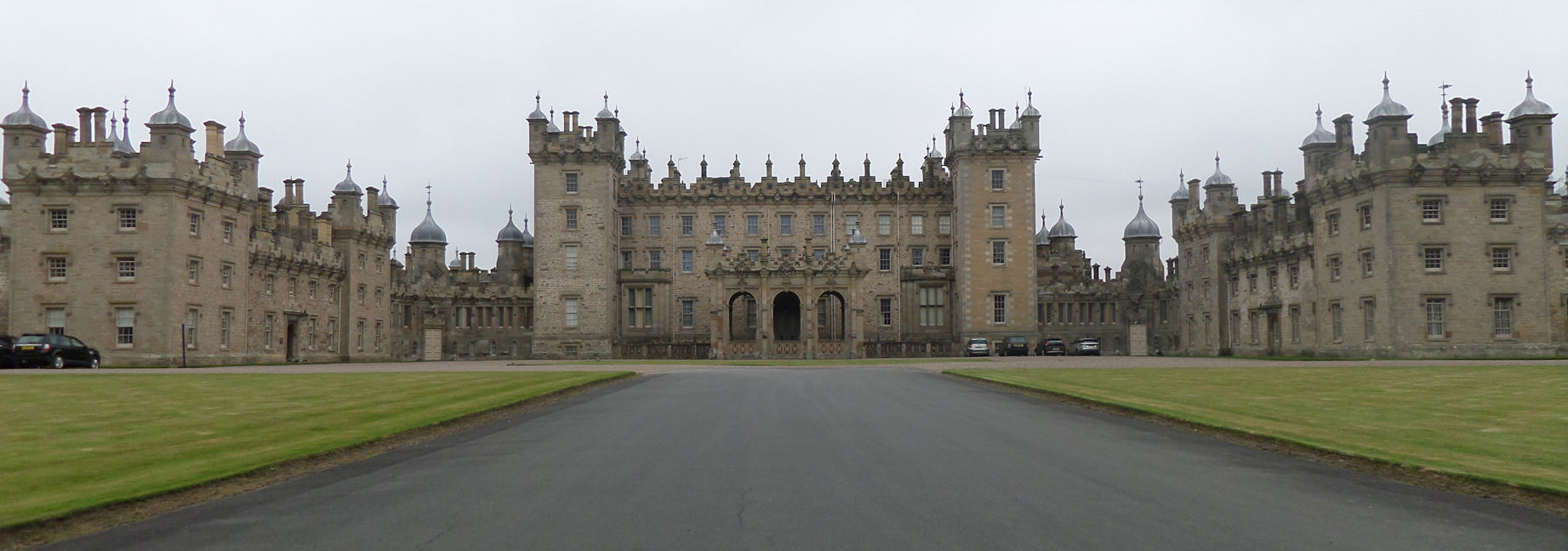
Floors Castle
Scottish Borders
A family record stretching from medieval Reiver land to French tapestries brought from a New York estate: one house rebuilt twice over three centur…
Fortified place · Medieval
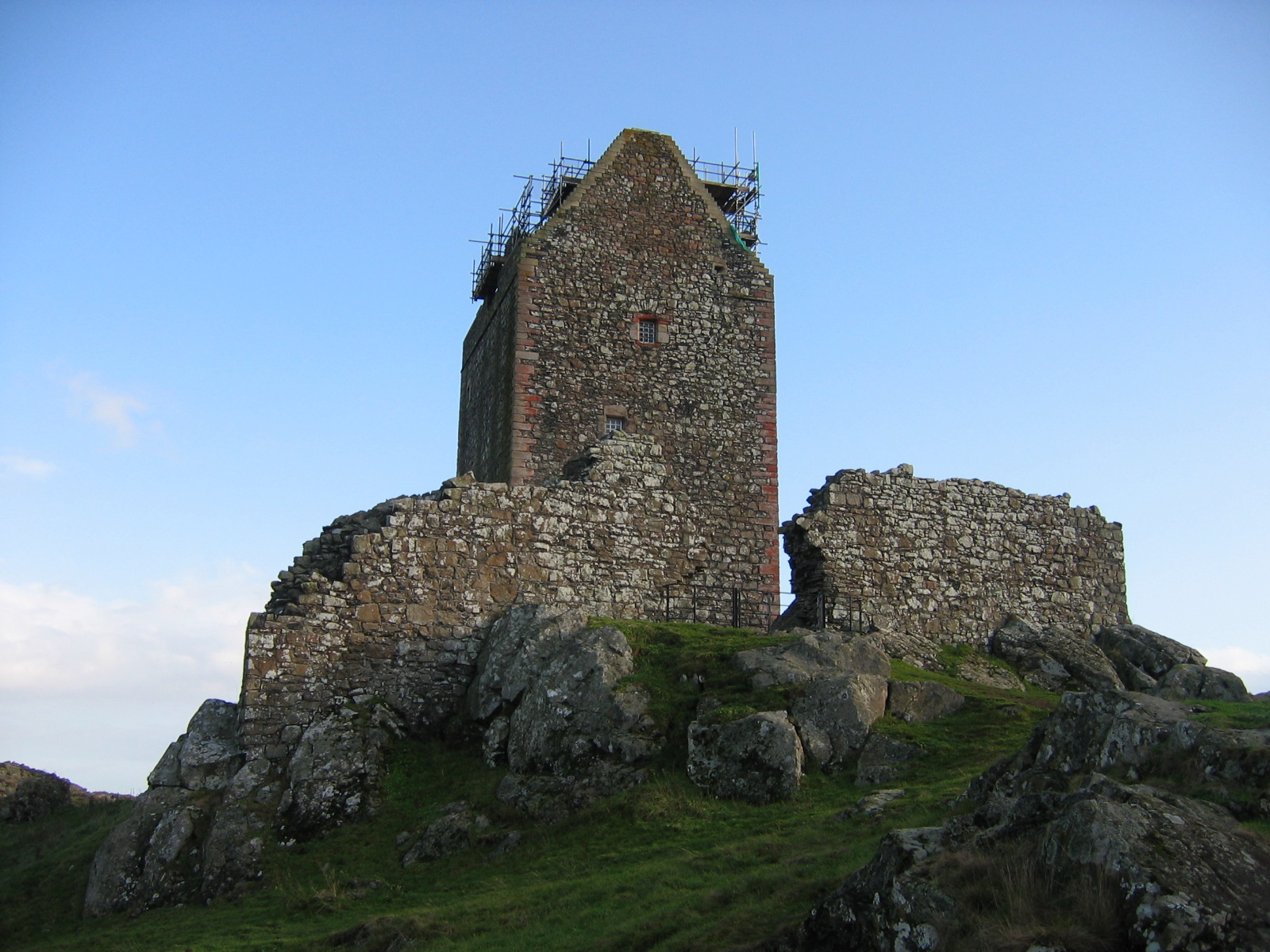
Smailholm Tower
Scottish Borders
Smailholm Tower is a peel tower (a small border stronghold, built as a refuge against raiders) atop the crag of Lady Hill, around five miles west o…
- Near Smailholm
- 1 min walk from car park

Fortified place · Medieval
Cessford Castle
Scottish Borders
A Border Reiver stronghold whose name outlived it: the ruined tower still lends its title to the Duke of Roxburghe, who is Baron Ker of Cessford to…
The setting
Abbey Court in Kelso, with Kelso Abbey’s west tower visible beyond the houses.
Photo: Victuallers / Wikimedia Commons / CC BY-SA 4.0
Sources
- Canmore site record 58418 (accessed 2026-06-13)
- Trove (HES) record (accessed 2026-06-13)
- Wikipedia: Kelso Abbey (accessed 2026-06-13)
- Wikidata Q1447338 (accessed 2026-06-13)
Explore more: Building or ruins · Medieval · Scottish Borders
The Ancient Codex, in your pocket
Get the Pocket Codex app
Carry the directory with you — Kelso Abbey and thousands of ancient places across Britain and Ireland, offline, wherever you roam.