
A grassy mound is nearly all that remains of what was once one of the most fought-over fortresses on the Anglo-Scottish border, changing hands at least nine times in under 250 years.
A long grassy mound rises beside the meeting point of the Tweed and Teviot, its stone walls reduced to a few broken fragments on the south side. Little else survives to hint that this quiet spot once held one of the most contested castles in Britain, a fortress so valuable that kings on both sides of the border were prepared to lose armies, and in one case a life, to control it.
For more than three centuries Roxburgh Castle sat at the hinge of the Scottish Borders, guarding the burgh that grew up in its shadow and the river crossing beneath its walls. It was captured, garrisoned, besieged, escaladed by night, and torn down more than once, each demolition a deliberate act meant to stop the other side from using it again. What stands today, within the grounds of Floors Castle across the river from Kelso, is the physical residue of that repeated destruction rather than the ruin of a single siege.
The castle’s story is really the story of the border wars themselves, told through one fortification: founded on tradition by a Scottish king, lost to England within two generations, won back by stealth and cloaked soldiers mistaken for cattle, rebuilt as an English fort three centuries later, and finally erased for good in the mid-sixteenth century.
What follows is drawn from published sources, with each claim labelled by how firmly it is established.
The name
The name Roxburgh combines an Old English personal element with "burh", meaning a fortified place, reflecting the site's long history as a defended stronghold on the border.
History
Tradition credits King David I with founding Roxburgh Castle, and it first appears in record around 1128 during his reign, guarding the meeting point of the Tweed and Teviot. The stronghold anchored a royal burgh that grew up around it, but its position on the border made it a prize fought over for more than three centuries. In 1174, following the capture of King William I at Alnwick, the castle was surrendered to England, beginning a long pattern of it changing hands between the two kingdoms.
Between 1306 and 1310, King Edward I of England had Robert the Bruce's sister Mary imprisoned in a cage suspended from the castle walls, a deliberate act of humiliation aimed at the Bruce cause. The castle was finally retaken for the Scots on 19 February 1314, when Sir James Douglas, known as the Black Douglas, led a night attack; his men, wrapped in black cloaks, were reportedly mistaken for grazing cattle as they scaled the walls using rope and board ladders.
Robert the Bruce then ordered his brother Edward Bruce, Earl of Carrick, to demolish the newly won castle entirely, so that, in the words of the Lanercost Chronicle, the English could never again hold the land by garrisoning it. The order reflected a deliberate Scottish strategy of the period: rather than hold and defend border castles against superior English resources, raze them so they could offer the enemy no future foothold.
The castle did not stay demolished for long. English forces under Edward III captured the site again in 1334 and restored its defences, only for the Scottish knight Alexander Ramsay to recapture it on 30 March 1342 in a daring night escalade over the walls. England regained control shortly after its victory at the Battle of Neville's Cross in October 1346, and the castle changed hands yet again in 1417, when a Scottish siege forced substantial repairs to the damaged defences.
In August 1436, King James I of Scotland assembled a huge army to besiege Roxburgh, bringing large cannons and mortars served by German gun crews under Johannes Paule, described as "Master of the King's engines", alongside thousands of Highlanders and men-at-arms from the Lowlands. The siege collapsed before it truly began: the queen warned the king that rival nobles were plotting against him, and James abandoned the campaign, leaving his costly German artillery behind as his army dispersed.
The Scots besieged Roxburgh again in 1460, and during the fighting King James II was killed when one of his own bombards exploded, scattering metal fragments. Despite the king's death the Scots pressed on and stormed the castle successfully, and his widow, Mary of Guelders, had it demolished so it could never again be turned against Scotland, ending its life as a functioning medieval fortress.
During the War of the Rough Wooing, an English garrison under Ralph Bulmer built a new rectangular fort on the ruined site in 1545 at the instigation of the Earl of Hertford. In 1547 Hertford had the surveyor William Ridgeway and the master carpenter John Revell erect a brewhouse there, reusing a timber frame originally made for Wark Castle. This last fortification was itself destroyed in 1550 under the terms of the Treaty of Boulogne, ending centuries of building on the site.
People
-
King David I of Scotland
Traditionally credited as the founder of Roxburgh Castle in the early twelfth century.
-
Sir James Douglas, the "Black Douglas"
Led the night attack that recaptured the castle for the Scots on 19 February 1314.
-
Edward Bruce, Earl of Carrick
Ordered by his brother Robert the Bruce to demolish the captured castle in 1314.
-
Alexander Ramsay
Recaptured Roxburgh Castle for the Scots on 30 March 1342 in a night escalade.
-
King James II of Scotland
Killed by fragments from an exploding bombard during the 1460 siege of the castle.
-
Mary of Guelders
Widow of James II; ordered the castle demolished after its capture in 1460.
-
Ralph Bulmer
Commanded the English garrison that built a new fort on the site in 1545.
Connections
-
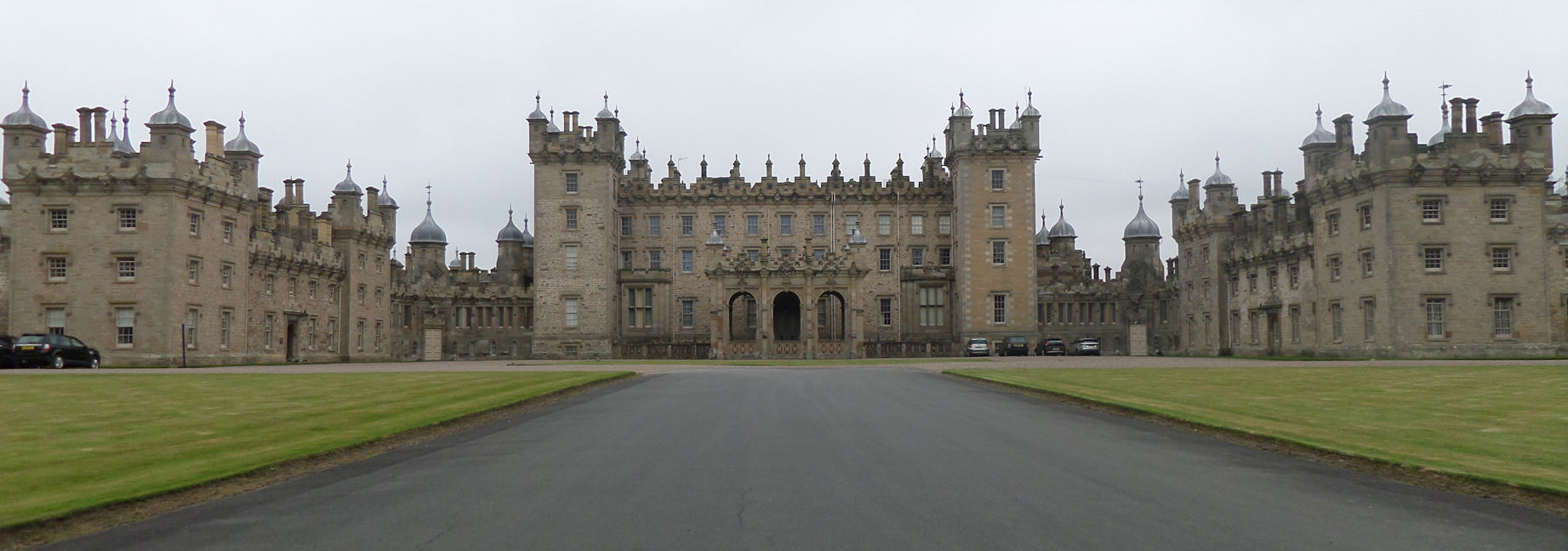
Photo: Hogweard / Wikimedia Commons / Public domain The ruins of Roxburgh Castle now stand within the grounds of Floors Castle, the seat of the Duke of Roxburghe.
-
Wark Castle
A timber frame originally built for Wark Castle was reused to construct a brewhouse at Roxburgh in 1547.
-
Alnwick
King William I of Scotland's capture at Alnwick in 1174 directly led to Roxburgh Castle's surrender to England.
In culture
-
The Three Perils of Man
The 1314 recapture of Roxburgh Castle by Sir James Douglas is one of the events that inspired James Hogg's novel "The Three Perils of Man".
What to look for
-
The castle mound
A large earthen mound is the most prominent surviving feature, marking the footprint of the vanished stronghold.
-
Fragments of stone walling
Small fragments of stone wall survive on the south side of the mound, remnants of the masonry that once stood there.
What is said
Folklore and tradition, recorded as what is said — not as established fact.
-
The cattle in cloaks
It is said that Douglas's men, disguised in black cloaks during their 1314 night attack, were mistaken by the castle's defenders for cattle grazing near the walls, allowing them to approach unchallenged.
Plan your visit
- Location
- 55.5963°N · 2.4569°W
- Time needed
- About 30 minutes
Nearby places
Fortified place · Medieval
Floors Castle
Scottish Borders
A family record stretching from medieval Reiver land to French tapestries brought from a New York estate: one house rebuilt twice over three centur…
Building or ruin · Medieval
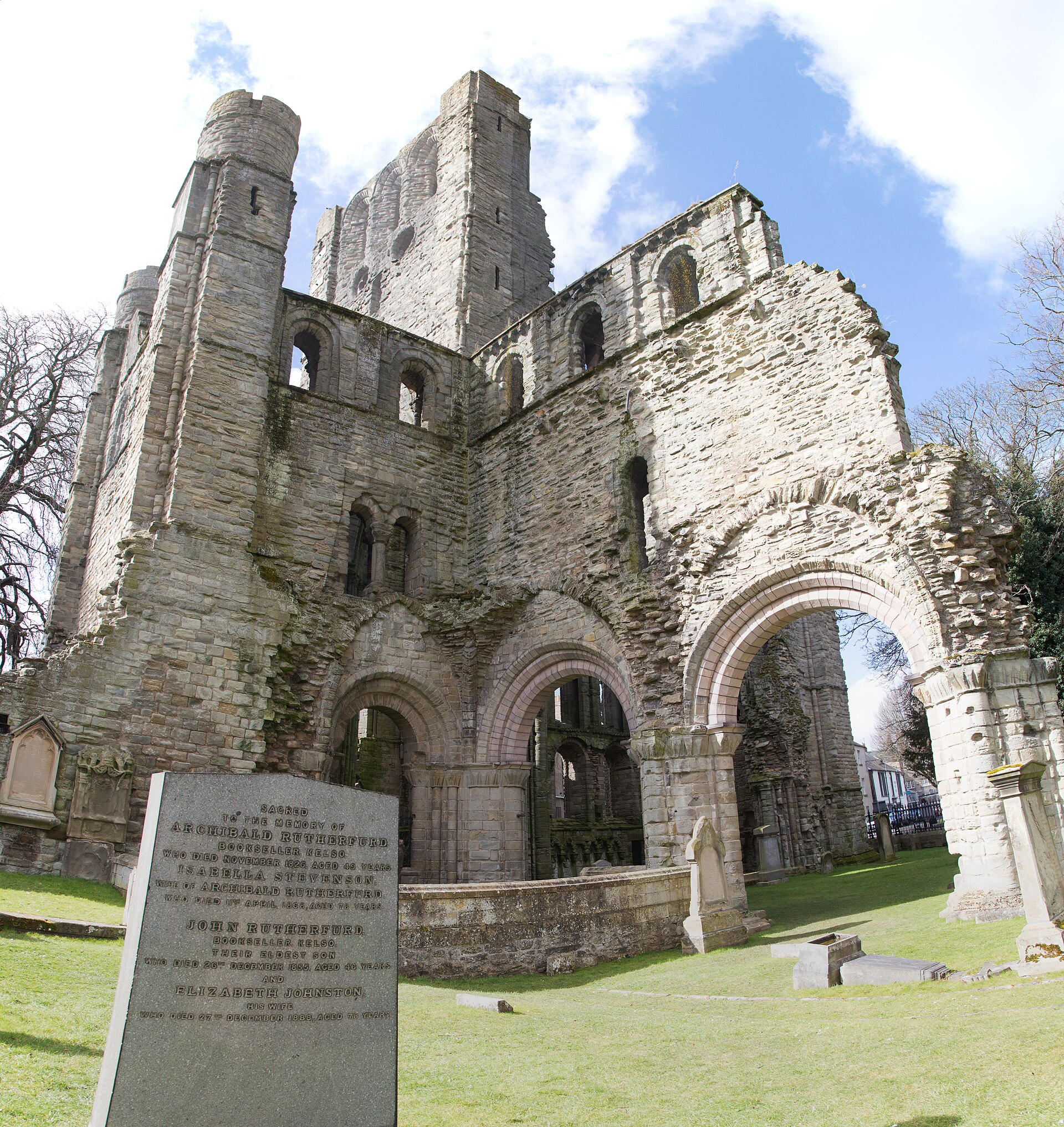
Kelso Abbey
Scottish Borders
Kelso Abbey was founded at Roxburgh in 1128 by Tironensian monks from Tiron, near Chartres in France. The community had first entered Scotland c. 1…
- Near Kelso
- 2 min walk from car park
Fortified place · Medieval
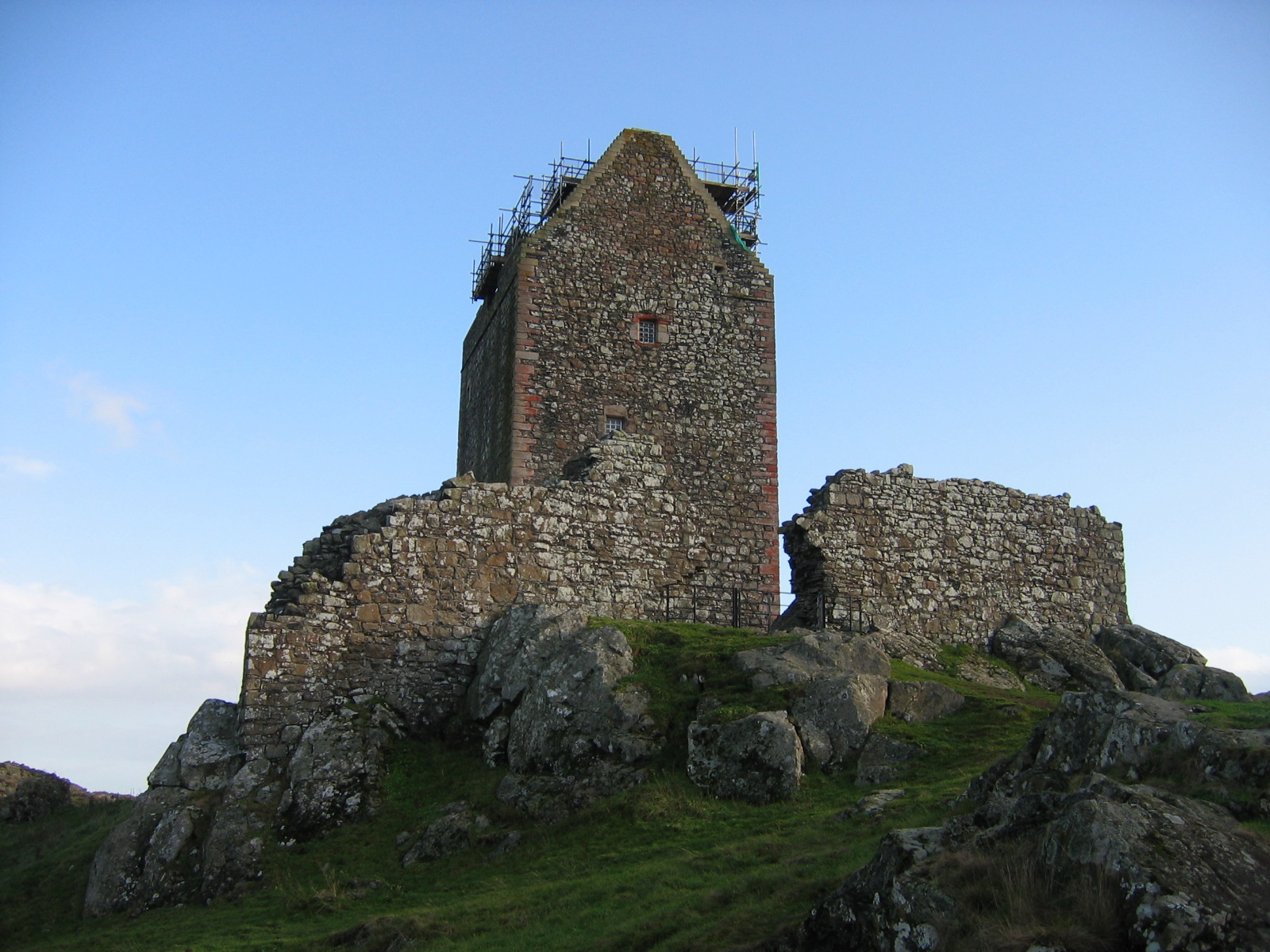
Smailholm Tower
Scottish Borders
Smailholm Tower is a peel tower (a small border stronghold, built as a refuge against raiders) atop the crag of Lady Hill, around five miles west o…
- Near Smailholm
- 1 min walk from car park
Fortified place · Iron Age
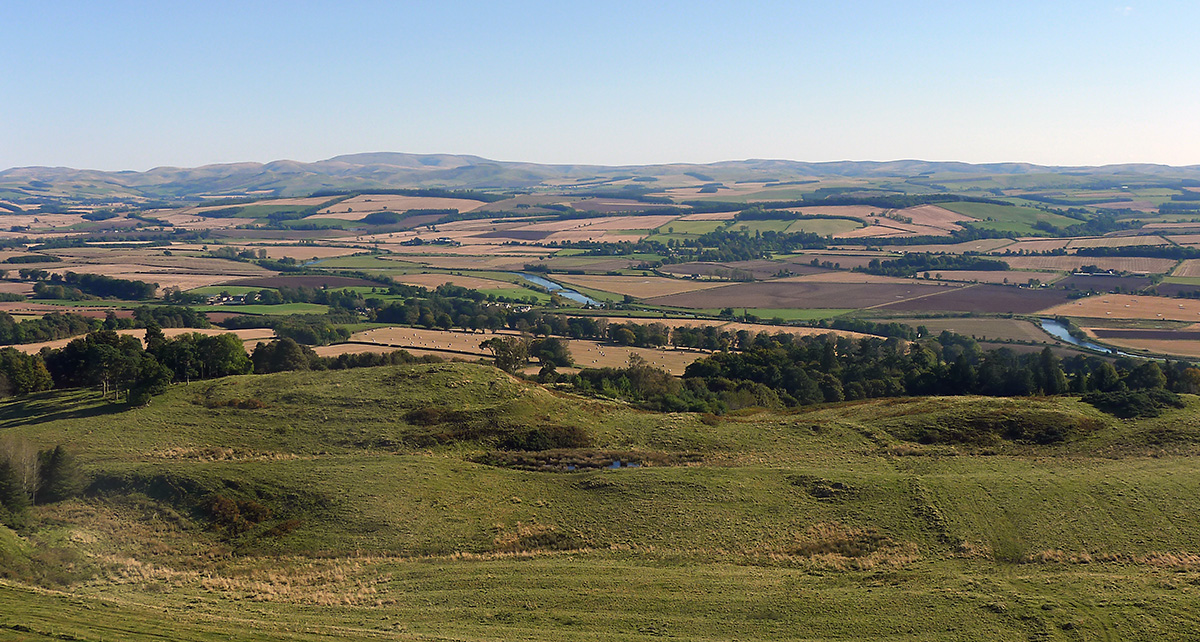
Peniel Heugh
Scottish Borders
A 237-metre hill near Ancrum carrying both an ancient defended settlement and the Waterloo Monument.
- Some walking
Questions people ask
- Who founded Roxburgh Castle?
- Tradition credits King David I of Scotland with founding the castle, which is first recorded around 1128 during his reign.
- Why did King James II die at Roxburgh Castle?
- He was killed in 1460 when one of his own bombards exploded during a siege of the castle, and metal fragments struck him.
- How was the castle recaptured in 1314?
- Sir James Douglas led a night attack; his men, disguised in black cloaks, were said to be mistaken for cattle as they scaled the walls with ladders.
- Why was Roxburgh Castle demolished more than once?
- Both Scottish and English forces destroyed it after capture, so the other side could never again use it as a garrison on the border.
- Where can Roxburgh Castle be visited today?
- The ruined mound stands within the grounds of Floors Castle, the seat of the Duke of Roxburghe, across the river from Kelso.
Sources
- Wikipedia: Roxburgh Castle
- Lanercost Chronicle
Explore more: Fortified places · Medieval · Scottish Borders
The Ancient Codex, in your pocket
Get the Pocket Codex app
Carry the directory with you — Roxburgh Castle and thousands of ancient places across Britain and Ireland, offline, wherever you roam.