A Border Reiver stronghold whose name outlived it: the ruined tower still lends its title to the Duke of Roxburghe, who is Baron Ker of Cessford to this day.
Thick walls and the stump of a defensive gatehouse still guard the approach to Cessford, the ruin of an L-shaped tower house that once paired a main keep with a wing nearly its equal in size. In places the building rose to six storeys, two of them vaulted in solid stone, and its outer walls run up to 13 feet (4 metres) thick — the work of builders planning for more than a passing raid.
That planning was well founded. Cessford was the chief seat of the Kerr family, among the most notorious of the Border Reivers, the raiding clans who fought and feuded along the Anglo-Scottish frontier for centuries, and several Kerrs served as Wardens of the Middle March, the crown-appointed officers responsible for keeping order along this stretch of the border. The castle’s defences were tested directly in 1523, when an English army under the Earl of Surrey besieged it and found the ring of earthworks and outer walling, known as a barmekin, tough enough to force his men to scale the walls with ladders rather than simply walk in.
Cessford was given up in 1650, but its name did not disappear with it. It survives today as one of the subsidiary titles of the Dukes of Roxburghe, descendants of the family that built and held it, a reminder that the ruin standing near the village of Cessford once anchored an entire branch of Scottish aristocracy.
What follows is drawn from published sources, with each claim labelled by how firmly it is established.
History
Around 1450 Andrew Ker, an ancestor of Robert Ker, 1st Earl of Roxburghe, built Cessford Castle on an L-plan, pairing a main keep with a wing of almost equal size. The fortalice (a small fortified tower house) rose to as many as six storeys, two of them barrel-vaulted, behind walls up to 13 feet thick, and it is possible the new building incorporated parts of an earlier structure already standing on the site.
A single-storey defensive gatehouse enclosed the angle where the keep met its wing, and the whole stronghold was ringed by a barmekin — an outer defensive wall — and further earthworks. That these outer defences were formidable is confirmed by the record of English troops having to mount an escalade, scaling the walls with ladders, to force their way into the courtyard rather than simply breaching a gate.
In July 1482 Richard, Duke of Gloucester, captured Berwick-upon-Tweed, and Henry Percy, Earl of Northumberland, followed with a campaign that burned a number of places across the surrounding area. At the end of it, on 22 August 1482, Percy knighted twenty of his soldiers at what was recorded as the mains of Sessford, placing Cessford at the centre of a notable Border ceremony even before its later sieges.
Cessford was besieged in 1523 by the Earl of Surrey, whose own assessment of its defences survives in his remark that it might never have been taken had the defenders been able to keep on defending. The siege stands as clear evidence of the strength the Kerr family had built into their principal stronghold, and of their standing as some of the most formidable Border Reivers of the sixteenth century.
The castle was abandoned in 1650, after roughly two centuries as the principal stronghold of the Kerr family and the caput, or chief seat, of the Barony of Cessford. Its name lived on regardless: the Dukes of Roxburghe still carry the subsidiary titles Baron Ker of Cessford and Marquess of Bowmont and Cessford, a direct inheritance from this ruined tower house.
People
-
Andrew Ker
Built Cessford Castle around 1450; ancestor of Robert Ker, 1st Earl of Roxburghe, and of the Dukes of Roxburghe.
-
Robert Ker, 1st Earl of Roxburghe
Descendant of Andrew Ker; his line's ducal successors still hold subsidiary titles taken from Cessford.
-
Earl of Surrey
Led the English siege of Cessford Castle in 1523 and recorded his own assessment of its strong defences.
-
Henry Percy, Earl of Northumberland
Led a burning campaign in the Borders in 1482 and knighted twenty soldiers at the mains of Sessford.
Connections
-
Dukes of Roxburghe
The dukedom's subsidiary titles, Baron Ker of Cessford and Marquess of Bowmont and Cessford, derive directly from this castle and its founding family.
-
Berwick-upon-Tweed
Its capture by Richard, Duke of Gloucester in July 1482 triggered the Percy campaign that brought armed men to Cessford's doorstep that same summer.
What to look for
-
The L-plan keep and wing
The castle's main structure pairs a keep with a wing of almost equal size, forming the L-shape typical of Scottish tower houses of the period.
-
Barrel-vaulted storeys
Of the building's up to six storeys, two were barrel-vaulted, stone ceilings curved into a continuous arch for strength and fire resistance.
-
Walls up to 13 feet thick
The massive wall thickness, roughly 4 metres, is a direct legacy of the castle's role as a serious defensive stronghold rather than a residence alone.
-
Traces of the gatehouse and barmekin
A single-storey gatehouse once enclosed the angle of the building, surrounded by a barmekin (outer defensive wall) and earthworks, remnants of which can still be traced around the ruin.
Plan your visit
- Location
- 55.5077°N · 2.4141°W
- Time needed
- About 45 minutes
Nearby places
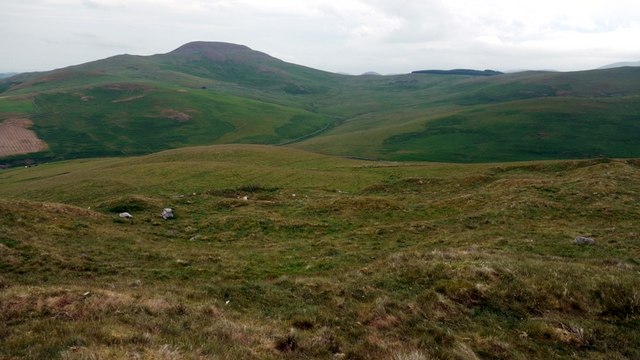
Carved stone · Prehistoric
Hownam Rings
Scottish Borders
C. M. Piggott's 1948 excavation at Hownam Rings became a landmark in the archaeology of northern Britain. It produced the 'Hownam model' (or 'Howna…
- Near Hownam
- 1.2 km from car park
- Some walking
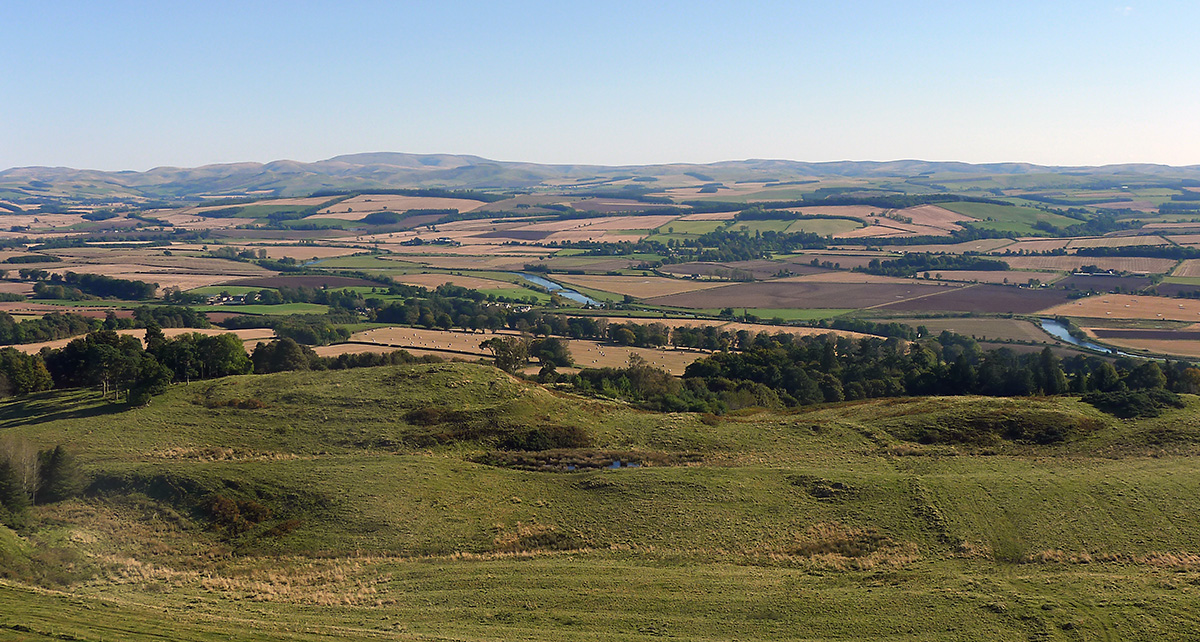
Fortified place · Iron Age
Peniel Heugh
Scottish Borders
A 237-metre hill near Ancrum carrying both an ancient defended settlement and the Waterloo Monument.
- Some walking
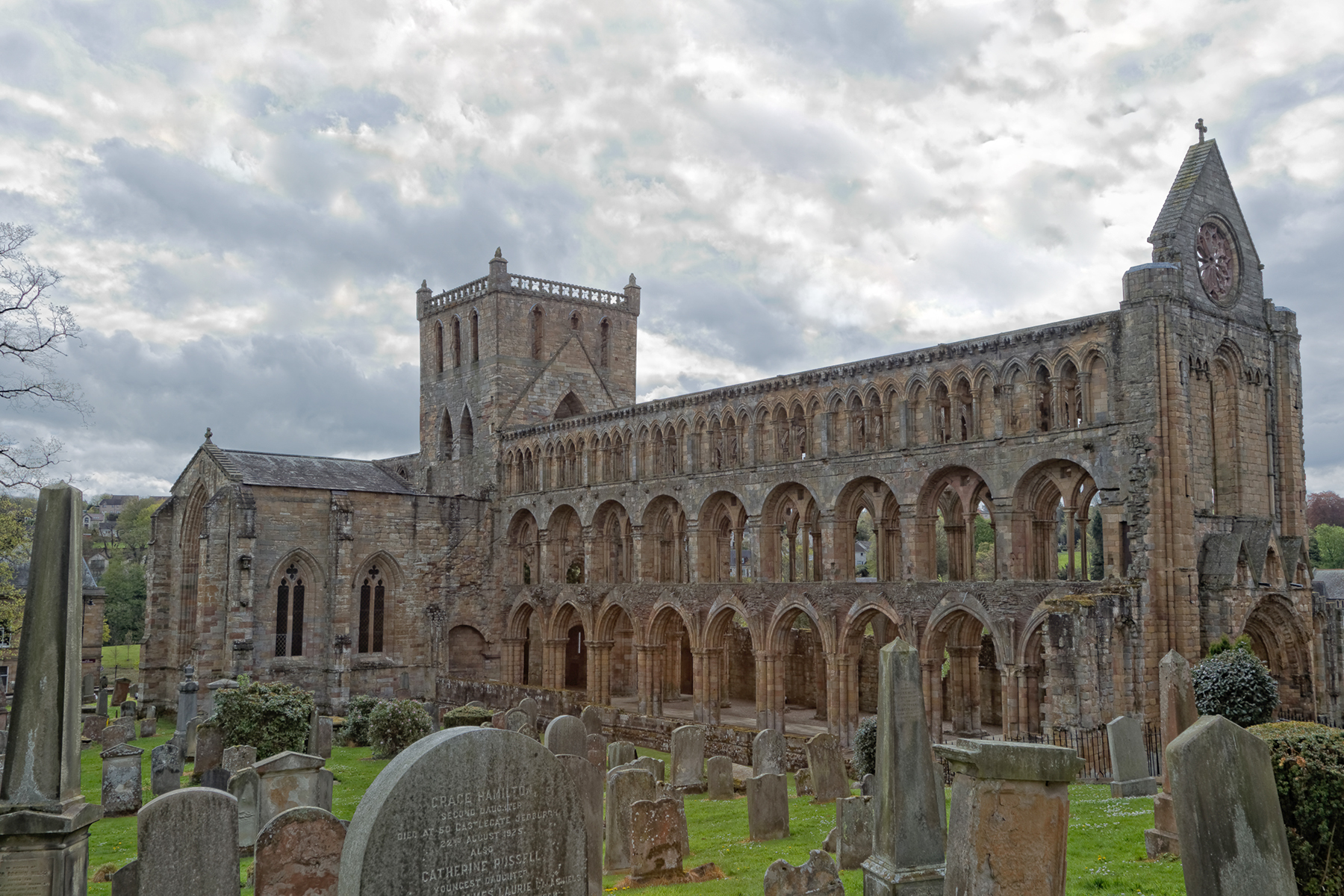
Carved stone · Medieval
Jedburgh Abbey
Scottish Borders
In 1118, before his accession to the Scottish throne, Prince David established a foundation of Augustinian canons at Jedburgh. It rose from priory:…
- Near Jedburgh
- 1 min walk from car park
Building or ruin · Medieval
Kelso Abbey
Scottish Borders
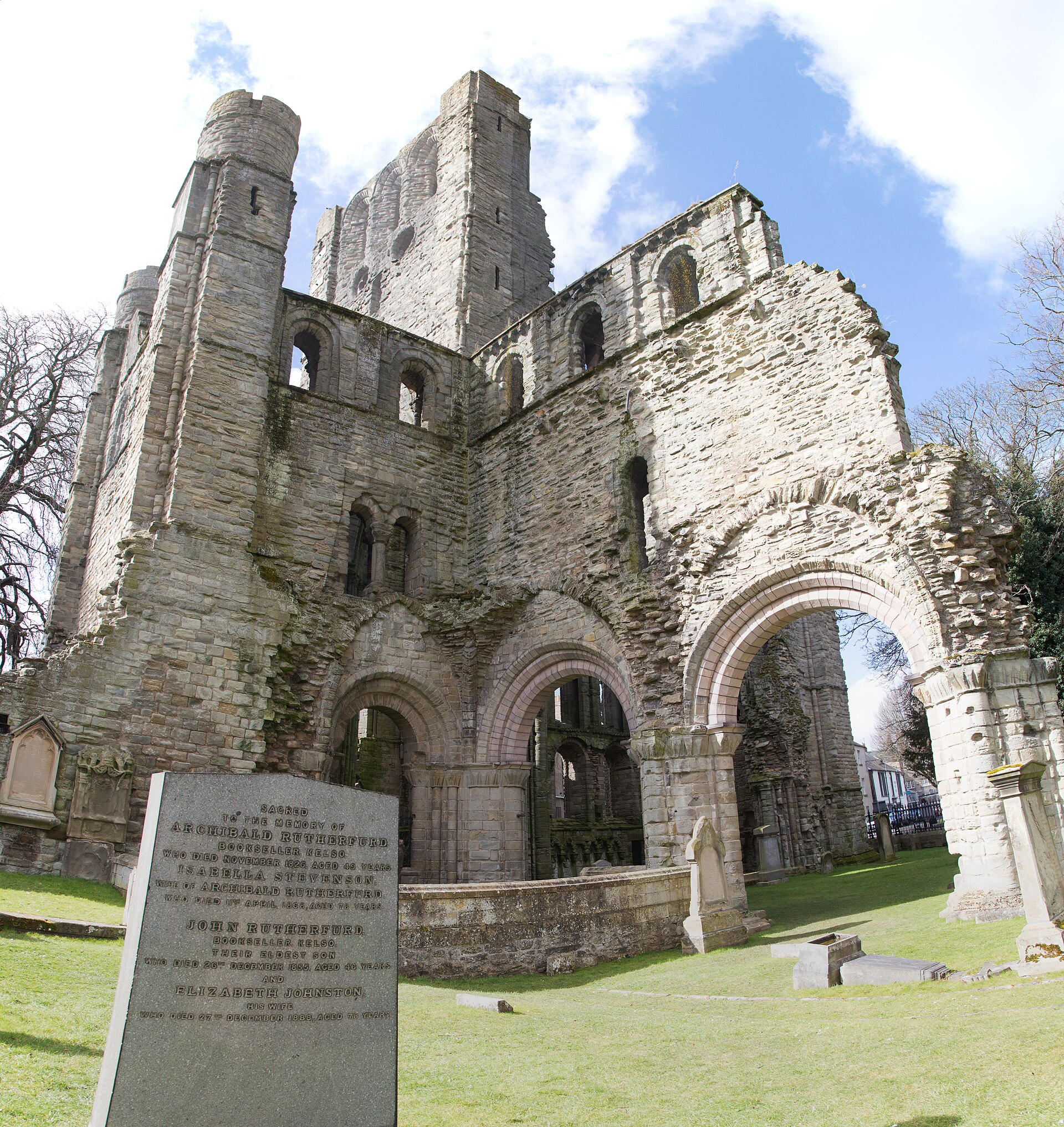
Kelso Abbey was founded at Roxburgh in 1128 by Tironensian monks from Tiron, near Chartres in France. The community had first entered Scotland c. 1…
- Near Kelso
- 2 min walk from car park
The setting
Near Cessford Castle, about 106 metres away.
Photo: Tim Heaton / Wikimedia Commons / CC BY-SA 2.0
Near Cessford Castle, about 115 metres away.
Photo: Darren Haddock / Wikimedia Commons / CC BY-SA 2.0
Near Cessford Castle, about 125 metres away.
Photo: Darren Haddock / Wikimedia Commons / CC BY-SA 2.0
Near Cessford Castle, about 145 metres away.
Photo: Astrid H / Wikimedia Commons / CC BY-SA 2.0
Questions people ask
- Who built Cessford Castle?
- Andrew Ker built it around 1450. He was an ancestor of Robert Ker, 1st Earl of Roxburghe, whose descendants became the Dukes of Roxburghe.
- Why was Cessford Castle important?
- It was the principal stronghold of the Kerr family, notorious Border Reivers, several of whom served as Wardens of the Middle March.
- What happened at the 1523 siege?
- The Earl of Surrey besieged Cessford and had to use ladders to scale its defences, later remarking it might never have fallen had the defenders held out.
- When was Cessford Castle abandoned?
- It was abandoned in 1650, after roughly two centuries as the Kerr family's chief seat.
- Does the Cessford name still mean anything today?
- Yes. The Dukes of Roxburghe still hold the subsidiary titles Baron Ker of Cessford and Marquess of Bowmont and Cessford.
Sources
- Wikipedia: Cessford Castle
- Historic Environment Scotland — Canmore: Cessford Castle
- Groome, F.H., Ordnance Gazetteer of Scotland (1884)
Explore more: Fortified places · Medieval · Scottish Borders
The Ancient Codex, in your pocket
Get the Pocket Codex app
Carry the directory with you — Cessford Castle and thousands of ancient places across Britain and Ireland, offline, wherever you roam.