
The Annals of Ulster record a siege here in 683 and the death of a king in 889 - a fort of the Picts, the people of northern and eastern Scotland from about AD 300 to 900, with two fixed points in written history.
Most Pictish forts have no written history at all. Dundurn has two entries in the Annals of Ulster, two centuries apart, and both concern kings.
The first records a siege in 683 AD, when the fort was held by King Bridei III. The second records the death here of King Giric, also called Gregory, in 889. Between those two dates sits the archaeology, which has identified three stages of fortification between 500 and 800 AD - a stronghold rebuilt more than once rather than raised and left.
The hill is in Strathearn, with the River Earn on one side and the Allt Ghoinean burn on another, so two of its approaches were closed by water before anyone dug a ditch. That is the practical reason a fort is here; the annals are the reason it is possible to say anything about who was in it.
The site is a designated scheduled monument.
What follows is drawn from published sources, with each claim labelled by how firmly it is established.
History
Dundurn is the site of a Pictish hill fort in what is now Strathearn in Perth and Kinross. The fort occupied a hill with the River Earn on one side and the Allt Ghoinean burn on another, so water covered two of its approaches before any rampart was raised. Choosing ground that defends itself on two sides halves the work and doubles the effect of whatever is built on the remainder. Excavation has identified three stages of fortification between 500 and 800 AD. Three phases across three centuries indicates a site that was maintained and rebuilt rather than raised once and abandoned, which is itself a mark of importance.
The fort is mentioned twice in the Annals of Ulster, which is unusual - most Pictish sites have no written record at all. The first entry concerns a siege in 683 AD, at which time the fort was held by King Bridei III. The second entry records Dundurn as the place where King Giric, also known as King Gregory, died in 889 AD. Two fixed points in the written record, two centuries apart, both attaching this hill to named kings.
Between them those entries bracket the excavated sequence closely. The archaeology gives three phases between 500 and 800; the annals give a royal siege in 683 and a royal death in 889. The two kinds of evidence describe the same place from opposite directions and agree about what it was — a stronghold that mattered to whoever held Strathearn. The site is a designated scheduled monument, which protects both the visible earthworks and whatever remains buried within them from unauthorised disturbance. For a site whose sequence is known from excavation rather than from standing fabric, that buried evidence is the greater part of what survives.
People
-
Bridei III
Held the fort at the time of the siege recorded in the Annals of Ulster for 683 AD.
-
Giric
Also known as King Gregory; the Annals of Ulster record his death at Dundurn in 889 AD.
Cultural influences
-
Three rebuilding phases between 500 and 800 AD made use of a hill defended naturally by the River Earn and Allt Ghoinean burn.
Connections
-
River Earn
The River Earn protects one side of Dundurn’s Pictish hillfort, while the Allt Ghoinean burn covers another approach beneath the rebuilt defences.
Discovery & excavation
Excavation identified three separate fortification stages, establishing that the hill was repeatedly maintained over three centuries.
What to look for
-
The three phases
Excavation identified three stages of fortification between 500 and 800 AD, so the defences were rebuilt more than once.
-
The two watercourses
The River Earn on one side and the Allt Ghoinean burn on another, covering two approaches to the hill.
Plan your visit
- Location
- 56.3839°N · 4.0939°W
- Nearest settlement
- St Fillans
- Access
- Open access
- Terrain
- Moderate walking
- Time needed
- About 45 minutes
- Best time
- Daylight hours
- What survives
- A scheduled Pictish hillfort whose earthworks occupy a position protected by the River Earn and Allt Ghoinean burn.
Opening & admission
- Scheduled Pictish hillfort in Strathearn; no public route is established here.
Nearby places
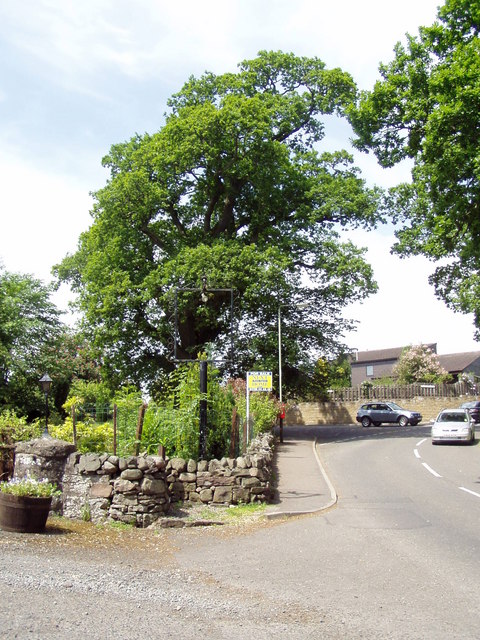
Ancient tree · Medieval
Eppie Callum's Oak
Argyll and Bute
Eppie Callum’s Oak is a named living landmark whose value lies in the survival of local landscape memory, even though its age and namesake remain u…
- Near Argyll and Bute
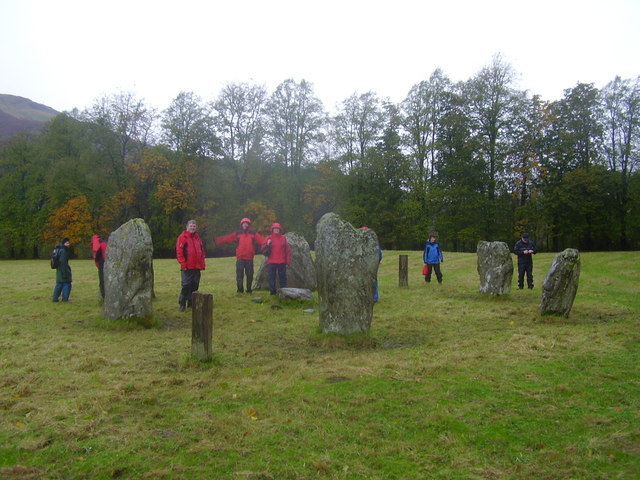
Sacred place · Prehistoric
Killin Stone Circle
Stirling
Six schist slabs in a flattened ring by Loch Tay, with three cupmarks ground into the top of the northernmost.
- Easy path
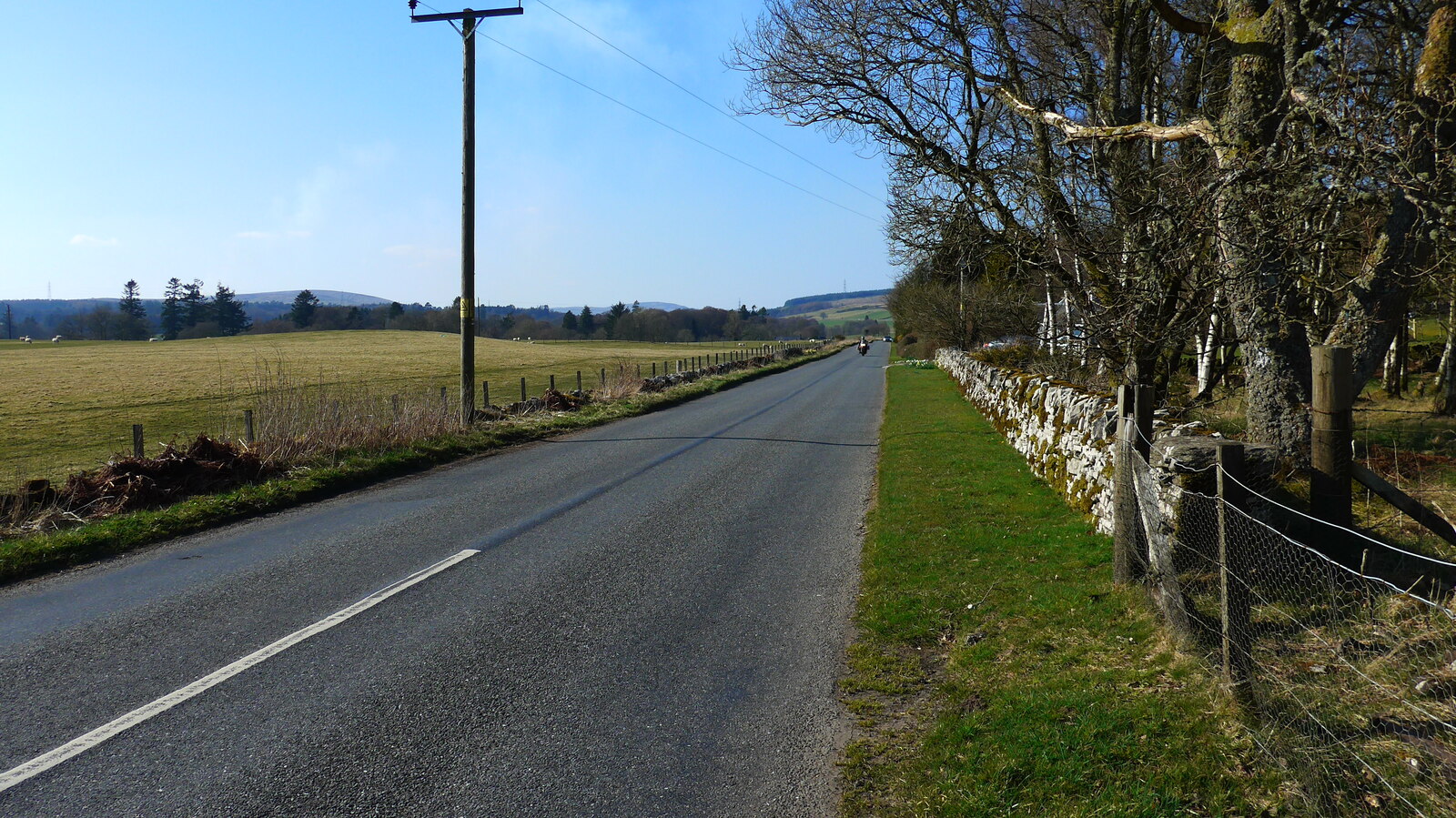
Fortified place · Roman
Black Hill Roman Camps
Perth and Kinross
Two Roman camps within the extensive military complex centred on the fort at Ardoch.
- Some walking
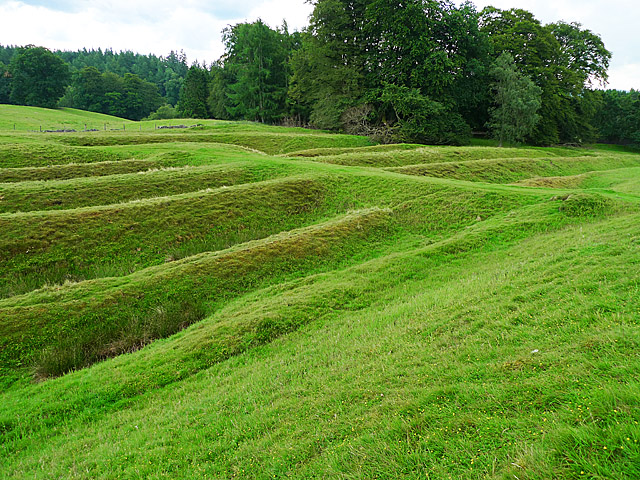
Fortified place · Roman
Ardoch Roman Fort
Perth and Kinross
Five ditches deep on two sides, and among the best-preserved Roman earthworks anywhere in the Empire.
The setting
Near Dundurn, Scotland, about 517 metres away.
Photo: Richard Sutcliffe / Wikimedia Commons / CC BY-SA 2.0
Near Dundurn, Scotland, about 544 metres away.
Photo: Richard Sutcliffe / Wikimedia Commons / CC BY-SA 2.0
Near Dundurn, Scotland, about 603 metres away.
Photo: Richard Webb / Wikimedia Commons / CC BY-SA 2.0
The setting near Dundurn, Scotland.
Portrait: Greenshed / Wikimedia Commons / Public domain
The setting near Dundurn, Scotland.
Portrait: Jacob Jacobsz de Wet II (Haarlem 1641/2 - Amsterdam 1697) / Wikimedia Commons / Public domain
Questions people ask
- What do the Annals of Ulster say?
- They mention Dundurn twice - a siege in 683 AD, when the fort was held by King Bridei III, and the death of King Giric there in 889 AD.
- When was the fort built?
- Excavation has identified three stages of fortification between 500 and 800 AD, so it was rebuilt more than once across those centuries.
- Why this hill?
- The River Earn runs on one side and the Allt Ghoinean burn on another, so two of the approaches were covered by water before any rampart went up.
Sources
The Ancient Codex, in your pocket
Get the Pocket Codex app
Carry the directory with you — Dundurn, Scotland and thousands of ancient places across Britain and Ireland, offline, wherever you roam.