A fifteenth- and sixteenth-century castle just outside Milnathort, north of Kinross.
The key is kept at a house nearby. Burleigh Castle stands just outside Milnathort, a mile and a half north of Kinross, beside the A911 and opposite a nineteenth-century steading now converted to housing, and anyone who wants to go in asks for the key.
The Balfours held these lands from 1456 and built the tower house late in the fifteenth century or early in the sixteenth, with Sir James Balfour of Pittendreich adding a curtain wall, a corner tower and outbuildings later on. What the castle mostly did, for a while, was feed royalty in transit. Mary of Guise dined here on 9 January 1540 on her way to Falkland. James VI came repeatedly — several days with Lady Burleigh in April 1587, again in January 1589 after Christmas at Kinneil, and in July 1596 before riding on to Stirling for a christening.
It housed less willing guests too. Colonel William Stewart was imprisoned here in June 1592, suspected of plotting to help Bothwell seize the king at Falkland.
The family’s fortunes turned on two pieces of legislation and one murder. An Act of 1600 obliged landowners to buy armour from Michael Balfour for the defence musters, several of them complaining he pushed more on them than their rank required, and he was made Lord Balfour of Burleigh in 1607. A century later Robert Balfour, heir to that title, was condemned to death for killing the schoolmaster of Inverkeithing — who had married the woman Balfour had grown up loving — escaped the Edinburgh tolbooth, went out for the Jacobites in 1715, and died attainted in France in 1757.
What follows is drawn from published sources, with each claim labelled by how firmly it is established.
History
James II granted the lands of Burleigh to John Balfour of Balgarvie in 1456, and a tower house went up in the late fifteenth or early sixteenth century. Sir James Balfour of Pittendreich extended it late in the sixteenth century with a curtain wall, a corner tower and other outbuildings.
The castle's real function for a time was hospitality on a route. Mary of Guise dined at Burleigh on 9 January 1540 before going on to Falkland Palace, and James VI was a frequent visitor in the time of Sir Michael Balfour — staying with Lady Burleigh for a few days in April 1587, coming in January 1589 after Christmas at Kinneil House, and lodging there in July 1596 before riding to Stirling for a christening. It also served as a prison. Colonel William Stewart was held at Burleigh in June 1592, suspected of planning to help the Earl of Bothwell seize James VI at Falkland Palace.
An Act of Parliament in 1600 made Michael Balfour a wealthy man by directing landowners and people of standing to buy armour from him for the defence musters. Several complained that he pressed them to buy more than their rank and income required. He was raised to the peerage as Lord Balfour of Burleigh in 1607.
Robert Balfour, before succeeding as 5th Lord, was sentenced to beheading in 1707 for murdering the schoolmaster of Inverkeithing — who had married Balfour's childhood sweetheart. He escaped from the Edinburgh tolbooth, joined the Jacobites, proclaimed the Old Pretender king at Lochmaben and fought in the 1715 rising. Attainted after the defeat, he died in France in 1757. The castle was forfeited to the Irwins and afterwards passed to the Grahams of Kinross. It is now a scheduled monument in the care of Historic Environment Scotland, with no entrance charge and a key available from a nearby house at all reasonable hours.
People
-
James Balfour of Pittendreich
Extended Burleigh in the late sixteenth century with a curtain wall, corner tower and outbuildings around the earlier tower house.
-
Mary of Guise
Dined at Burleigh on 9 January 1540 while travelling onward to Falkland Palace, recording the castle’s place on a royal route.
-
James VI
Frequent late-sixteenth-century guest at Burleigh, staying in 1587, 1589 and 1596 while travelling between royal residences.
Cultural influences
-
A castle on the royal route
Burleigh served royal hospitality between Falkland, Kinneil and Stirling, while its owners also used it as a prison and a base for their political power.
Connections
-
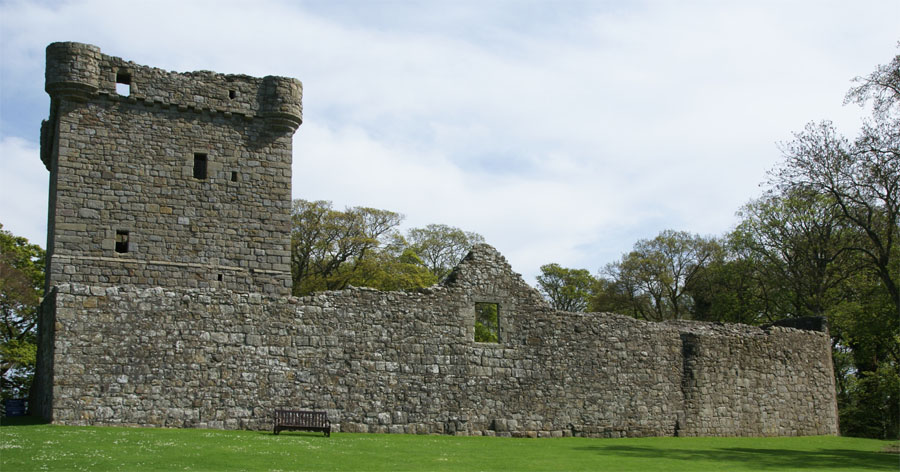
Photo: Otter / Wikimedia Commons / CC BY-SA 3.0 Both are historic castles in central Scotland, linking Burleigh’s tower-house estate with Lochleven’s major island stronghold.
-
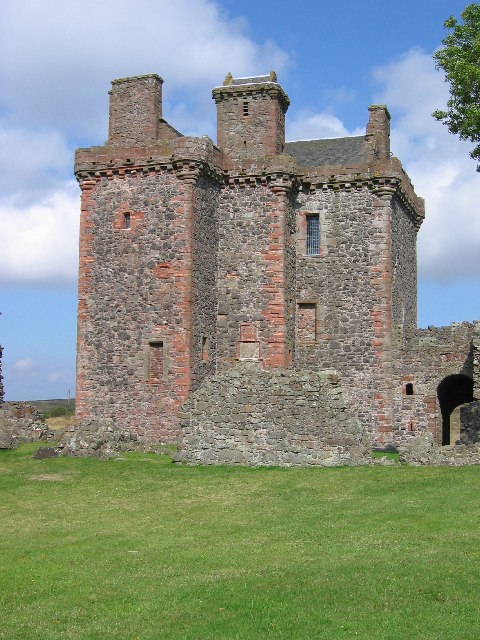
Photo: Brian D Osborne / Wikimedia Commons / CC BY-SA 2.0 The castles represent related forms of late medieval and early-modern landed residence in the Perthshire landscape.
-

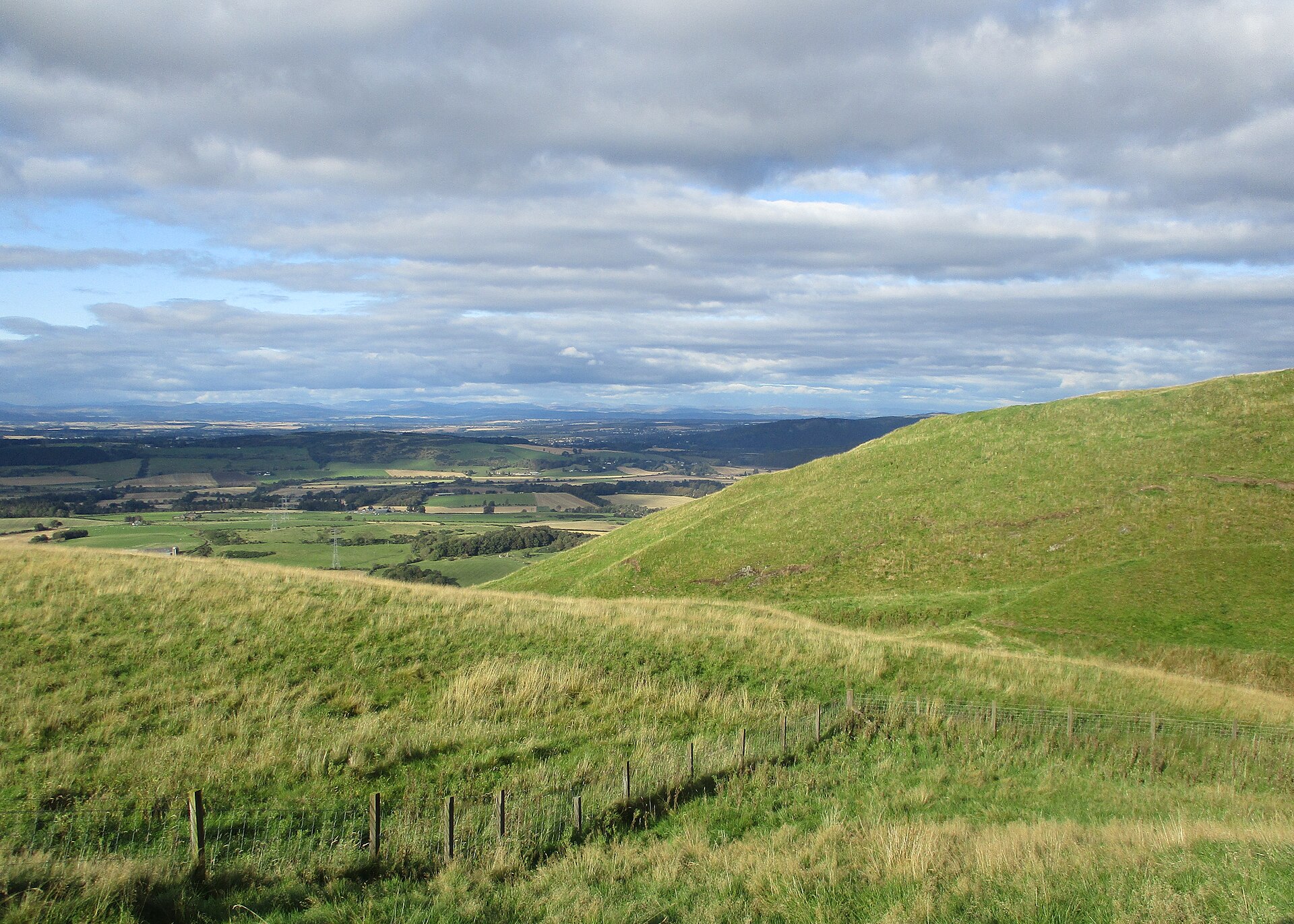
Photo: Paul McIlroy / Wikimedia Commons / CC BY-SA 2.0 The castle and hillfort span different periods of defended occupation in the historic Perthshire countryside.
Discovery & excavation
A 2010 watching brief monitored small trenches for a new gate and fence; it identified altered ground but possible in-situ deposits beneath later landscaping. A 2011 interpretation-board trench also recorded a fill over earlier ground surfaces and a ditch later reduced by landscaping.
What to look for
-
The tower-house core
A late fifteenth- or early sixteenth-century tower house forms the core, enlarged with a curtain wall and corner tower by James Balfour.
-
The royal stopping place
Mary of Guise dined here in 1540 and James VI stayed repeatedly, placing Burleigh on routes between Falkland, Kinneil and Stirling.
-
The prison room
Colonel William Stewart was held at Burleigh in 1592, suspected of a plot to help the Earl of Bothwell seize James VI.
Plan your visit
- Location
- 56.2259°N · 3.4065°W
- Nearest settlement
- Kinross
- Time needed
- About 45 minutes
- What survives
- A late-medieval tower house is enclosed by a sixteenth-century curtain wall, corner tower and ancillary buildings.
Nearby places
Settlement · Medieval
Lochleven Castle
Perth and Kinross
Besieged in 1335 by an English force that dammed the loch to drown it. The captain went off to a saint's festival, and the defenders broke the dam.
- Some walking
Fortified place · Medieval
Balvaird Castle
Perth and Kinross
Carved heads support the roundels on the wall-walk, and the cap-house over the stair is a miniature tower house of its own: detail that may have be…

Fortified place · Iron Age
Dumglow
Perth and Kinross
A burial cairn - a mound of stones raised over a grave - sits inside the ramparts of the fort on this summit.
- Near Dunfermline
- Some walking
Fortified place · Prehistoric
Castle Law, Forgandenny
Perth and Kinross
A multiple-enclosure hillfort above Forgandenny whose banks and ditches are effectively its entire history: the written record has almost nothing t…
The setting
Farm steading beside Burleigh Castle, with part of the castle at right.
Photo: Richard Sutcliffe / Wikimedia Commons / CC BY-SA 2.0
Field beside Burleigh Castle in the ground around the monument.
Photo: Richard Sutcliffe / Wikimedia Commons / CC BY-SA 2.0
Questions people ask
- Who built it?
- James II granted the lands to John Balfour of Balgarvie in 1456, and a tower house went up in the late fifteenth or early sixteenth century. Sir James Balfour of Pittendreich extended it late in the sixteenth century with a curtain wall, a corner tower and other outbuildings.
- Who stayed here?
- Mary of Guise dined at Burleigh on 9 January 1540 on her way to Falkland Palace, and James VI was a frequent visitor in the time of Sir Michael Balfour, staying with Lady Burleigh for several days in April 1587 and returning in January 1589. The castle also held prisoners — Colonel William Stewart in June 1592, suspected of plotting to help the Earl of Bothwell seize the king at Falkland.
- What became of the Balfours?
- An Act of Parliament in 1600 made Michael Balfour wealthy by directing landowners to buy armour from him for the defence musters, and he was raised to the peerage as Lord Balfour of Burleigh in 1607. Robert Balfour, before succeeding as fifth Lord, was sentenced to beheading in 1707 for murder, escaped the Edinburgh tolbooth, joined the Jacobites and fought in the 1715 rising.
Sources
The Ancient Codex, in your pocket
Get the Pocket Codex app
Carry the directory with you — Burleigh Castle and thousands of ancient places across Britain and Ireland, offline, wherever you roam.