
A burial cairn - a mound of stones raised over a grave - sits inside the ramparts of the fort on this summit.
Inside the ramparts on this summit stands a burial cairn - a mound of stones raised over a grave - and the enclosure around it is very much younger. Two monuments of different purposes and almost certainly different ages occupy the same hilltop, and the record does not say how the second treated the first.
That question is worth asking rather than passing over. Fort builders elsewhere in Britain have been shown to avoid earlier burial mounds, to respect them, and occasionally to build them deliberately into their defences. Nothing visible on Dumglow decides which of those happened here.
The hill is 379 metres, the highest of the Cleish Hills, north of Dunfermline. Its defences are concentrated on the east side, where several sets of ramparts and ditches were dug. That is the ordinary economy of hill fort building: the other approaches are steep enough to defend themselves, so the labour goes where the ground is weakest.
What follows is drawn from published sources, with each claim labelled by how firmly it is established.
History
Dumglow rises to 379 metres and is the highest peak of the Cleish Hills in Perth and Kinross, north of Dunfermline. An ancient fort occupies the summit, which is the usual position for a work of this kind and the reason the hill has an archaeological record at all. The fort is defended by several sets of ramparts and ditches on its east side. Concentrating the made defences on one side is the standard economy of hill fort building — the other approaches are steep enough that the ground does the work, so labour goes where the ground is weakest.
A burial cairn stands within the remains of the fort. A cairn — a mound of stones raised over a burial — is a monument of a different purpose and usually of a much earlier date than the enclosure around it, so the summit carries at least two distinct phases of use. The relationship between the two is not established by the record. Fort builders elsewhere have been shown to respect, avoid or deliberately incorporate earlier burial monuments on the ground they enclosed, and which of those happened here is not something the surface evidence can settle.
Cultural influences
-
A burial cairn stands inside the later summit enclosure, showing at least two distinct phases of use on Dumglow.
Connections
-
The Cleish Hills
Dumglow is the Cleish Hills’ highest peak at 379 metres, its summit enclosure using the range’s naturally steep ground to reduce the need for ramparts.
Discovery & excavation
The summit earthworks retain several ramparts and ditches concentrated on the eastern approach, with a burial cairn inside the enclosure.
What to look for
-
The eastern ramparts
Several banks and ditches concentrate on the eastern side, where Dumglow’s summit has least natural protection and fort-builders needed made defences.
-
The cairn inside the fort
A burial cairn stands within the later enclosure, preserving an earlier summit monument whose relationship to the fort is not established.
Plan your visit
- Location
- 56.1525°N · 3.4890°W
- Nearest settlement
- Dunfermline
- Access
- Open access
- Terrain
- Moderate walking
- Time needed
- About 60 minutes
- Best time
- Daylight hours
- What survives
- The highest Cleish Hills summit, with eastern hillfort ramparts and ditches surrounding a burial cairn.
Opening & admission
- Summit hillfort on the highest peak of the Cleish Hills.
- Expect steep hill terrain if accessed by a legitimate route; source gives no visitor access details.
Nearby places
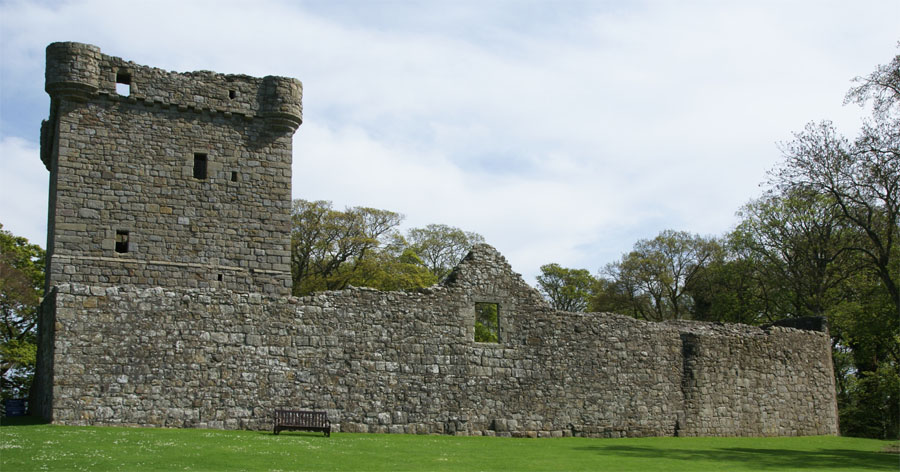
Settlement · Medieval
Lochleven Castle
Perth and Kinross
Besieged in 1335 by an English force that dammed the loch to drown it. The captain went off to a saint's festival, and the defenders broke the dam.
- Some walking
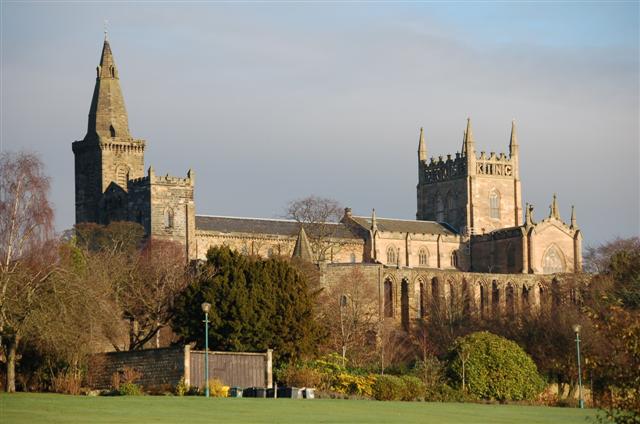
Building or ruin · Medieval
Dunfermline Abbey
Fife
Dunfermline Abbey combines one of Scotland’s great round-arched churches, built before the Gothic style, with the country’s richest concentration o…
- Near St Andrews
- 2 min walk from car park
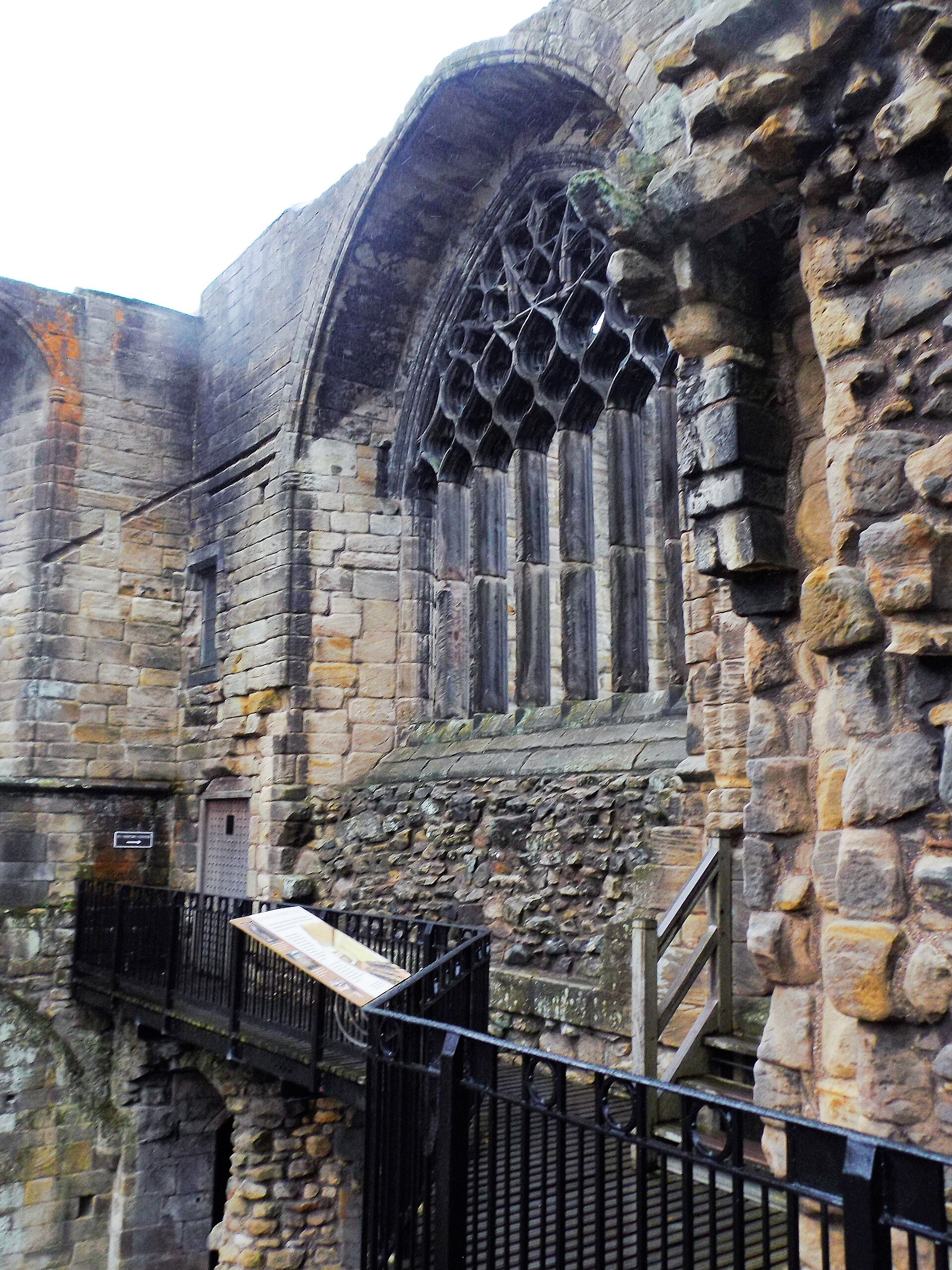

Fortified place · Medieval
Burleigh Castle
Perth and Kinross
A fifteenth- and sixteenth-century castle just outside Milnathort, north of Kinross.
- Near Kinross
The setting
Near Dumglow, about 368 metres away.
Photo: Rob Burke / Wikimedia Commons / CC BY-SA 2.0
Near Dumglow, about 371 metres away.
Photo: Steven Brown / Wikimedia Commons / CC BY-SA 2.0
Questions people ask
- What is on the summit?
- An ancient fort, defended by several sets of ramparts and ditches on its east side, with a burial cairn standing inside it.
- How high is it?
- 379 metres, the highest peak of the Cleish Hills, north of Dunfermline.
- Which is older, the fort or the cairn?
- The cairn almost certainly, since burial monuments of that kind generally predate hill forts. The record does not establish the relationship between them.
Sources
The Ancient Codex, in your pocket
Get the Pocket Codex app
Carry the directory with you — Dumglow and thousands of ancient places across Britain and Ireland, offline, wherever you roam.