On the west side of Lewis, in the village of Ballantrushal, a single grey pillar of stone rises 5.8 metres out of the machair. Clach an Trushal is said to be the tallest standing stone in Scotland, 1.83 metres wide and, at its thickest point, 1.5 metres through, with a girth of 4.75 metres at its base. It stands alone now, but it was not always meant to.
On the west side of Lewis, in the village of Ballantrushal, a single grey pillar of stone rises 5.8 metres out of the machair. Clach an Trushal is said to be the tallest standing stone in Scotland, 1.83 metres wide and, at its thickest point, 1.5 metres through, with a girth of 4.75 metres at its base. It stands alone now, but it was not always meant to.
The stone is the last upright survivor of a stone circle raised roughly 5,000 years ago, and its position within that vanished ring was not central but off to one side. A second stone, the last of its companions still standing, was taken down in 1914 and repurposed as a lintel, leaving Clach an Trushal to keep watch by itself over the ground the circle once enclosed.
From its base the stone circle at Steinacleit is visible to the north-east, and the great complex at Callanish lies some 20 miles to the south-west, placing the stone within a wider Neolithic landscape of monument-building across Lewis rather than in isolation.
What follows is drawn from published sources, with each claim labelled by how firmly it is established.
The name
The name Clach an Trushal comes from the Scottish Gaelic Clach an Truiseil, generally translated into English as "Stone of Compassion".
History
About 5,000 years ago, around 3000 BCE, a stone circle was raised on this site on the west side of Lewis. Clach an Trushal occupied a place within that circle, though not at its centre, standing alongside a number of companion stones as part of a single monument rather than as a solitary marker. In 1914 the second-to-last standing stone of the circle was taken down and used as a lintel, removing the last of Clach an Trushal's upright neighbours and leaving it as the sole surviving standing stone from the original circle.
Cultural influences
-
The surviving monolith stands within sight of Steinacleit and in the wider landscape of Callanish monument-building.
Connections
-
Steinacleit stone circle
Visible from the base of Clach an Trushal to the north-east, part of the same wider Neolithic monument landscape on Lewis.
-
Callanish standing stones
Located around 20 miles (30 kilometres) to the south-west of Clach an Trushal.
What to look for
-
Height and proportions
The stone stands approximately 5.8 metres (19 feet) tall above ground, 1.83 metres (6 feet) wide, and up to 1.5 metres (4 feet 11 inches) thick at its thickest point.
-
Base girth
At its base the stone has a girth of 4.75 metres (15 feet 7 inches), giving a sense of its considerable bulk as well as its height.
-
An off-centre position
The stone's placement is not central to the original stone circle, a detail that hints at the layout of the vanished monument it once belonged to.
What is said
Folklore and tradition, recorded as what is said — not as established fact.
-
The battle of the Macaulays and Morrissons
Local legend holds that the stone marks the site of a great battle, said to have been the last fought between the feuding clans of the Macaulays and the Morrisons.
Plan your visit
- Location
- 58.3934°N · 6.4929°W
- Access
- Open access
- Terrain
- Easy going
- Time needed
- About 45 minutes
Nearby places

Tomb or burial place · Prehistoric
Steinacleit
Outer Hebrides
Ten large stone slabs ring a low central mound on the west coast of Lewis, the only part still standing of the stone burial mound known as Steinacl…
- Easy path
Fortified place · Iron Age
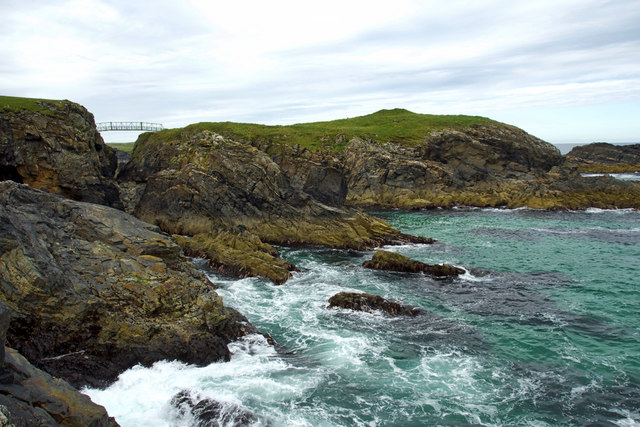
Dùn Èistean
Outer Hebrides
On an inter-tidal sea stack off the north-east coast of the Isle of Lewis, near the village of Knockaird (Cnoc Àrd) in the district of Ness (Nis),…
- Some walking
Fortified place · Medieval
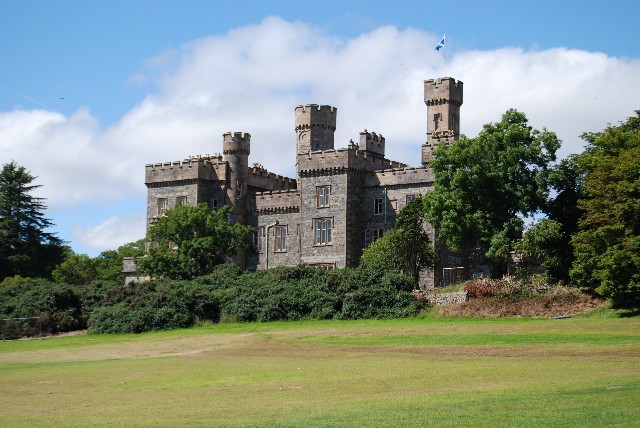
Lews Castle
Outer Hebrides
A private retreat built on an opium-trade fortune ended up given whole to the town it once stood apart from: a rare reversal for a Highland laird's…
- Easy path

Fortified place · Iron Age
Dun Carloway
Outer Hebrides
On the south side of Dun Carloway the original wall still stands to 9.2 metres, and on the east side sections of the old wall reach close to nine m…
- Some walking
The setting
Near Clach an Trushal, about 6 metres away.
Photo: M J Richardson / Wikimedia Commons / CC BY-SA 2.0
Near Clach an Trushal, about 10 metres away.
Photo: M J Richardson / Wikimedia Commons / CC BY-SA 2.0
Near Clach an Trushal, about 16 metres away.
Photo: Sandy Gerrard / Wikimedia Commons / CC BY-SA 2.0
Questions people ask
- Is Clach an Trushal the tallest standing stone in Scotland?
- It is said to be the tallest standing stone in Scotland, standing approximately 5.8 metres (19 feet) tall above ground.
- What does the name Clach an Trushal mean?
- The Gaelic name, Clach an Truiseil, is generally translated into English as "Stone of Compassion".
- Was Clach an Trushal always a single, isolated stone?
- No. It is the sole surviving upright stone from a stone circle built around 5,000 years ago, within which it occupied an off-centre position. The last of its companion stones was removed in 1914 and used as a lintel.
- What legend is associated with the stone?
- Local tradition holds that it marks the site of a great battle, said to have been the last fought between the feuding clans of the Macaulays and the Morrisons.
- Are there other prehistoric monuments nearby?
- Yes. The stone circle at Steinacleit is visible from the base of Clach an Trushal to the north-east, and the Callanish standing stones lie around 20 miles (30 kilometres) to the south-west.
Sources
The Ancient Codex, in your pocket
Get the Pocket Codex app
Carry the directory with you — Clach an Trushal and thousands of ancient places across Britain and Ireland, offline, wherever you roam.