A Late Neolithic standing stone on the island of Eday.
Only the Stones of Stenness are taller. The Stone of Setter is the largest monolith in Orkney outside that circle, standing twenty-five metres above sea level in the north-central part of Eday and looking out over Calf Sound.
It belongs to the late Neolithic or early Bronze Age, somewhere in the second millennium BC, and it is not on its own. Three chambered cairns lie within reach of it — Vinquoy, Huntersquoy and Braeside — so the stone is one element of a group of monuments rather than a solitary marker in a field. What it was for is not recorded, and a single upright with no excavated context around it offers very little to go on.
Historic Environment Scotland scheduled the site in 1936. The stone is on private land and cannot be approached, but it stands clearly visible from the road, which is how nearly everyone sees it.
What follows is drawn from published sources, with each claim labelled by how firmly it is established.
History
The Stone of Setter is a standing stone on the island of Eday in Orkney, dating from the late Neolithic or early Bronze Age — around the second millennium BC. Outside the Stones of Stenness it is the tallest monolith in the islands. A monolith of that height took real organisation to quarry, move and raise, whatever it was raised for. It stands 25 metres above sea level in the north-central part of Eday, overlooking Calf Sound. Height and position together mean the stone is visible across a good part of the island, which is presumably why it was put where it was. A stone this size is a claim on the landscape as much as a marker within it.
It does not stand alone in the landscape. Several burial monuments lie nearby — the Vinquoy, Huntersquoy and Braeside chambered cairns — so the stone belongs to a group rather than being an isolated marker. Groupings of that kind are the norm in Orkney, and they make single-monument interpretations unreliable. Historic Environment Scotland established the site as a scheduled monument in 1936, protecting it by law as an archaeological site of national importance. Scheduling in 1936 came early in the history of statutory protection in Scotland.
The stone stands on private property. It can be seen clearly from the road, which is how most visitors encounter it, and there is no access across the field. A monument that can be seen but not approached is a common compromise on farmed land.
Cultural influences
-
The stone’s position above Calf Sound and its proximity to chambered cairns place it within Eday’s prehistoric monumental landscape.
Connections
-
Eday
The Stone of Setter is located on the island of Eday.
-
Calf Sound
The Stone of Setter overlooks Calf Sound.
-
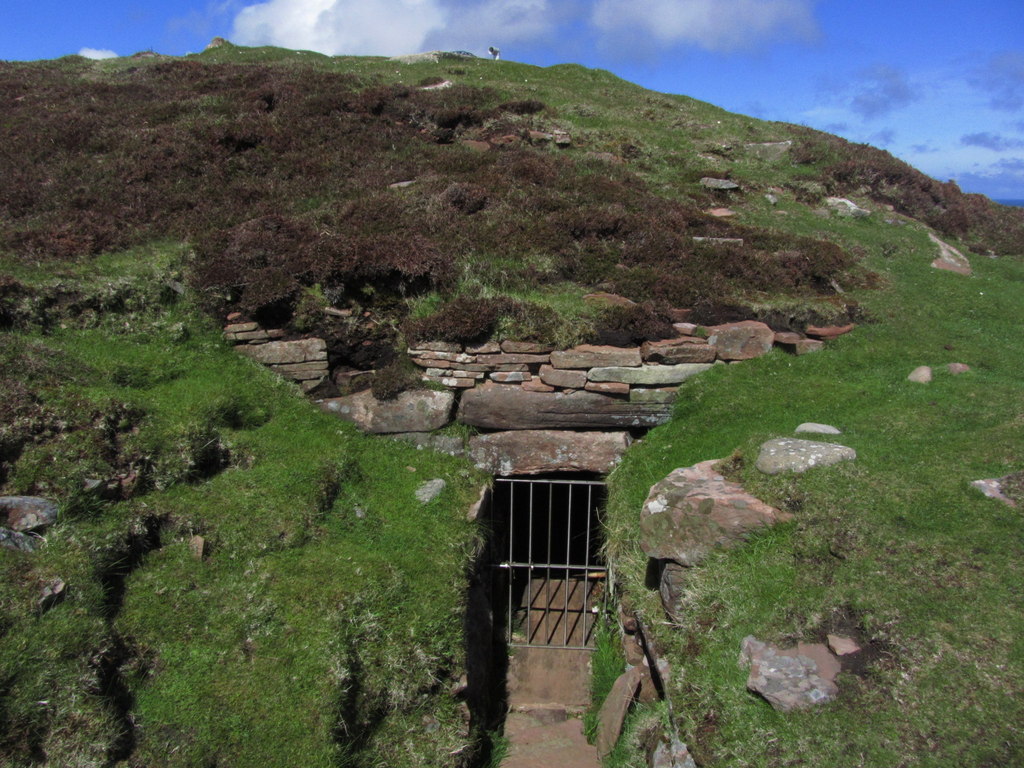
Photo: Colin Park / Wikimedia Commons / CC BY-SA 2.0 The Stone of Setter is located near the Vinquoy chambered cairn.
What to look for
-
The tallest monolith outside Stenness
Apart from the Stones of Stenness, this is the tallest standing stone in Orkney.
-
The view over Calf Sound
The stone stands 25 metres above sea level in the north-central part of Eday, looking out over Calf Sound.
-
Cairns in every direction
Vinquoy, Huntersquoy and Braeside chambered cairns all lie nearby, so the stone stands within a group of burial monuments rather than alone.
-
Seen from the road
The stone is on private property and cannot be approached, but it is clearly visible from the road.
Plan your visit
- Location
- 59.2190°N · 2.7645°W
- Nearest settlement
- Eday
- Access
- Open access
- Terrain
- Easy going
- Time needed
- About 20 minutes
- Best time
- Daylight hours
- What survives
- The tall standing stone remains upright on private farmland and is visible from the road, but cannot be approached across the field.
Opening & admission
No reliable current admission details are recorded; verify before travelling.
- The stone stands on Eday near Vinquoy chambered cairn and overlooks Calf Sound; it is visible from the road on private land.
Nearby places

Tomb or burial place · Prehistoric
Huntersquoy chambered cairn
Orkney Islands
An exceptionally rare two-storey tomb, its opposed entrances and flooded lower chamber reveal two burial spaces stacked within one small Eday mound.
- Easy path

Tomb or burial place · Prehistoric
Vinquoy chambered cairn
Orkney Islands
Vinquoy is a restored Stone Age burial monument on Eday, built around a central chamber with four small side-cells and overlooking Calf Sound.
- Near Eday
- Some walking

Tomb or burial place · Prehistoric
Quoyness Chambered Cairn
Orkney Islands
A tomb mistaken for a broch until 1867, holding at least ten adults and possibly four children in a stone-lined cist: a box grave built of slabs: w…
- Near Sanday
- 20 min walk from car park
- Easy path
Ancient place · Prehistoric
Rinyo
Orkney Islands
A settlement of the first farming age on Rousay, discovered in the winter of 1937.
- Near Rousay
- Some walking
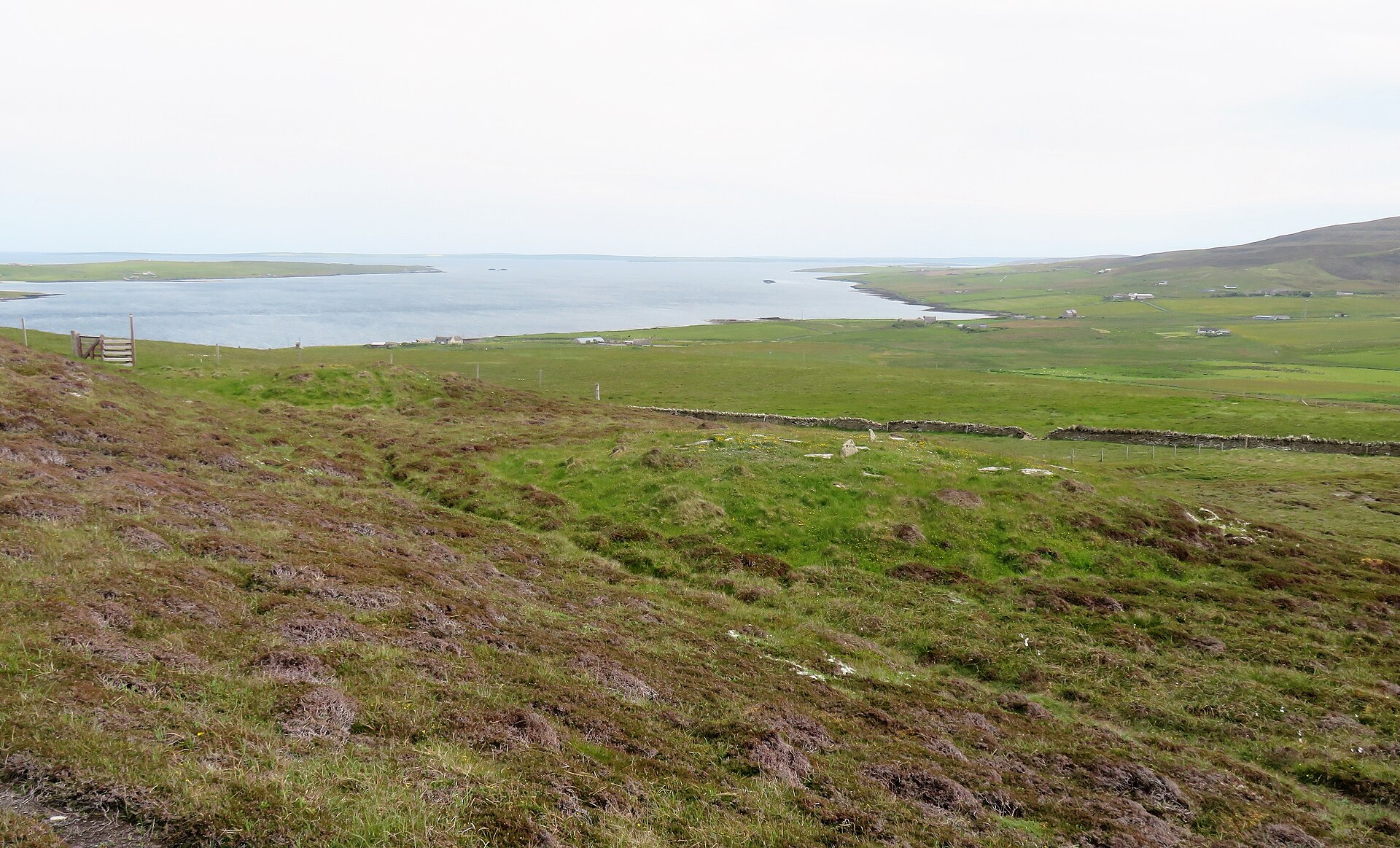
The setting
Near Stone of Setter, about 0 metres away.
Photo: Beep boop beep / Wikimedia Commons / CC BY-SA 4.0
Questions people ask
- How tall is it?
- It is the tallest monolith in Orkney outside the Stones of Stenness.
- How old is it?
- Late Neolithic or early Bronze Age, around the second millennium BC.
- What else is nearby?
- Three chambered cairns — Vinquoy, Huntersquoy and Braeside — so the stone belongs to a group of monuments rather than standing in isolation.
- Can it be visited?
- It stands on private property, but is clearly visible from the road.
Sources
The Ancient Codex, in your pocket
Get the Pocket Codex app
Carry the directory with you — Stone of Setter and thousands of ancient places across Britain and Ireland, offline, wherever you roam.