
Seagate’s scheduled ruin preserves Irvine’s former harbour route and the sixteenth-century Montgomerie town house, where defence, aristocratic display and urban maritime life met.
Vaulted rooms, moulded windows and a richly treated entrance survive behind Seagate Castle’s roofless walls beside the River Irvine. The building faces the town’s oldest street, once the route toward a harbour that later silted up and was abandoned. Its mixture of defensive features and elegant domestic detail captures a transition from medieval stronghold to high-status town house.
The site’s long history ties together royal burgh status, the lordship of Cunninghame, the Montgomeries of Eglinton and later episodes of abandonment, stone removal and repair. It may incorporate an earlier castle, but the prominent structure was remodelled and expanded in the sixteenth century. Today the scheduled remains preserve rare physical evidence for civic and aristocratic life in old Irvine after many of the town’s other historic civil and ecclesiastical buildings disappeared.
What follows is drawn from published sources, with each claim labelled by how firmly it is established.
The name
The name refers to the old street and route from Irvine toward its former harbour.
History
Irvine’s first record dates to 1163, when its harbour lay near the sea-gait or Seagate; the castle was first built to protect that access. A castle of “Hirun” recorded in 1184 may refer to Irvine, and the original defensive structure was probably wooden before being rebuilt in stone in the 1360s. This early setting is significant because Seagate’s history begins with a maritime town and harbour rather than with a secluded country estate.
In 1366 Sir Hugh de Eglintoun received the castle, the chamberlaincy of Irvine and the bailiary of the Barony of Cunninghame from Robert the Steward. Through his daughter Elizabeth’s marriage to John Montgomerie, the estates passed into the Montgomerie family. Around 1565 Hugh, third Earl of Eglinton remodelled and expanded the site as a showpiece: less a purely defensive castle than a palace-like town house with a role as a dower house.
The castle became unroofed around 1746, when the tenth Earl of Eglinton removed its roof for a new church in Ardrossan parish. It then attracted stories of smugglers, thieves and illicit distilling, while local people quarried stone from it. Repairs in 1810 and later clearance of accumulated rubble offered partial rescue, and the building was given to Irvine Burgh in 1945. More recent consolidation work addressed structural danger in 2011.
People
-
Hugh Montgomerie, 3rd Earl of Eglinton
Remodelled and expanded Seagate as a town house around 1565; his initials and arms survive on a roof boss in the entrance pend.
-
Montgomeries of Eglinton
Aristocratic family central to the castle’s remodelling and its place in the lordship of Cunninghame.
Cultural influences
-
The castle’s ornate entrance and moulded windows show the Scottish Renaissance Gothic style of its sixteenth-century remodelling.
-
Remodelling combined defensive features with the elegant domestic detail of a high-status town house.
Connections
-
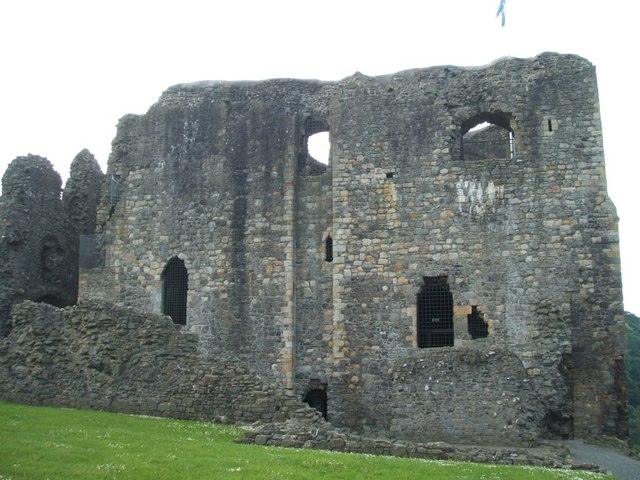
Photo: Derek Ferris / Wikimedia Commons / CC BY-SA 2.0 Another medieval Ayrshire castle, providing a regional comparison for aristocratic power and fortified residences.
-
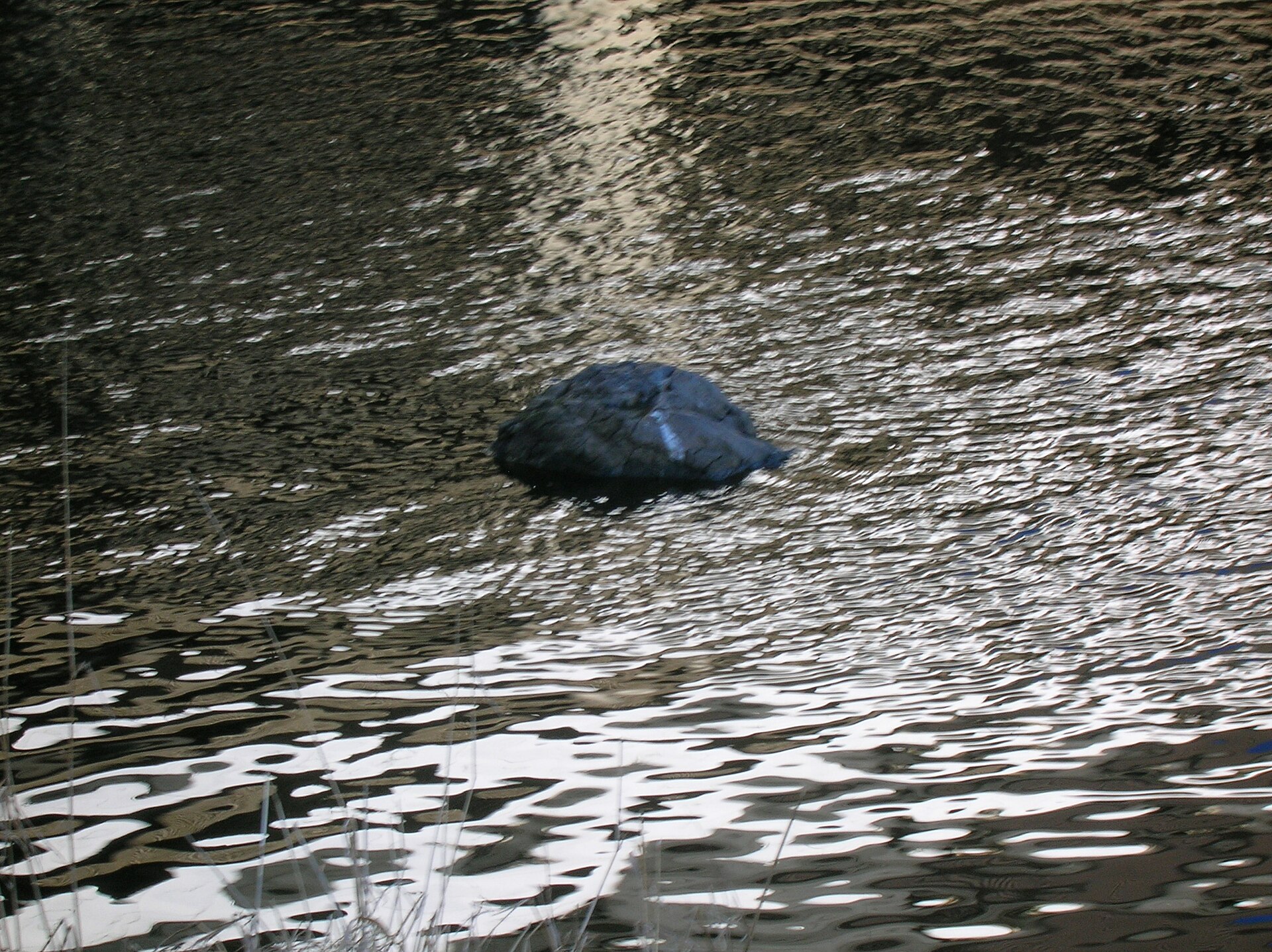
Photo: Rosser1954 Roger Griffith / Wikimedia Commons / Public domain A prehistoric monument in the wider landscape, providing a long chronological contrast with Seagate’s later castle fabric.
-

Photo: Bubobubo2 / Wikimedia Commons / CC BY-SA 3.0 The abbey was being dismantled as Seagate was remodelled for the Earl of Eglinton; stone from Kilwinning may have been reused in the castle’s entrance doorway and fabric.
Discovery & excavation
A 1992 trial excavation found medieval deposits to a depth of 2.8 metres and a short length of wall, although it did not produce clear dating evidence for the earlier castle.
In culture
-
Marymass celebrations
The castle is associated with Irvine’s annual Marymass celebrations, although the festival is more likely to derive from the Assumption or Saint Inan than from Mary, Queen of Scots’s reported 1563 visit.
What to look for
-
The vaulted pend
Enter through the vaulted pend in the north part of the main block. Its ornamental arched doorway opens into the courtyard and recalls the southern entrance passageway at Linlithgow Palace, revealing the building’s architectural ambition.
-
The carved doorway
Look closely at the Scottish Renaissance Gothic entrance and its mouldings. The doorway has prompted debate about whether its appearance is Saxon, Norman or Scottish Gothic; its form fits a sixteenth- and seventeenth-century Renaissance Gothic context rather than requiring a Norman origin.
-
The kitchen and serving hatch
Notice the surviving ground-floor accommodation: vaulted rooms, two guardrooms, the kitchen, fireplace, aumbries and serving hatch. These interior traces allow the ruin to be read as a working household with controlled access as well as as a public-facing statement of status.
-
The triangular tower
Trace the plan from the long street-facing block toward the projecting towers. Two were round and one triangular, with the triangular north-west tower sometimes suggested as older fabric, although that interpretation remains disputed.
-
The road to the harbour
Read the site against Seagate itself and the River Irvine. The castle once overlooked the town’s route to the harbour at Seagatefoot, but silting made that harbour useless by 1606; the ruin therefore retains a physical relationship to an urban maritime landscape that no longer functions as it did.
What is said
Folklore and tradition, recorded as what is said — not as established fact.
-
The Seagate tunnels
Local tradition says that tunnels ran from Seagate Castle to Stanecastle and Dundonald Castle.
Plan your visit
- Location
- 55.6168°N · 4.6705°W
- Time needed
- About 30 minutes
Nearby places
Sacred place · Prehistoric
Grannie stone
North Ayrshire
The Grannie Stone is an enduring Irvine river landmark whose uncertain origin: glacial erratic or last stone-circle survivor: reveals how folklore,…
- Near Irvine
- Easy path

Sacred place · Medieval
Kilwinning Abbey
North Ayrshire
Kilwinning’s ruined monastery once held revenues from fourteen parishes, granges and baronial jurisdiction, leaving an unusually wide medieval impr…
Fortified place · Medieval
Dundonald Castle
South Ayrshire
A fourteenth-century royal residence on a hill between Kilmarnock and Troon.
Ancient tree · Medieval
Bickering Bush
East Ayrshire
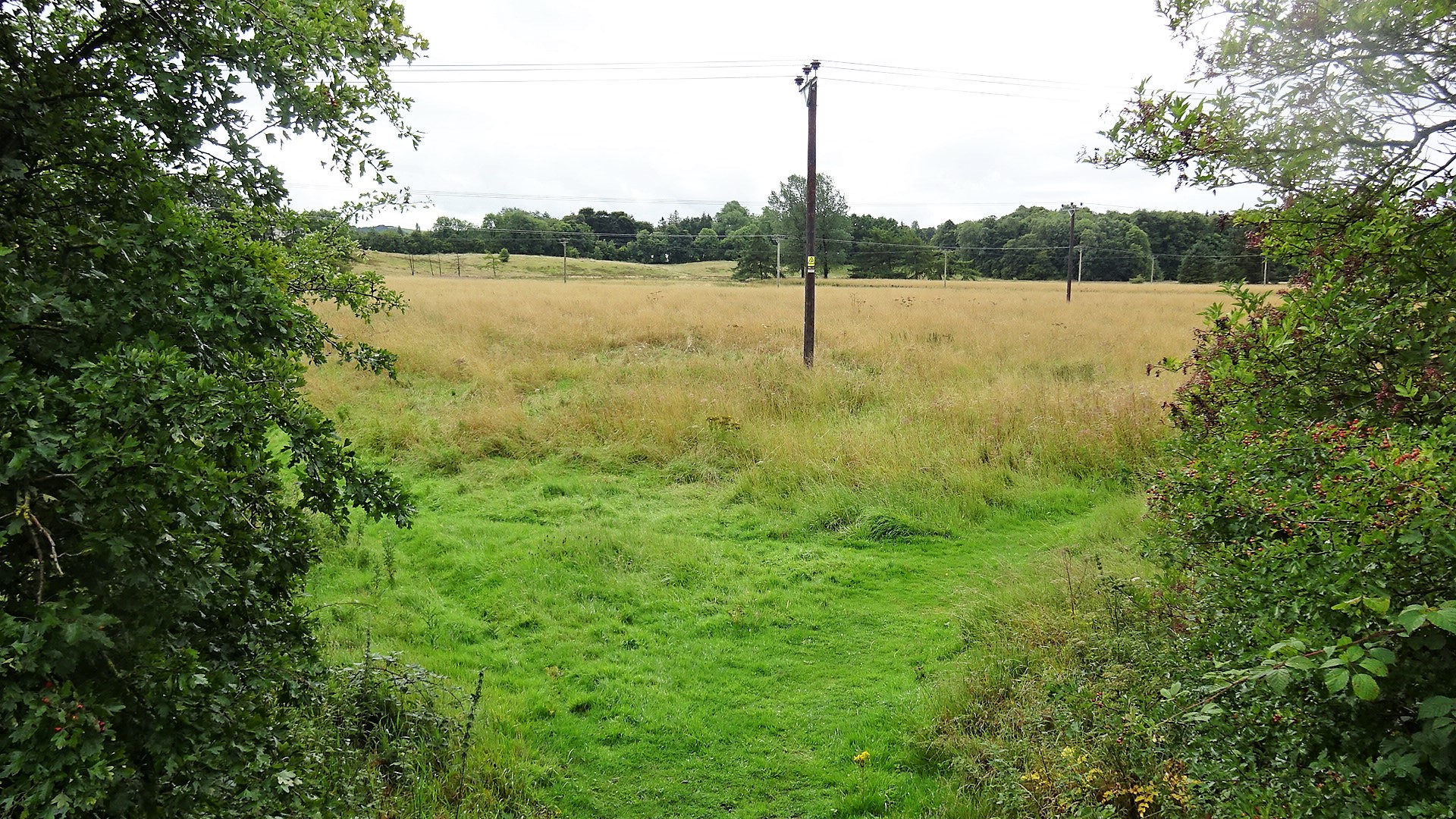
Bickering Bush preserves the memory of a named hawthorn, its lost site tied to Caprington Castle lands and Wallace tradition.
- Near East Ayrshire
Questions people ask
- Why was Seagate Castle built at Irvine?
- An early castle is recorded as built to protect Irvine’s harbour near the sea-gait or Seagate. The later building also served as a Montgomerie town house and dower house.
- When was the present Seagate Castle developed?
- An earlier castle was probably rebuilt in stone in the 1360s, then remodelled and expanded around 1565 by Hugh, third Earl of Eglinton. The source dates the showpiece building to 1562–85.
- What architectural features survive?
- The surviving ruin includes a vaulted entrance pend, ornamental arched doorway, moulded windows, ground-floor vaults, guardrooms, kitchen, fireplace, aumbries and parts of the projecting towers.
Sources
The Ancient Codex, in your pocket
Get the Pocket Codex app
Carry the directory with you — Seagate Castle and thousands of ancient places across Britain and Ireland, offline, wherever you roam.