
Kilwinning’s ruined monastery once held revenues from fourteen parishes, granges and baronial jurisdiction, leaving an unusually wide medieval imprint on Ayrshire’s land, worship and power.
A surviving arch, lengths of masonry and the tall later clock tower give Kilwinning Abbey a fragmented but still forceful presence in the centre of the town. Founded between 1162 and 1188 for Tironensian Benedictine monks from Kelso, it was dedicated to Saint Winning and the Virgin Mary. Its setting beside the Garnock, its pilgrim associations and the scale suggested by archaeological remains make it a useful place to read both devotional life and the practical organization of a medieval religious house.
The ruins also carry the marks of dramatic change. The abbey drew income from a wide network of churches, lands and granges, but Reformation-era conflict, secularisation and the loss of revenues transformed its future. Stone from the buildings travelled into Eglinton estate works and later local construction, while the rebuilt tower became a civic landmark and heritage centre. Kilwinning therefore connects monastic patronage, contested property and the afterlives of historic fabric in one compact town-centre site.
What follows is drawn from published sources, with each claim labelled by how firmly it is established.
The name
The abbey was dedicated to Saint Winning and the Virgin Mary; the town and abbey name preserve this saintly association.
History
Between 1162 and 1188, monks from Kelso established a Tironensian Benedictine community at Kilwinning, dedicated to Saint Winning and the Virgin Mary. The patron is uncertain, though Richard de Morville, Lord of Cunninghame and Great Constable of Scotland, may have supported the foundation. That uncertainty matters because the abbey was not a royal foundation, and its surviving history has to be reconstructed despite the loss or destruction of much of its chartulary.
The abbey developed into a major landholding and ecclesiastical institution. It received revenues from churches in Kilwinning and thirteen further parishes in Cunninghame, held granges including Beith and Craignaught, and exercised baronial jurisdiction through its abbots. In the 1540s it had seventeen monks. These details show that the community’s influence extended far beyond its church and cloister, joining worship, farming, rents and local authority across a broad part of Ayrshire.
From the sixteenth century, plundering, Reformation conflict, secularisation and the disappearance of institutional income altered the abbey profoundly. In 1592 its commendary became a free barony for William Melville; in 1603 he sold the lands and offices to Hugh, fifth Earl of Eglinton. As the buildings declined, their stone was reused in Eglinton works and elsewhere. The later tower, completed in 1816 after the old northern tower was demolished, preserves a prominent public successor to the medieval complex.
People
-
Richard de Morville
May have been the abbey’s patron at its foundation between 1162 and 1188, possibly with King William’s backing.
-
Saint Winning
Saint to whom the abbey was dedicated, alongside the Virgin Mary.
Cultural influences
-
Monks from Kelso founded Kilwinning as a Tironensian Benedictine community, tying it to the order’s centre at Tiron in the diocese of Chartres.
-
Monks from Kelso established the abbey for the Tironensian Benedictine tradition between 1162 and 1188.
Connections
-

Photo: Rosser1954 Roger Griffith / Wikimedia Commons / Public domain Seagate was remodelled for the Earl of Eglinton while Kilwinning Abbey was being dismantled; abbey stone may have been reused in the castle’s entrance and fabric.
-
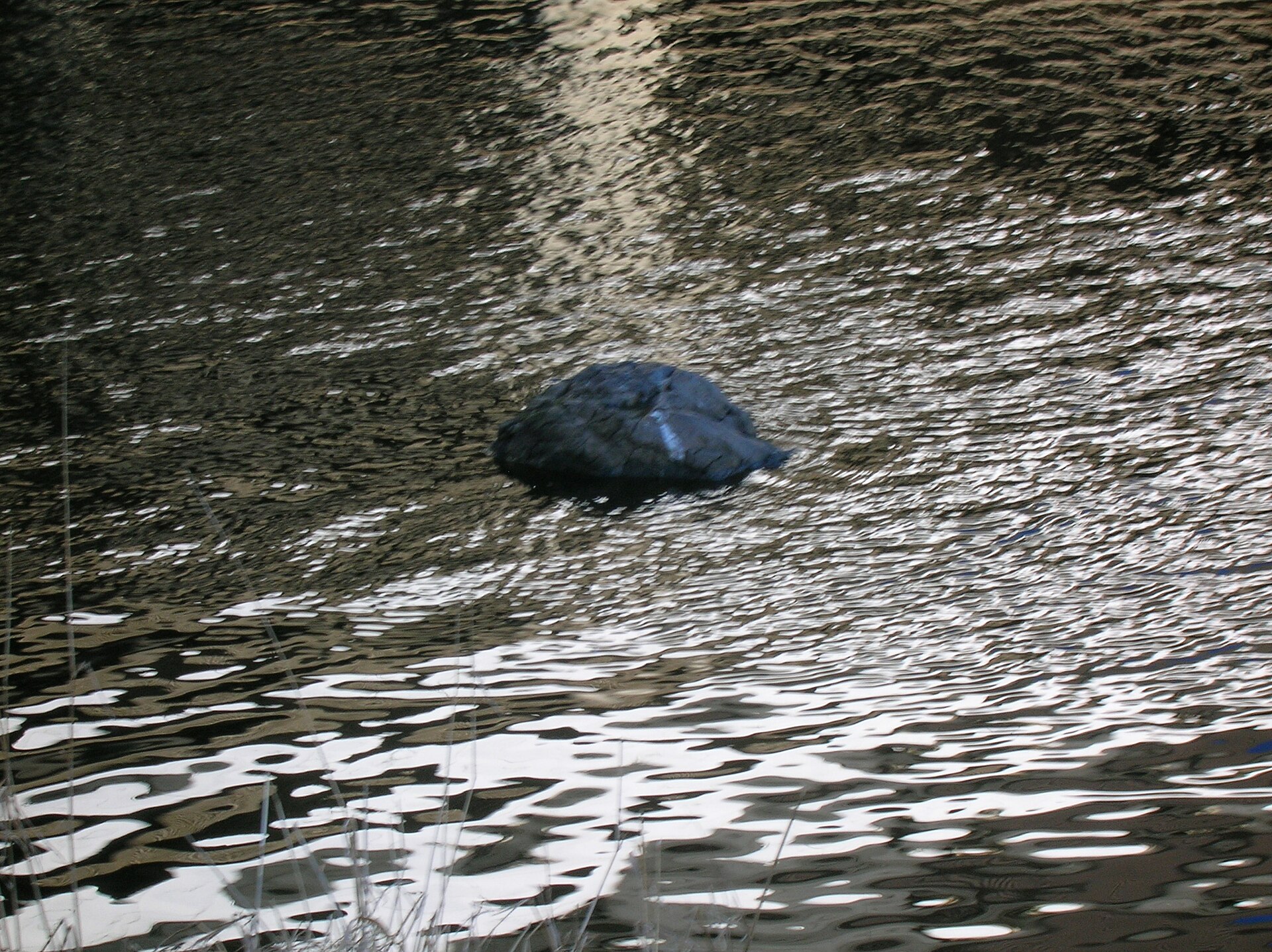
Photo: Rosser1954 Roger Griffith / Wikimedia Commons / Public domain A prehistoric stone monument in the wider Ayrshire landscape, providing a chronological contrast with the medieval abbey.
-
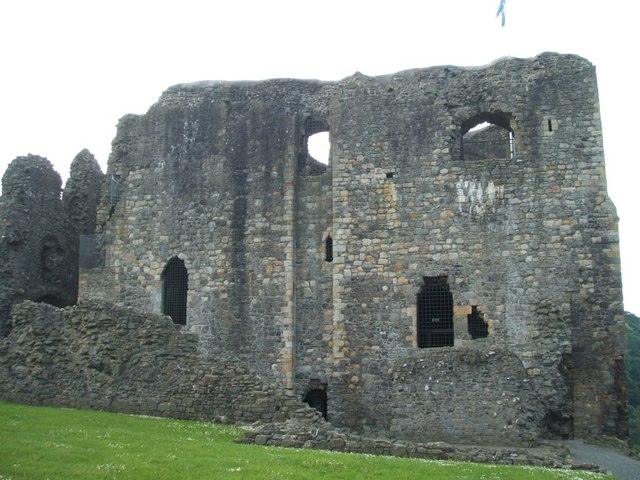
Photo: Derek Ferris / Wikimedia Commons / CC BY-SA 2.0 A major medieval castle in Ayrshire, contrasting with Kilwinning’s religious role and helping place the abbey within the region’s network of lordship.
Discovery & excavation
Archaeological remains and standing fabric reveal the scale of the medieval abbey despite later loss and rebuilding.
In culture
-
Civic clock tower and heritage centre
The rebuilt tower became a town landmark and heritage centre after the abbey’s secularisation.
What to look for
-
The Adam and Eve capital
Look for the surviving ruined masonry and processional arch, including the Norman-style capital said to show Adam and Eve. Archaeological interpretation suggests that an earlier church may lie behind later phases of construction, while the visible fabric helps convey a church that once had an unusually broad nave and transept.
-
The 1816 clock tower
Notice the relationship between the medieval remains and the rebuilt tower. The present 103-foot clock tower was completed in 1816 after the remaining older tower had become unsafe and was demolished. It is a reminder that the site has been repeatedly adapted rather than simply left untouched.
-
The Garnock and the town
Consider the abbey’s town-centre position and its association with the River Garnock. The source records traditions of pilgrims approaching Saint Winning’s shrine and notes substantial historical changes in the river’s course, which shaped the wider landscape around the religious house.
-
The stone taken away
Seek out reused stone and later buildings in and around the former precinct. Material from the abbey was taken for Eglinton Castle-related works, the estate wall and other structures; this reuse makes the abbey’s physical legacy wider than the visible ruins alone.
-
The heritage centre
At the heritage centre in the tower, the local history displays place the abbey alongside the town’s later stories, including the Kilwinning Archers and their annual papingo shoot. This offers a useful bridge between the medieval monastery and community traditions still associated with its grounds.
What is said
Folklore and tradition, recorded as what is said — not as established fact.
-
Saint Winning and the Garnock
Local legend says that Saint Winning cursed the River Garnock after his monks could catch no fish; the river is then said to have changed course to escape the curse.
Plan your visit
- Location
- 55.6532°N · 4.6982°W
- Time needed
- About 45 minutes
- Best time
- Visit in daylight and dry conditions, when the abbey ruins and surrounding town setting can be viewed safely.
- What survives
- Managed abbey ruins in Kilwinning, with the surviving tower and fragments incorporated into the town-centre setting.
- Facilities
- No dedicated visitor facilities are documented at the ruins; plan to use facilities in nearby settlements.
Opening & admission
Free to visit.
- Open year-round; check Historic Environment Scotland for unexpected closures.
Nearby places

Fortified place · Medieval
Seagate Castle
North Ayrshire
Seagate’s scheduled ruin preserves Irvine’s former harbour route and the sixteenth-century Montgomerie town house, where defence, aristocratic disp…
Sacred place · Prehistoric
Grannie stone
North Ayrshire
The Grannie Stone is an enduring Irvine river landmark whose uncertain origin: glacial erratic or last stone-circle survivor: reveals how folklore,…
- Near Irvine
- Easy path
Fortified place · Medieval
Dundonald Castle
South Ayrshire
A fourteenth-century royal residence on a hill between Kilmarnock and Troon.
Ancient tree · Medieval
Bickering Bush
East Ayrshire
Bickering Bush preserves the memory of a named hawthorn, its lost site tied to Caprington Castle lands and Wallace tradition.
- Near East Ayrshire
Questions people ask
- When was Kilwinning Abbey founded?
- The abbey was founded sometime between 1162 and 1188, when Tironensian Benedictine monks came from Kelso. It was dedicated to Saint Winning and the Virgin Mary.
- Why did Kilwinning Abbey fall into ruin?
- The source describes a combination of sixteenth-century plundering, religious and political conflict, secularisation, and the loss of the wider revenues needed to maintain such a large complex. Its fabric was then increasingly quarried for building stone.
- What survives at Kilwinning Abbey today?
- Parts of the abbey survive as ruins, while the later rebuilt tower houses a heritage centre. The present clock tower was completed in 1816 after the older remaining tower was judged unsafe and demolished.
Sources
The Ancient Codex, in your pocket
Get the Pocket Codex app
Carry the directory with you — Kilwinning Abbey and thousands of ancient places across Britain and Ireland, offline, wherever you roam.