
A Pictish symbol stone whose carver broke with convention, spreading incised emblems across two adjacent granite faces — an arrangement thought to be unique among surviving examples.
A slab of pink granite, standing higher than a person and carved with strange incised emblems, lay hidden beneath a field near Craigellachie for well over a thousand years before a plough turned it up in May 2013. Farm work, not archaeology, brought it back into the light, and the exact spot where it lay has been kept out of the public record ever since, as a precaution against further disturbance of the ground.
The stone belongs to a group known as Class I Pictish stones — unshaped, undressed slabs bearing only incised symbols, without the crosses or interlace patterns added on the later, more elaborate Class II stones. What sets this particular slab apart is where its symbols were placed: not gathered on one broad face, as was customary, but split across two faces set at an angle to each other. A notched rectangle crossed by a z-shaped rod, paired with a mirror case, occupies one side; an eagle above a crescent crossed by a v-shaped rod occupies the other.
That two-faced arrangement may have no exact parallel among the many Pictish stones known to survive. After conservation work to stabilise the granite, the stone left the field for good and went on permanent display at Elgin Museum, where it can now be seen at close range — a piece of carving that spent well over a thousand years underground.
What follows is drawn from published sources, with each claim labelled by how firmly it is established.
History
In May 2013, workers ploughing a field near Craigellachie struck an unfamiliar slab of pink granite, turning up a Pictish symbol stone that had lain hidden in the soil for well over a thousand years. Its exact findspot has never been made public, a deliberate precaution taken because of the archaeological vulnerability of the site.
Following its recovery, the stone was taken in for conservation to stabilise and clean the granite before it entered the collection of Elgin Museum, where it went on public display. The move gave archaeologists a proper opportunity to record and interpret the carvings, away from the field where the stone had lain undisturbed for so long.
Cataloguers classed the stone as a Class I Pictish monument — an unshaped slab bearing incised symbols rather than the crosses and interlace of the later Class II tradition. What set it apart was the decision to carve symbols across two adjacent faces rather than gathering them on one, a layout so unusual it may be without parallel among surviving Pictish stones.
Cultural influences
-
The Class I slab carries incised symbols across two adjacent faces, an unusually arranged example of Pictish stone carving.
Connections
-
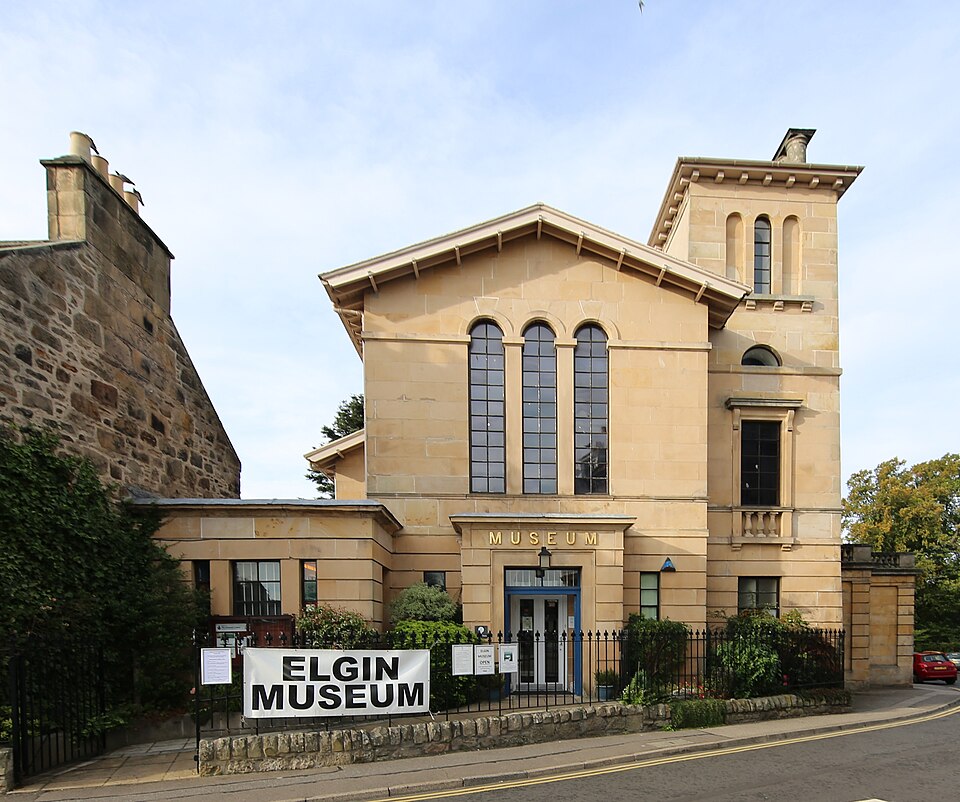
Photo: Geni / Wikimedia Commons / CC BY-SA 4.0 Elgin Museum
Holds the stone in its collection following conservation and displays it to the public.
-

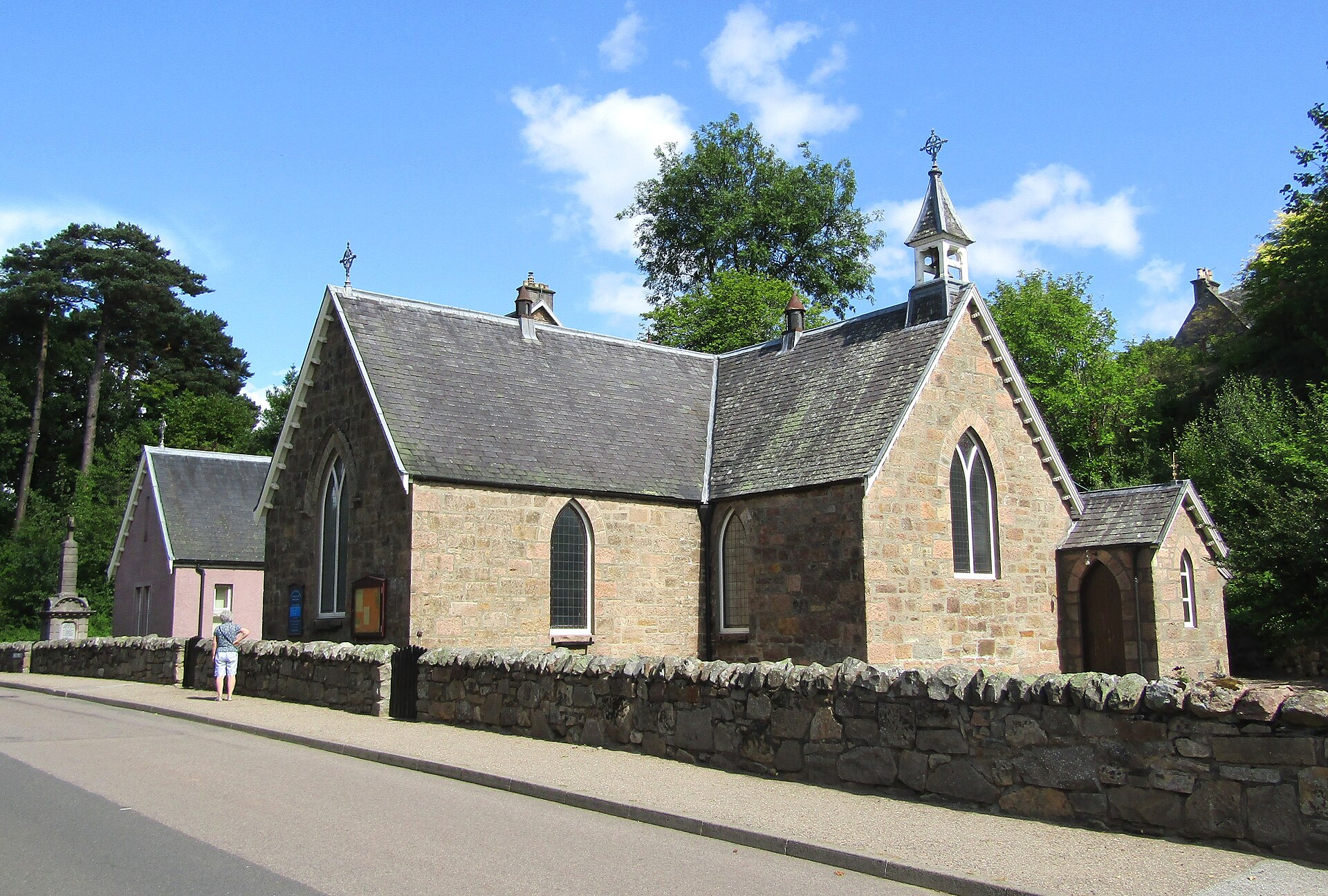
Photo: Lucas Kendall / Wikimedia Commons / CC BY-SA 2.0 Craigellachie
The stone was uncovered in farmland near this Moray village, though its exact findspot has not been disclosed.
Discovery & excavation
The stone came to light in May 2013 when a field near Craigellachie was being ploughed, exposing a slab of pink granite that had lain buried for centuries. Its precise findspot remains unreported, a precaution taken because of the archaeological vulnerability of the site; before going on display, the stone underwent conservation work to stabilise and clean its surface.
Finds now held at: Elgin Museum.
What to look for
-
Notched rectangle with z-rod and mirror case
One face carries three linked Pictish symbols: a notched rectangle overlaid with a z-shaped rod, paired with a mirror case design, all incised into the pink granite.
-
Eagle, crescent and v-rod
The adjacent face bears a second set of symbols — an eagle above a crescent crossed by a v-shaped rod — carved in the same incised technique as the first face.
-
Symbols spread across two faces
Rather than gathering all its symbols onto a single face, as is typical of Class I Pictish stones, the carver spread them across two adjacent sides of the slab — an arrangement so unusual it may be unique among surviving examples.
-
Pink granite slab
The stone stands 1.7 metres high, 0.5 metres wide and 0.36 metres deep, cut from pink granite rather than the sandstone more commonly used for Pictish symbol stones.
Plan your visit
- Location
- 57.4900°N · 3.1870°W
- Nearest settlement
- Elgin
- Time needed
- About 30 minutes
- Best time
- During Elgin Museum opening hours, when both carved faces can be examined.
- What survives
- The conserved pink-granite slab is displayed at Elgin Museum; its protected original findspot is not disclosed.
Opening & admission
No current admission details are recorded — check the managing body's site before travelling.
- Original find-spot location is undisclosed to protect the site
- The stone itself is conserved and on display at Elgin Museum
Nearby places

Fortified place · Medieval
Ballindalloch Castle
Moray
Continuously lived in by one family since 1546, its Z-plan tower survived a burning by Montrose's men and a feud that ended in murder at a neighbou…
- Near Ballindalloch

Carved stone · Pictish & early medieval
Birnie Symbol Stone
Moray
The Birnie Symbol Stone preserves a compact seventh-century Pictish (of the Picts, the people of northern and eastern Scotland from about AD 300 to…
- Near Elgin
- Easy path
Fortified place · Roman
Auchinhove
Moray
Auchinhove is a large Roman marching camp east of Keith, discovered from the air in 1949 and preserving evidence of Roman military movement in Moray.
- Near Keith
- Some walking

Carved stone · Pictish & early medieval
Elgin Pillar
Moray
A tall granite Pictish (of the Picts, the people of northern and eastern Scotland from about AD 300 to 900) stone found buried beneath Elgin's old…
- Near Elgin
- Easy path
Questions people ask
- What is the Dandaleith stone?
- A Class I Pictish symbol stone carved from pink granite, discovered in a field near Craigellachie, Moray, in May 2013.
- When and how was it found?
- It was uncovered in May 2013 during ploughing of a field near Craigellachie; the precise findspot has never been made public.
- What symbols does it carry?
- One face shows a notched rectangle with a z-rod and mirror case; the adjacent face shows an eagle, a crescent and a v-rod.
- Where can the stone be seen today?
- After conservation, the stone went on permanent public display at Elgin Museum in Moray.
- What makes its design unusual?
- Its symbols are carved across two adjacent faces rather than one, a layout believed to be extremely rare, possibly unique, among Pictish stones.
Sources
The Ancient Codex, in your pocket
Get the Pocket Codex app
Carry the directory with you — Dandaleith stone and thousands of ancient places across Britain and Ireland, offline, wherever you roam.