Rosslyn Chapel is a superbly carved fifteenth-century collegiate church (a church staffed by a college of priests, without being a monastery) whose interrupted building plan, nineteenth- and twenty-first-century rescues, 1914 suffragette bombing, and modern mythmaking make its real history as compelling as its legends.
Rosslyn Chapel, formally the Collegiate Chapel of Saint Matthew, rises above Roslin Glen in Midlothian. William Sinclair, first Earl of Caithness, founded the collegiate church in the mid-fifteenth century to sustain daily liturgy and masses for the faithful departed, including his family.
Construction began in 1456, but the planned cruciform church was never completed: only the choir and associated Lady Chapel were built. Its fourteen pillars, detailed stonework, Green Men and celebrated Apprentice Pillar have made it one of Scotland’s most intensively interpreted medieval buildings.
The Reformation ended Catholic worship, leaving the chapel neglected until Victorian restoration and Episcopal rededication in 1862. More recently conservation from 1997 to 2013 secured its roof, carvings, stone, glazing and organ, while the chapel’s appearance in The Da Vinci Code brought a new international audience and much speculative baggage.
What follows is drawn from published sources, with each claim labelled by how firmly it is established.
History
William Sinclair founded the chapel as a collegiate church on a hill above Roslin Glen, with four to six ordained canons and two boy choristers. He endowed it to sustain the Liturgy of the Hours day and night and masses for the dead. Building began on 20 September 1456, although a 1446 papal founding charter has often caused the construction date to be reported incorrectly as 1446.
The original project was cruciform but stopped after the choir, retro-chapel or Lady Chapel, and an earlier Lower Chapel were built. Nineteenth-century records traced foundations of the unbuilt nave and transepts for 90 feet. This incompletion is central to the building’s form: its famous interior is not an entire medieval church but the realised eastern part of a far larger intended plan.
The Scottish Reformation ended Catholic worship at Rosslyn in 1560, and its altars were destroyed in 1592. By Queen Victoria’s 1842 visit, the chapel was ruinous and overgrown. At her urging, David Bryce restored it for James Alexander, third Earl of Rosslyn; it was rededicated on 22 April 1862 and Sunday services resumed under the Scottish Episcopal Church.
On 11 July 1914 a bomb exploded inside Rosslyn Chapel during the nationwide suffragette bombing and arson campaign of 1912–14. Churches were targeted because campaigners believed the Church of England reinforced opposition to women’s suffrage; 32 churches were attacked between 1913 and 1914. The attack places the chapel within a wider history of militant suffrage protest.
The Rosslyn Chapel Trust began overseeing conservation and visitor access in 1995. From 1997 to 2013, a long programme repaired roof, stone, carvings, stained glass and organ; a steel canopy sheltered the roof for fourteen years while the building dried. Major stonework was finished by 2011 and a visitor centre opened in July 2011, with restoration expected to cost about £13 million.
People
-
William Sinclair, first Earl of Caithness
Founder and endower who established the collegiate chapel to maintain perpetual worship and memorial masses.
-

Portrait: Alexander Bassano / Wikimedia Commons / Public domain Queen Victoria
Her 1842 visit and call for preservation prompted the nineteenth-century restoration of the neglected chapel.
-

Portrait: Stephencdickson / Wikimedia Commons / CC BY-SA 4.0 David Bryce
Architect who restored Rosslyn for the third Earl of Rosslyn, enabling rededication in 1862.
-
Louise Yeoman
Historian who criticised commercial use of Da Vinci Code popularity and rejects the Templar connection.
Cultural influences
-
Ended Catholic worship in 1560 and led to the destruction of altars in 1592.
-
Took jurisdiction when services resumed after the 1862 rededication.
-
Its novel and film adaptation drove popular interest and visitor numbers while amplifying speculative associations.
Connections
-

Photo: Taken by User:Supergolden / Wikimedia Commons / CC BY-SA 3.0 The chapel was the third Sinclair place of worship at Roslin, after sites at the castle and in the present cemetery.
-
.jpg?width=320)
Photo: Bewahrerderwerte / Wikimedia Commons / CC BY-SA 4.0 Its east quire has a documented close plan relationship with the chapel, unlike claimed comparisons with Solomon’s Temple.
In culture
-
The Da Vinci Code
Dan Brown’s 2003 novel and the 2006 film adaptation made the chapel a focal point of modern Grail and Templar speculation.
-
Batman: Scottish Connection
A DC Comics storyline used the chapel’s mystery associations in a Scottish clan vendetta narrative.
What to look for
-
Apprentice Pillar
The most famous eastern pillar is tied to an eighteenth-century legend and a cast made for the V&A.
-
Green Men
More than 110 foliage-surrounded faces appear across the chapel’s interior and exterior medieval stonework.
-
Carved cubes
The 213 protruding boxes on pillars and arches have prompted many proposed readings, none conclusively demonstrated.
What is said
Folklore and tradition, recorded as what is said — not as established fact.
-
Apprentice Pillar legend
Legend holds that a master mason killed his apprentice in jealousy after the apprentice carved the column unaided, and that the master’s face was carved opposite as punishment.
-
Hidden vault claims
Speculation has claimed the sealed crypt conceals a larger vault and treasures including the Grail, Templar wealth or Scottish crown jewels; the source identifies these as recurrent legends.
-
Templar and Grail links
Modern theories are said to connect the chapel with Templars, Freemasonry and the Holy Grail, but medieval historians cited by the source say they lack factual basis.
Plan your visit
- Location
- 55.8554°N · 3.1599°W
- Time needed
- About 90 minutes
- Best time
- Visit during published chapel opening hours and allow time for the interior, grounds and surrounding valley setting.
- What survives
- Rosslyn is a complete, working late-medieval chapel, richly carved inside and out, with its grounds and visitor centre managed for ticketed public visits.
- Facilities
- Visitor facilities depend on the current chapel operation; check the official information before travelling.
Opening & admission
Tickets are required for access to the chapel and grounds; advance booking is recommended to guarantee admission.
- Open Monday–Saturday 9am–5pm and Sunday noon–5pm, except Christmas Eve, Christmas Day and New Year’s Day.
Nearby places

Fortified place · Medieval
Roslin Castle
Midlothian
Roslin Castle combines the Sinclair family’s long medieval lordship, a rare Scots-prose manuscript connection, destructive episodes from the Rough…
Fortified place · Iron Age
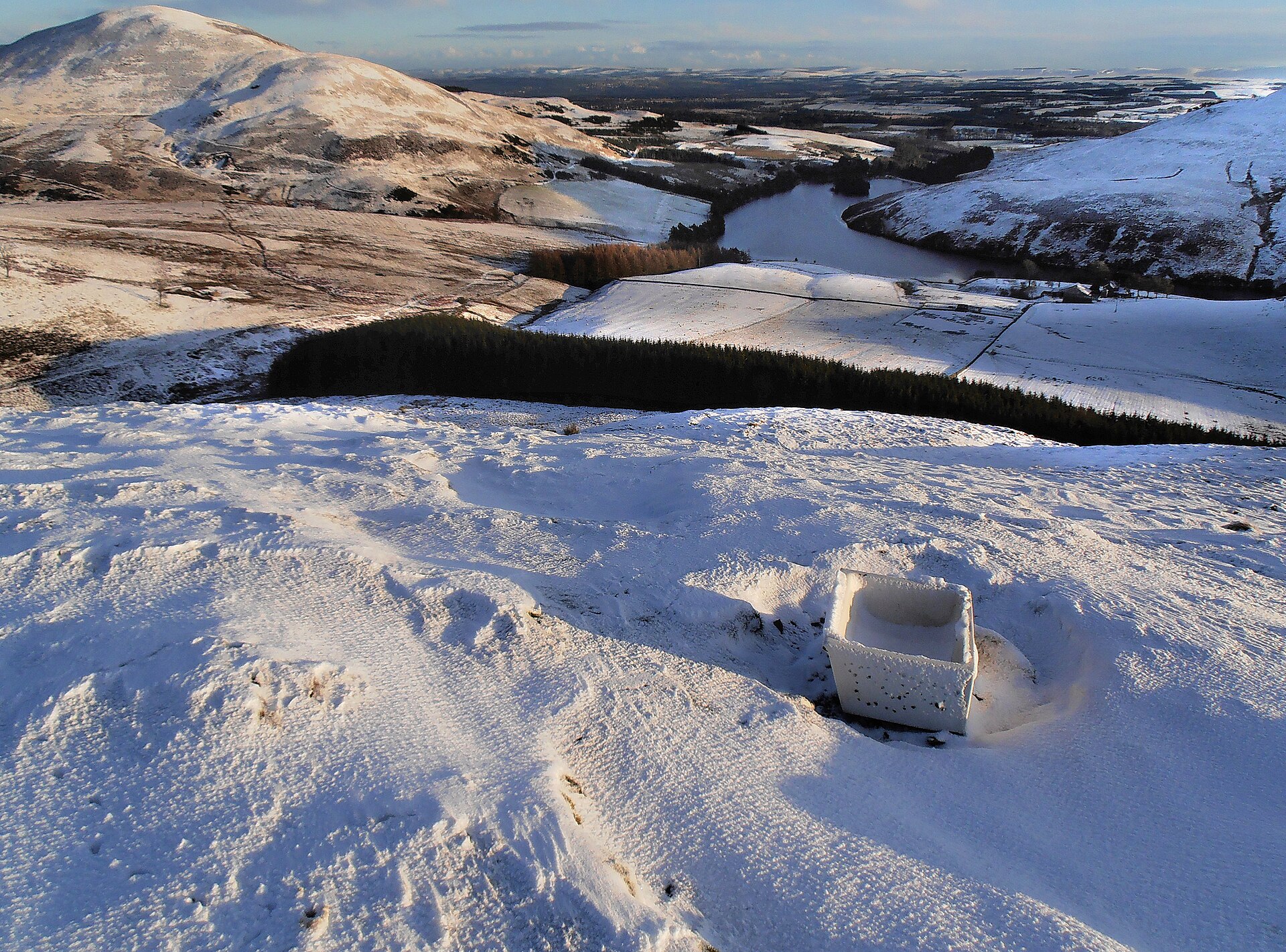
Castle Law
Midlothian
Castle Law is a scheduled Iron Age (the centuries before Rome arrived, from about 800 BC) hill fort in the Pentlands, preserving earthworks and a s…
- Near Edinburgh
- Some walking
Fortified place · Roman
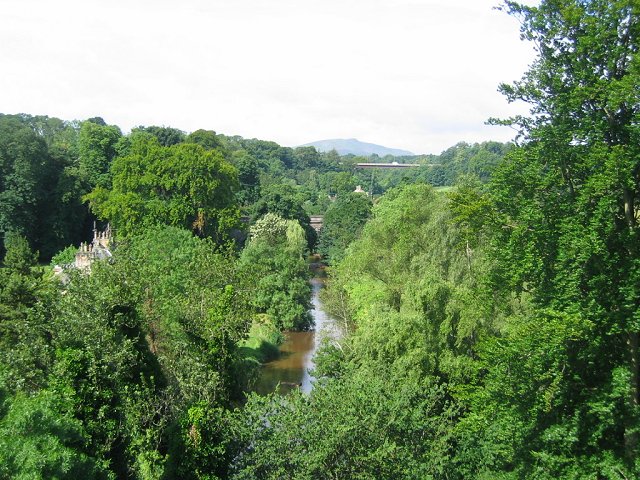
Elginhaugh
Midlothian
Elginhaugh is the Roman Empire’s most completely excavated timber-built auxiliary fort, offering rare evidence for a short Flavian occupation, mixe…
- Near Dalkeith
- Some walking

Sacred place · Medieval
Newbattle Abbey
Midlothian
Newbattle Abbey links Cistercian settlement, early Scottish coal extraction, repeated Anglo-Scottish conflict, Reformation (the break with Rome tha…
- Near Dalkeith
Questions people ask
- When did construction of Rosslyn Chapel begin?
- Construction began on 20 September 1456; the often-repeated 1446 date is the year of its founding charter from Rome.
- Was Rosslyn Chapel completed as planned?
- No. The intended cruciform church was never completed; only the choir and associated east-end spaces were built.
- Are the Templar and Holy Grail stories historical?
- The source describes them as modern speculative theories and says medieval historians find no factual basis for the claimed Templar connection.
Sources
The Ancient Codex, in your pocket
Get the Pocket Codex app
Carry the directory with you — Rosslyn Chapel and thousands of ancient places across Britain and Ireland, offline, wherever you roam.