
Although the Wallace story cannot be confirmed, the lost oak’s storm-felled remains and memorial show how a local legend became durable civic memory.
The chains may have made the story rather than the other way round. The Wallace Oak at Port Glasgow was said to be the tree William Wallace was chained to in 1304 or 1305, after his capture by English forces — but the tree was decaying by the eighteenth century, was treated with pitch, and had chains fitted to hold its branches together. A tree in chains, in a country that remembers Wallace, is a legend waiting to be told.
It stood near where the Holy Family Roman Catholic Church now is, on Parkhill Avenue. A storm brought it down in 1995, though some of its timber was kept, and in 2019 a proposal was made to put up a monument to it.
Trees of this kind are worth recording precisely because they are not buildings. A named tree is a landmark held in a community’s memory across generations, and when one falls the place loses a fixed point that no amount of masonry replaces. What the record can confirm here is the tree, its decay, its propping, its fall and its afterlife in timber. What it cannot confirm is the story that made it famous.
What follows is drawn from published sources, with each claim labelled by how firmly it is established.
The name
The tree’s name commemorated the long-standing local legend that William Wallace was chained to it after his capture, although the story cannot be confirmed from the surviving record.
History
Legend says William Wallace was chained to this tree after his capture in 1304 or 1305, though reliable evidence for his movements at that point is scarce. The tree stood near where the Holy Family Roman Catholic Church now is, on Parkhill Avenue in Port Glasgow. The oak was already decaying by 1768, when damaged wood was cut away and the cavity filled with pitch. Chains were later fitted to hold its branches together — and a chained tree in a country that remembers Wallace is very likely the origin of the story rather than its evidence.
The tree came down in a storm in 1995. Some of the remains were taken to Gourock Ropeworks and some were left where they fell, so the oak survives as salvaged timber rather than as a living landmark. A memorial was unveiled in 2021, following a proposal made two years earlier, and in 2022 the last surviving piece of the fallen oak was put on display at Hunterston Castle. A named tree is a fixed point in a community's memory, and losing one leaves a gap that masonry does not fill.
People
-
William Wallace
Legend says Wallace was chained to the oak at Port Glasgow after his capture in 1304 or 1305, though reliable records of his movements in this period are scarce.
Cultural influences
-
The Wallace Oak gave Port Glasgow a local focus for commemorating the Scottish independence leader, through its chains, annual red painting and the 2021 memorial erected after the tree fell.
Connections
-
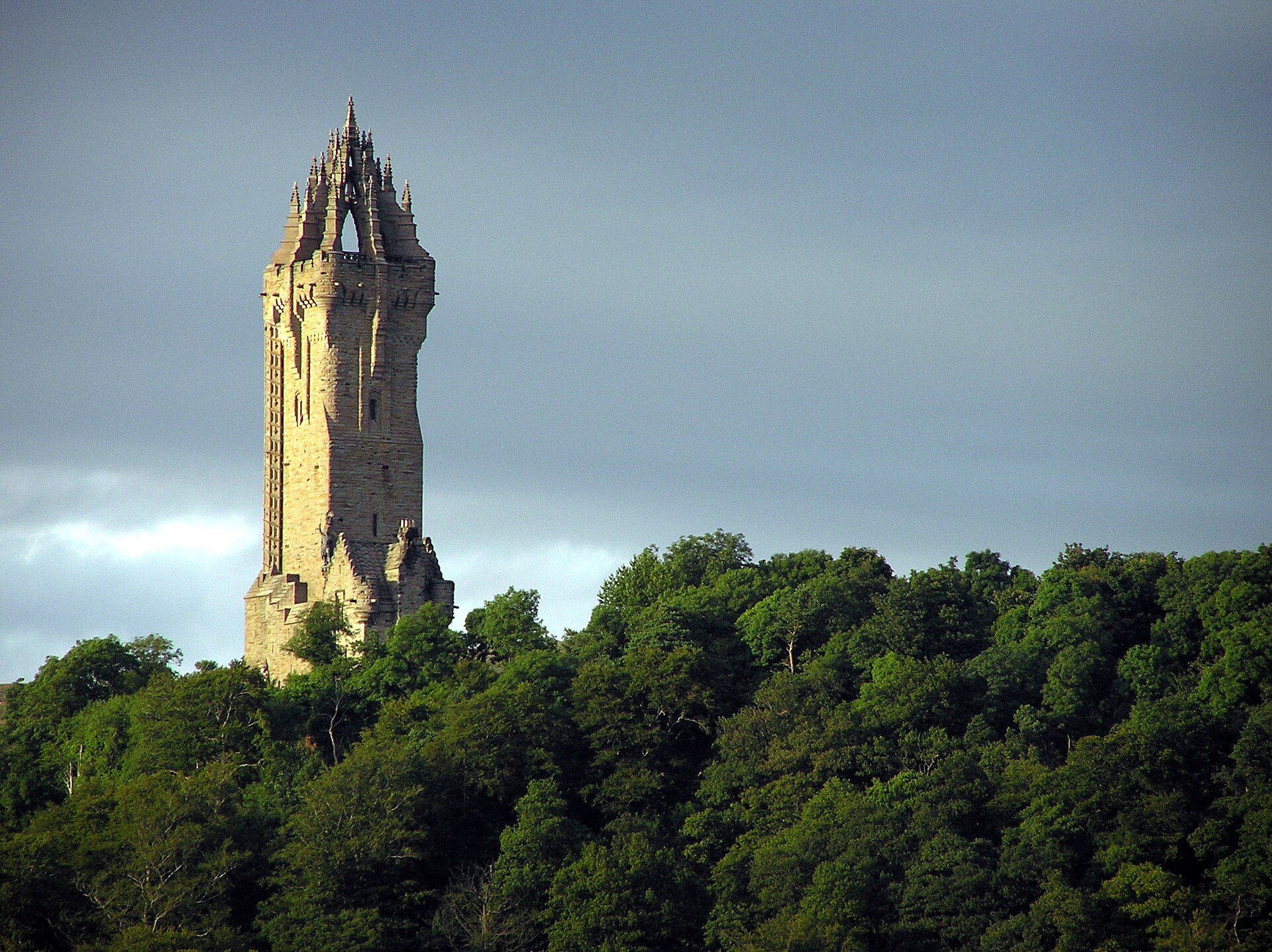
Photo: Finlay McWalter / Wikimedia Commons / CC BY-SA 3.0 The oak’s unverified Wallace story prompted a local memorial after the tree fell; the Stirling tower was completed in 1869 as a national memorial to the same Scottish figure.
Discovery & excavation
After the oak fell in a 1995 storm, dendrochronological analysis of surviving timber dated one section to 1786 and suggested that it may have been regrowth from an older tree.
In culture
-
Wallace Oak memorial
A granite-and-metal monument designed by Nicholson McShane Architects, representing a split trunk wrapped with a chain, was unveiled beside the former oak in 2021.
What to look for
-
Surviving timber
The last surviving timber is preserved at Hunterston Castle, while the 2021 split-trunk memorial marks the former Port Glasgow site.
What is said
Folklore and tradition, recorded as what is said — not as established fact.
-
Local tradition says that Wallace was chained to the oak after his capture, and another version says he hid in its branches while escaping English patrols; neither account can be confirmed.
Plan your visit
- Location
- General area near Inverclyde, Inverclyde
- Nearest settlement
- Inverclyde
- Access
- Reached on a public path
- Best time
- In daylight, when the memorial at the former tree site can be viewed clearly.
- What survives
- Living-tree condition and access should be checked against current local guidance before any visit copy is expanded.
This is a sensitive or fragile site, so we show only its general area. Please check official heritage sources for access before visiting, and take care not to disturb it.
Nearby places
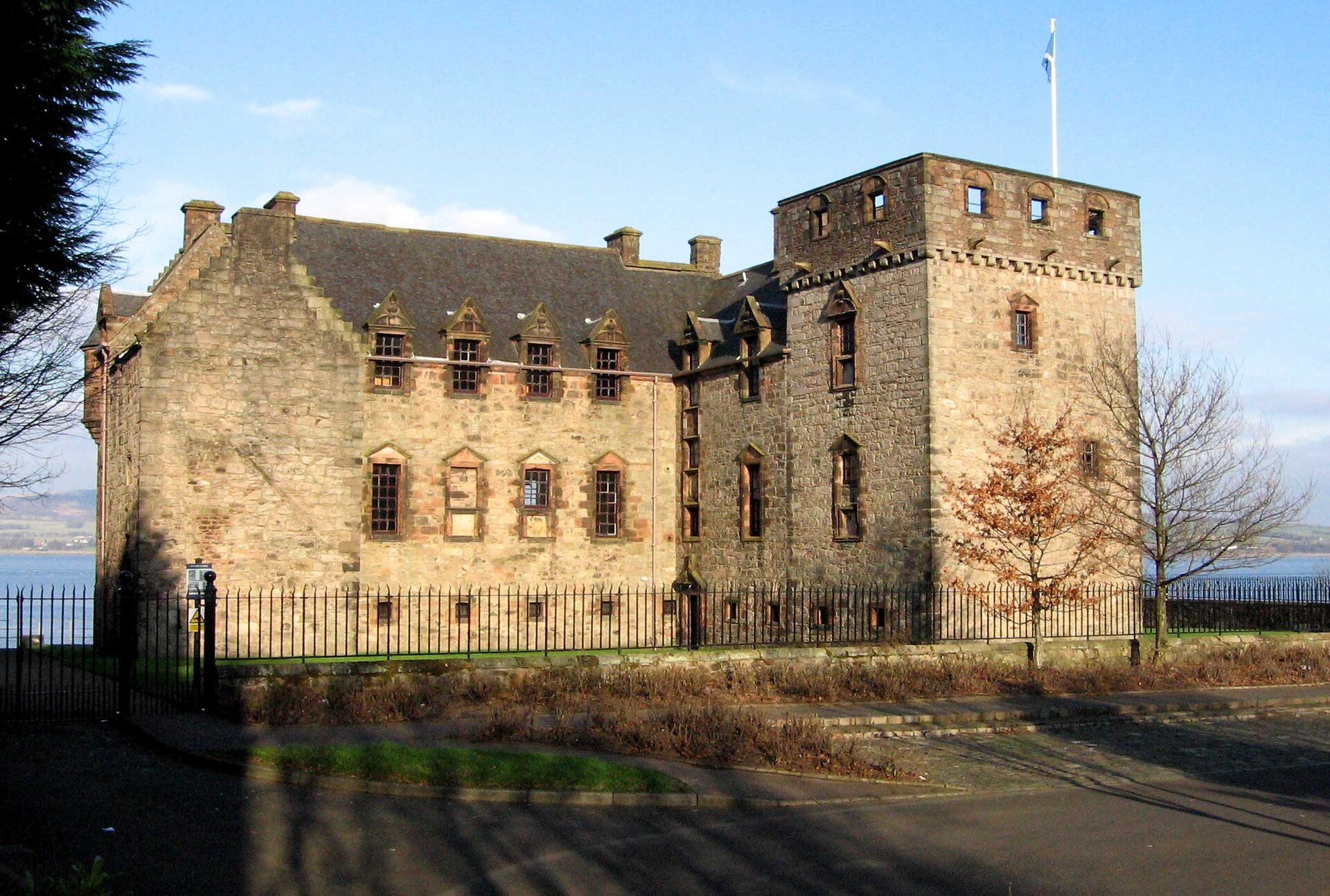
Fortified place · Medieval
Newark Castle, Port Glasgow
Inverclyde
Newark exposes the transformation of a defensive Maxwell tower into a Renaissance mansion, then into the harbour-side landmark around which Port Gl…
- Near Port Glasgow
- Easy path
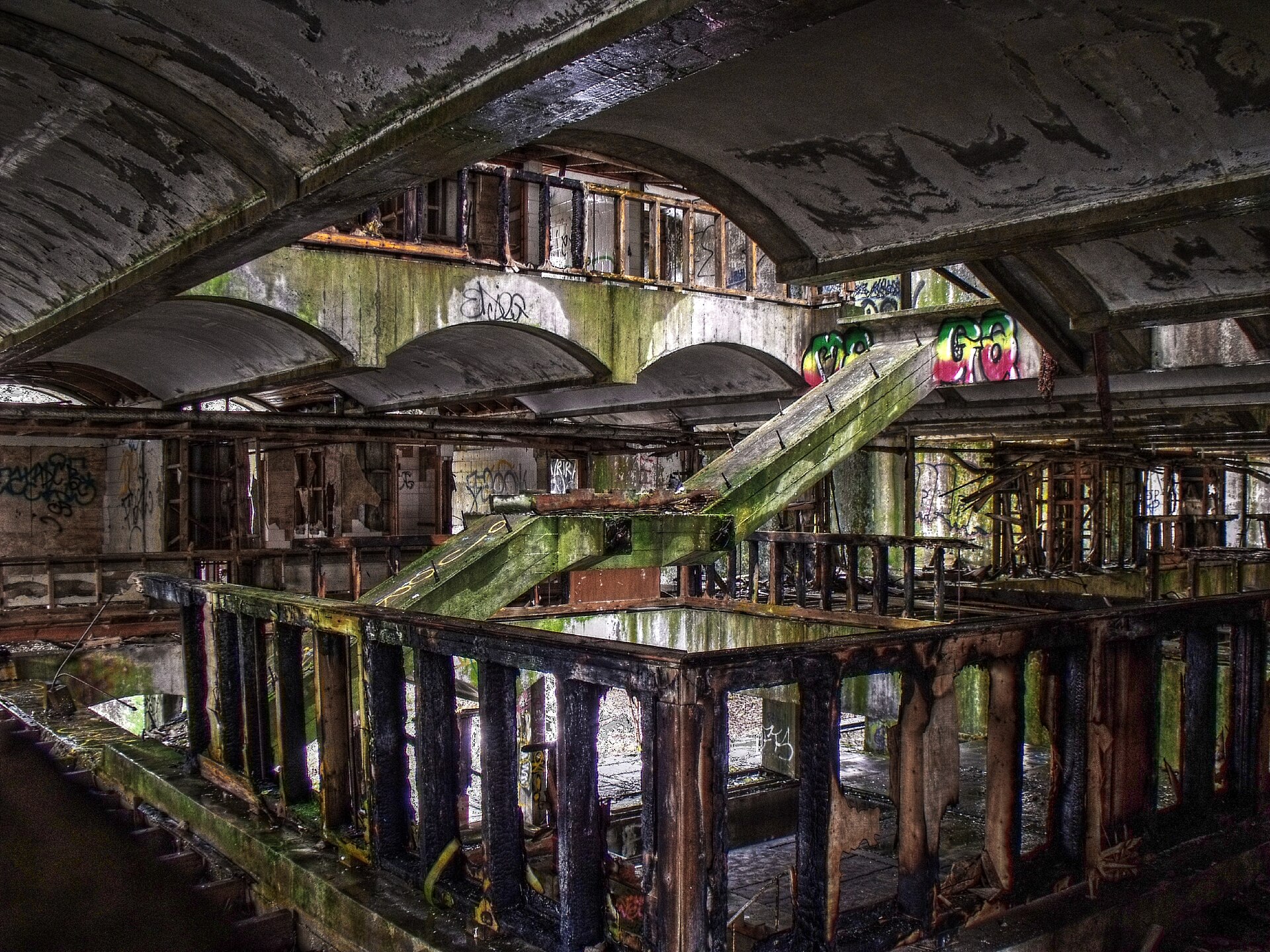
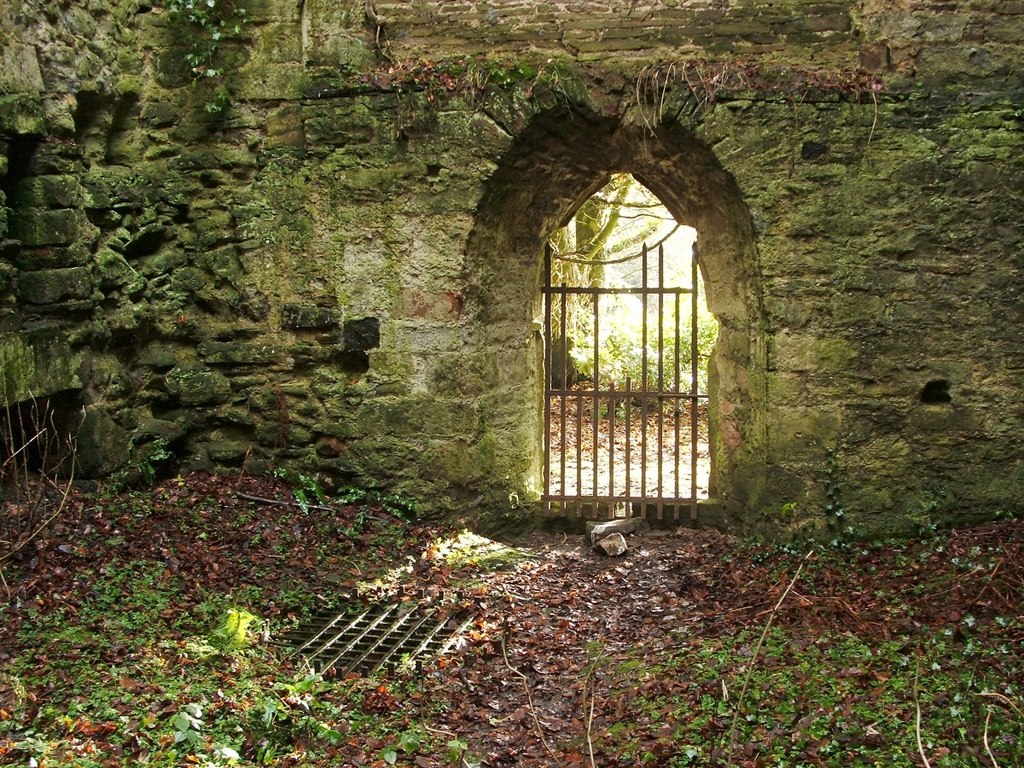
Fortified place · Medieval
Kilmahew Castle
Argyll and Bute
A roofless tower house north of Cardross that gave its name to eighteen generations of Napiers, among them the shipbuilding dynasty that built the…
- Near Cardross
- Some walking
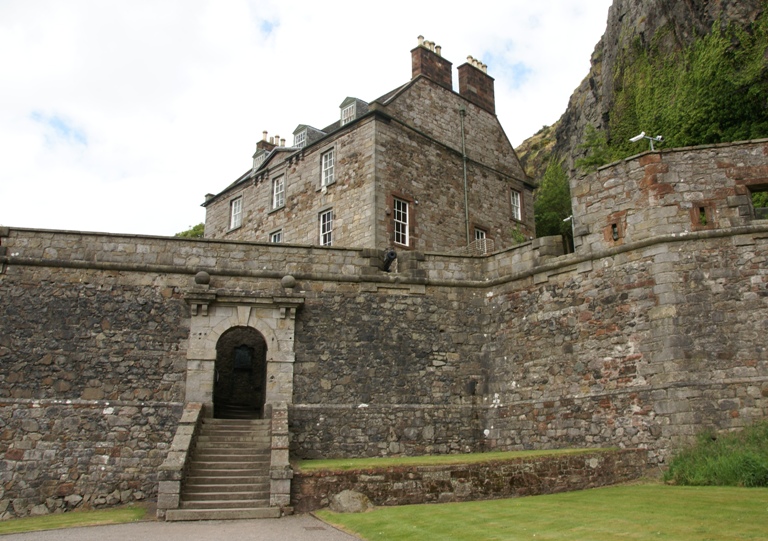
Fortified place · Iron Age
Dumbarton Castle and Dumbarton Rock
West Dunbartonshire
The longest recorded history of any stronghold in Scotland: capital of Strathclyde, taken by Vikings in 871 after its water failed.
- Near Dumbarton
- Some walking
Questions people ask
- Was William Wallace really chained to this tree?
- There is no evidence for it. The tradition says he was chained here in 1304 or 1305 after his capture, but the chains fitted to the decaying tree in later centuries are the likelier origin of the story.
- Where did the tree stand?
- Near the present site of the Holy Family Roman Catholic Church on Parkhill Avenue, Port Glasgow.
- What happened to it?
- It was decaying by the eighteenth century, was treated with pitch and braced with chains, and finally fell in a storm in 1995. Some of the timber was preserved.
- Is anything marking the spot?
- A proposal to erect a monument to the tree was made in 2019.
Sources
- Wikipedia — Wallace Oak (Port Glasgow)
- Historic Environment Scotland — Port Glasgow
- Historic Environment Scotland — listing and place records
- National Wallace Monument — Our Story
Explore more: Ancient trees · Medieval · Inverclyde
The Ancient Codex, in your pocket
Get the Pocket Codex app
Carry the directory with you — Wallace Oak (Port Glasgow) and thousands of ancient places across Britain and Ireland, offline, wherever you roam.