A roofless tower house north of Cardross that gave its name to eighteen generations of Napiers, among them the shipbuilding dynasty that built the Clyde's reputation.
A broken shell of masonry rises among trees on the slope above Kilmahew Burn, four storeys of a tower house reduced now to open walls and empty window openings. For more than three centuries this was the seat of a single family, the Napiers, whose name would later travel far beyond Argyll and Bute through the shipyards of the River Clyde.
What follows is drawn from published sources, with each claim labelled by how firmly it is established.
The name
The estate takes its name from Mochta, known locally as Mahew, an early Christian saint to whom the site was dedicated; 'Kilmahew' combines the element 'kil' (a church or cell) with the saint's name.
History
Around 1290 the lands of Kilmahew passed to the Napier family as a grant from Malcolm, Earl of Lennox, establishing a connection that would last for eighteen generations. The tower house itself was not raised immediately; it was built later, in the 16th century, once the family was established as lairds of the estate, and it became the seat from which successive generations of Napiers managed their lands north of Cardross.
The Napiers of Kilmahew are remembered less for the castle itself than for the descendants they produced in the age of industry. Robert Napier, later celebrated as the father of Clyde shipbuilding, traced his line to this family, as did David, James and Montague Napier, who ran the engineering firm of Napier & Son. A tower house on a quiet burn thus sits at the root of a name that shaped one of the world's great shipbuilding rivers.
In 1694 the estate passed to George Maxwell of Newark and Tealing, who took the name John Napier of Kilmahew after his maternal grandfather. He died in 1744 without legitimate children, ending the Napier line at Kilmahew directly, though the family's coat of arms survives as a quartering within that of Noble of Ardmore, who represent the Napiers of Kilmahew in heraldry today. Around the same period, in 1744, alterations attributed to the architect John Douglas were made to the tower house.
Ownership then grew tangled. An illegitimate daughter, Jean Smith, successfully claimed the estate after Maxwell's death and married David Brydie, but the property was later sold to Alexander Sharp in 1820 to settle gambling debts. Sharp is credited with giving the castle some of its more obviously Gothic touches during the 19th century, reworking parts of the older tower house to suit contemporary taste.
In 1839 the estate was bought by James Burns of the neighbouring property of Bloomhill, son of the Reverend Dr John Burns. James Burns lived out his life at Kilmahew and died within the castle itself in 1871, closing out more than a century of private ownership by families with no blood tie to the original Napier line.
The ruined castle and its surrounding estate were acquired by the Archdiocese of Glasgow in 1948, a purchase that set the site on a very different course: the Archdiocese went on to build the modernist St Peter's Seminary nearby, permanently linking the medieval ruin to one of Scotland's most debated pieces of 20th-century architecture. In 2020 the Kilmahew Education Trust acquired the castle as part of the wider 140-acre (57 hectare) Kilmahew Estate, which also takes in the seminary ruins and John Fleming's Walled Gardens, bringing the tower house under a single body dedicated to the future of the whole site.
People
-
Robert Napier
Descendant of the Napiers of Kilmahew, later known as the father of Clyde shipbuilding.
-
David, James and Montague Napier
Descendants of the Kilmahew Napiers who ran the engineering firm of Napier & Son.
-
John Douglas
Architect credited with the castle modifications made in 1744, reshaping parts of the older tower house.
-
Alexander Sharp
Nineteenth-century owner who carried out Gothic-style alterations, giving the medieval ruin part of its later character.
-
James Burns of Bloomhill
Owner from 1839 who died in the castle in 1871, during the estate’s nineteenth-century ownership.
Connections
-
St Peter's Seminary
Stands close to Kilmahew Castle within the same Kilmahew Estate, built after the Archdiocese of Glasgow acquired the estate in 1948.
-
John Fleming's Walled Gardens
Part of the same 140-acre Kilmahew Estate now held by the Kilmahew Education Trust alongside the castle.
-
Kilmahew Burn
The watercourse running past the castle from which part of the estate's name and setting derive.
-
Noble of Ardmore
Family that now carries the Napier of Kilmahew coat of arms as a quartering, representing the Napiers in heraldry after the direct line ended.
What to look for
-
Four-storey tower house shell
The surviving walls represent the original 16th-century tower house, now open to the sky but still standing to much of its full height.
-
Gothic alterations
Sections reworked in the 19th century under Alexander Sharp give parts of the ruin a more Gothic appearance than its earlier tower-house form.
-
Setting above Kilmahew Burn
The castle sits on rising ground close to the burn, within wooded grounds shared with St Peter's Seminary and the walled gardens.
Plan your visit
- Location
- 55.9725°N · 4.6428°W
- Nearest settlement
- Cardross
- Terrain
- Moderate walking
- Time needed
- About 45 minutes
- What survives
- The sixteenth-century tower house survives as a roofless ruin on the Kilmahew Estate.
Opening & admission
No current visitor access details are recorded — check the Kilmahew Education Trust's website before travelling.
- Ruined castle on the wider Kilmahew Estate, alongside St. Peter's Seminary
- No public access route or terrain details are documented
Nearby places
Ancient tree · Medieval
Bruce Tree
West Dunbartonshire
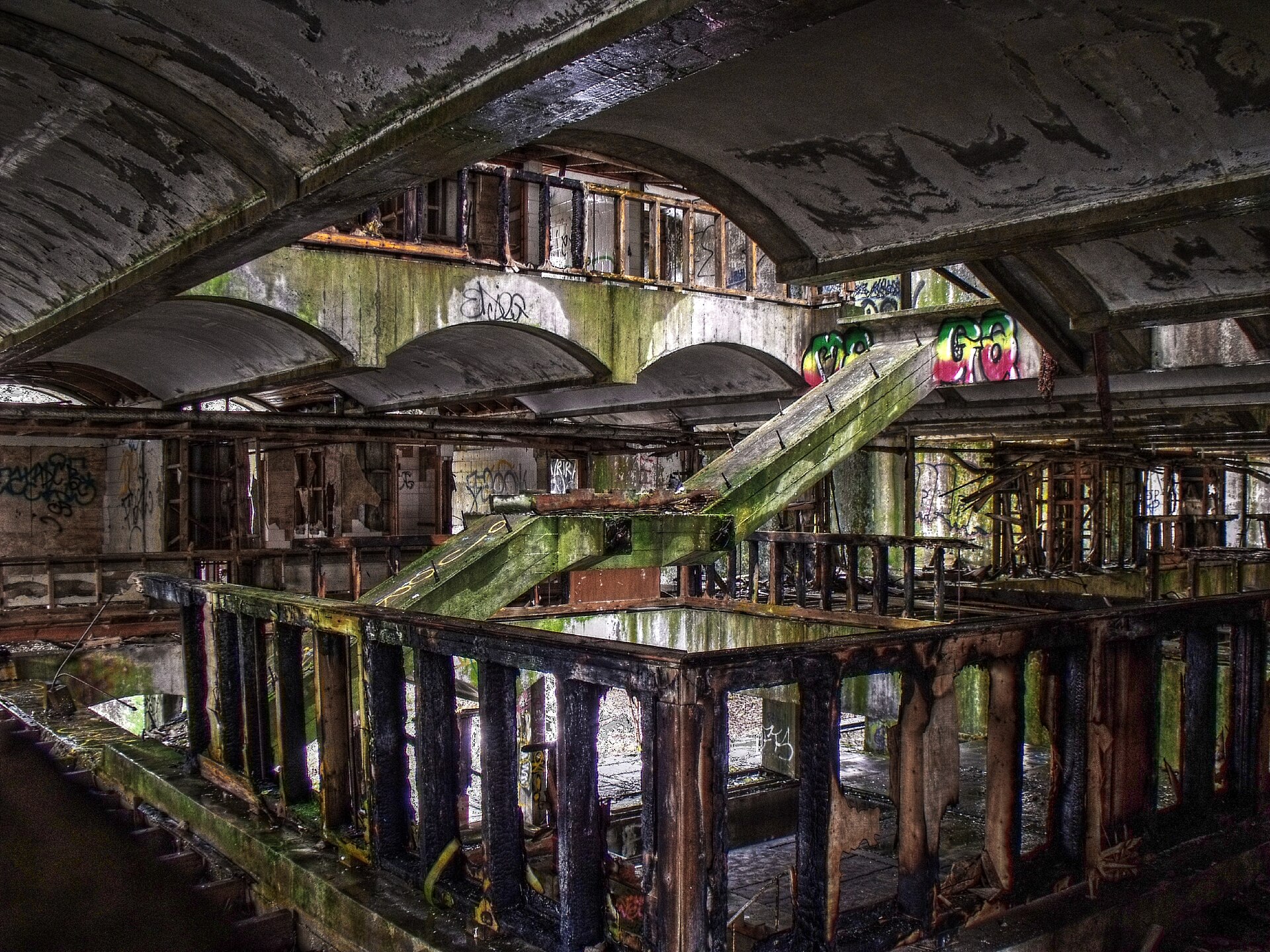
An oak said to have been planted by Robert the Bruce, burnt down by an arsonist in May 2004: and then cut up and carved into a replica of his throne.
- Near West Dunbartonshire
Fortified place · Medieval
Newark Castle, Port Glasgow
Inverclyde
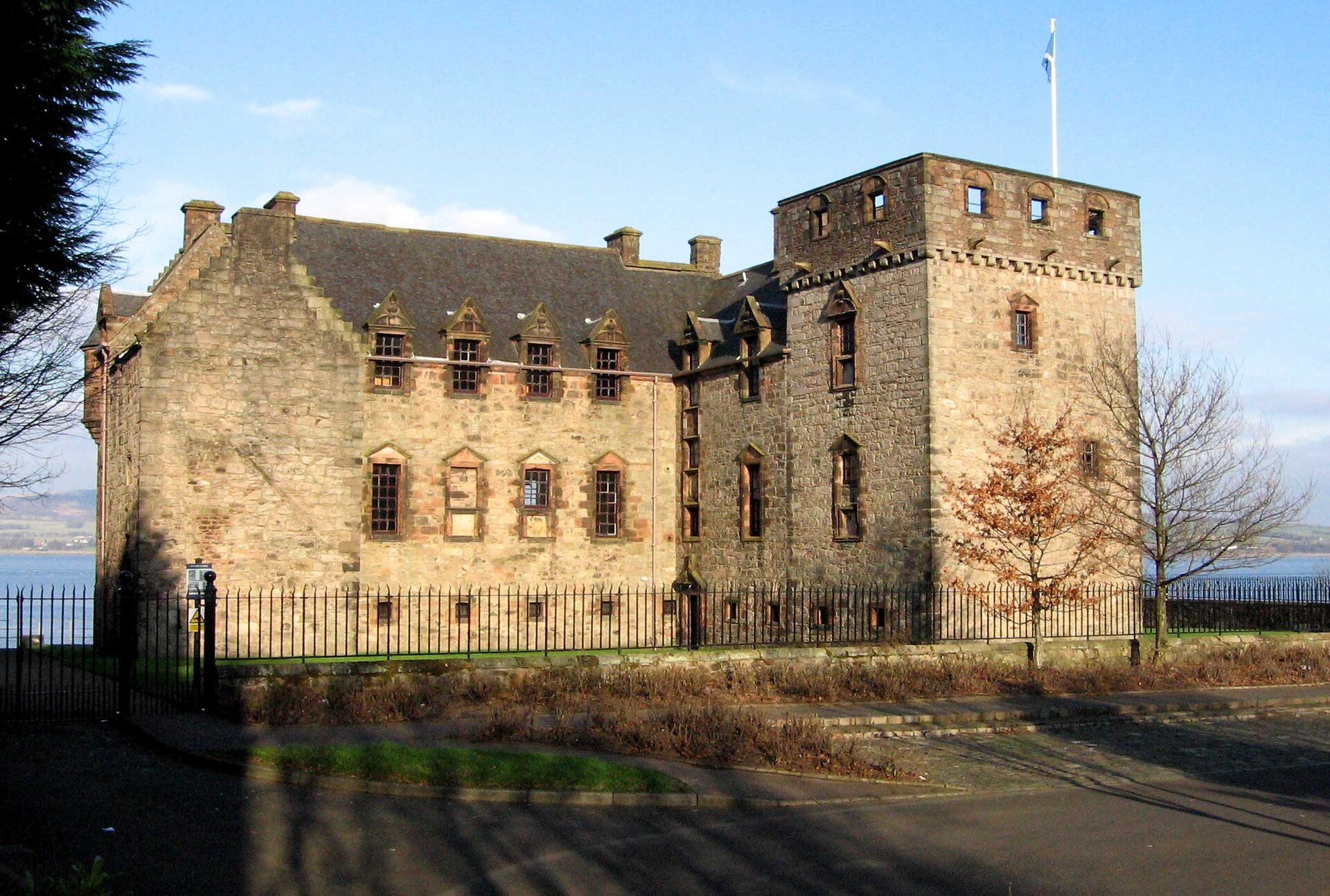
Newark exposes the transformation of a defensive Maxwell tower into a Renaissance mansion, then into the harbour-side landmark around which Port Gl…
- Near Port Glasgow
- Easy path
Ancient tree · Medieval
Wallace Oak (Port Glasgow)
Inverclyde
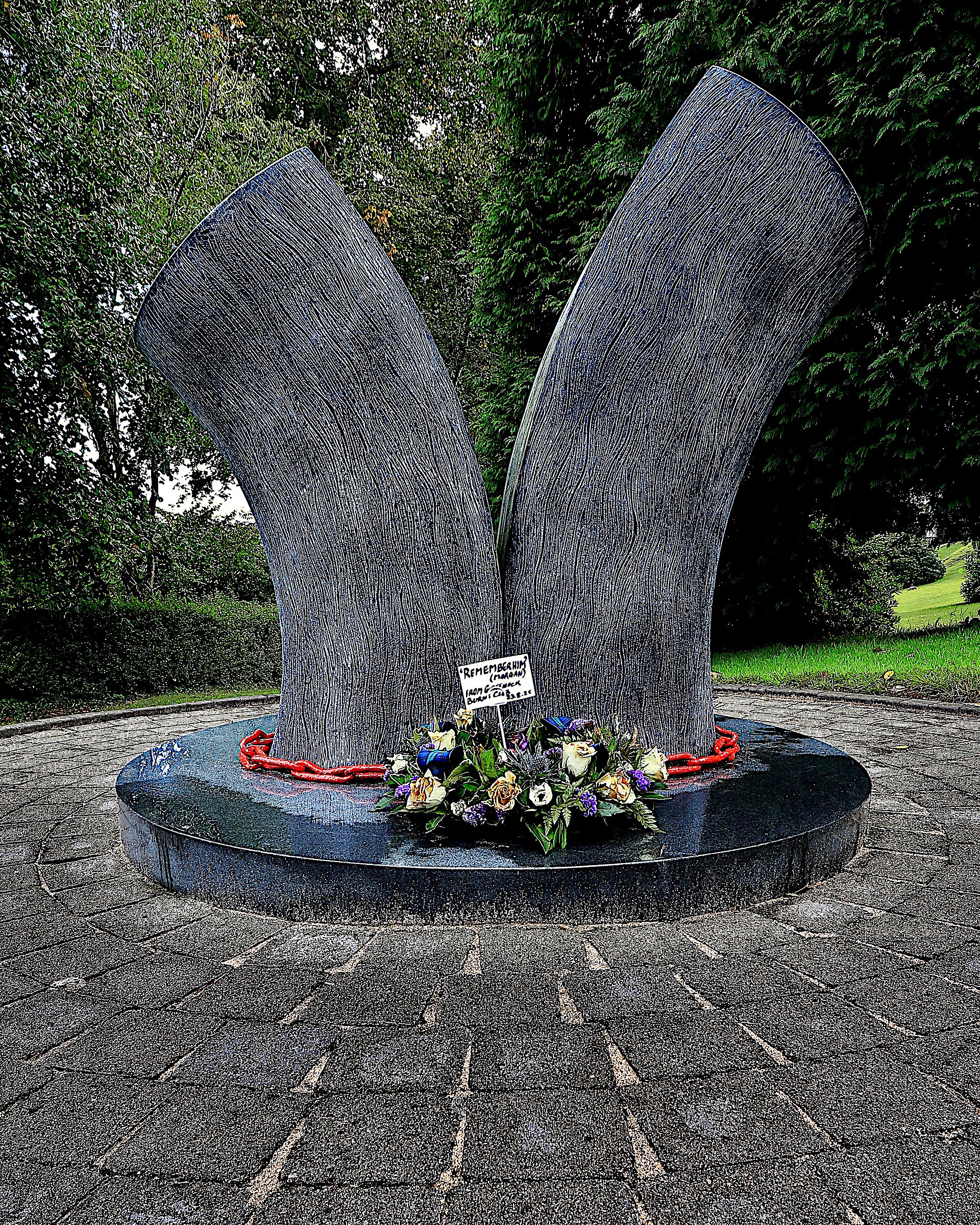
Although the Wallace story cannot be confirmed, the lost oak’s storm-felled remains and memorial show how a local legend became durable civic memory.
- Near Inverclyde
The setting
Kilmahew Farm in the wider landscape around Kilmahew Castle; the castle is not visible.
Photo: Lairich Rig / Wikimedia Commons / CC BY-SA 2.0
A woodland path near Kilmahew Castle; the castle is not visible.
Photo: Lairich Rig / Wikimedia Commons / CC BY-SA 2.0
Questions people ask
- Who built Kilmahew Castle?
- The Napier family built the tower house in the 16th century, on lands granted to them around 1290 by Malcolm, Earl of Lennox.
- Why is Kilmahew Castle historically significant beyond its ruins?
- It was the seat of the Napiers of Kilmahew for eighteen generations, a family whose descendants included Robert Napier, the father of Clyde shipbuilding.
- Who owns Kilmahew Castle today?
- The Kilmahew Education Trust, which acquired the castle in 2020 as part of the wider 140-acre Kilmahew Estate.
- How is Kilmahew Castle connected to St Peter's Seminary?
- Both sit within the same estate; the Archdiocese of Glasgow acquired Kilmahew in 1948 and later built the seminary nearby.
- Where does the name Kilmahew come from?
- It derives from Saint Mochta, known as Mahew, the site's patron saint, combined with 'kil', meaning church or cell.
Sources
- Wikipedia: Kilmahew Castle
- Wikidata: Kilmahew Castle
- Historic Environment Scotland — Kilmahew Castle (SM5404)
- Royal Commission on the Ancient and Historical Monuments of Scotland (RCAHMS) — Kilmahew Castle
Explore more: Fortified places · Medieval · Argyll and Bute
The Ancient Codex, in your pocket
Get the Pocket Codex app
Carry the directory with you — Kilmahew Castle and thousands of ancient places across Britain and Ireland, offline, wherever you roam.