
Scotstarvit Tower is a remarkably intact six-storey Fife tower house, recording the transition from an Inglis family residence to Sir John Scot’s learned 17th-century rebuilding and modern public stewardship.
A six-storey L-plan tower rises south of Cupar between Tarvit Hill and Walton Hill. Scotstarvit Tower remains largely intact, giving a clear impression of the vertical scale and defensive domestic form of a 16th-century Scottish tower house.
The Inglis family built it in the third quarter of the 16th century. In 1611 Sir John Scot acquired the property and rebuilt the tower in the 1620s, leaving the structure associated with both landed power and the satirical literary culture of early modern Scotland.
Later ownership passed to the Wemyss family. The tower entered National Trust for Scotland guardianship in 1948 and is now cared for by Historic Environment Scotland as a Scheduled Ancient Monument, allowing its long architectural sequence to be read within the Fife countryside.
What follows is drawn from published sources, with each claim labelled by how firmly it is established.
History
The Inglis family built Scotstarvit Tower in the third quarter of the 16th century. Its six-storey L-plan design is still largely intact, preserving the characteristic form of a Scottish tower house and the vertical arrangement of a substantial late-medieval or early-modern country residence. Sir John Scot purchased the tower in 1611 and undertook rebuilding in the 1620s. Scot was the author of the satirical The Staggering State of the Scots’ Statesmen, so his ownership links the altered residence to the political and literary culture of 17th-century Scotland.
Scotstarvit later passed to the Wemyss family. In 1766 Major General John Scott inherited the tower from his father David Scott, and he died there in 1775, adding a documented 18th-century family chapter to a building whose principal form had already been established much earlier. The tower was placed in the guardianship of the National Trust for Scotland in 1948. It is now cared for by Historic Environment Scotland and protected as a Scheduled Ancient Monument, securing the survival of a largely intact tower house in its rural setting south of Cupar.
People
-
Sir John Scot
Owner from 1611 who rebuilt the tower in the 1620s and wrote the satirical The Staggering State of the Scots’ Statesmen, linking the house to early modern political writing.
-
Major General John Scott
Later owner who inherited Scotstarvit from his father David Scott in 1766 and died at the tower in 1775, marking its eighteenth-century family history.
-
David Scott
Father of Major General John Scott and owner from whom the tower passed by inheritance in 1766, before his son’s death there nine years later.
Cultural influences
-
The L-plan and six-storey form place Scotstarvit within the long tradition of fortified domestic residences.
Connections
-

Photo: Kilnburn (talk) 18:25, 20 February 2009 (UTC) / Wikimedia Commons / Attribution Cupar
The nearby county town lies north of the tower; Scotstarvit’s scheduled survival in its rural setting makes it a distinct counterpart to Cupar’s civic centre.
-
Wemyss family
This family later owned Scotstarvit after the Scot period, continuing the tower’s ownership history beyond Sir John Scot’s seventeenth-century rebuilding.
In culture
-
Sir John Scot’s satirical work, connecting the tower to early modern Scottish political writing.
What to look for
-
L-plan tower
The six-storey L-plan form is largely intact, showing how a substantial Scottish tower house stacked defensive and domestic rooms vertically.
-
Height and setting
The tower’s vertical mass rises above rolling ground between Tarvit and Walton hills, making its rural setting as striking as its fortified silhouette.
-
17th-century rebuilding
Sir John Scot’s 1620s rebuilding is the major later layer in a tower first built by the Inglis family in the third quarter of the sixteenth century.
Plan your visit
- Location
- 56.2896°N · 3.0171°W
- Nearest settlement
- St Andrews
- Access
- Visible from a public way
- Time needed
- About 45 minutes
- Best time
- Visit in daylight and dry conditions, when the tower exterior and surrounding landscape can be viewed safely.
- What survives
- The well-preserved six-storey L-plan tower survives in its rural setting, although its interior is currently closed to visitors.
- Facilities
- No dedicated visitor facilities are documented at the tower; plan to use facilities in nearby settlements.
Opening & admission
No interior admission while the tower is closed.
- Historic Scotland states that the tower is currently closed, but visitors can admire it from outside.
Nearby places
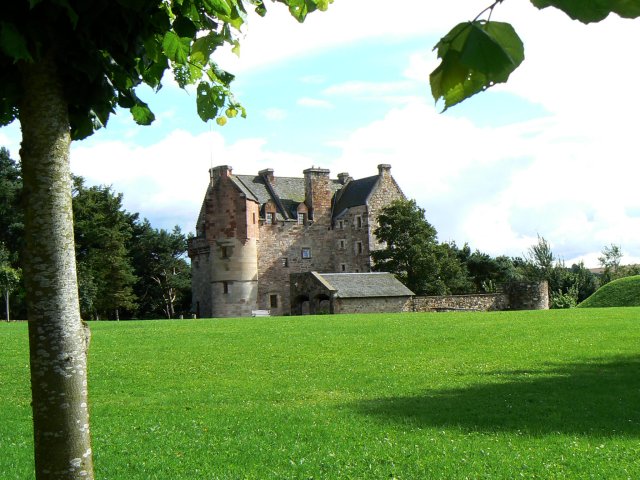
Fortified place · Medieval
Dairsie Castle
Fife
Dairsie gathers Fife’s ecclesiastical, royal and civil-war histories in one tower: a bishop’s estate, a besieged refuge for Mary’s jewels, and a re…
- Near St Andrews
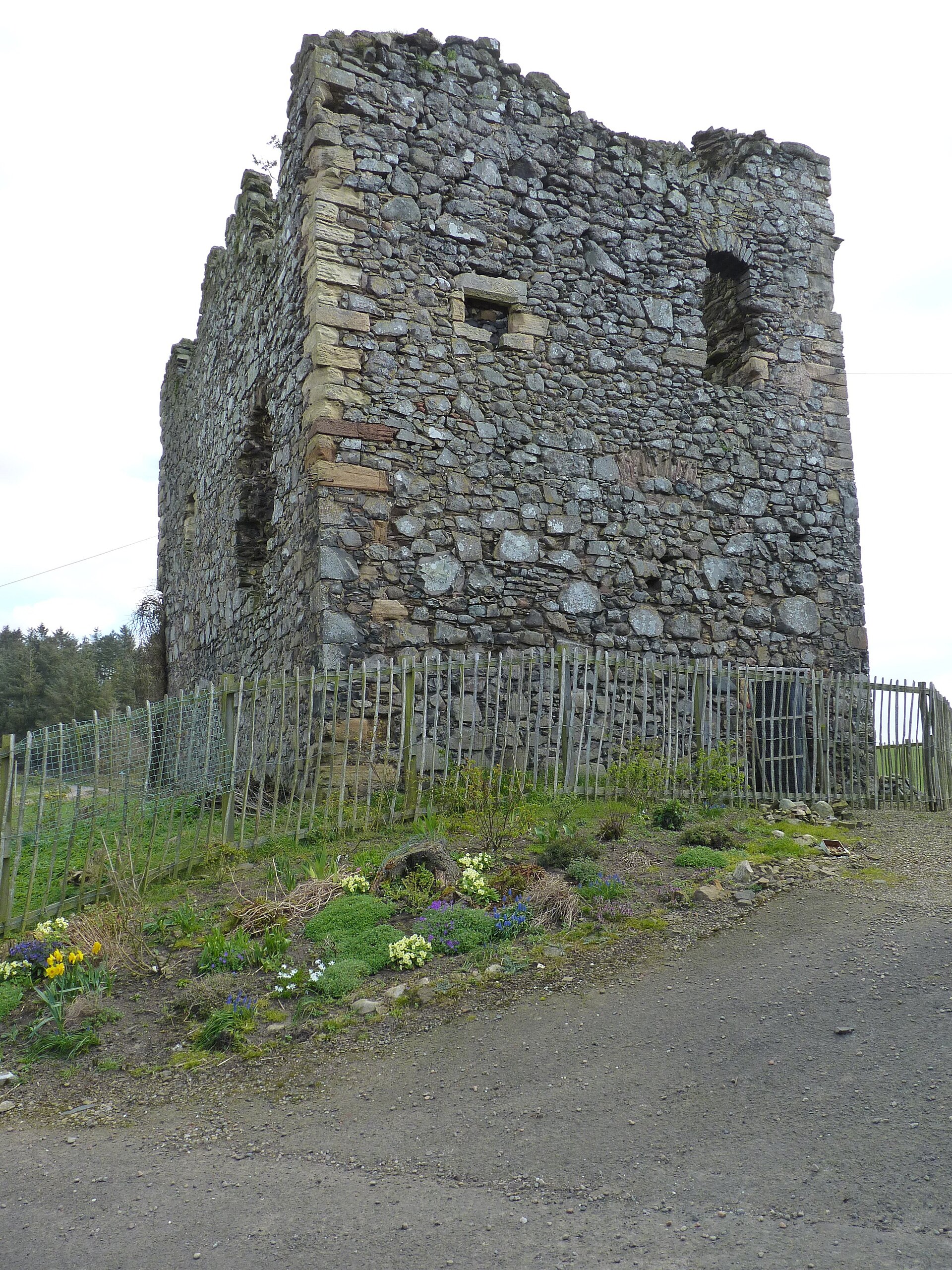
Minor monument · Medieval
Dovecot, Creich Castle
Fife
Creich’s 1723 pigeon house is an unusually formal castle lean-to, where twin chambers, rat-proofing and dormer entries make estate food production…

Fortified place · Iron Age
Norman's Law
Fife
Norman’s Law pairs a scheduled defended settlement dating from from around 800 BC up to the Roman conquest with commanding views over Fife, the Tay…
- Near St Andrews
- Some walking
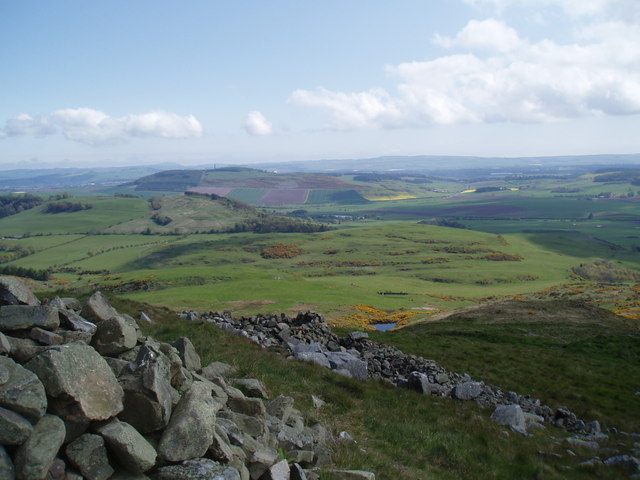
Fortified place · Iron Age
Norman's Law Hillfort
Fife
Two concentric stone ramparts enclosing roughly four hectares mark this as a hillfort (an upland enclosure defended by earthen banks) community of…
- Near St Andrews
- Rough ground
The setting
View across farmland around Scotstarvit Tower.
Photo: Gordon Hatton / Wikimedia Commons / CC BY-SA 2.0
Questions people ask
- When was Scotstarvit Tower built?
- The Inglis family built the six-storey L-plan tower in the third quarter of the 16th century.
- Who rebuilt Scotstarvit Tower?
- Sir John Scot bought it in 1611 and rebuilt it in the 1620s.
- Who cares for Scotstarvit Tower today?
- The tower was placed in National Trust for Scotland guardianship in 1948 and is now cared for by Historic Environment Scotland as a Scheduled Ancient Monument.
Sources
The Ancient Codex, in your pocket
Get the Pocket Codex app
Carry the directory with you — Scotstarvit Tower and thousands of ancient places across Britain and Ireland, offline, wherever you roam.