
Queen Mary’s Thorn keeps royal memory alive in St Andrews through a living tree, while the absence of contemporary evidence makes its famous planting story worth reading cautiously.
A hawthorn grows inside St Mary’s College quadrangle in St Andrews, named Queen Mary’s Thorn for the tradition that Mary, Queen of Scots planted it herself, in some tellings in 1563 to mark her late uncle Francis, Duke of Guise, assassinated that same year in France.
Mary is remembered as having visited St Andrews shortly after returning from France to take up her throne, and grew fond enough of the town to buy a house near the Abbey within a year — a retreat from the business of Edinburgh, where she is said to have shopped, cooked and kept house alongside her ladies-in-waiting, the four Maries who had accompanied her since childhood.
No contemporary record confirms the planting itself, or gives the tree a measured age, so the royal hand behind it remains attribution rather than proof. What survives is the tree and its name, kept alive in local memory long after any written record of the act itself.
The Mapping Memorials to Women in Scotland project lists the thorn as one of its “other” memorial types, entered into that register in December 2015 — a living, botanical tribute rather than a plaque or statue, and a rare case of a tree standing in for a monument to a named woman.
The thorn still flowers and fruits within the quad each year, a named living landmark tied to one of Scotland’s best-known queens and to the university that has grown up around it.
What follows is drawn from published sources, with each claim labelled by how firmly it is established.
The name
The name Queen Marys Thorn records the tradition associating the hawthorn with Mary, Queen of Scots.
History
A hawthorn grows within the quadrangle of St Mary's College on South Street, St Andrews, named for the tradition that Mary, Queen of Scots planted it herself. Where a source gives a specific year, it is 1563, said to mark her late uncle Francis, Duke of Guise, assassinated that same year in France. Mary is recorded as having first visited St Andrews shortly after her return from France to take up her throne, and grew fond enough of the town to acquire a house near the Abbey within a year — a retreat from Edinburgh where she is said to have shopped, cooked and kept house with her ladies-in-waiting, the "four Maries".
No contemporary record establishes the planting event itself, and the tree's exact age is not independently measured, so the 1560s date and the royal hand behind it remain attribution rather than proven fact — a story attached to the tree rather than a fact carved alongside it. The Mapping Memorials to Women in Scotland project lists the tree as one of its "other" memorial types — a living, botanical tribute rather than a plaque or statue — entered into that register in December 2015.
Its value lies in the persistence of a named living feature within the historic landscape of St Andrews, still flowering and fruiting within the university quad centuries after the story attached to it, tying a working college courtyard to the memory of one of Scotland's best-remembered queens.
People
-
Mary, Queen of Scots
The queen traditionally credited with planting the hawthorn in St Marys College quadrangle.
Cultural influences
-
The tree is shaped by royal memory of Mary, Queen of Scots and by its setting within the historic St Andrews college quadrangle.
Connections
-

Photo: Marcok / Wikimedia Commons / CC BY-SA 4.0 The thorn’s royal tradition recalls Mary, Queen of Scots; at St Andrews Castle, Cardinal Beaton’s opposition to her proposed English marriage helped trigger the 1544 crisis that brought conflict to the town.
In culture
-
Living memorial
The Mapping Memorials to Women in Scotland project records the thorn as a botanical memorial to Mary, Queen of Scots.
What to look for
-
Named hawthorn
The tree’s identity as a hawthorn and its royal name are the clearest surviving features.
What is said
Folklore and tradition, recorded as what is said — not as established fact.
-
The planting tradition
Tradition says Mary, Queen of Scots planted the thorn, sometimes dated to 1563, but no contemporary record confirms the event.
Plan your visit
- Location
- General area near Fife, Fife
- Nearest settlement
- Fife
- Access
- Reached on a public path
- What survives
- Living-tree condition and access should be checked against current local guidance before any visit copy is expanded.
This is a sensitive or fragile site, so we show only its general area. Please check official heritage sources for access before visiting, and take care not to disturb it.
Nearby places
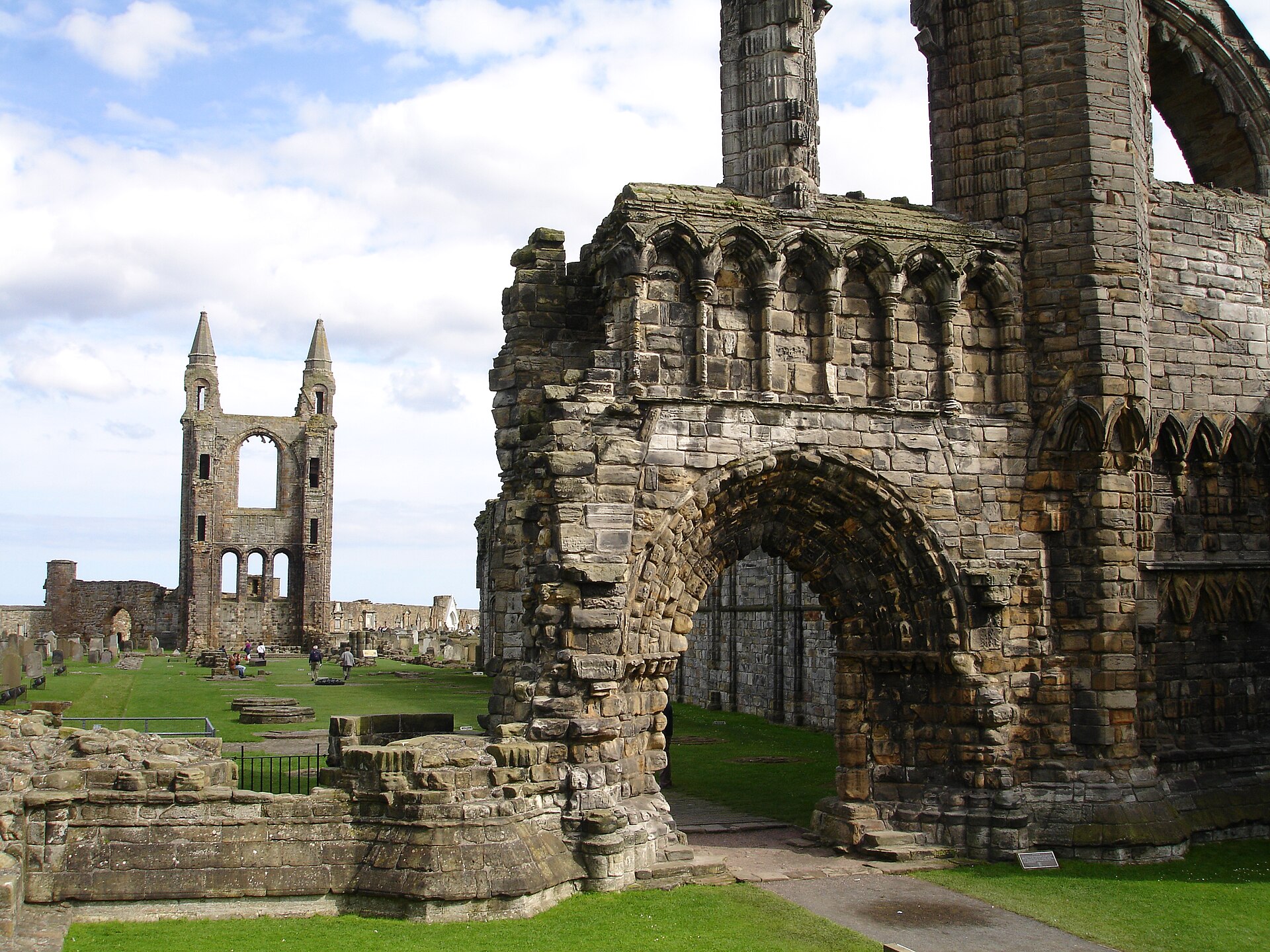
Building or ruin · Pictish & early medieval
St Andrews Cathedral
Fife
The Cathedral of St Andrew was founded in 1158 to provide more accommodation than the older church of St Regulus (St Rule) afforded, and became the…
- Near St Andrews
- 6 min walk from car park
Fortified place · Medieval
St Andrews Castle
Fife
St Andrews Castle was the palace and prison of Scotland’s bishops, a frontline fortress in the Wars of Independence and Reformation (the sixteenth-…

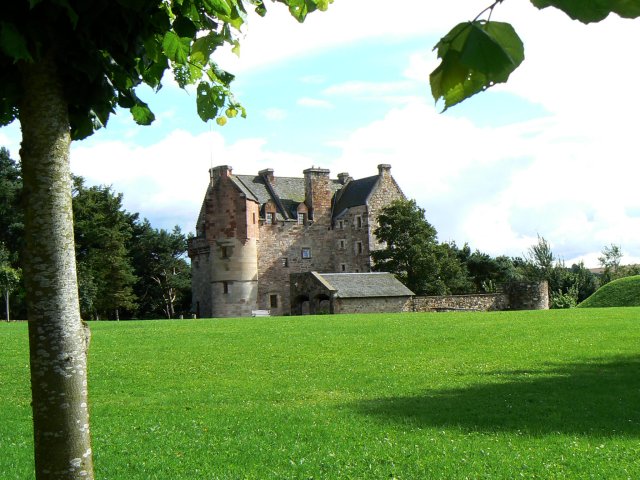
Fortified place · Medieval
Dairsie Castle
Fife
Dairsie gathers Fife’s ecclesiastical, royal and civil-war histories in one tower: a bishop’s estate, a besieged refuge for Mary’s jewels, and a re…
- Near St Andrews
The setting
Near Queen Mary's Thorn, about 20 metres away.
Photo: Jerzy Morkis / Wikimedia Commons / CC BY-SA 2.0
Near Queen Mary's Thorn, about 21 metres away.
Photo: Drkirstyross / Wikimedia Commons / CC BY-SA 4.0
Near Queen Mary's Thorn, about 21 metres away.
Photo: Drkirstyross / Wikimedia Commons / CC BY-SA 4.0
Near Queen Mary's Thorn, about 23 metres away.
Photo: Jerzy Morkis / Wikimedia Commons / CC BY-SA 2.0
Questions people ask
- Did Mary, Queen of Scots really plant this tree?
- Tradition says so, sometimes dating the planting to 1563, but no contemporary record confirms the event and the tree's age has not been independently measured. It remains attribution rather than proven fact.
- Why would Mary have planted a hawthorn in St Andrews?
- She grew attached to the town after returning from France, buying a house near the Abbey within a year of her first visit as a retreat from Edinburgh, where she is recorded keeping house with her ladies-in-waiting, the "four Maries".
- Is the tree recognised as a memorial?
- The Mapping Memorials to Women in Scotland project lists it as an "other" memorial type — a living, botanical tribute rather than a plaque or statue — entered in December 2015.
Sources
- Historic Environment Scotland — St Andrews
- Historic Environment Scotland — listing and place records
- Mapping Memorials to Women in Scotland — Queen Mary's Thorn
- Historic Environment Scotland — St Andrews Castle history
Explore more: Ancient trees · Medieval · Fife
The Ancient Codex, in your pocket
Get the Pocket Codex app
Carry the directory with you — Queen Mary's Thorn and thousands of ancient places across Britain and Ireland, offline, wherever you roam.