
The hill was already a place of burial by around 1500 BC and shows evidence of occupation and ramparts after 1000 BC; the ramparts were rebuilt and realigned many times over the following centuries.…
Traprain Law is a settlement near East Linton, East Lothian, Scotland.
What follows is drawn from published sources, with each claim labelled by how firmly it is established.
The name
The hill has been called Traprain Law only since the late 18th century, taking its name from a local hamlet — a Cumbric name cognate with Welsh 'tref' ('farm') and either 'pren' ('tree') or 'bryn' ('hill'), with 'Law' from Old English 'hlāw', a hill. Earlier maps record it as Dunpendyrlaw (1630) and Dounprenderlaw (1547). Locally, especially among fishermen using it as a landmark, it is still called Dunpelder — also Cumbric, cognate with Welsh 'din' ('fort') and 'pelydr' ('spear shafts'), thus 'fort of the spear shafts'.
History
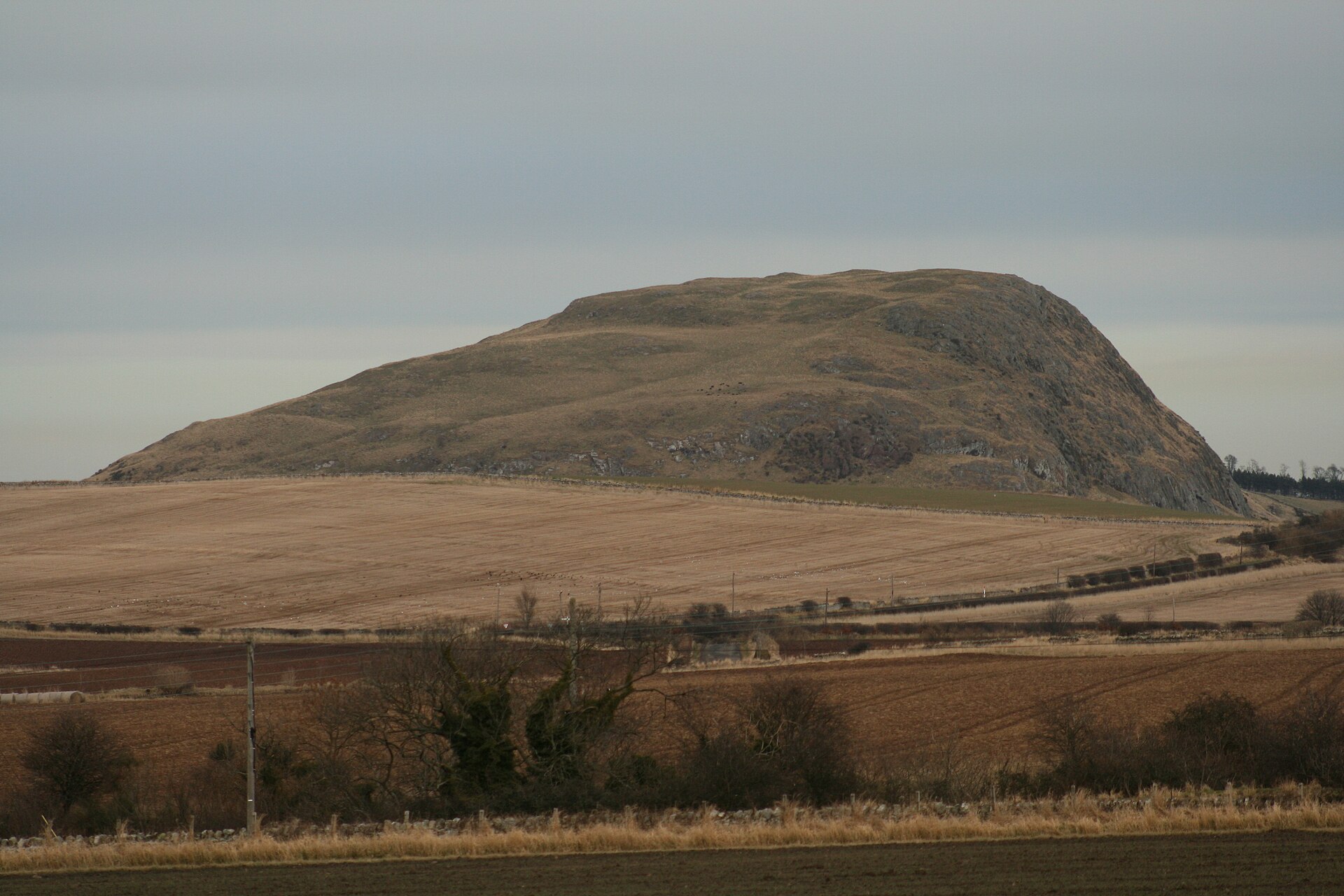
The hill was already a place of burial by around 1500 BC and shows evidence of occupation and ramparts after 1000 BC; the ramparts were rebuilt and realigned many times over the following centuries. Excavation has shown Late Iron Age occupation from about AD 40 until the last quarter of the 2nd century — roughly the period the Antonine Wall was manned.
In the 1st century AD the Romans recorded the Votadini as a British tribe in the area, and Traprain Law is generally thought to have been one of their major settlements — named Curia by Ptolemy. The tribe later emerged as the kingdom of the Gododdin, with Traprain Law thought to be their capital before the centre moved to Din Eidyn (Castle Rock, Edinburgh). In 1547 a signal beacon was placed on the hill to warn of an English invasion. In 1938 part of the hill was leased to the district council as a road-stone quarry, causing substantial disfigurement to the landscape.
People
-
The Votadini / Gododdin
British tribe and successor kingdom whose major settlement, and probable early capital before the move to Din Eidyn, is widely identified with Traprain Law.
-
Ptolemy
Geographer whose account has been interpreted as naming the Votadini settlement here Curia, though the identification remains a scholarly interpretation rather than certain fact.
-
Alexander Ormiston Curle
Archaeologist who recovered the Traprain Law Treasure in 1919: more than 24 kilograms of hacked Roman-era silver deposited in a pit within the settlement.
-
Curle and Cree
Archaeologists who led the first systematic excavations from 1914 to 1923, finding fragmentary stone and timber houses beneath the turf.
Cultural influences
-
Roman Britain: the site sat just beyond the frontier, and its occupation tracked Roman activity in the north (ending around the time the Antonine Wall was manned). The silver hoard is overwhelmingly Roman-era table silver.
-
Brythonic / Cumbric culture: the tribe's own name (Gododdin) and the hill's older names (Dunpelder, 'fort of the spear shafts') are Brythonic, placing the site at the heart of the early historic kingdoms of the Old North.
Connections
-
Traprain Law Treasure (National Museum of Scotland)
The largest Roman silver hoard found outside the Empire, recovered here in 1919 and now in the NMS
-
Din Eidyn (Edinburgh Castle Rock)
Where the Gododdin capital is thought to have moved from Traprain Law
-
Mildenhall Treasure & Hoxne Hoard (Suffolk)
Comparable Roman silverware finds cited to show such plate was in genuine use in Roman Britain
-
North Berwick Law & Bass Rock
Neighbouring landmarks formed of the same unusual phonolite rock
-
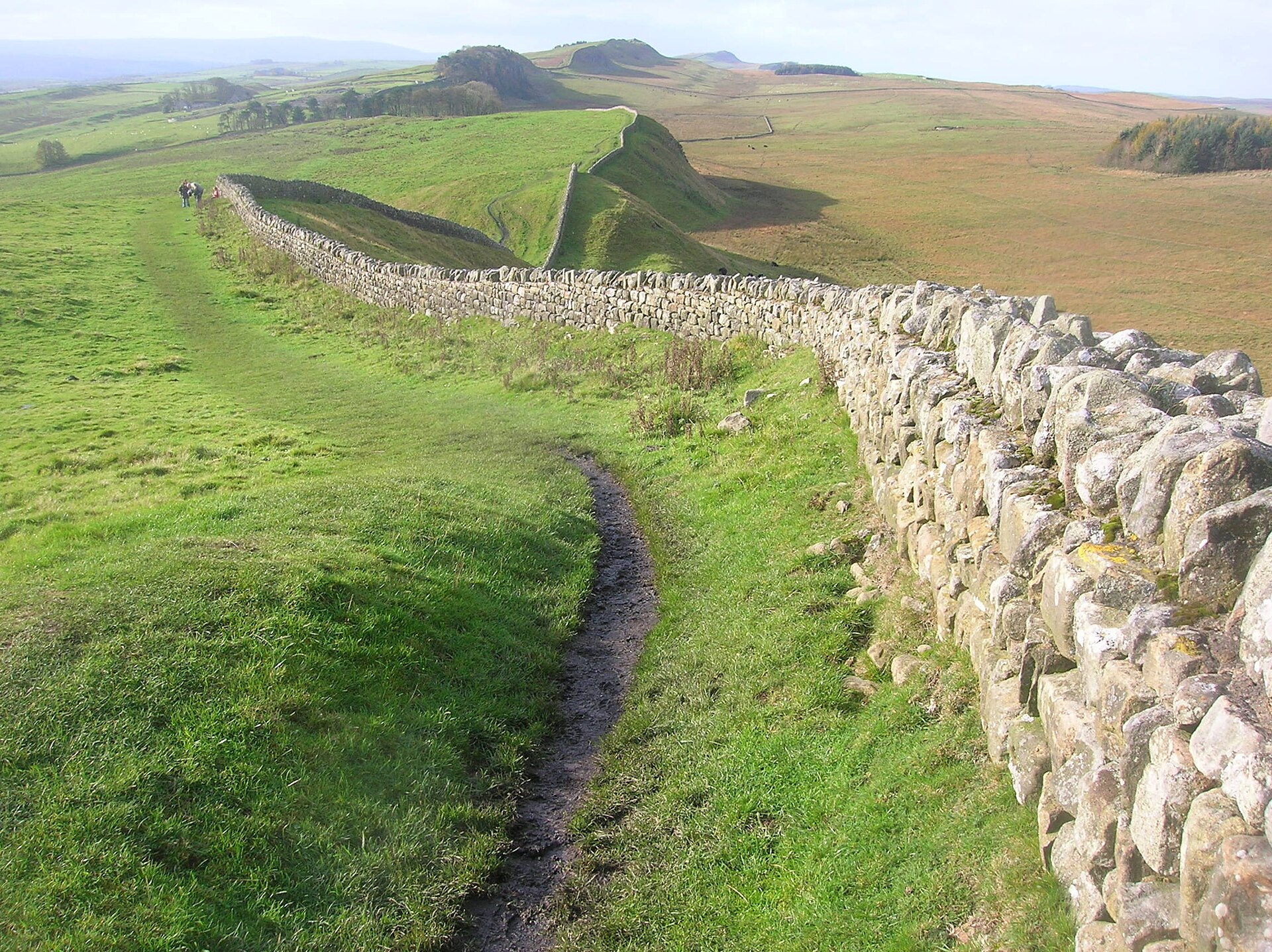
Photo: quisnovus from Gloucester, England / Wikimedia Commons / CC BY 2.0 Frontier across which the Votadini may have raided, possibly bringing back the hoard silver
Discovery & excavation
Curle and Cree began the first excavations in 1914, continuing to 1923 and finding fragmentary stone and timber houses beneath the turf. In 1919 Alexander Ormiston Curle recovered the Traprain Law Treasure — over 24 kg of sliced-up Roman-era silver in a pit within the settlement, accompanied by Gallic coins of Valens, Arcadius and Honorius that date the deposit to the 5th century AD, after Rome had left Britain. Most pieces had been crushed and hacked up, the find including table silver, early Christian items and remnants of a Roman officer's uniform. Further excavations followed by Cruden in 1939 and Bersu in 1947. The treasure is now in the care of the National Museum of Scotland.
Finds now held at: National Museum of Scotland (Traprain Law Treasure).
In culture
-
Traprain Law appears as 'Dunpeldyr', the capital of King Lot of Lothian, in Mary Stewart's Merlin Trilogy.
-
Up to 1891 the hill was the origin (meridian) of the 6-inch and 1:2500 Ordnance Survey maps of East Lothian.
What to look for
-
The rebuilt ramparts
The much-rebuilt ramparts enclosed up to about 16 hectares of this 220-metre hill, tracing centuries of refortification across the Iron Age settlement.
-
The quarry scar
The 1938 road-stone quarry cut substantially into the hill’s flank, leaving a major scar that explains the altered profile seen today.
-
The phonolite summit
The phonolite summit is part of the same unusual volcanic rock formation as North Berwick Law and Bass Rock, intruded about 350 million years ago.
What is said
Folklore and tradition, recorded as what is said — not as established fact.
-
In legend Traprain Law was the cliff from which Thenaw — mother of Saint Mungo — was thrown by her father King Lot (Leudonus) when he discovered she was pregnant by Owain mab Urien. Saved by divine providence, she was carried by boat to Saint Serf's community at Culross, where she bore Kentigern, later known as Mungo.
Plan your visit
- Location
- 55.9631°N · 2.6725°W
- Nearest settlement
- East Linton
- Access
- Reached on a public path
- Terrain
- Moderate walking
- Time needed
- About 60 minutes
- What survives
- Historic ramparts and settlement traces remain across the hill, though quarrying in 1938 substantially disfigured part of the landscape.
- Start point
- Traprain Law car park (foot of the hill) — Small free car park at the foot of the hill on the minor road below the north/west flank; the hillfort summit is a walk up from here. Keep clear of the disused quarry edge near the top.
Nearby places
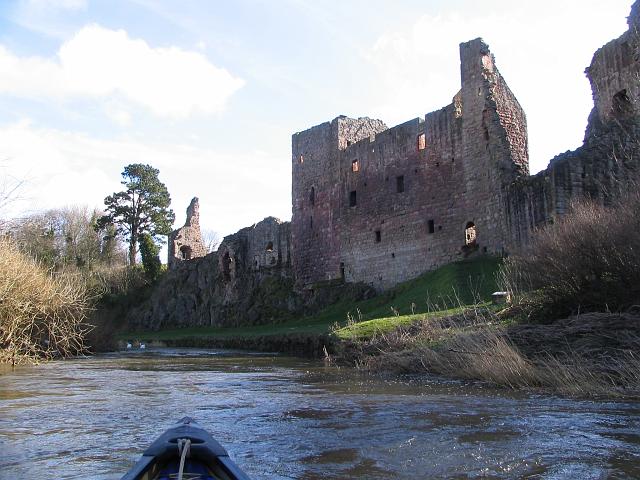
Fortified place · Medieval
Hailes Castle
East Lothian
Hailes Castle is a riverside Hepburn stronghold whose fourteenth-century towers, chapel and service rooms record border warfare and late medieval l…
- Near Dunbar
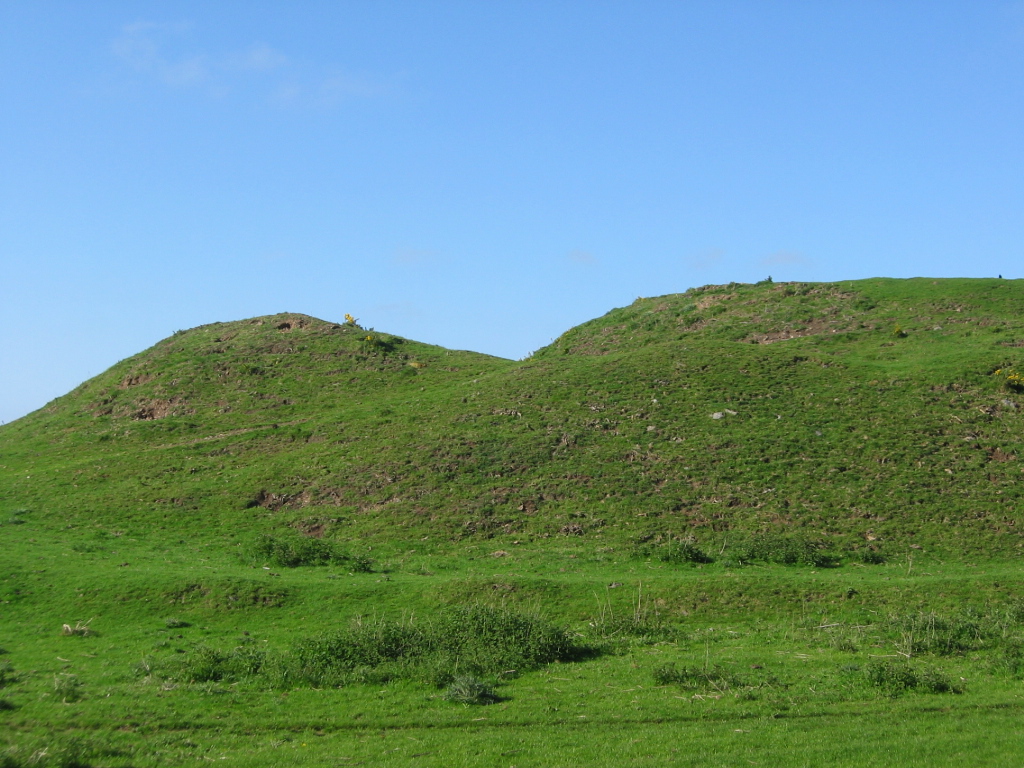
Fortified place · Iron Age
Chesters Hill Fort
East Lothian
A settlement of some twenty roundhouses survives inside its ramparts and ditches: Historic Environment Scotland rates it one of the best-preserved…
- Some walking
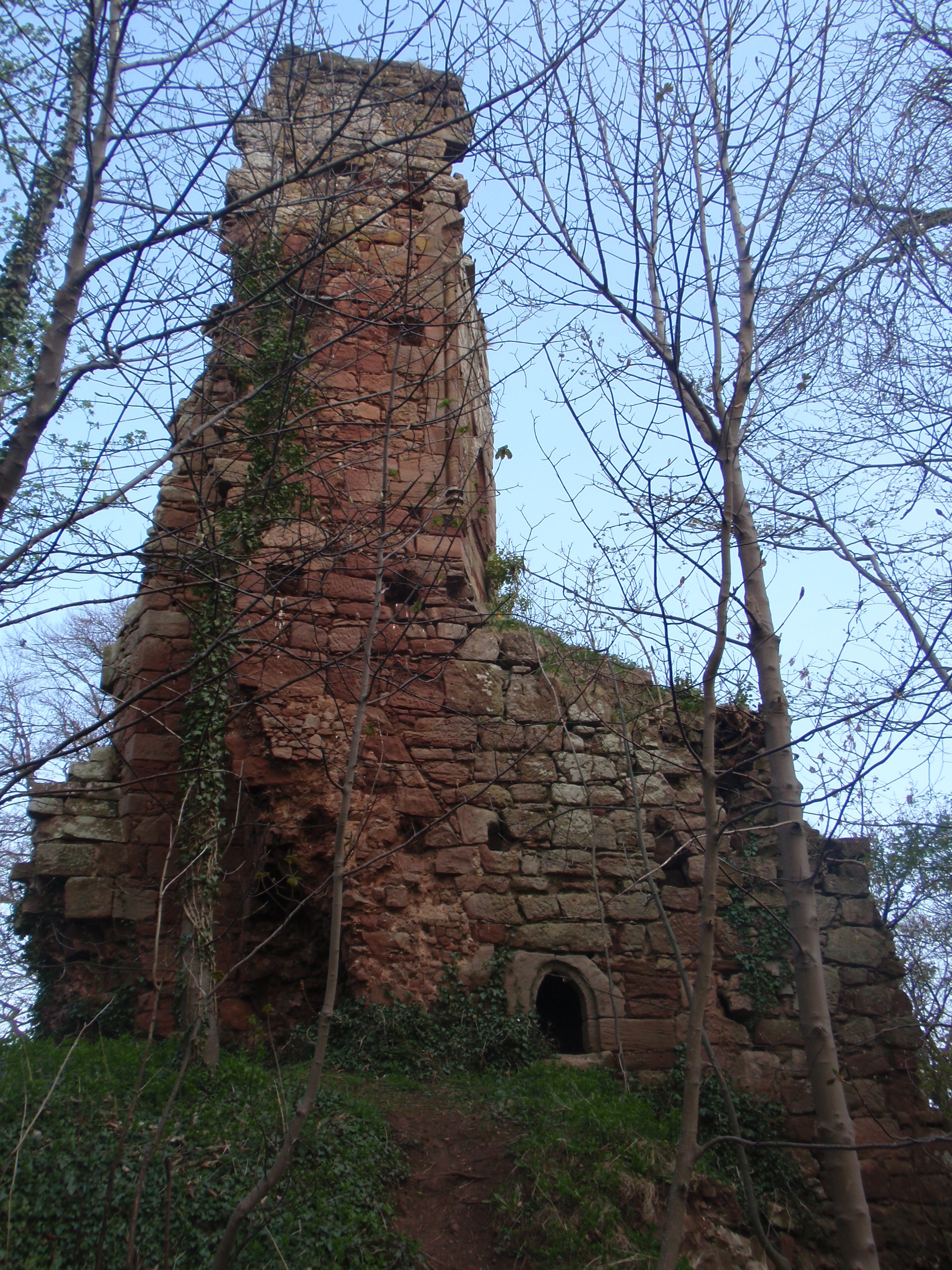
Fortified place · Medieval
Yester Castle
East Lothian
Yester is remembered for its extraordinary underground Goblin Ha’, a surviving medieval hall bound to the enduring folklore of the ‘Wizard of Yester’.
- Near Dunbar
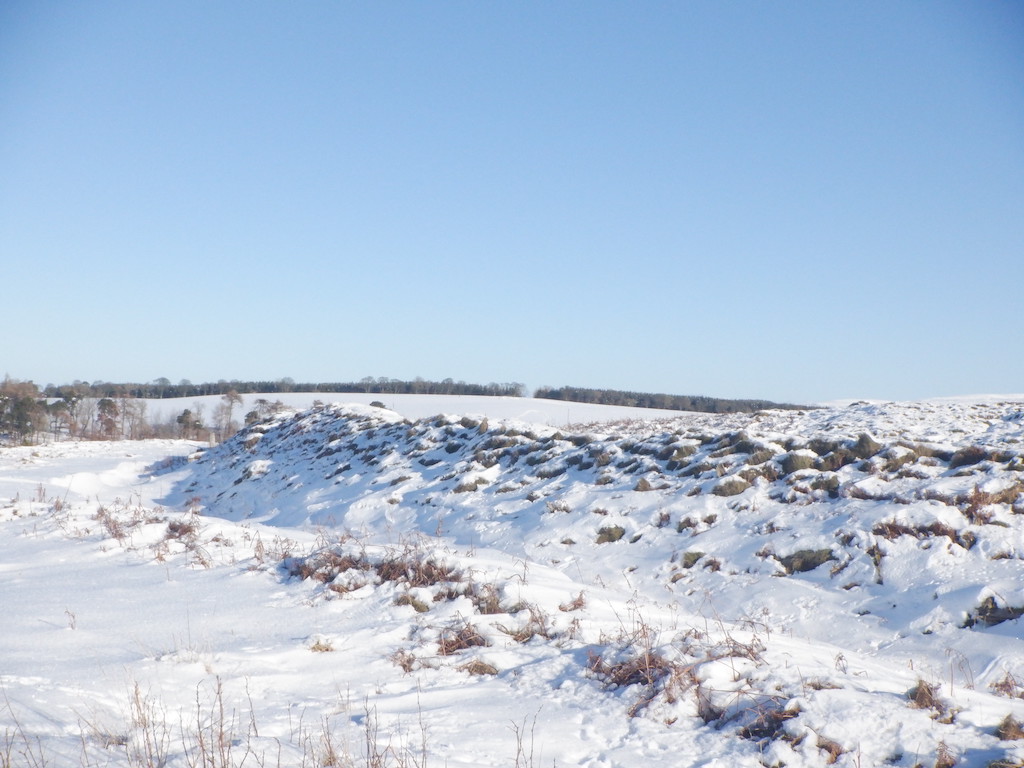
Fortified place · Iron Age
Black Castle, East Lothian
East Lothian
A double ring of earthen ramparts with two carefully placed causewayed entrances, sited between two other named hillforts in a dense East Lothian c…
- Some walking
Questions people ask
- What is Traprain Law?
- Traprain Law is a hillfort and settlement near East Linton, occupied from prehistory and associated with the Votadini and later Gododdin.
- What was found at Traprain Law?
- Excavations recovered the Traprain Law Treasure, a large hoard of Roman-era silver discovered in 1919 and now cared for by the National Museum of Scotland.
Sources
- Canmore site record 56374 (accessed 2026-06-13)
- Trove (HES) record (accessed 2026-06-13)
- Wikipedia: Traprain Law (accessed 2026-06-13)
- Wikidata Q1119359 (accessed 2026-06-13)
Explore more: Settlements · Prehistoric · East Lothian
The Ancient Codex, in your pocket
Get the Pocket Codex app
Carry the directory with you — Traprain Law and thousands of ancient places across Britain and Ireland, offline, wherever you roam.