
The most completely excavated hillfort (a defended enclosure on high ground, ringed with banks and ditches) in Scotland, its cemetery preserves rare Iron Age (the centuries before Rome arrived, from about 800 BC) burial evidence and Britain's earliest known steelworking.
Before machinery tore into the hillside to make way for a cement works, archaeologists raced against the diggers to record what lay beneath it: tightly packed roundhouses rebuilt generation after generation, ditches recut and refilled over centuries, and a burial ground where Iron Age farmers had been laid to rest in carefully built stone-lined graves. Broxmouth stands on a low hill near Dunbar in East Lothian, close enough to the coast that its people could fish the North Sea, and set among some of the richest farmland in Scotland.
What makes Broxmouth unusual is not its size, which was fairly ordinary for a hillfort, but how much of its long life survived to be read from the ground. People were active on the hill as early as 3000 BCE, and a fortified settlement stood here continuously for roughly a thousand years, from around 600 BCE until Roman power in the area faded around 200 CE. Because the entire site was about to be quarried away, the excavation that followed became one of the most thorough studies ever undertaken of a Scottish hillfort.
That thoroughness paid off in an unexpected way. Alongside the houses and defences, excavators found a formal cemetery, isolated graves within the fort’s walls, and scattered fragments of human bone showing signs of violence and deliberate handling after death — together giving archaeologists one of the clearest pictures anywhere in Britain of how an Iron Age community treated its dead.
What follows is drawn from published sources, with each claim labelled by how firmly it is established.
History
Human presence at the site reaches back to around 3000 BCE, when Neolithic communities left flint scatters and a scrap of pottery on the hillside long before any fort stood there. Permanent settlement began around 640 to 570 BCE with a palisaded enclosure and a shallow ditch; roundhouses and timber structures rose around it, and early ironworking already left its trace in the ground alongside two of the earliest burials on the hill.
Between roughly 490 and 395 BCE the hilltop was transformed into a proper hillfort. An inner ditch and rampart were dug first, followed by a second, middle ditch and rampart enclosing a wider area, with two entrances cut through the new defences, one to the east and one to the west, the western marked by an elaborate timber gateway whose foundations survived beneath later rebuilding.
Over the following century, from about 395 to 235 BCE, the community reworked its defences repeatedly, blocking the old west entrance and cutting a new one to the south-west. In four successive stages the fort grew outward until, at its largest, three concentric ditches enclosed around one and a half hectares, before the ditches were deliberately backfilled at the phase's end.
Life continued after the earthworks were filled in: houses of the following phase, around 235 to 210 BCE, were built directly over the settling ditch fills near the old west entrance. Later still, between about 210 and 60 BCE, the interior filled with domestic midden waste rather than new buildings, and a small cemetery was founded to the north of the fort, the first formal burial ground on the site.
From around 100 BCE the settlement reached its densest form: tightly packed stone- and timber-walled roundhouses, a rebuilt enclosure bank, and a monumental timber entrance at the south-west. Occupation continued for two or three centuries, overlapping with the Roman advance into Scotland, and smiths here produced some of the earliest steel yet identified in the British Isles. The hill fell silent by around 210 CE, perhaps as Roman forces withdrew and later returned under Severus.
After a long abandonment, the hill was used once more between 420 and 540 CE, when a single individual was buried in the western part of the old interior. Whether this was an isolated act or part of a larger, since-ploughed-out cemetery in the northern half of the site could not be determined, but the burial shows the old fort still held meaning centuries after its walls had fallen out of use.
The site was first identified in 1956 when Dr St Joseph spotted its cropmarks from the air, and further aerial surveys followed through the 1970s. Rescue excavations directed by Ian Armit, with fieldwork led by Peter Hill, took place in 1977 and 1978 ahead of construction of a cement works that destroyed the hillfort; full analysis was not published until 2013, in An Inherited Place: Broxmouth Hillfort and the South-East Scottish Iron Age.
People
-
Ian Armit
Directed the 1977–78 rescue excavation for the University of Bradford and led the post-excavation analysis published in 2013.
-
Peter Hill
Led fieldwork during the 1977–78 rescue excavation of Broxmouth ahead of quarrying for a cement works.
-
Dr J. K. St Joseph
First identified Broxmouth hillfort in 1956 from aerial photographs showing its cropmarks.
Cultural influences
-
A precision chronology for Iron Age Scotland
Broxmouth's unusually large set of high-quality radiocarbon dates allowed a Bayesian statistical analysis that produced one of the most precise chronologies for any Iron Age hillfort in Britain, substantially revising the excavator's original phasing of the site.
Connections
-
Cnip wheelhouse, Isle of Lewis
A perforated human cranial fragment from Cnip, dated to the 1st–2nd century CE, is the closest known parallel to Broxmouth's own deliberately worked bone fragment.
-
Killhead, Caithness
The complex roundhouse at Killhead produced comparable evidence of deliberately modified human bone, part of the same wider Iron Age practice documented at Broxmouth.
-
University of Bradford
Received the Broxmouth excavation archive from Historic Scotland in 2008 and carried out the post-excavation analysis published in 2013.
-
Historic Scotland / Arts and Humanities Research Council
Jointly funded the 2008–2013 post-excavation programme that finally brought the Broxmouth excavation results into print.
Discovery & excavation
Broxmouth's cropmarks were first spotted from the air in 1956 by Dr St Joseph, with further aerial surveys through the 1970s adding detail before any ground excavation took place. When Lafarge Tarmac began quarrying the hill for a cement works, Historic Scotland commissioned rescue excavations in 1977 and 1978, directed by Ian Armit with fieldwork led by Peter Hill, to record the entire site before it was destroyed. Because the excavation could not be revisited, the team recovered an unusually large number of high-quality radiocarbon dates, later reanalysed using Bayesian statistics to build a detailed chronology of the site's thousand-year history.
What to look for
-
Nothing survives above ground
The hillfort was entirely removed during construction of the Lafarge Tarmac cement works that followed the 1977–78 excavation, so there are no visible earthworks or structures left to see on the site itself; its record survives only in the excavation archive and finds.
Plan your visit
- Location
- 55.9886°N · 2.4806°W
- Access
- Open access
- Terrain
- Moderate walking
- Time needed
- About 60 minutes
Nearby places
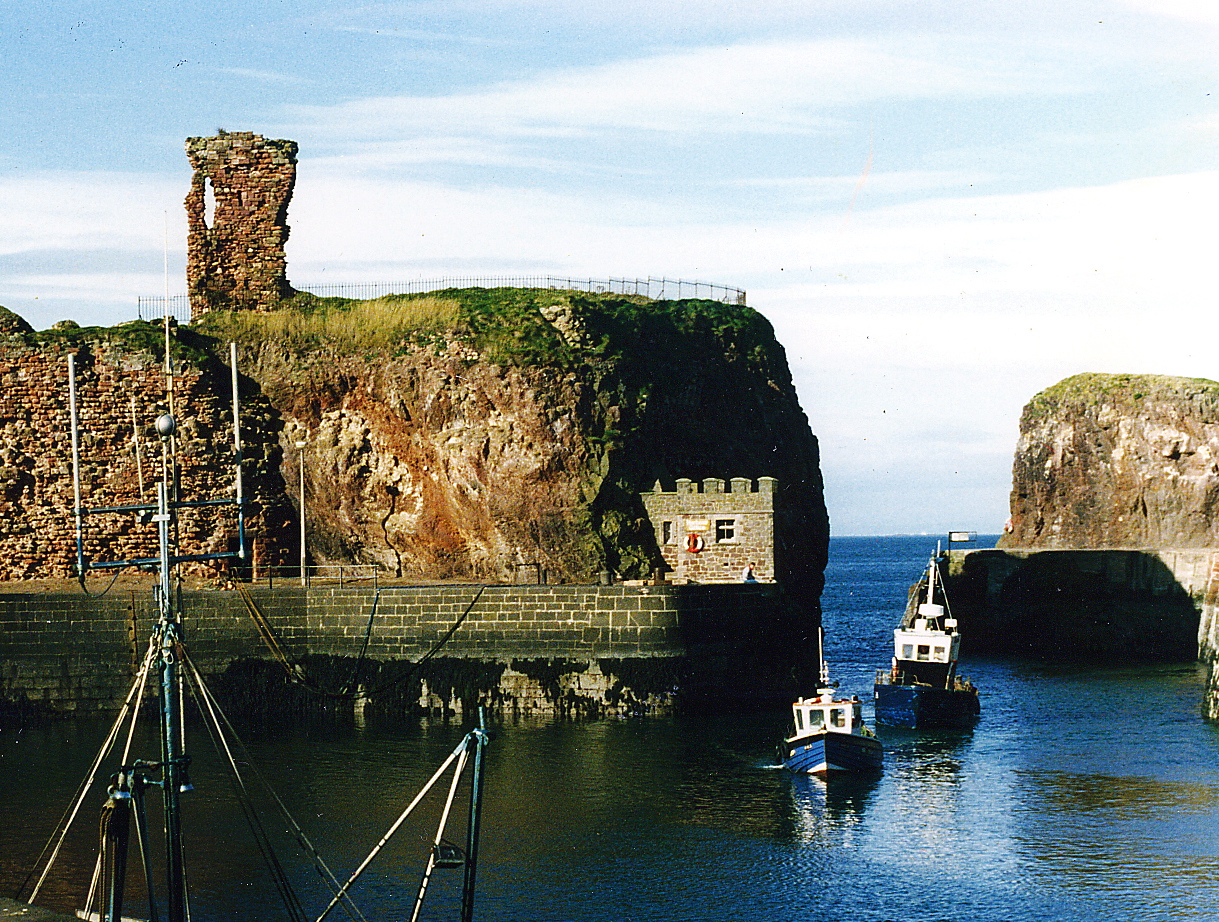
Fortified place · Medieval
Dunbar Castle
East Lothian
A red-stone stronghold so formidable it was besieged, rebuilt and fought over for a thousand years, then torn down so thoroughly no one could ever…
- Near Dunbar
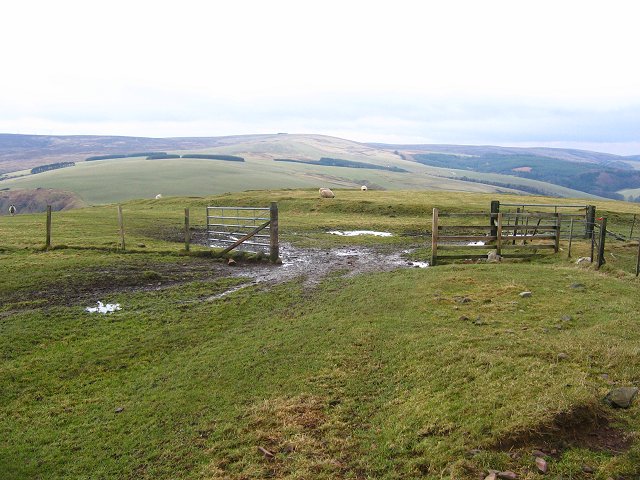
Fortified place · Iron Age
Blackcastle Hill, East Lothian
East Lothian
A single earthen bank, not the layered ramparts of its grander neighbours, rings this Lammermuir summit: a modest, univallate answer to the same Ir…
- Some walking
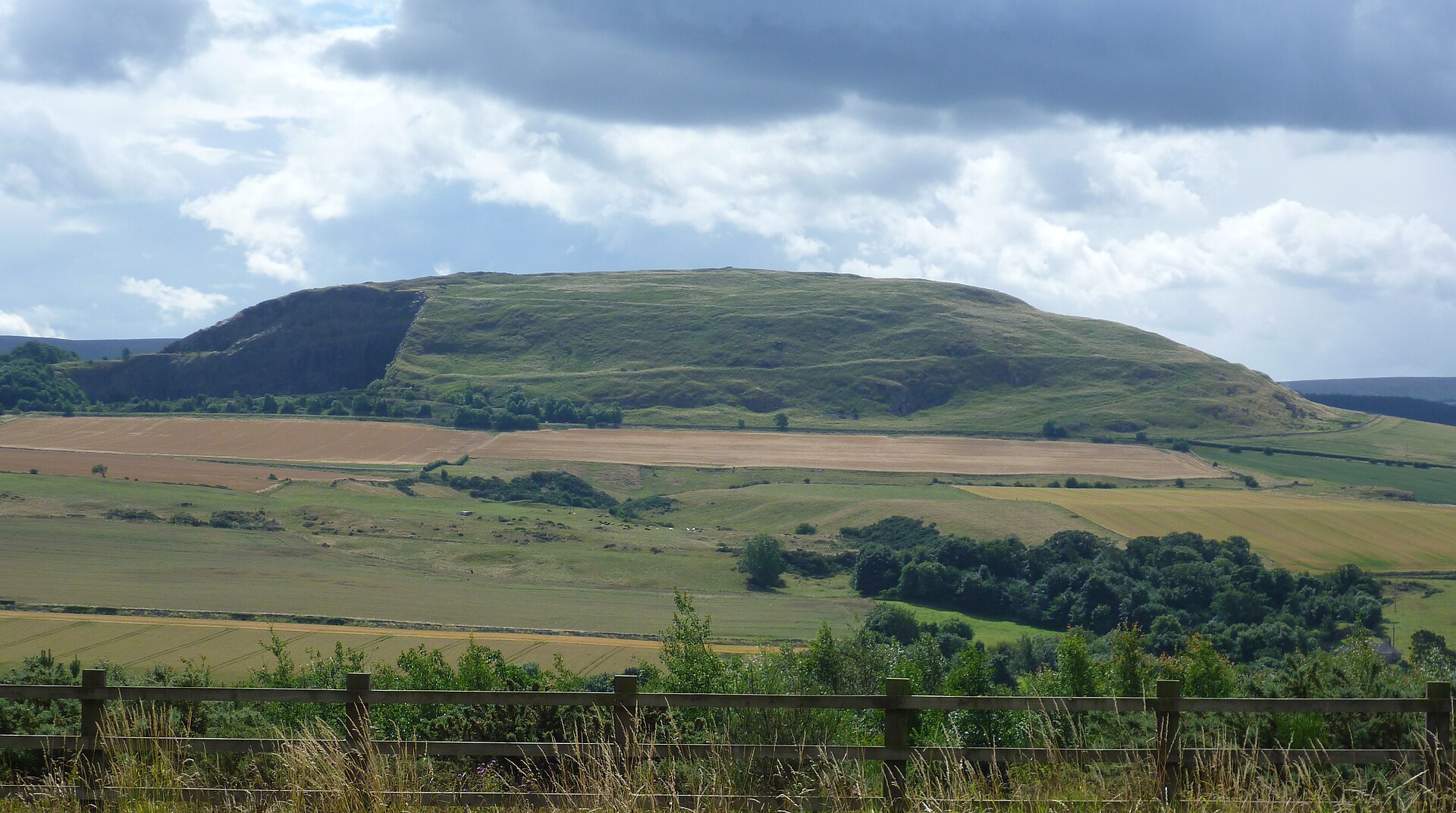
Settlement · Prehistoric
Traprain Law
East Lothian
The hill was already a place of burial by around 1500 BC and shows evidence of occupation and ramparts after 1000 BC; the ramparts were rebuilt and…
- Near East Linton
- 25 min walk from car park
- Some walking
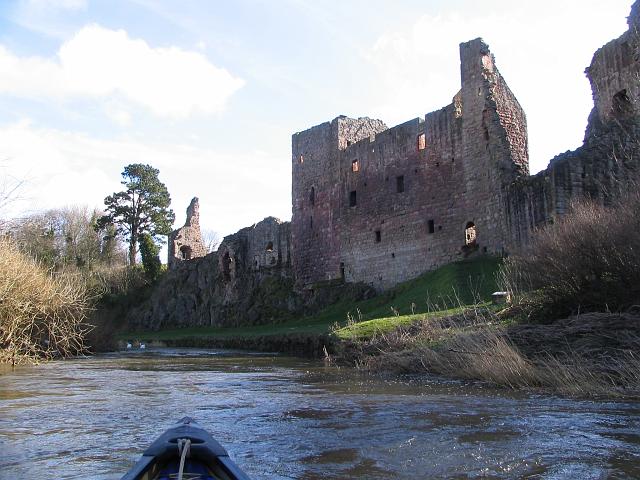
Fortified place · Medieval
Hailes Castle
East Lothian
Hailes Castle is a riverside Hepburn stronghold whose fourteenth-century towers, chapel and service rooms record border warfare and late medieval l…
- Near Dunbar
Questions people ask
- What is Broxmouth?
- An Iron Age hillfort near Dunbar in East Lothian, with roundhouses, multiple ditch-and-rampart defences, and a formal cemetery, occupied for roughly a thousand years before Roman power in the area faded.
- When was Broxmouth occupied?
- Activity on the hill dates back to around 3000 BCE, with continuous fortified settlement from about 600 BCE until roughly 200 CE, plus a single later burial in the 5th to 6th centuries.
- Why is Broxmouth's cemetery important?
- Formal Iron Age cemeteries rarely survive in Britain. Broxmouth's careful stone-lined graves, alongside isolated burials and disarticulated bone, give an unusually detailed picture of Iron Age funerary practice.
- Can Broxmouth hillfort still be visited today?
- No. The hillfort was completely destroyed during construction of a cement works shortly after its 1977–78 rescue excavation, so no earthworks survive above ground.
- What makes the finds from Broxmouth unusual?
- The site produced Britain's earliest known high-carbon steel artefacts, dated to 490–375 BCE, plus an unusually rich range of preserved animal bone, pottery and worked bone for an Iron Age site.
Sources
- Wikipedia: Broxmouth
- Armit et al., An Inherited Place: Broxmouth Hillfort and the South-East Scottish Iron Age (2013)
- Wikidata: Broxmouth
- Historic Scotland / Arts and Humanities Research Council post-excavation programme
Explore more: Fortified places · Iron Age · East Lothian
The Ancient Codex, in your pocket
Get the Pocket Codex app
Carry the directory with you — Broxmouth and thousands of ancient places across Britain and Ireland, offline, wherever you roam.