
Wallace's House is an earthen rampart (an encircling bank built for defence) raised on a promontory near Lochmaben in Dumfries and Galloway. The defended enclosure takes advantage of the natural spur, its bank of piled earth closing off the approach to form a promontory fort (a coastal spur defended by banks thrown across its neck), and it carries the name of William Wallace through a tradition that ties the site to the guerrilla campaigns of the late thirteenth century.
Wallace’s House is an earthen rampart raised on a promontory near Lochmaben in Dumfries and Galloway. The defended enclosure takes advantage of the natural spur, its bank of piled earth closing off the approach to form a promontory fort, and it carries the name of William Wallace through a tradition that ties the site to the guerrilla campaigns of the late thirteenth century.
The fort is a scheduled monument, protected in its own right as an upstanding earthwork. Local tradition holds that it sheltered a body of men under Wallace who used it as a base to harry the English garrison then holding Lochmaben Castle during 1297.
What follows is drawn from published sources, with each claim labelled by how firmly it is established.
History
During 1297 the promontory fort is said to have housed a force of men led by William Wallace, who used the position to harass the English garrison stationed at Lochmaben Castle. The surviving earth rampart and naturally defended spur are the physical basis for its scheduled-monument status, while the Wallace association remains a local tradition rather than archaeological proof.
The name is the strongest evidence, and it is not evidence of the event. Places called after Wallace are common across southern Scotland, attached to caves, trees, wells and earthworks alike, and most record the reach of his reputation in later centuries rather than his presence in 1297. What is not in doubt is the position. A promontory fort commands its approaches and can be held by a small force, which is precisely the quality that would recommend it to anyone harassing a garrison rather than facing one in the field, and it is the reason such sites were built in the first place.
No excavation is recorded and no finds are noted. The enclosure is known from its form and its setting, and the association with Wallace rests on tradition, so the two elements of this record should be held apart rather than allowed to support one another.
People
-

Portrait: Unknown author / Wikimedia Commons / Public domain William Wallace
Scottish leader with whom the site is associated; tradition links him to a force based here in 1297.
Cultural influences
-
Wallace’s House occupies a promontory position near Lochmaben, where its rampart is associated with resistance to the English garrison at Lochmaben Castle in 1297.
Connections
-
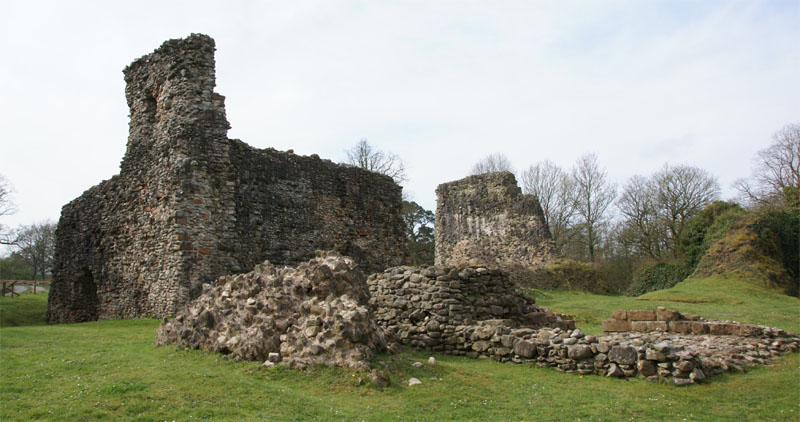
Photo: Otter / Wikimedia Commons / CC BY-SA 3.0 The English-held garrison that the men based at the fort are said to have harassed during 1297.
What to look for
-
Earthen rampart
A bank of piled earth encloses the promontory, the surviving man-made work that distinguishes the scheduled fort from the surrounding rough ground.
-
Promontory setting
The enclosure occupies a naturally defended spur above Annandale; steep sides limit access and show why a small force could defend the approaches.
What is said
Folklore and tradition, recorded as what is said — not as established fact.
-
Wallace's stronghold
The site's name and local tradition hold that it sheltered a force led by William Wallace during his campaign against the English garrison at nearby Lochmaben Castle in 1297.
Plan your visit
- Location
- 55.2023°N · 3.5188°W
- Nearest settlement
- Newton Stewart
- Access
- Open access
- Terrain
- Moderate walking
- Time needed
- About 45 minutes
Nearby places
Fortified place · Medieval
Lochmaben Castle
Dumfries and Galloway
Lochmaben Castle anchors the Bruce lordship of Annandale and records centuries of border conflict, royal rebuilding and repeated sixteenth-century…
- Near Newton Stewart
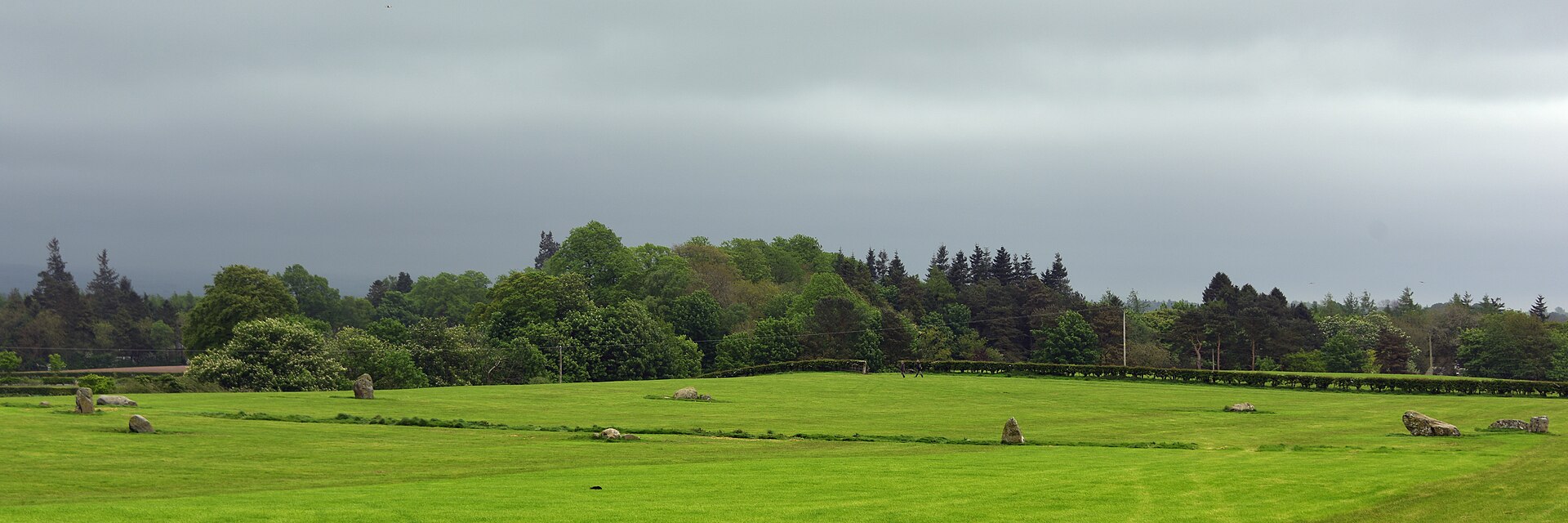
Sacred place · Prehistoric
Twelve Apostles Stone Circle
Dumfries and Galloway
Eleven stones stand in a rough ring on farmland between Holywood and Newbridge, a little north-west of Dumfries. Five are still earthfast; the rest…
- Near Newton Stewart
- Easy path
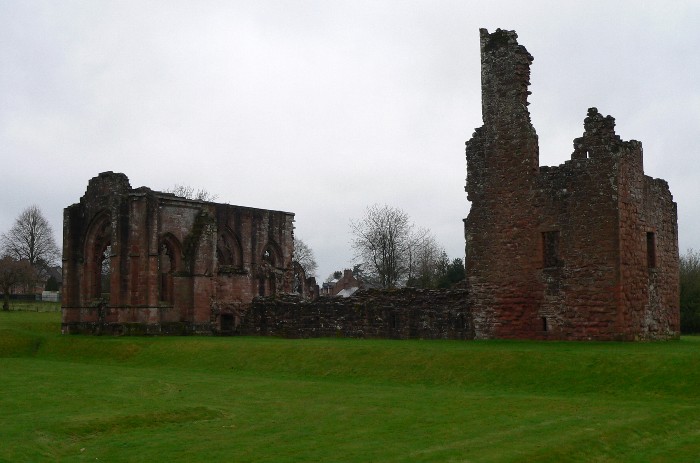
Sacred place · Medieval
Lincluden Collegiate Church
Dumfries and Galloway
Lincluden’s ruins record the transformation of Galloway’s first nunnery into a richly endowed collegiate church: a church staffed by a college of p…
- Near Newton Stewart
Minor monument · Medieval
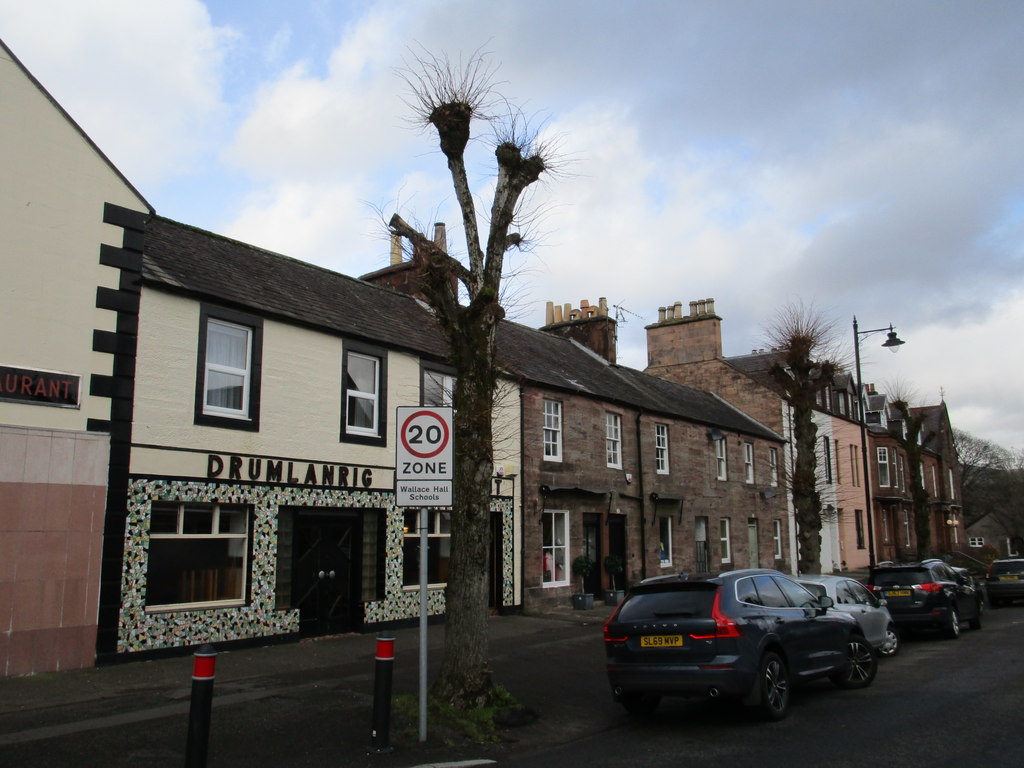
Market Cross, Drumlanrig Street, Thornhill
Dumfries and Galloway
Thornhill’s 1714 Pegasus-topped cross was planned with the village road, making its column a surviving civic centre despite relocation and later re…
- Near Thornhill
- Easy path
Questions people ask
- What is Wallace's House?
- It is an earthen rampart forming a promontory fort near Lochmaben in Dumfries and Galloway, associated by tradition with William Wallace.
- Why is it named after William Wallace?
- The site is said to have housed a force of men led by William Wallace, and it carries his name through that tradition.
- What happened here in 1297?
- Tradition holds that the men based at the fort harassed the English garrison at Lochmaben Castle during 1297.
- Is the site protected?
- Yes, the promontory fort is a scheduled monument.
Sources
- Wallace's House — Wikipedia
- Wallace's House — Wikidata
- CANMORE — Wallace's House
Explore more: Fortified places · Iron Age · Dumfries and Galloway
The Ancient Codex, in your pocket
Get the Pocket Codex app
Carry the directory with you — Wallace's House and thousands of ancient places across Britain and Ireland, offline, wherever you roam.