Eleven stones stand in a rough ring on farmland between Holywood and Newbridge, a little north-west of Dumfries. Five are still earthfast; the rest have shifted or fallen over the centuries, and the tallest upright reaches around 1.9 metres. Once there were twelve, and the missing stone gives the monument both its name and a thread of local legend that survived into the nineteenth century.
Eleven stones stand in a rough ring on farmland between Holywood and Newbridge, a little north-west of Dumfries. Five are still earthfast; the rest have shifted or fallen over the centuries, and the tallest upright reaches around 1.9 metres. Once there were twelve, and the missing stone gives the monument both its name and a thread of local legend that survived into the nineteenth century.
At roughly 89 metres across at its widest, the ring is the largest stone circle on the Scottish mainland and the seventh largest in Britain. Its plan is not a true circle but an example of what Alexander Thom classified as a Type B ‘flattened circle’, and its south-westerly arrangement lines it up with the midwinter sunset. In design it resembles the great circles of Cumbria, and is generally treated as a northern outlier of that group rather than a purely Scottish tradition.
Most of the stones are Silurian rock, quarried and hauled from an outcrop about two miles away near Irongray Church; one is porphyry, and four, including the porphyry stone, are natural boulders rather than worked blocks. The setting is quietly archaeological as much as monumental: two cursuses lie nearby, one of which, if extended, would run towards the circle, and other now-vanished circles once stood within a few miles.
What follows is drawn from published sources, with each claim labelled by how firmly it is established.
The name
The name records the twelve stones the circle originally held. Local traditions noted in the nineteenth century linked the stones to the twelve apostles of Jesus Christ, with the lost twelfth stone associated with Judas Iscariot; the antiquary W. C. Lukis recorded a version in which the apostles themselves were said to have set the stones up.
History
The circle was raised in prehistory as one of the great flattened rings of northern Britain. Its close kinship with the stone circles of Cumbria, together with its south-westerly setting towards the midwinter sunset, places it within that broader Cumbrian tradition rather than a distinctly Scottish one, and marks it as the largest such monument on the Scottish mainland. By the late eighteenth century the site had begun to attract antiquarian attention. A plan taken by Francis Grose in 1789 shows the full complement of twelve stones, and the First Statistical Account, published two years later in 1791, records the same number.
One of the stones was removed at some point before 1837, the year the New Statistical Account entry for Holywood was compiled, which noted the reduced count. The 25-inch Ordnance Survey map of 1850 appears to show twelve stones once more, but this was an error: an accidental spot of blue ink on the original survey plan was carried through onto the published map. In 1882 it was reported that, some years earlier, a small bronze figure about four inches high had been uncovered at the circle. The find was later identified as Saint Norbert, founder of the Premonstratensian order, and dated to the twelfth century; it is now held in Dumfries Museum.
The monument survives today as a scheduled monument. Of the original twelve stones, eleven remain, five of them still set firmly in the ground, with the tallest upright standing about 1.9 metres and the longest stone, lying in the south-western sector, measuring some 3.2 metres.
People
-
.jpg?width=320)
Portrait: Unidentified engraver / Wikimedia Commons / Public domain Francis Grose
Antiquary whose 1789 plan of the circle records all twelve stones then standing.
-
W. C. Lukis
Recorded a local tradition that the stones had been set up by the twelve apostles.
-

Portrait: Charles Grey (1808-1892) / Wikimedia Commons / Public domain Alexander Thom
Surveyor whose classification identifies the circle as a Type B 'flattened circle' rather than a true circle.
-
.JPG?width=320)
Portrait: Fralambert / Wikimedia Commons / CC BY-SA 4.0 Saint Norbert
Twelfth-century founder of the Premonstratensian order, depicted in the small bronze figure found at the circle and now in Dumfries Museum.
Cultural influences
-
The Twelve Apostles resembles the stone circles of Cumbria and is considered an outlier of that group; its south-western arrangement aligns with the midwinter sunset.
Connections
-
Cumbrian stone circles
The Twelve Apostles is similar in design to these circles and is regarded as a northern outlier of the group.
-
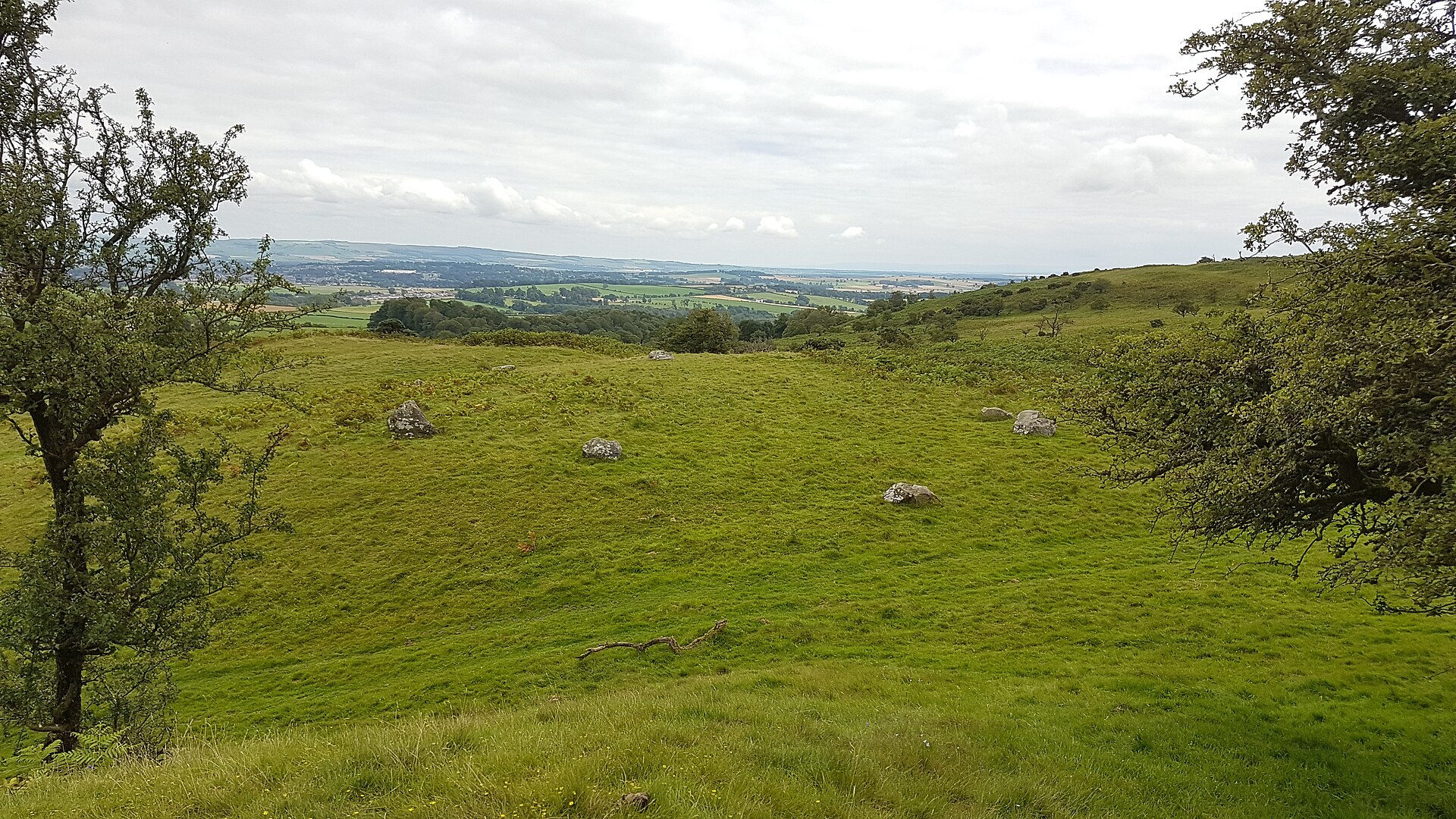
Photo: C1614 / Wikimedia Commons / CC BY-SA 4.0 Another stone circle lying about 3¾ miles south-south-west of the Twelve Apostles.
-

Photo: FutureMuseumSW / Wikimedia Commons / CC BY-SA 3.0 Dumfries Museum
Holds the twelfth-century bronze figure of Saint Norbert uncovered at the circle.
Discovery & excavation
The circle has been documented by antiquaries since at least Francis Grose's plan of 1789 and the First Statistical Account of 1791. Its most notable find came to light in 1882, when it was reported that a four-inch bronze figure had been uncovered at the site some years before; later identified as a twelfth-century depiction of Saint Norbert, it is now housed in Dumfries Museum.
Finds now held at: Dumfries Museum.
What to look for
-
The eleven surviving stones
Eleven stones remain of the original twelve, five of them still earthfast; the tallest upright stands around 1.9 metres.
-
The long recumbent stone
The longest stone, lying in the south-western sector of the ring, measures about 3.2 metres.
-
The flattened plan
The ring is not a true circle but a Type B 'flattened circle', measuring roughly 89 metres across at its maximum diameter.
-
Silurian and porphyry stones
All but one of the stones are Silurian rock, quarried about two miles away near Irongray Church; one is porphyry, and four stones, including the porphyry, are natural boulders.
-
The midwinter alignment
The circle's south-westerly arrangement aligns it with the midwinter sunset.
What is said
Folklore and tradition, recorded as what is said — not as established fact.
-
The apostles and Judas
Local tradition recorded in the nineteenth century is said to have linked the stones with the twelve apostles of Jesus Christ, and connected the removed twelfth stone with Judas Iscariot.
-
Raised by the apostles
W. C. Lukis noted a tradition in which the stones themselves were said to have been set up by the apostles.
Plan your visit
- Location
- 55.0978°N · 3.6517°W
- Nearest settlement
- Newton Stewart
- Access
- Open access
- Terrain
- Easy going
- Time needed
- About 45 minutes
Nearby places
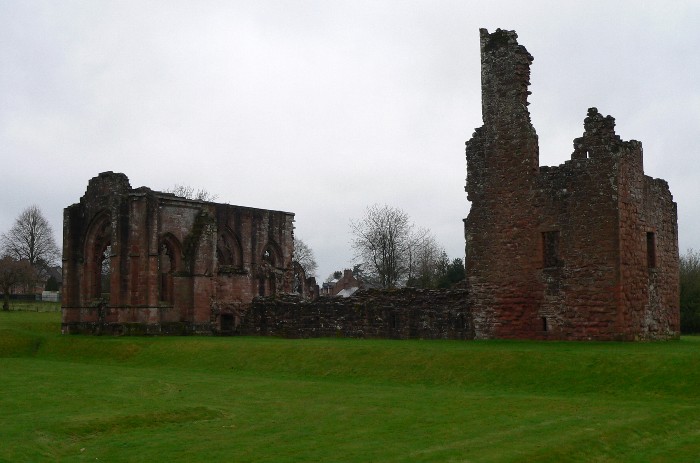
Sacred place · Medieval
Lincluden Collegiate Church
Dumfries and Galloway
Lincluden’s ruins record the transformation of Galloway’s first nunnery into a richly endowed collegiate church: a church staffed by a college of p…
- Near Newton Stewart
Sacred place · Prehistoric
Easthill stone circle
Dumfries and Galloway
Easthill's ring is short of a stone. Eight survive in an oval roughly three and three-quarter miles south-west of Dumfries, and a ninth is thought…
- Easy path
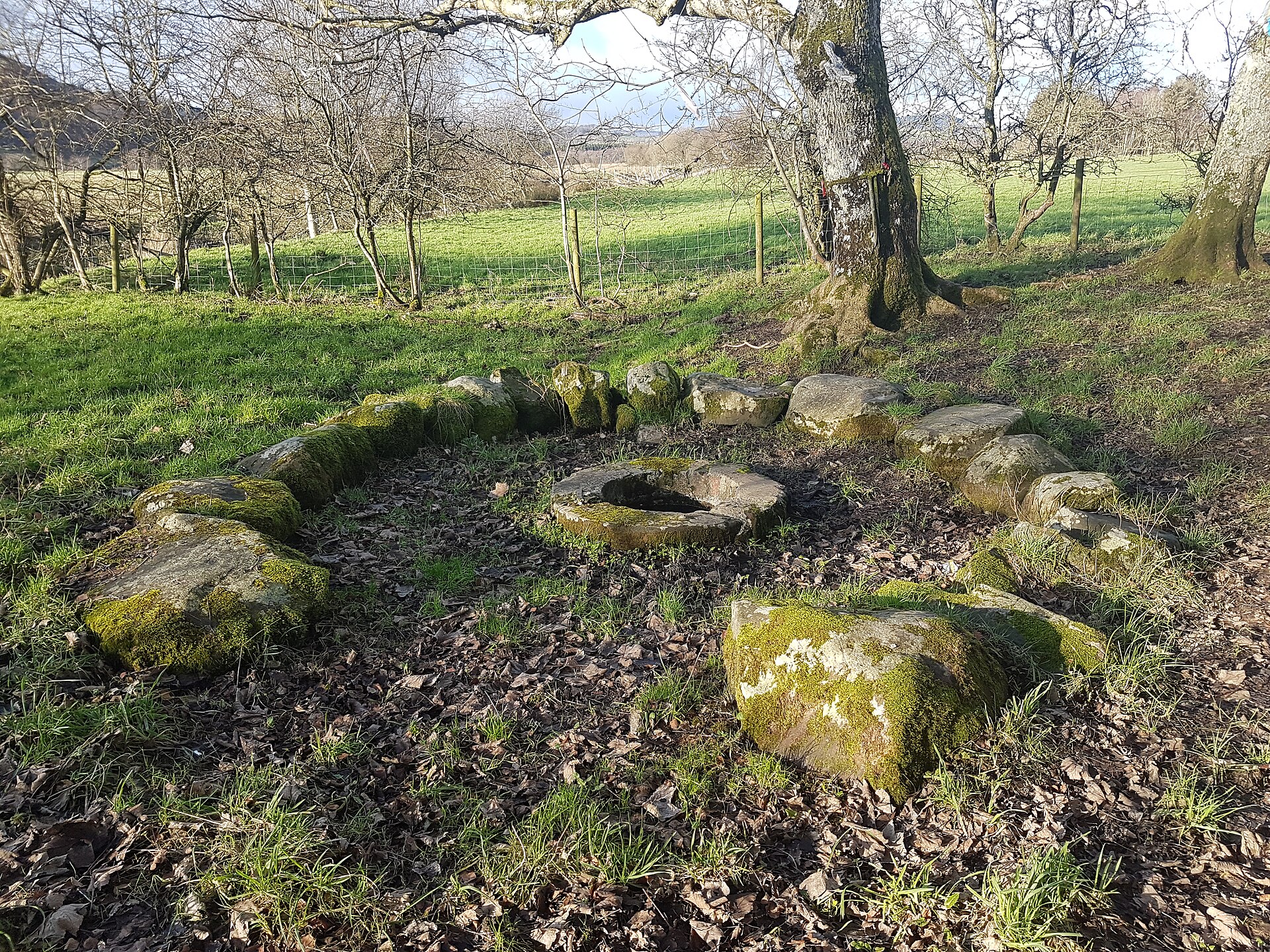
Sacred place · Medieval
St Queran's Well
Dumfries and Galloway
St Queran’s Well preserves a continuing Scottish holy-well tradition, where coins, pins and ribbons have been offered from at least the nineteenth…
Sacred place · Prehistoric
Pict's Knowe
Dumfries and Galloway
A small sandy bank rises out of the peat-covered valley of the Crooks Pow stream, four kilometres south-west of Dumfries, and it is on this slight…
- Easy path
Questions people ask
- Why is it called the Twelve Apostles?
- The circle originally held twelve stones, and nineteenth-century local tradition linked them to the twelve apostles of Jesus Christ, associating the removed twelfth stone with Judas Iscariot. Eleven stones survive today.
- How big is the Twelve Apostles Stone Circle?
- It measures roughly 89 metres (292 feet) across at its maximum diameter, making it the largest stone circle on the Scottish mainland and the seventh largest in Britain.
- Is it a true circle?
- No. It is an example of Alexander Thom's Type B 'flattened circle' rather than a true circle, and its south-westerly arrangement aligns it with the midwinter sunset.
- What are the stones made of?
- All but one of the stones are Silurian rock; the exception is porphyry. Four, including the porphyry stone, are natural boulders, while the rest were quarried. The nearest source of Silurian rock is about two miles away near Irongray Church.
- Was anything found at the circle?
- In 1882 it was reported that a four-inch bronze figure had been uncovered at the site some years earlier. It was later identified as a twelfth-century depiction of Saint Norbert and is now held in Dumfries Museum.
Sources
The Ancient Codex, in your pocket
Get the Pocket Codex app
Carry the directory with you — Twelve Apostles Stone Circle and thousands of ancient places across Britain and Ireland, offline, wherever you roam.