
St Queran’s Well preserves a continuing Scottish holy-well tradition, where coins, pins and ribbons have been offered from at least the nineteenth century around a small spring-fed pool in Troqueer parish.
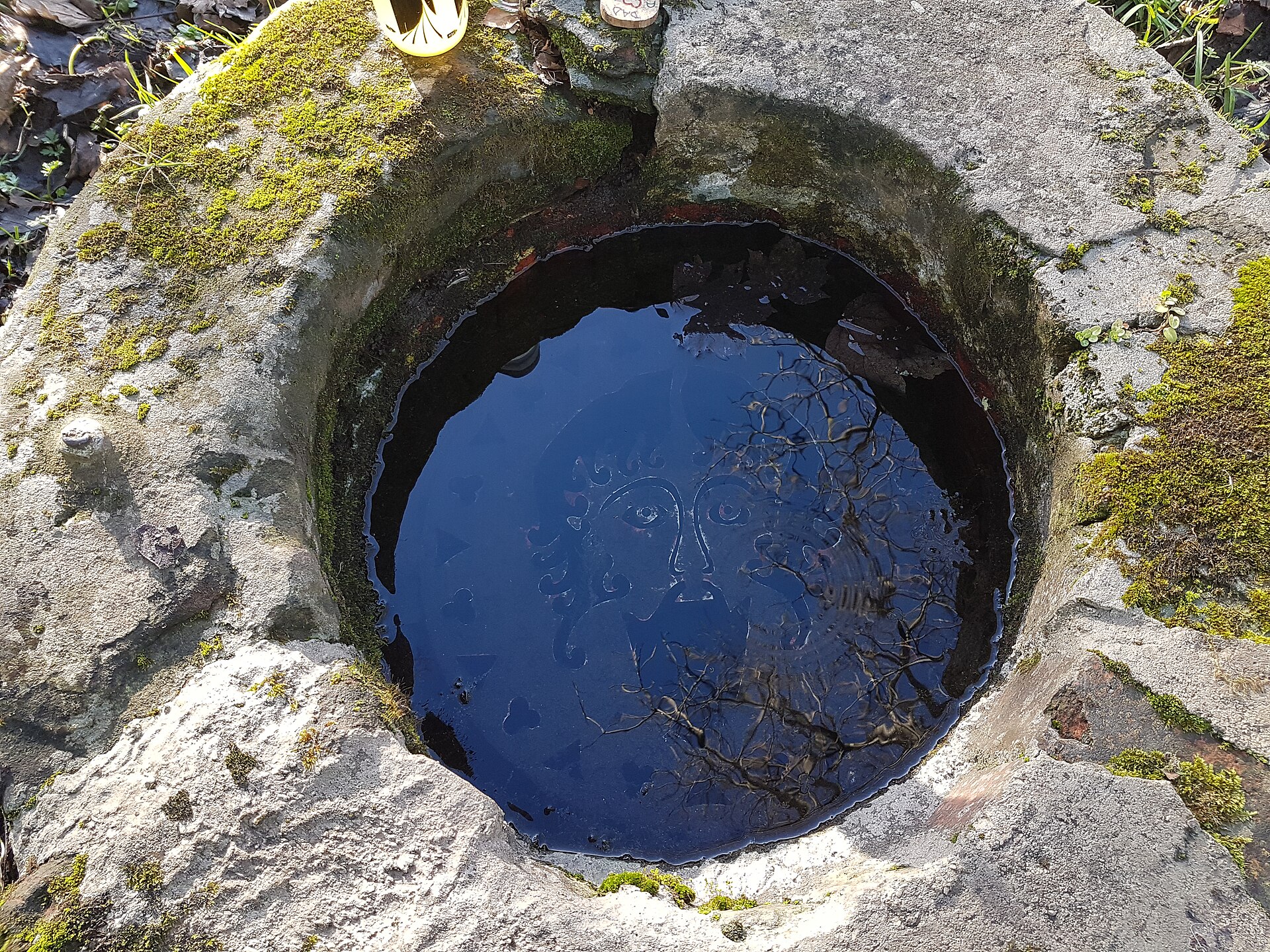
A spring-fed pool set within a ring of stones marks St Queran’s Well in the parish of Troqueer. The modest water source has long attracted offerings of coins, pins and ribbons.
The concrete pool is about three feet wide, enclosed by a ten-foot circle of stones. When it was cleaned around 1870, hundreds of coins were found, the earliest dating to 1560.
Offerings are still left among the surrounding bushes today. Older records give the well other names, including St Jargan’s and St Jardan’s, showing how its local identity shifted over time.
What follows is drawn from published sources, with each claim labelled by how firmly it is established.
The name
The recorded names shifted from St Jargan’s Well in the seventeenth century to St Jardan’s Well in the 1847 Ordnance Survey Name Book and the modern form St Queran’s Well; the reason for these changes is not established.
History
St Queran’s Well is a holy well in the parish of Troqueer, in the historic county of Kirkcudbrightshire, Dumfries and Galloway. A spring feeds a concrete pool about three feet wide, which is surrounded by a ring of stones roughly ten feet in diameter. Its significance is instead grounded in the continuing physical meeting of spring water, stone enclosure and the practices of offering that have been recorded there.
The well was cleaned out around 1870, when hundreds of coins were found. The earliest coins were dated to 1560. This provides a tangible indication that people had deposited objects at the well over a long period before the nineteenth-century clean-out. In 1892, reports noted coins and pins left in the well and ribbons tied to surrounding bushes as offerings. Ribbons and other offerings are still left around the site today. The objects should therefore be described as offerings rather than proof of a specific belief or healing practice.
The Ordnance Survey Name Book listed it as St Jardan’s Well in 1847, while it was known as St Jargan’s Well in the first half of the seventeenth century. The current form, St Queran’s Well, is therefore part of a history of shifting local naming rather than an unbroken single spelling.
Cultural influences
-
The spring, stone ring and continuing practice of leaving coins, pins and ribbons make St Queran’s Well a living example of Scottish holy-well devotion.
Connections
-

Photo: Grant McIntosh Photography / Wikimedia Commons / CC BY-SA 4.0 Troqueer parish
The spring and stone ring lie in Troqueer parish, the local setting in which the well’s long offering tradition has been recorded.
-

Photo: William Mouncey / Wikimedia Commons / Public domain Kirkcudbrightshire
The well lies in historic Kirkcudbrightshire, placing its local holy-well tradition within the older county landscape of south-west Scotland.
-
Ordnance Survey Name Book
The 1847 Ordnance Survey Name Book recorded the well as St Jardan’s Well, documenting one stage in the site’s changing local names.
Discovery & excavation
When the well was cleaned around 1870, hundreds of coins were found, the earliest dated 1560, showing a long history of objects being deposited at the spring.
What to look for
-
Spring-fed pool
A spring fills the small concrete pool, about three feet wide, forming the persistent water source at the centre of the holy-well site.
-
Stone ring
A roughly ten-foot ring of stones surrounds the pool, making a visible enclosure for the spring within the wooded setting.
-
Offering bushes
Ribbons and other offerings are tied to or left around the surrounding vegetation, continuing a practice recorded with coins and pins in 1892.
Plan your visit
- Location
- 55.0335°N · 3.6351°W
- Time needed
- About 20 minutes
Opening & admission
Public access arrangements are not confirmed for the holy well; check current local guidance and do not enter private land without permission. Treat the spring and offerings respectfully.
Nearby places
Sacred place · Prehistoric
Pict's Knowe
Dumfries and Galloway
A small sandy bank rises out of the peat-covered valley of the Crooks Pow stream, four kilometres south-west of Dumfries, and it is on this slight…
- Easy path
Sacred place · Prehistoric
Easthill stone circle
Dumfries and Galloway
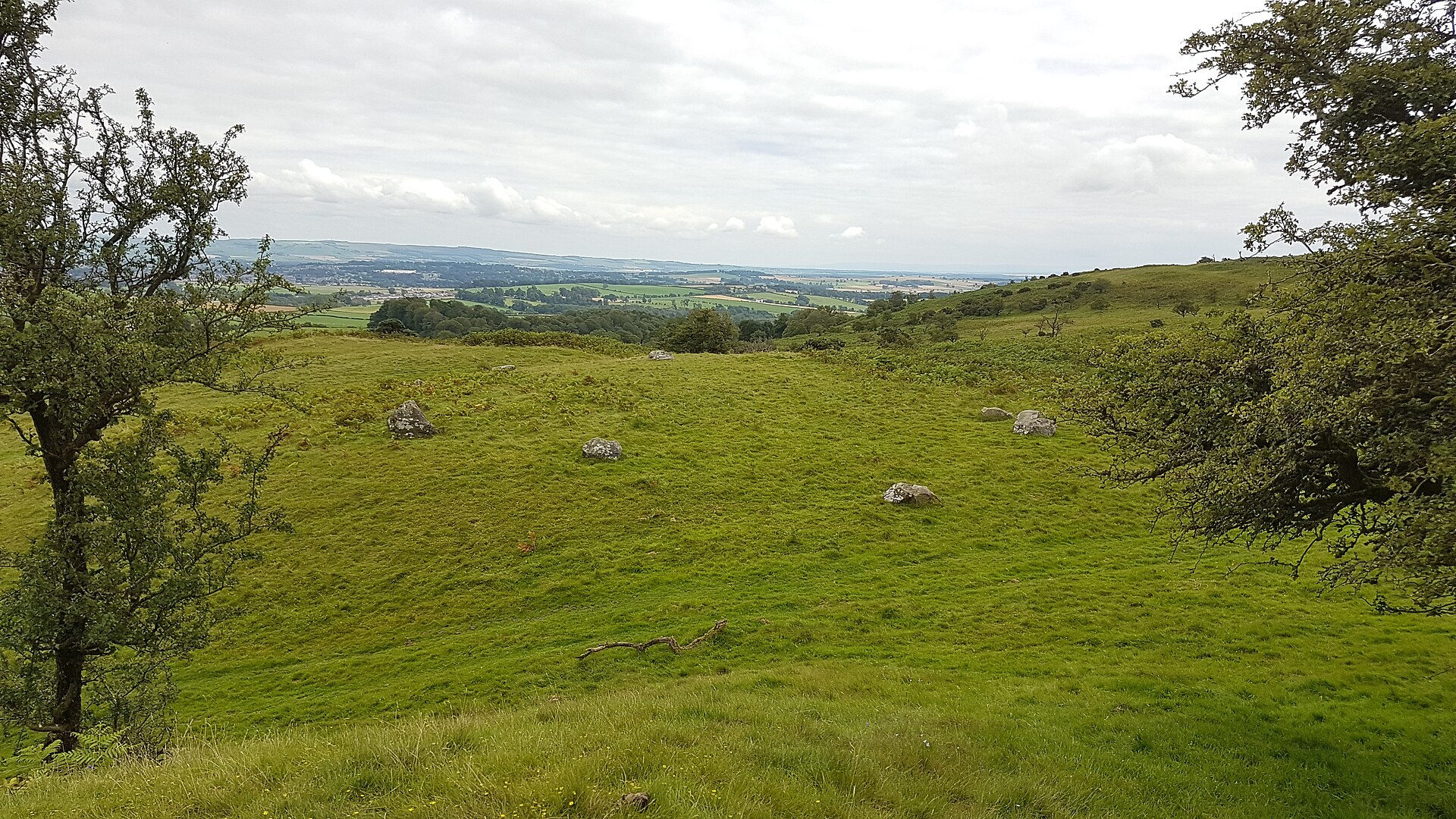
Easthill's ring is short of a stone. Eight survive in an oval roughly three and three-quarter miles south-west of Dumfries, and a ninth is thought…
- Easy path
Sacred place · Medieval
Lincluden Collegiate Church
Dumfries and Galloway
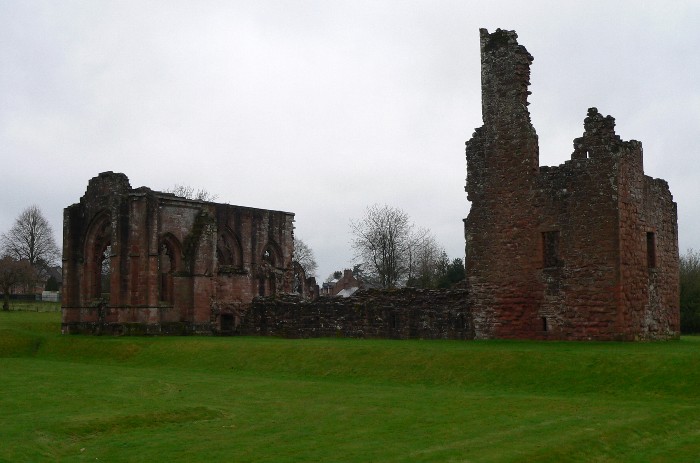
Lincluden’s ruins record the transformation of Galloway’s first nunnery into a richly endowed collegiate church: a church staffed by a college of p…
- Near Newton Stewart
Sacred place · Medieval
Sweetheart Abbey
Dumfries and Galloway
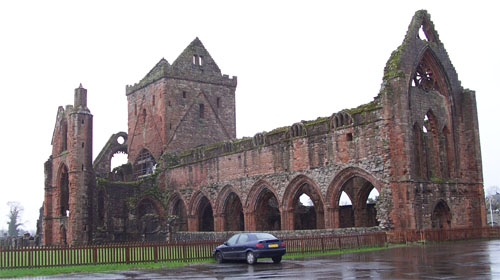
Sweetheart Abbey preserves the personal memorial of Dervorguilla of Galloway and John de Balliol, and traces how a Cistercian house shaped the farm…
- Easy path
Questions people ask
- Where is St Queran’s Well?
- It is in the parish of Troqueer in Dumfries and Galloway, historic Kirkcudbrightshire.
- What was found when St Queran’s Well was cleaned?
- Hundreds of coins were found around 1870, with the earliest dating to 1560.
- Are offerings still left at St Queran’s Well?
- Yes. Ribbons and other offerings are still left around the well.
Sources
The Ancient Codex, in your pocket
Get the Pocket Codex app
Carry the directory with you — St Queran's Well and thousands of ancient places across Britain and Ireland, offline, wherever you roam.