
Six burial cairns stand grouped together in the countryside of Dumfries and Galloway, two of them holding a particular importance for archaeologists. Mid Gleniron I and Mid Gleniron II are chambered cairns of the Clyde tradition, and what makes them significant is not their scale but the evidence they preserve of having been built in stages. Rather than being raised in a single act, each grew and changed over generations, and that layered construction offers a rare window onto how Clyde cairns developed at the very beginning of the Neolithic (the late Stone Age, roughly 4000–2500 BC in Britain) period.
Six burial cairns stand grouped together in the countryside of Dumfries and Galloway, two of them holding a particular importance for archaeologists. Mid Gleniron I and Mid Gleniron II are chambered cairns of the Clyde tradition, and what makes them significant is not their scale but the evidence they preserve of having been built in stages. Rather than being raised in a single act, each grew and changed over generations, and that layered construction offers a rare window onto how Clyde cairns developed at the very beginning of the Neolithic period.
The wider site was in use across both the Neolithic and the Bronze Age, and today it is protected as a scheduled ancient monument. Historic Environment Scotland’s Statement of National Importance argues the monument has potentially international value for what it can reveal about the sequence and development of funerary and ritual architecture during the Neolithic and early Bronze Age. The two chambered cairns, in other words, are read less as isolated tombs than as a record of changing burial practice written into the stones themselves.
What follows is drawn from published sources, with each claim labelled by how firmly it is established.
History
The story of Mid Gleniron begins in the earliest Neolithic, when the site was not one monument but several small ones. Mid Gleniron I started as two separate, modest rectangular cairns, each only about five metres in diameter, and each with an entrance leading into a single chamber. The pair were set in the same direction, their chambers aligned, and the archaeologist Julian Thomas has noted that their close positioning suggests it was already anticipated they would one day be drawn into something larger.
At a later date that expectation was realised. The two small cairns of Mid Gleniron I were modified and subsumed into a single large trapezoidal cairn. A third chamber was added, along with a forecourt of the kind typical of Clyde cairns, and the facade marking out that forecourt was built from standing stones measuring over eight metres across.
Mid Gleniron II followed a comparable path. It too appears to have begun as a set of two smaller cairns before being transformed into a large trapezoidal cairn with its own forecourt. Here, however, only one of the earlier cairns was subsumed and altered by the new monument, and the forecourt led into a newly built chamber. The use of the site did not end in the Neolithic. Centuries after the new chamber at Mid Gleniron II was constructed, it was deliberately blocked up in the early Bronze Age, marking a closing phase in the long life of the monument.
The multi-period sequence was recovered through excavation by Corcoran between 1963 and 1966, whose work revealed the successive stages of construction that had otherwise been hidden within the finished cairns. Later, excavation at nearby Droughdool Mote between 1999 and 2002 uncovered a round cairn at the top of the mound, similar in construction to Mid Gleniron A, extending understanding of the surrounding prehistoric landscape.
People
-

Portrait: Bruce Fingerhood from Springfield, Oregon, US / Wikimedia Commons / CC BY 2.0 Corcoran
Excavated the chambered cairns Mid Gleniron I and II between 1963 and 1966, revealing their multi-period construction.
-
Julian Thomas
Archaeologist who noted that the close positioning of the two original cairns at Mid Gleniron I implies it was anticipated they would be incorporated into a larger construction.
Cultural influences
-
Mid Gleniron was shaped by the development of Clyde cairns: pairs of smaller chambered cairns were later incorporated into larger trapezoidal monuments with forecourts.
Connections
-

Photo: Chris Newman / Wikimedia Commons / CC BY-SA 2.0 Droughdool Mote
Nearby mound where excavation between 1999 and 2002 revealed a round cairn at its top, similar in construction to Mid Gleniron A.
Discovery & excavation
The multi-stage nature of the monument was established by excavation. Corcoran excavated Mid Gleniron I and II between 1963 and 1966, and this work revealed that what appeared to be single large trapezoidal cairns had in fact grown from earlier, smaller structures. Mid Gleniron I was shown to have originated as two separate rectangular cairns roughly five metres in diameter, each with a single chamber, later subsumed into the larger cairn with the addition of a third chamber and a forecourt. Mid Gleniron II likewise began as two smaller cairns, of which one was incorporated into the later trapezoidal monument whose new chamber was blocked in the early Bronze Age.
What to look for
-
Group of six cairns
The scheduled monument comprises a group of six burial cairns set together in the landscape.
-
Two Clyde-tradition chambered cairns
Mid Gleniron I and II are the chambered cairns, each now a large trapezoidal mound with a forecourt of the type characteristic of the Clyde tradition.
-
Standing-stone facade
At Mid Gleniron I the forecourt is marked out by a facade of standing stones measuring over eight metres across.
-
Multiple chambers
Mid Gleniron I incorporates the chambers of its two original small cairns plus a third chamber added when it was enlarged.
Plan your visit
- Location
- 54.9101°N · 4.8286°W
- Nearest settlement
- Newton Stewart
- Access
- Open access
- Terrain
- Easy going
- Time needed
- About 45 minutes
Nearby places
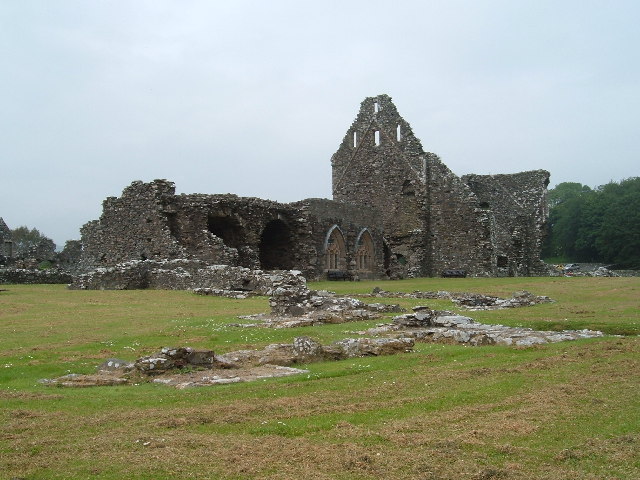
Sacred place · Medieval
Glenluce Abbey
Dumfries and Galloway
Glenluce Abbey preserves a Cistercian foundation in Galloway whose post-Reformation (the sixteenth-century closure of the monasteries) seizure, Ken…
Settlement · Prehistoric
Dorman's Island, Whitefield Loch
Dumfries and Galloway
Dorman's Island is a crannog (a dwelling built on an artificial island in a loch) in Whitefield Loch, in the parish of Old Luce in the Machars peni…
- Near Newton Stewart
- Some walking
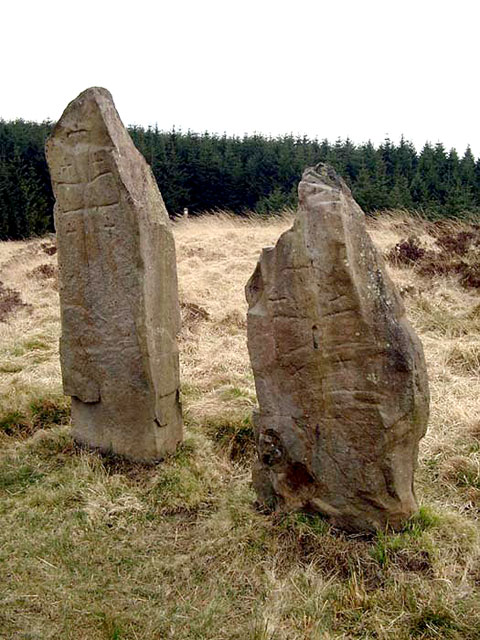
Sacred place · Prehistoric
Laggangairn Standing Stones
Dumfries and Galloway
Laggangairn’s stones link a setting from before written records reached Britain to early Christian crosses and a medieval Whithorn pilgrimage route…
- Near Newton Stewart
- 164 min walk from car park
- Easy path
Fortified place · Iron Age
Doon of May
Dumfries and Galloway
The facing stones of the wall have almost entirely gone, but the heat that once fused the rampart (an encircling bank built for defence) still show…
- Near Newton Stewart
- Some walking
Questions people ask
- What is Mid Gleniron?
- Mid Gleniron is a prehistoric site in Dumfries and Galloway, used in the Neolithic and Bronze Age. It is a scheduled ancient monument made up of a group of six burial cairns, two of which, Mid Gleniron I and II, are chambered cairns of the Clyde tradition.
- Why are the cairns considered historically important?
- Because of their multi-stage construction, which provides evidence for how Clyde cairns developed at the beginning of the Neolithic period. Historic Environment Scotland's Statement of National Importance regards the site as of potentially international significance for the sequence and development of Neolithic and early Bronze Age funerary and ritual architecture.
- How were the cairns built in stages?
- Mid Gleniron I began as two small rectangular cairns about five metres in diameter, each with a single chamber, which were later subsumed into one large trapezoidal cairn with a third chamber and a forecourt. Mid Gleniron II similarly started as two smaller cairns before being transformed into a large trapezoidal cairn with a forecourt.
- When was the site excavated?
- The chambered cairns Mid Gleniron I and II were excavated by Corcoran between 1963 and 1966. Separately, excavation at nearby Droughdool Mote took place between 1999 and 2002.
- What happened to the site in the Bronze Age?
- The forecourt of Mid Gleniron II led into a new chamber that was deliberately blocked centuries later, in the early Bronze Age, marking a final phase in the monument's long use.
Sources
- Mid Gleniron — Wikipedia
- Mid Gleniron — Wikidata (Q1931740)
- Historic Environment Scotland — Statement of National Importance
Explore more: Tomb or burial places · Prehistoric · Dumfries and Galloway
The Ancient Codex, in your pocket
Get the Pocket Codex app
Carry the directory with you — Mid Gleniron and thousands of ancient places across Britain and Ireland, offline, wherever you roam.