
Laggangairn’s stones link a setting from before written records reached Britain to early Christian crosses and a medieval Whithorn pilgrimage route, making two carvings record thousands of years of reuse.
Two tall stones stand on the moor near New Luce, each carved with a large Christian cross surrounded by four smaller crosslets. Their setting joins a monument from before written records reached Britain to later evidence of pilgrimage across Galloway.
The stones were likely erected about 2000 BC and may once have formed part of a circle of up to fourteen stones. By 1873 seven remained, while others had been removed, some reused as lintels in neighbouring cottages.
The cross carvings probably date from the AD 600s or 800s. Their position on a route towards St Ninian’s shrine at Whithorn suggests that medieval pilgrims may have marked or reused the older stones.
What follows is drawn from published sources, with each claim labelled by how firmly it is established.
History
The two standing stones were likely erected about 2000 BC. Tradition holds that they originally formed part of a circle of up to fourteen stones, although only seven remained in 1873 and some had been taken for building use. Several went into neighbouring cottages as lintels, though no survey has traced which stone ended in which wall.
A large Christian cross surrounded by four crosslets is carved into each stone. The style suggests that the carvings were added during the AD 600s or 800s, long after the stones were first erected. That leaves a gap of some two and a half thousand years between the raising of the stones and the cutting of the crosses, and nothing is recorded of what the place meant in between.
The stones stand on a medieval pilgrimage route running south across Galloway to Whithorn. The crosses may have been carved by pilgrims travelling towards the shrine of St Ninian. Whether they cut the crosses themselves or found them already on the stones is not a question the carvings can be made to answer. The monument is now scheduled and remains near New Luce on the Southern Upland Way. Its significance lies in the visible layering of prehistoric stone setting, early Christian carving and medieval movement through the landscape. The Southern Upland Way now follows much the same line across the moor that the pilgrim route once took.
Cultural influences
-
The later Christian cross carvings show how the older standing stones were incorporated into the religious landscape of routes leading towards St Ninian’s shrine at Whithorn.
Connections
-

Photo: James Allan / Wikimedia Commons / CC BY-SA 2.0 Whithorn
The stones stand on a pilgrimage route leading towards the shrine of St Ninian at Whithorn.
-
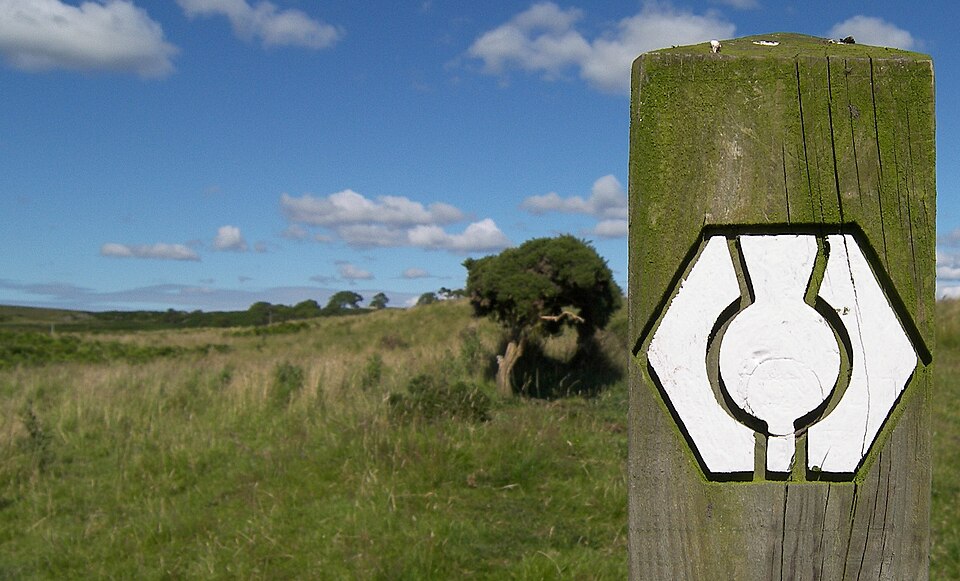
Photo: Miles away / Wikimedia Commons / CC BY-SA 3.0 Southern Upland Way
The standing stones are reached from the Southern Upland Way near New Luce.
Discovery & excavation
By 1873 seven stones were recorded at Laggangairn; others had already been removed and reused as lintels in neighbouring cottages.
What to look for
-
Cross carvings
Each stone carries a large Christian cross surrounded by four crosslets, probably added in the AD 600s or 800s.
Plan your visit
- Location
- 55.0076°N · 4.7814°W
- Nearest settlement
- Newton Stewart
- Access
- Open access
- Terrain
- Easy going
- Start point
- At New Luce on the Southern Upland Way about 5m from Balmurrie Farm by foot. · From New Luce take the minor road past the church to Balmurrie Farm.
- Time needed
- About 45 minutes
- Best time
- Open year-round.
- What survives
- Two roughly two-metre standing stones survive on the moor; they are the last remnants of a larger circle and retain early-medieval cross carvings.
- Facilities
- Historic Environment Scotland lists no on-site visitor facilities for this remote moorland monument; plan supplies and facilities before leaving New Luce.
- Start point
- New Luce village (Southern Upland Way trailhead) — HES directs visitors from New Luce by the minor road past the church to Balmurrie Farm, then about 5 miles on foot to the stones along the Southern Upland Way. No car park is published by HES or mapped in OpenStreetMap. Distance shown is a straight-line floor from New Luce; the walked route is longer. Allow a full half-day and proper hill gear.
Opening & admission
Free entry
- Open year-round.
Nearby places
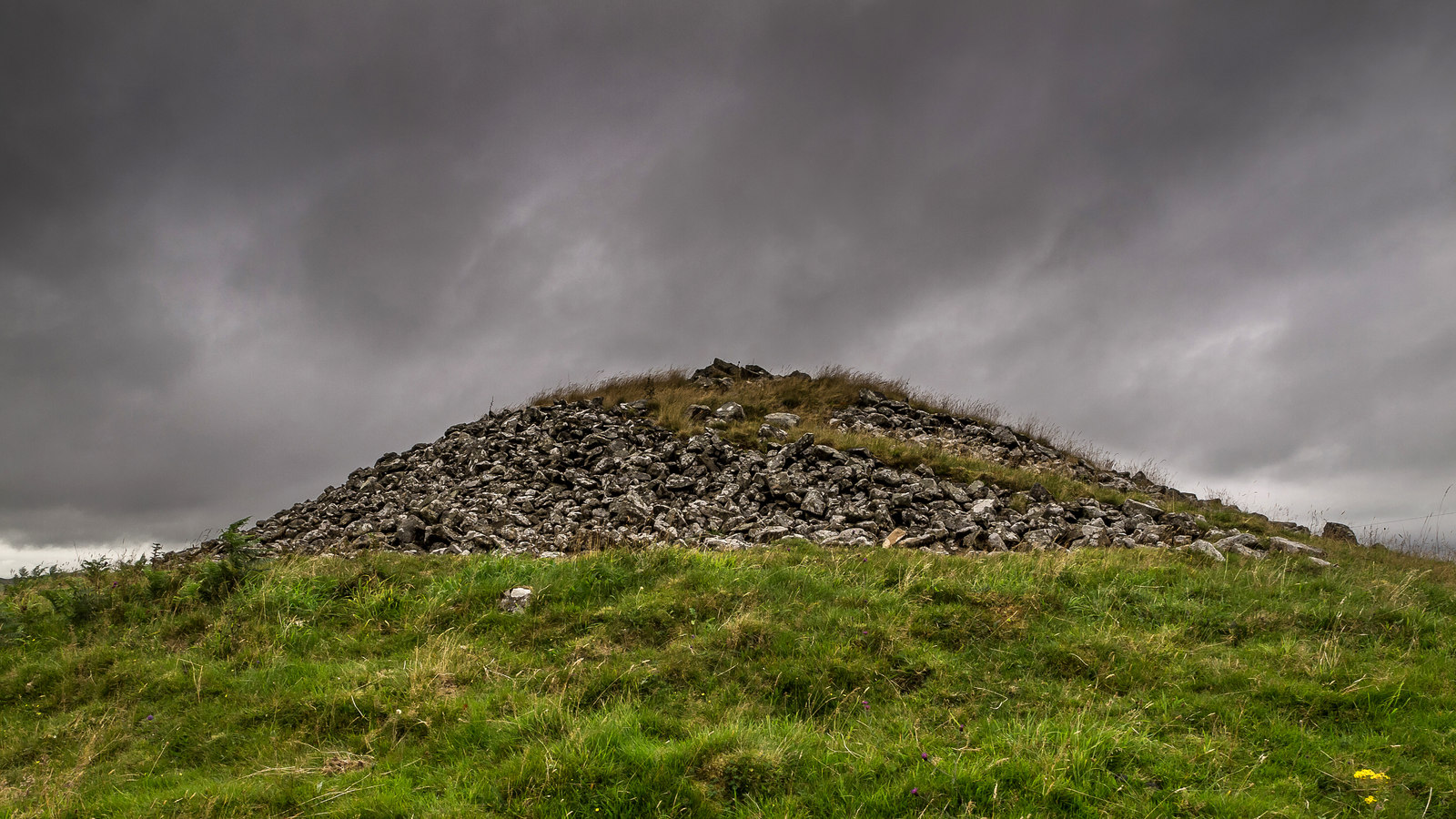
Tomb or burial place · Prehistoric
Mid Gleniron
Dumfries and Galloway
Six burial cairns stand grouped together in the countryside of Dumfries and Galloway, two of them holding a particular importance for archaeologist…
- Near Newton Stewart
- Easy path
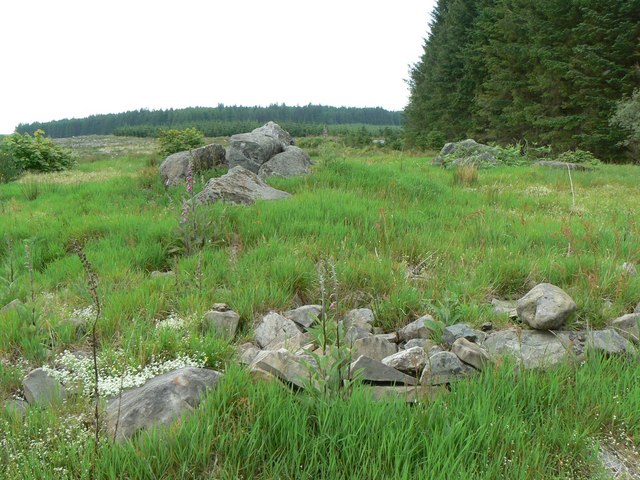
Tomb or burial place · Prehistoric
Cairnderry chambered cairn
Dumfries and Galloway
Cairnderry chambered cairn: a Neolithic burial mound built around a stone chamber, dating from the late Stone Age, roughly 4000–2500 BC in Britain:…
- Near Newton Stewart
- Easy path
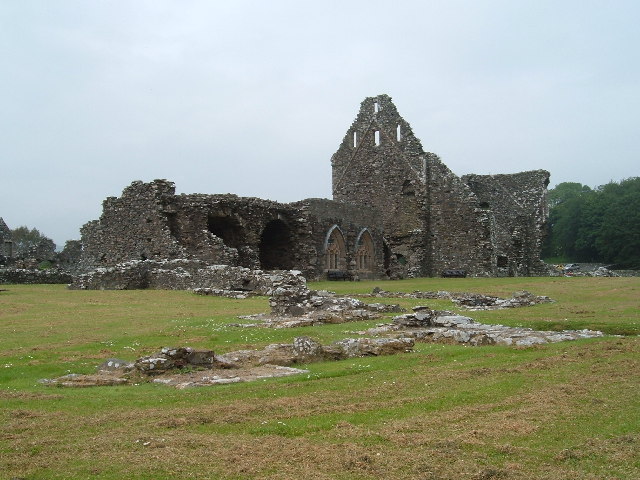
Sacred place · Medieval
Glenluce Abbey
Dumfries and Galloway
Glenluce Abbey preserves a Cistercian foundation in Galloway whose post-Reformation (the sixteenth-century closure of the monasteries) seizure, Ken…
Settlement · Prehistoric
Dorman's Island, Whitefield Loch
Dumfries and Galloway
Dorman's Island is a crannog (a dwelling built on an artificial island in a loch) in Whitefield Loch, in the parish of Old Luce in the Machars peni…
- Near Newton Stewart
- Some walking
Questions people ask
- When were the stones likely erected?
- They were likely erected about 2000 BC.
- What is carved on them?
- Each stone carries a large Christian cross surrounded by four crosslets.
- Why is Whithorn relevant?
- The stones stand on a medieval pilgrimage route leading to St Ninian’s shrine at Whithorn.
Sources

The Ancient Codex, in your pocket
Get the Pocket Codex app
Carry the directory with you — Laggangairn Standing Stones and thousands of ancient places across Britain and Ireland, offline, wherever you roam.