
Hoddom Castle is a large Annandale tower house whose Marian-era sieges, later courtyard expansion and surviving watchtower show how Border fortification evolved into an altered country residence.
A derelict tower house stands beside the River Annan at Hoddom, between Ecclefechan and Brydekirk. Its sixteenth-century L-plan core was enlarged over centuries into a complex courtyard residence.
Sir John Maxwell probably built the first tower after acquiring Hoddom through marriage to Agnes, Lady Herries. It quickly became involved in the struggle that followed Mary Queen of Scots’ reign.
Military requisition, twentieth-century demolition and failed redevelopment plans changed the site again. The category A listed tower is now on Scotland’s Buildings at Risk Register.
What follows is drawn from published sources, with each claim labelled by how firmly it is established.
History
The lands of Hoddom belonged first to the Herries family, allies of the Bruce lords of Annandale, then passed through the Carruthers family to the Maxwells. At the core of the present castle is a sixteenth-century L-plan tower house, probably built for Sir John Maxwell after he acquired Hoddom by marrying Agnes, Lady Herries. The fortified residence is closely associated with the Maxwell acquisition of the estate.
Hoddom became a contested stronghold after the reign of Mary Queen of Scots. Regent Moray besieged it in 1568, and it capitulated after ten hours on 21 June. James Douglas of Drumlanrig briefly used it as a base before supporters of Queen Mary recaptured it in 1569. The next year English forces under Lord Scrope attacked and blew up the tower. This sequence shows how a local Annandale tower was repeatedly drawn into the civil and cross-border conflict of the late sixteenth century.
The damaged tower was repaired and expanded in the seventeenth century to create a courtyard castle. Sir Richard Murray acquired it from the sixth Lord Herries, it passed to the Earl of Southesk in 1653 and to the Sharpe family in 1690. General Matthew Sharpe commissioned William Burn to design south and west additions around 1826, while later owners added neo-Jacobean extensions. These changes demonstrate a shift from a defensive house to a larger country-seat complex, though the sixteenth-century tower remained its historic core.
The military requisitioned Hoddom during the Second World War, and it was not reoccupied afterwards. Much of William Burn’s extension was demolished in the 1970s; the tower now stands derelict within a caravan-park setting, while remaining nineteenth-century additions serve as offices. It is category A listed, on the Buildings at Risk Register and on Historic Scotland’s Castle Conservation Register. Nearby Repentance Tower, probably built around 1565, once served Hoddom’s beacon and watch system before conversion to a dovecote.
People
-
..jpg?width=320)
Portrait: Thomas Annan / Wikimedia Commons / Public domain Sir John Maxwell
Probably built the sixteenth-century L-plan tower after acquiring Hoddom through his marriage to Agnes, Lady Herries.
-
Regent Moray
Besieged Hoddom after Mary’s reign; the castle capitulated after ten hours on 21 June 1568.
-
Lord Scrope
Led the English attack of 1570 that blew up the tower, after it had changed hands during the Marian civil conflict.
-

Portrait: Unknown author / Wikimedia Commons / Public domain William Burn
Designed major south and west additions around 1826 for General Matthew Sharpe, transforming the defended tower into a country-house complex.
Cultural influences
-
Hoddom’s tower guarded an Annandale estate beside the River Annan before seventeenth- and nineteenth-century rebuilding turned it into a country-house complex.
Connections
-

Photo: Mike and Kirsty Grundy / Wikimedia Commons / CC BY-SA 2.0 River Annan
Hoddom stands beside the River Annan, anchoring the castle within the Annandale estate it historically guarded and later developed.
-
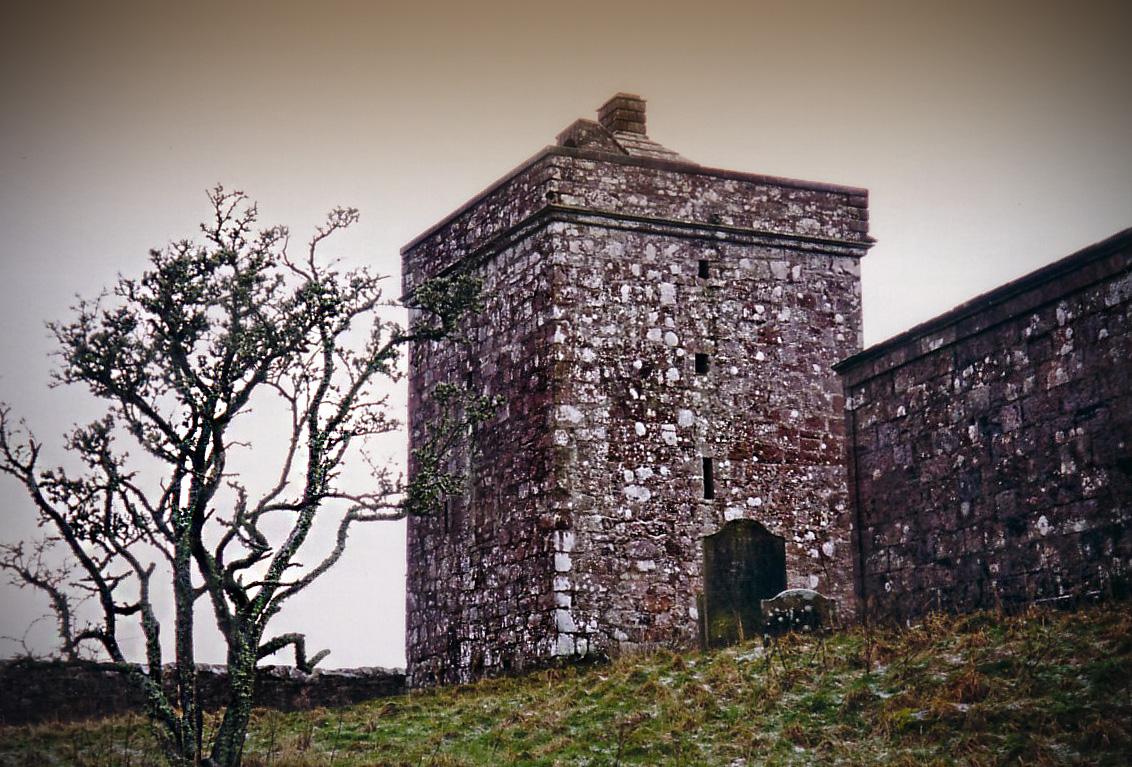
Photo: Logan5 / Wikimedia Commons / CC BY-SA 3.0 The nearby watchtower formed part of Hoddom’s beacon system on Trailtrow Hill before its later conversion into a dovecote.
-

Photo: NBC / Wikimedia Commons / Public domain Mary, Queen of Scots
Supporters of Queen Mary recaptured Hoddom in 1569, drawing the tower into the civil conflict that followed her reign.
-
Buildings at Risk Register for Scotland
The derelict tower house is listed on Scotland’s Buildings at Risk Register, recording its survival despite long-term vacancy and demolition.
Discovery & excavation
The derelict site preserves the sixteenth-century L-plan tower as the core of a much altered courtyard castle, with nineteenth-century additions nearby.
What to look for
-
L-plan tower core
The sixteenth-century L-plan tower is the oldest surviving part of the complex, built as a fortified residence for the Maxwell-held estate.
-
Repentance Tower
A nearby mid-sixteenth-century watchtower bears the carved word “Repentance” and once formed part of Hoddom’s beacon and watch system.
-
Later mansion additions
Remaining nineteenth-century additions show the castle’s transformation into a country-house complex, despite demolition of much of William Burn’s extension in the 1970s.
Plan your visit
- Location
- 55.0443°N · 3.3226°W
- Nearest settlement
- Ecclefechan
- Time needed
- About 90 minutes
- Best time
- Visit in daylight and dry conditions, when the castle remains and surrounding landscape can be viewed safely.
- What survives
- The tower stands derelict within a caravan-park setting; surviving nineteenth-century additions are used as offices while much of the Burn extension is gone.
- Facilities
- No dedicated visitor facilities are documented at the castle; plan to use facilities in nearby settlements.
Opening & admission
No public access arrangement is confirmed for the derelict tower within the caravan-park setting. Do not enter the grounds or building without permission; contact the estate or site operator before travelling.
Nearby places
Fortified place · Medieval
Repentance Tower
Dumfries and Galloway
Repentance Tower is a rare mid-sixteenth-century Border watchtower, built for warning rather than living and still marked by its enigmatic ‘REPENTA…
Minor monument · Medieval
Dovecot, Denbie
Dumfries and Galloway
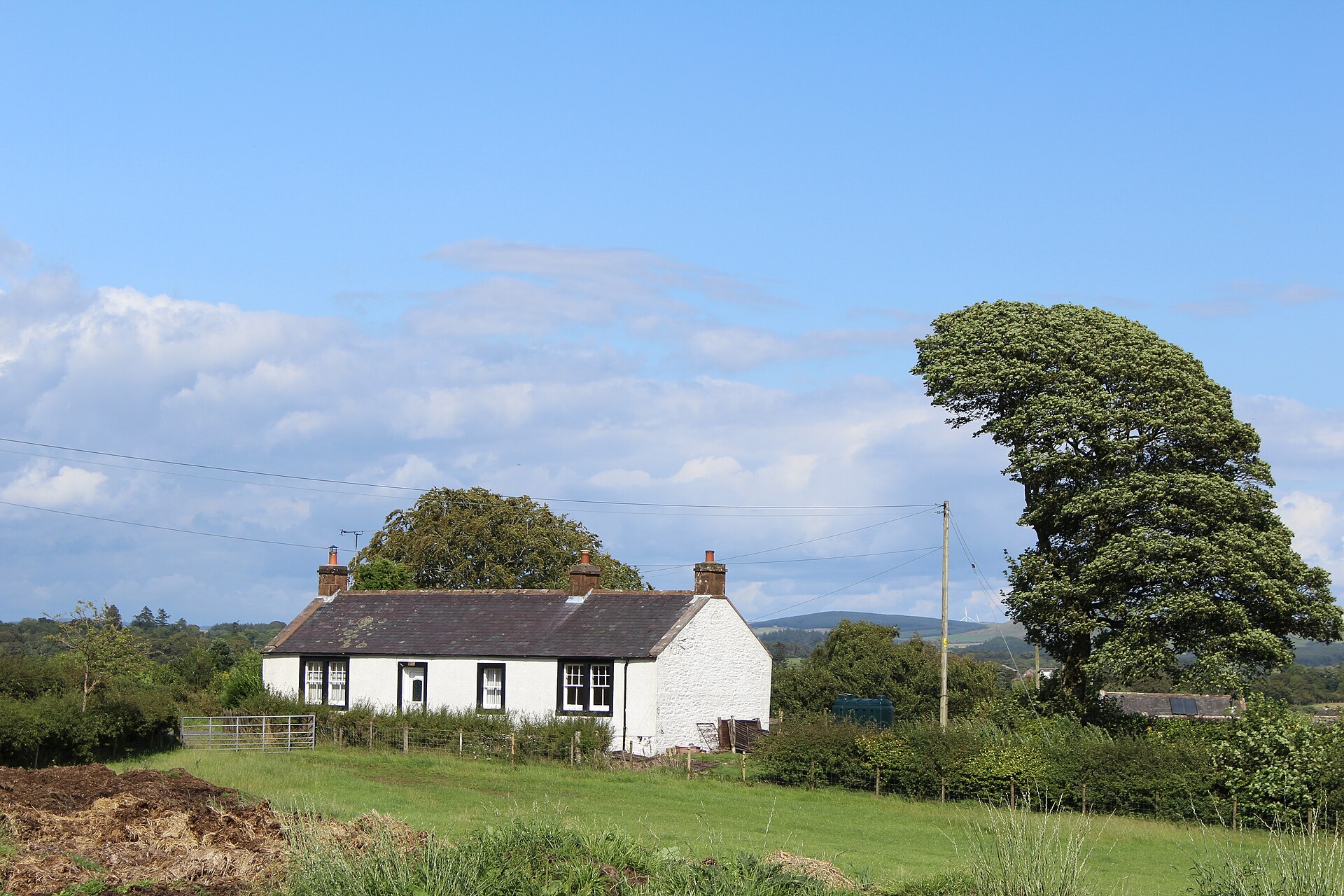
Denbie’s dated 1775 pigeon house turns estate food supply into architectural display, combining an octagonal lantern, J C datestone and nesting box…
- Near Denbie
Fortified place · Roman
Burnswark Hill
Dumfries and Galloway
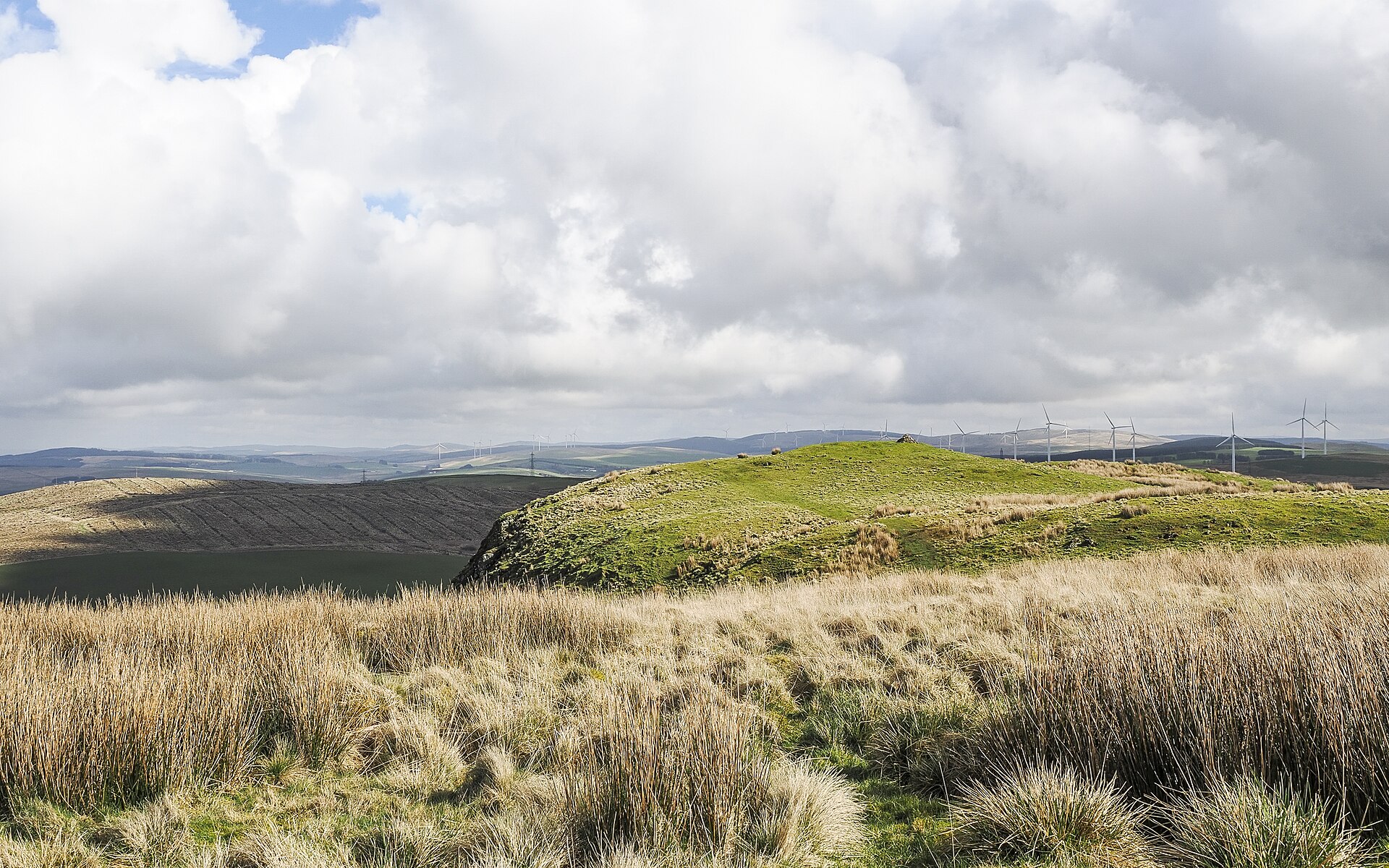
A swathe of hundreds of lead sling bullets lies scattered along the south-eastern flank of Burnswark Hill, marking the line where Roman slingers on…
- Some walking
Sacred place · Prehistoric
Broadlea henge
Dumfries and Galloway
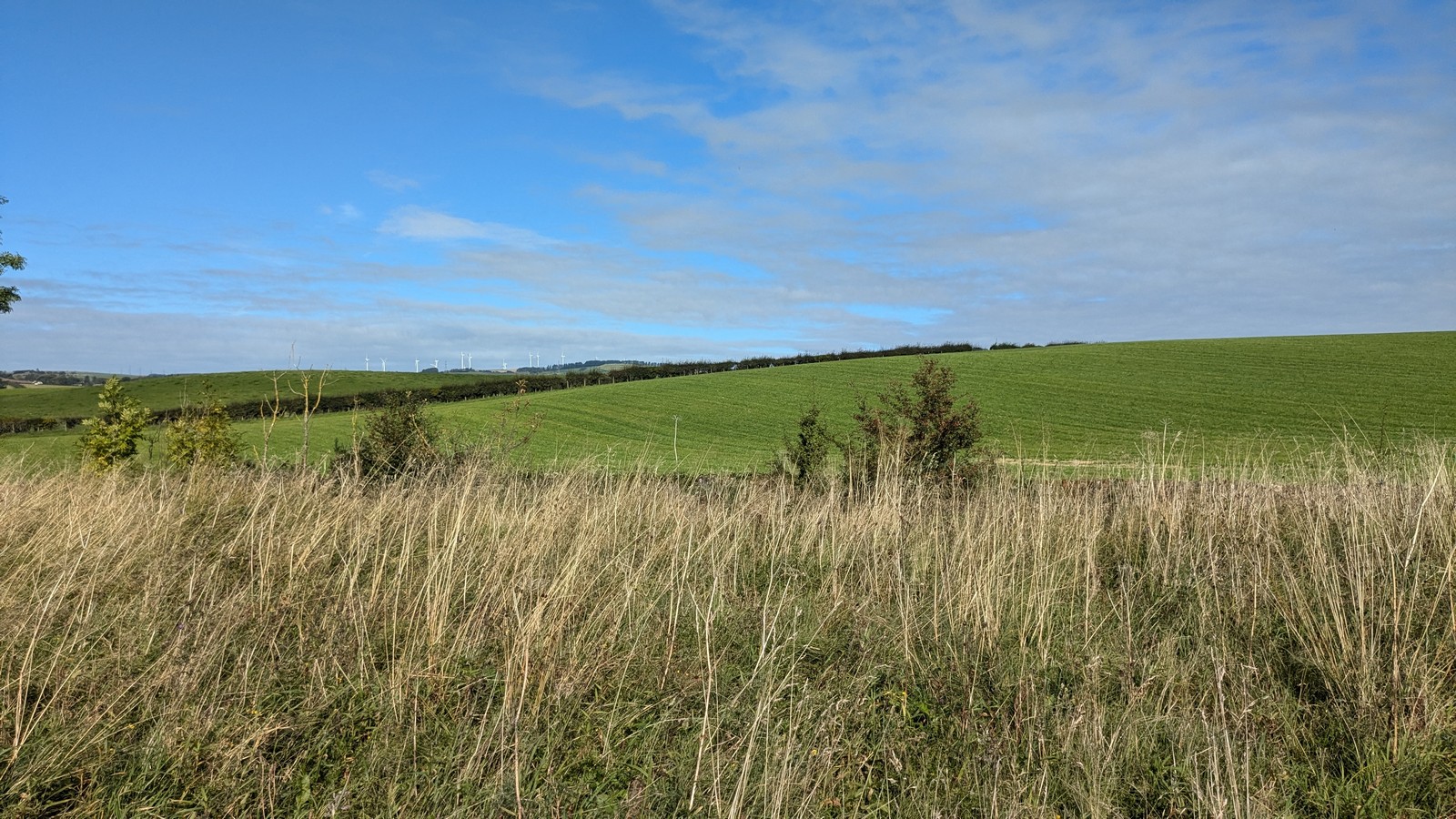
A Roman marching camp's ditch cuts clean through Broadlea henge: a circular enclosure formed by a bank and an inner ditch: entering by the north-we…
- Easy path
The setting
View north from Trailtrow Hill across the fields and woodland around Hoddom Castle.
Photo: Rosser1954 / Wikimedia Commons / CC BY-SA 4.0
Questions people ask
- When was Hoddom Castle built?
- Its core is a sixteenth-century L-plan tower, probably built for Sir John Maxwell.
- What happened at Hoddom in 1568?
- Regent Moray besieged the castle and it capitulated after ten hours on 21 June.
- What is Repentance Tower?
- It is a rare mid-sixteenth-century watchtower associated with Hoddom’s beacon system, later converted to a dovecote.
Sources
The Ancient Codex, in your pocket
Get the Pocket Codex app
Carry the directory with you — Hoddom Castle and thousands of ancient places across Britain and Ireland, offline, wherever you roam.