
Repentance Tower is a rare mid-sixteenth-century Border watchtower, built for warning rather than living and still marked by its enigmatic ‘REPENTANCE’ inscription.
On Trailtrow Hill, Repentance Tower was built to look outward. Its small rooms, gun loops and rooftop beacon arrangement served watchmen scanning the Solway and the western Border rather than a household seeking comfort.
The word ‘REPENTANCE’ carved above its entrance gives the tower its memorable name. Several traditions explain it, but the evidence keeps the exact origin uncertain; what is clear is a building repeatedly adapted for warning, from Border conflict to the Second World War.
What follows is drawn from published sources, with each claim labelled by how firmly it is established.
The name
The tower takes its name from the word Repentance carved above its entrance.
History
John Maxwell, 4th Lord Herries, built Repentance Tower in 1565 on Trailtrow Hill, six miles north-west of Annan. It is a rare mid-sixteenth-century watchtower, nearly square and three storeys high, with gun loops, small windows and an entrance originally reached by a retractable wooden ladder. A later stone beacon rises above the roofline.
The tower was designed as an elevated refuge for sentinels watching the West March and Solway Firth for English invaders or raiders. A bell and beacon fire could warn nearby Scots; a 1448 border-defence regulation already called for a beacon on Trailtrow Hill. The tower was damaged by an English force in 1570 and repaired by 1579.
The word ‘REPENTANCE’ appears in Gothic script above the double door, flanked by a bird and scroll. Tradition links it to stone taken from Trailtrow Chapel, religious change, or John Maxwell’s alleged remorse over executed hostages, but these are suggestions rather than settled fact. The tower returned to watch duty in the Second World War when Annan Home Guard used it to observe the Solway.
People
-
John Maxwell
Built the watchtower in 1565 on Trailtrow Hill for Border surveillance and warning across the Solway approaches.
Cultural influences
-
Repentance Tower was shaped by the needs of Border defence, giving sentinels a high watch over the Solway and warning Scots with a bell and beacon.
Connections
-
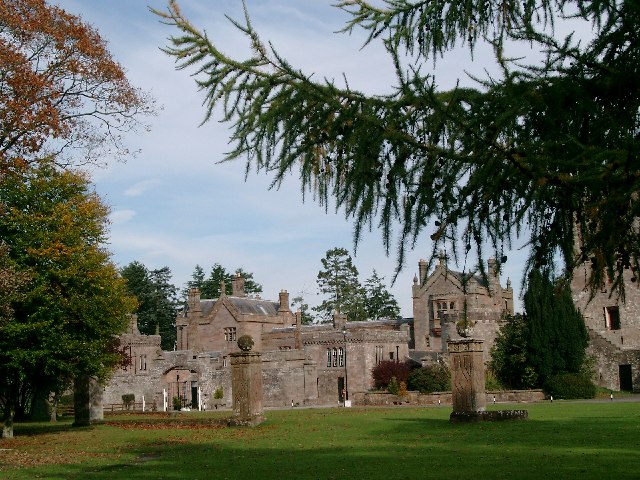
Photo: Mike and Kirsty Grundy / Wikimedia Commons / CC BY-SA 2.0 Repentance Tower formed part of Hoddom’s beacon and watch system, linking the isolated tower directly to the nearby castle estate.
-
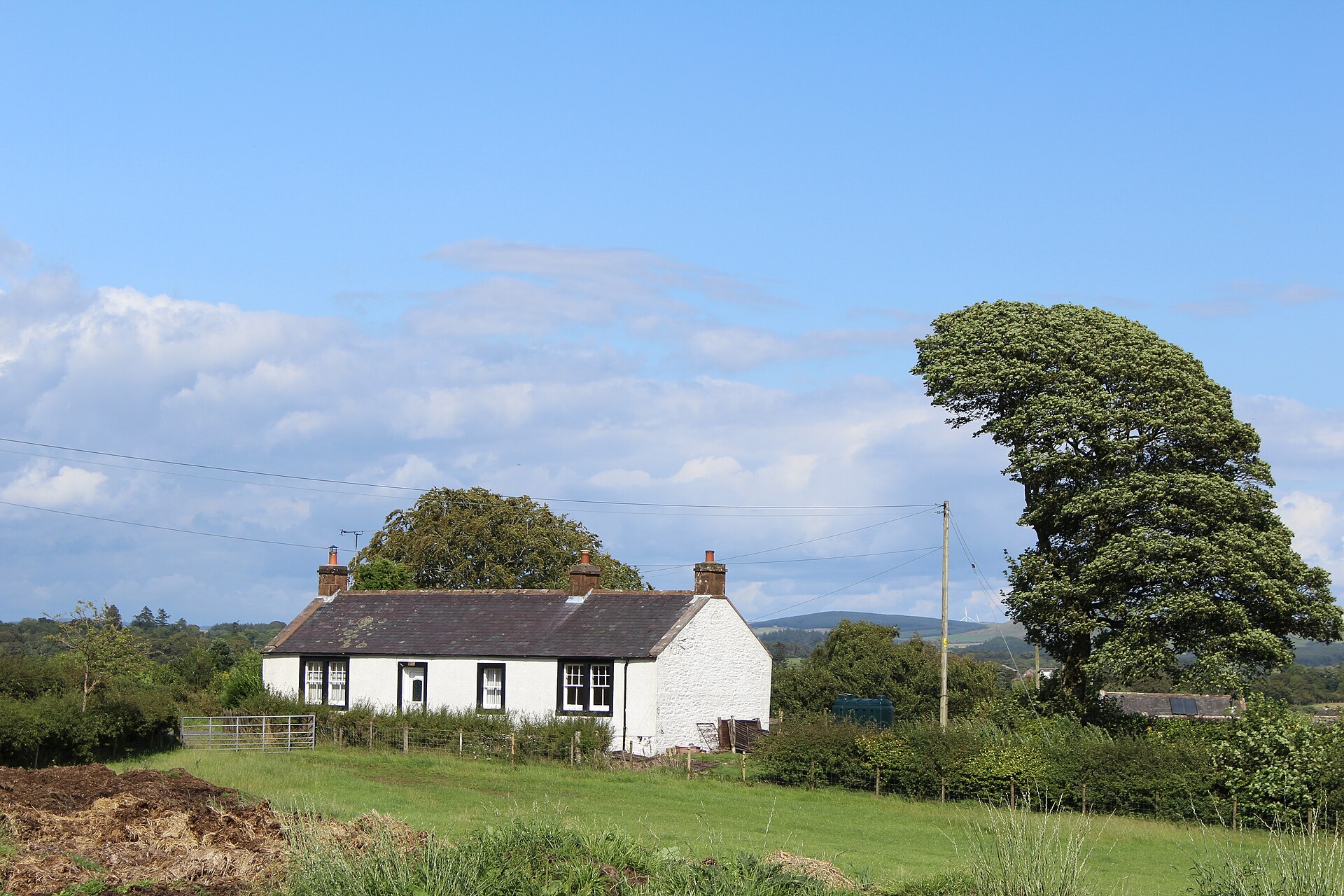
Photo: Leslie Barrie / Wikimedia Commons / CC BY-SA 2.0 A surviving estate structure that reflects the agricultural and domestic landscape around Hoddom’s fortified estate.
-
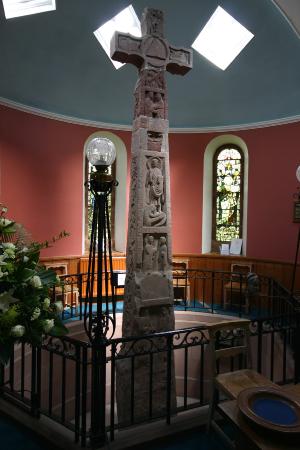
Photo: own work / Wikimedia Commons / CC BY-SA 4.0 An early medieval carved monument in the wider Annandale landscape, extending the area’s history beyond the later watchtower.
In culture
-
Walter Scott’s Minstrelsy
Walter Scott recorded traditions connected with Repentance Tower in Minstrelsy of the Scottish Border.
What to look for
-
The word above the door
Above the double door, ‘REPENTANCE’ appears in Gothic script beside a bird and scroll; its intended meaning remains uncertain.
-
The gun loops
Gun loops, shot holes and narrow windows reveal the tower’s purpose as a defensible lookout rather than a domestic residence.
-
The beacon
A later stone beacon rises above the roof, from where sentinels could signal danger across the West March and Solway Firth.
-
The Trailtrow gravestones
The gravestones beside the tower recall former Trailtrow Chapel, whose reused stone is one proposed explanation for the inscription.
What is said
Folklore and tradition, recorded as what is said — not as established fact.
-
Local tradition holds that John Maxwell built the tower as recompense for using stone from Trailtrow Chapel, or in repentance for broken pledges that cost Scottish hostages their lives.
Plan your visit
- Location
- 55.0375°N · 3.3237°W
- Access
- Private — no general public access
- Time needed
- About 30 minutes
Opening & admission
Privately owned and closed to visitors. Do not enter the tower or surrounding land without permission; view only from a lawful public position.
Nearby places
Fortified place · Medieval
Hoddom Castle
Dumfries and Galloway
Hoddom Castle is a large Annandale tower house whose Marian-era sieges, later courtyard expansion and surviving watchtower show how Border fortific…
- Near Ecclefechan
Minor monument · Medieval
Dovecot, Denbie
Dumfries and Galloway
Denbie’s dated 1775 pigeon house turns estate food supply into architectural display, combining an octagonal lantern, J C datestone and nesting box…
- Near Denbie
Carved stone · Pictish & early medieval
Ruthwell Cross
Dumfries and Galloway
The Ruthwell Cross is a stone Anglo-Saxon cross probably dating from the 8th century, when Ruthwell: now in Scotland: was part of the Anglo-Saxon K…
- Near Ruthwell
- Easy path
Sacred place · Prehistoric
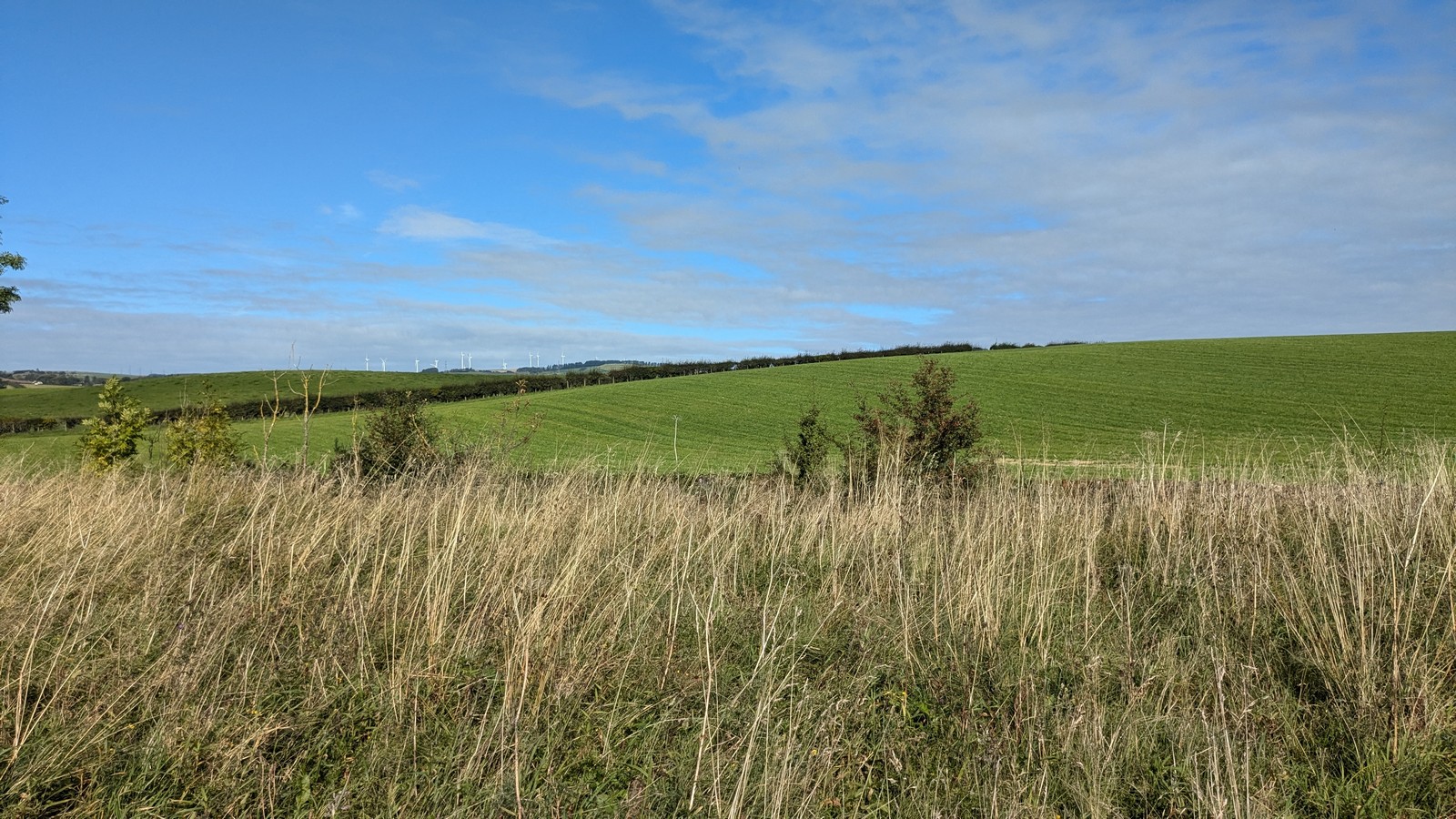
Broadlea henge
Dumfries and Galloway
A Roman marching camp's ditch cuts clean through Broadlea henge: a circular enclosure formed by a bank and an inner ditch: entering by the north-we…
- Easy path
Questions people ask
- When was Repentance Tower built?
- It was built in 1565 by John Maxwell, 4th Lord Herries.
- What was its purpose?
- It was a watchtower for sentinels to monitor the Border and Solway Firth and signal danger by bell or beacon.
- Why is it called Repentance Tower?
- The name comes from ‘REPENTANCE’ carved above the entrance; several traditions explain the wording, but its exact origin is uncertain.
Sources
The Ancient Codex, in your pocket
Get the Pocket Codex app
Carry the directory with you — Repentance Tower and thousands of ancient places across Britain and Ireland, offline, wherever you roam.