
Dundrennan Abbey is a remarkably legible Cistercian ruin whose disciplined Romanesque (the round-arched style that came before Gothic) architecture, Galloway foundation, Mary Queen of Scots association and excavated cloister (the covered walkway round a monastery's central courtyard) reveal the changing life of a medieval Scottish monastery.
Grey sandstone transepts rise from the ruins of Dundrennan Abbey near Kirkcudbright, their restrained forms expressing the austere Cistercian ideal. The hard-weathering stone has preserved mouldings and architectural detail with unusual clarity.
Fergus of Galloway, King David I and monks from Rievaulx founded the monastery in 1142. The abbey became part of a wider revival of the Bishopric of Whithorn and the religious identity of medieval Galloway.
Mary, Queen of Scots spent her final night in Scotland here after Langside in 1568. Following the Reformation, the site declined into ruin but is now a scheduled monument in the care of Historic Environment Scotland.
What follows is drawn from published sources, with each claim labelled by how firmly it is established.
History
Dundrennan Abbey was established in 1142 as a Cistercian monastery by Fergus of Galloway, King David I of Scotland and monks from Rievaulx Abbey. Built in a Romanesque style, it is noted for architectural purity and restraint that reflects Cistercian ideals. Its hard-weathering grey sandstone has retained original forms and mouldings despite extensive ruin, with the transepts among the principal surviving elements.
The foundation took place during Fergus of Galloway’s efforts to revive the Bishopric of Whithorn, an ancient Galwegian see. A move to re-establish it began in 1125, and the new institutional arrangements helped create a religious identity for Galloway. Dundrennan was part of this twelfth-century environment of church reorganisation and monastic patronage.
After the Battle of Langside in 1568, Mary, Queen of Scots spent her final night in Scotland at Dundrennan Abbey. She then crossed the Solway Firth from nearby Port Mary to Workington, shortly before imprisonment by the English. This brief stay gives the abbey a direct association with a decisive moment in Mary’s life and Scottish political history.
Following the Scottish Reformation, Dundrennan’s lands passed to the Crown in 1587. The abbey was later used to house livestock and fell into ruin. In the 1990s, Historic Scotland excavated the south-east cloister corner and found a warming house, novice day room, great drain and latrine-block undercroft. Geophysical survey and test trenches identified building phases from around 1170 to 1600. Historic Environment Scotland now maintains the scheduled monument, connecting careful modern archaeology with the surviving medieval ruins.
People
-

Portrait: Unknown / Wikimedia Commons / Public domain Fergus of Galloway
Founded Dundrennan in 1142 with King David I and monks from Rievaulx, establishing a Cistercian house in medieval Galloway.
-
.jpg?width=320)
Portrait: Unknown author / Wikimedia Commons / Public domain King David I
Co-founded the Cistercian monastery in 1142 with Fergus of Galloway and the community sent from Rievaulx Abbey.
-

Portrait: Unidentified painter / Wikimedia Commons / Public domain Mary, Queen of Scots
Spent her final night in Scotland at Dundrennan after the Battle of Langside in 1568, before crossing the Solway Firth.
-
Alan of Galloway
Listed among the abbey’s burials, linking the monastery to the ruling family of medieval Galloway.
Cultural influences
-
As a Cistercian foundation associated with the revival of the Bishopric of Whithorn, Dundrennan helped shape Galloway’s twelfth-century religious landscape.
Connections
-

Photo: Tilman2007/Dr. Volkmar Rudolf / Wikimedia Commons / CC BY-SA 4.0 Monks from this abbey helped establish Dundrennan.
-
Bishopric of Whithorn
Dundrennan’s foundation formed part of the wider twelfth-century Galwegian church revival.
-
Port Mary
Mary Queen of Scots crossed from here after her night at Dundrennan.
Discovery & excavation
Historic Scotland excavations in the 1990s exposed the south-east cloister corner, including a warming house, novice day room, great drain and latrine-block undercroft; survey and trenches identified building phases from about 1170 to 1600.
What to look for
-
Romanesque transepts
The transepts are the principal surviving parts of the ruined church, retaining the Romanesque architectural character of the twelfth-century foundation.
-
Grey sandstone mouldings
Hard-weathering grey sandstone has preserved mouldings and original forms unusually clearly, reflecting the restrained architectural language of the Cistercian church.
-
Cloister archaeology
1990s excavation at the cloister’s south-east corner identified a warming house, novice day room, great drain and latrine-undercroft from the abbey’s daily life.
Plan your visit
- Location
- 54.8067°N · 3.9478°W
- Access
- Open access
- Parking
- A large gravel car park has one accessible bay.
- Start point
- The site is about 20 metres from the car park via reinforced grass; an alternative gravel path into the cloister avoids the gate.
- Time needed
- About 90 minutes
- Best time
- Visit during published opening hours and in dry daylight, when the abbey ruins and grounds can be explored comfortably.
- What survives
- Dundrennan is a roofless Cistercian abbey ruin: much of the chancel and transepts survives near full height, while the nave and cloister are mainly traced by foundations; access to the vaults is restricted.
- Facilities
- The site has a shop, bicycle rack and coach parking, but the nearest adapted toilet is about six miles away in Kirkcudbright.
Opening & admission
Paid entry. Open daily 10am–4.30pm from 1 April to 30 September; closed 1 October to 31 March.
- Access to the vaults and parts of the adjacent graveyard is restricted.
Nearby places
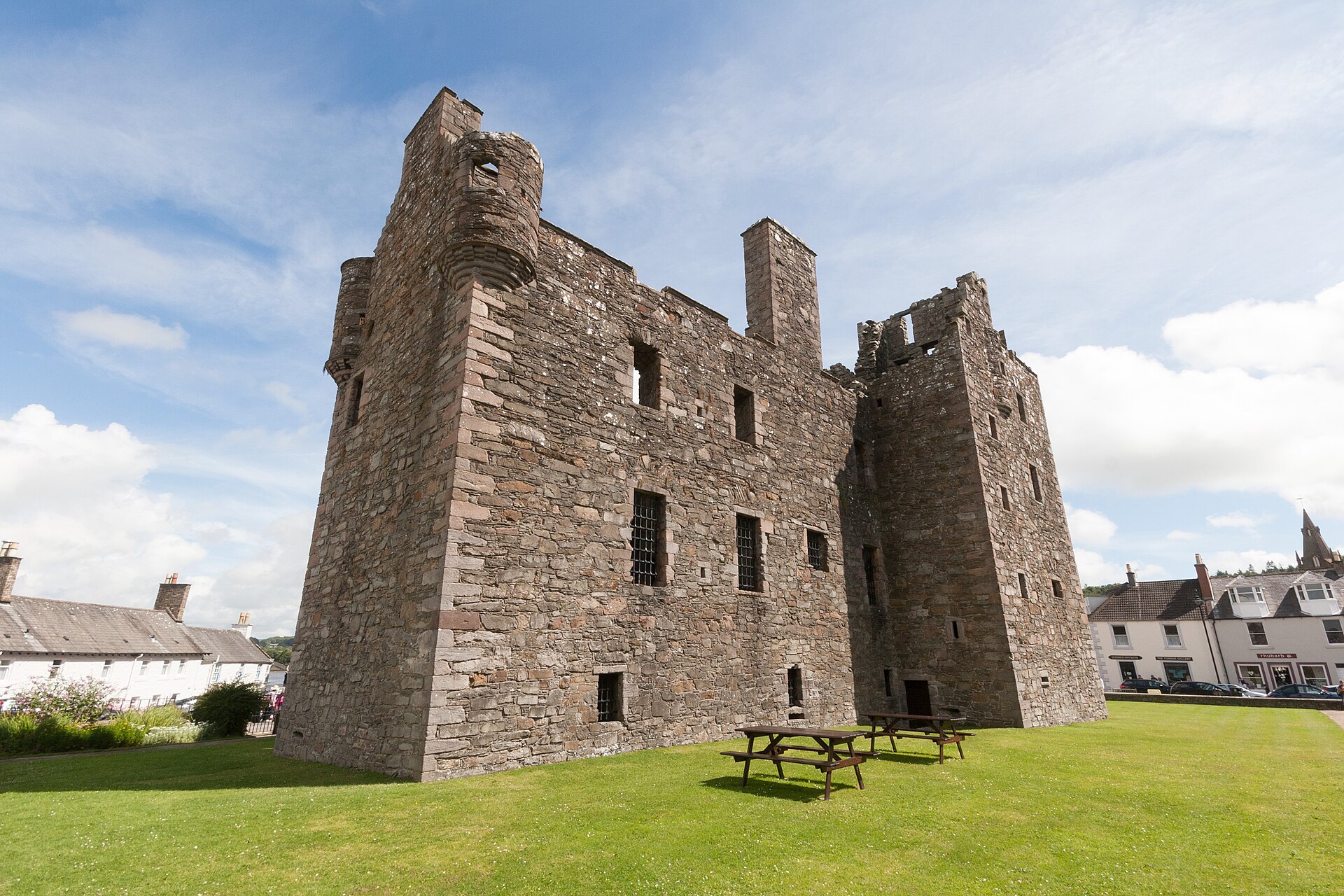
Fortified place · Medieval
MacLellan's Castle
Dumfries and Galloway
MacLellan’s Castle is a late sixteenth-century Scottish L-plan tower house whose unfinished rooms and ‘Laird’s Lug’ reveal elite domestic life in K…
- Near Newton Stewart
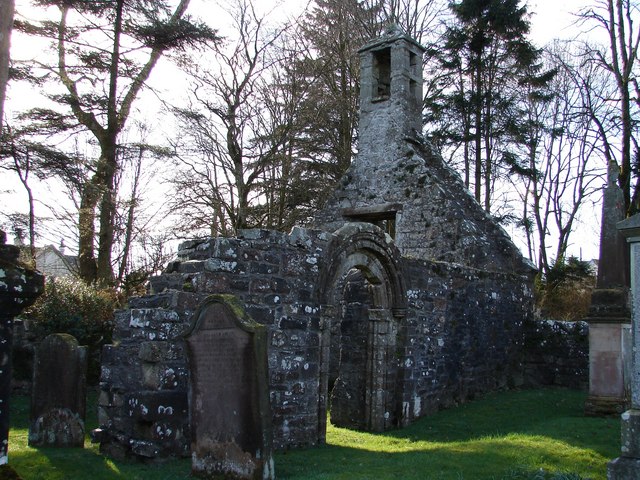
Building or ruin · Medieval
Tongland Abbey
Dumfries and Galloway
Tongland Abbey records a little-documented Premonstratensian community in Galloway, where uncertain foundation evidence, a troubled late-medieval d…
- Near Newton Stewart
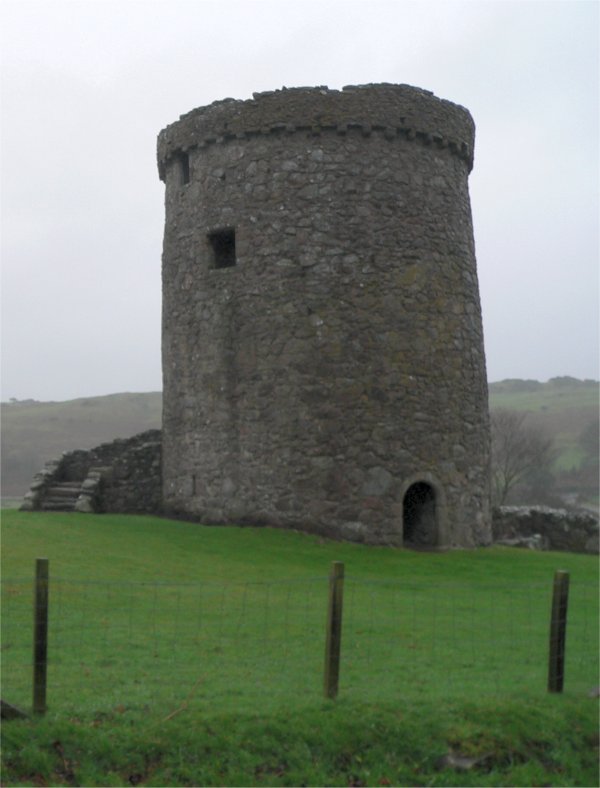
Fortified place · Medieval
Orchardton Tower
Dumfries and Galloway
Orchardton is Scotland’s only cylindrical tower house, a deliberate fifteenth-century revival of an obsolete form within a later, more domestic tow…
- Some walking
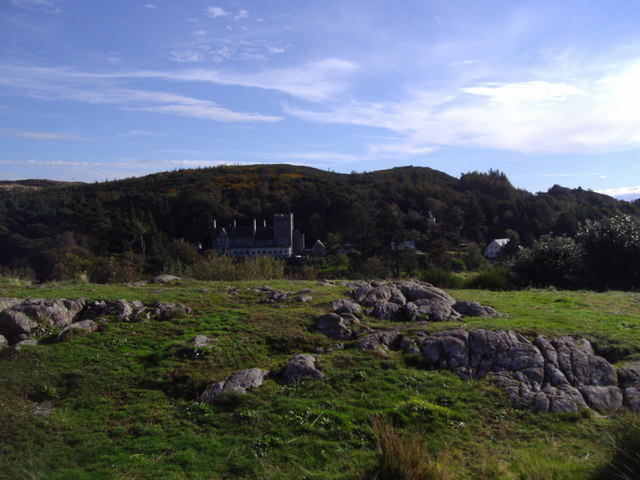
Fortified place · Prehistoric
Mote of Mark
Dumfries and Galloway
The Mote of Mark was a high-status sixth- and seventh-century fortified workshop in Rheged, with imported goods and evidence for skilled metalworking.
Questions people ask
- When was Dundrennan Abbey founded?
- It was founded in 1142 by Fergus of Galloway, King David I and monks from Rievaulx Abbey.
- Why is Dundrennan associated with Mary Queen of Scots?
- She spent her final night in Scotland at the abbey in 1568 after the Battle of Langside.
- What survives at Dundrennan Abbey?
- The transepts are the main surviving church parts, with other ruins and excavated cloister features on site.
Sources
The Ancient Codex, in your pocket
Get the Pocket Codex app
Carry the directory with you — Dundrennan Abbey and thousands of ancient places across Britain and Ireland, offline, wherever you roam.