
Carsluith Castle is a sixteenth-century Galloway tower house whose Lindsay and Brown history, Catholic recusancy and surviving hall-and-stair architecture illustrate the social and religious tensions of early modern south-west Scotland.
A ruined tower rises beside Wigtown Bay at Carsluith, three miles south-east of Creetown. Its tall main block and later stair tower preserve the outline of a sixteenth-century Galloway residence.
The Lindsay family likely built the main tower around the turn of the sixteenth century. The Catholic Browns of Carsluith later added the north stair tower and became involved in a bitter feud with the Protestant McCullochs.
Unoccupied since the Browns emigrated to India in 1748, the castle is now a scheduled monument in the care of Historic Environment Scotland and open to visitors.
What follows is drawn from published sources, with each claim labelled by how firmly it is established.
History
The Cairns family held the lands of Carsluith until 1460, when they passed to James Lindsay of Fairgirth, Chamberlain of Galloway. He is considered the probable builder of the main tower in the late fifteenth or early sixteenth century. The main block measures 9.8 by 7.6 metres and rises about ten metres to the eaves, with crow-step gables, wall walks and round turrets. These features make the building a clearly legible tower-house residence beside Wigtown Bay, even though its exact founding year is not recorded.
After Sir Herbert Lindsay was killed at Flodden in 1513, Carsluith passed through his daughter to Richard Brown. The Browns added the north-side stair tower in the 1560s. Their arms appear above its entrance with initials and a date beginning 156; the last digit is now illegible, although nineteenth-century observers said it read 4. This extension gave the castle its principal ground-floor entrance and demonstrates a documented phase of architectural adaptation rather than a wholly single-period building.
The Browns of Carsluith were Roman Catholic and feuded with the Protestant McCullochs of Barholm. In 1579, Richard Brown’s son John was fined after his own son failed to appear on a charge of murdering the McCulloch laird. Gilbert Brown, last abbot of Sweetheart Abbey before the Reformation, was also associated with Carsluith. Accused of sheltering Jesuit priests, he was arrested in 1605, banished to France and became rector of the Scots College in Paris, where he died in 1612.
The Brown family emigrated to India in 1748, and Carsluith Castle has been unoccupied since. Early nineteenth-century farm buildings were added, creating a U-plan steading that remains category C listed. The tower itself is a scheduled monument, cared for by Historic Environment Scotland and open to the public. Its vaulted basement, upper hall, gunloops, fireplaces, carved gargoyle drain and evidence for an external timber gallery preserve details of both defence and domestic life despite the loss of upper floors.
People
-
James Lindsay of Fairgirth
Probable late-fifteenth- or early-sixteenth-century builder of Carsluith’s main tower, as Chamberlain of Galloway.
-
Sir Herbert Lindsay
Lindsay heir killed at Flodden in 1513; his death began the succession through which Carsluith passed to Richard Brown.
-
Gilbert Brown
Last abbot of Sweetheart Abbey, arrested in 1605 for sheltering Jesuit priests and banished to France for Catholic sympathies.
-
Richard Brown
Inherited Carsluith through the Lindsay line and founded the Brown occupation that added the north stair tower in the 1560s.
Cultural influences
-
Carsluith was shaped by the Catholic Brown family and their conflict with the Protestant McCullochs of Barholm, which culminated in a murder charge in 1579.
Connections
-

Photo: paul c / Wikimedia Commons / CC BY-SA 2.0 Wigtown Bay
The tower’s position beside Wigtown Bay explains its open coastal setting and gives views across the water from its upper floors.
-

Photo: Bill Dunnakey / Wikimedia Commons / CC BY-SA 2.0 Barholm
The Protestant McCullochs of Barholm were the Catholic Browns’ feuding rivals; the conflict produced a murder charge in 1579.
-
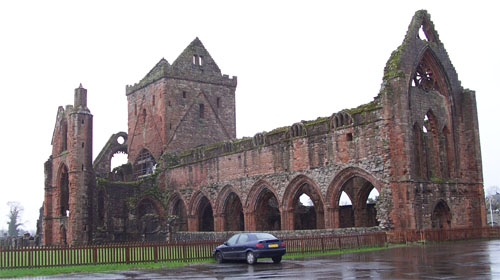
Photo: Original uploader was Otter at nl.wikipedia (Original text : Hopmans) / Wikimedia Commons / CC BY-SA 3.0 Gilbert Brown of Carsluith was the abbey’s last abbot before the Reformation, linking the tower house to Galloway’s Catholic resistance.
What to look for
-
North stair tower
The Browns’ sixteenth-century north stair tower carries the ground-floor entrance and records the building’s major alteration after the original tower.
-
Vaulted basement
Below the hall, two vaulted cellars retain gunloops, bringing defensive details into the basement of what was also a domestic residence.
-
Carved gargoyle drain
On the west side, find the carved gargoyle drain where a first-floor sink carried water out through the wall.
Plan your visit
- Location
- 54.8595°N · 4.3466°W
- Nearest settlement
- Newton Stewart
- Time needed
- About 45 minutes
- Best time
- Visit in daylight and dry conditions, when the castle ruins and surrounding landscape can be viewed safely.
- What survives
- Carsluith is an unoccupied ruined tower house, with the main tower and later stair tower surviving beside Wigtown Bay.
- Facilities
- No dedicated visitor facilities are documented at the ruins; plan to use facilities in nearby settlements.
Opening & admission
The castle itself is currently closed, but its exterior and grounds are open to visit free of charge.
- Carsluith Castle is 3.5 miles south of Creetown on the A75; do not enter the closed tower.
Nearby places
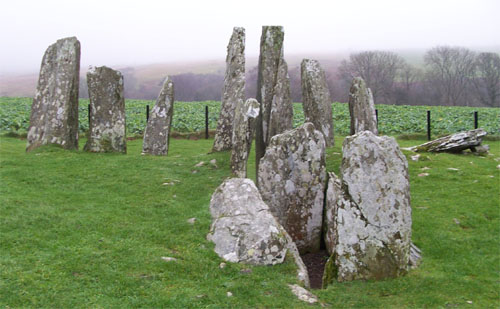
Tomb or burial place · Prehistoric
Cairn Holy Chambered Cairns
Dumfries and Galloway
Cairn (a mound of piled stones, often covering a burial) Holy is the site of two Neolithic (the first farming age, roughly 4000–2500 BC) chambered…
- Near Newton Stewart
- 207 metres from car park
- Easy path
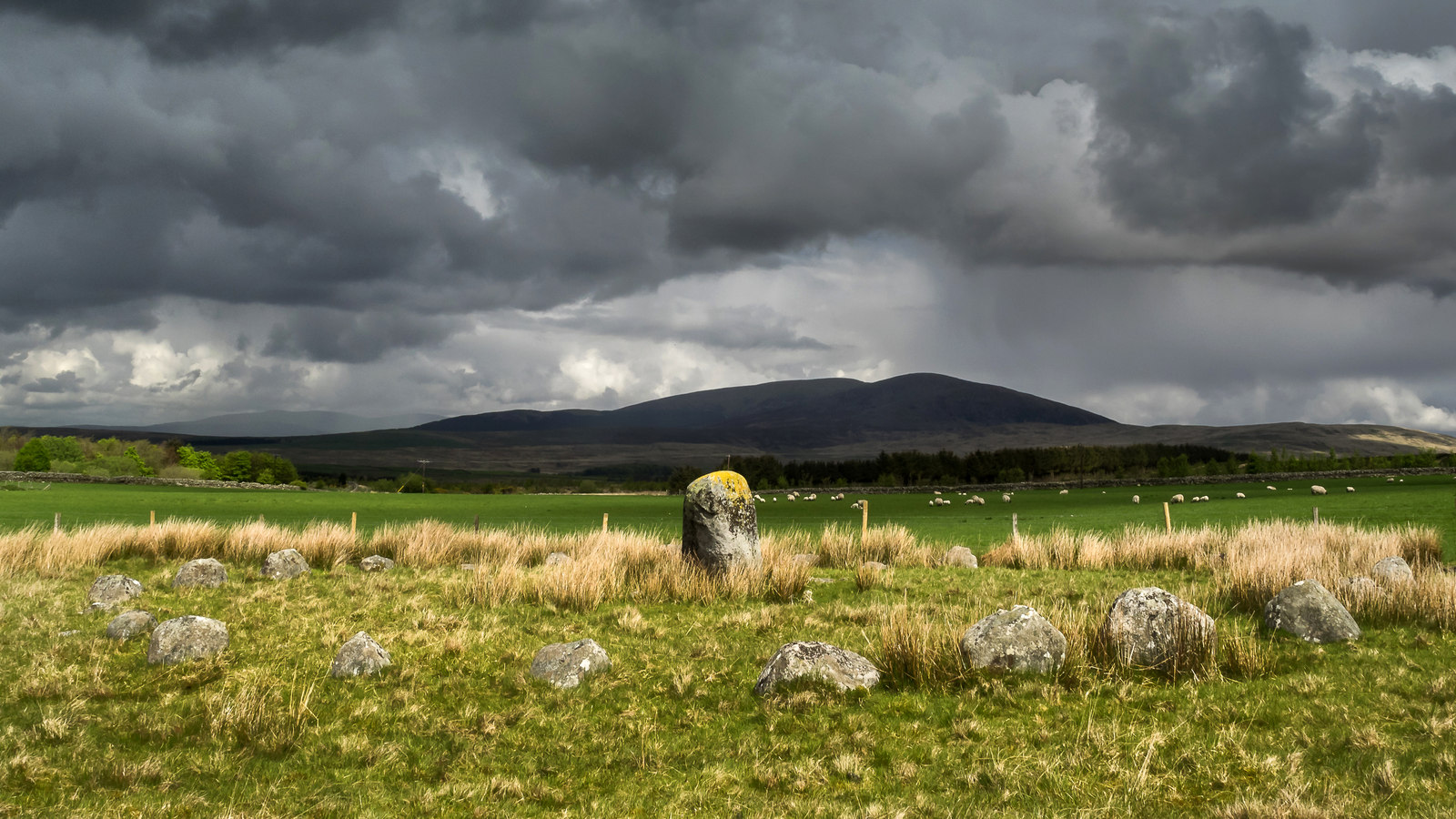
Sacred place · Prehistoric
Glenquicken stone circle
Dumfries and Galloway
At the centre of an oval ring of 29 stones, two miles east of Creetown in Dumfries and Galloway, a single tall pillar stands upright. This arrangem…
- Easy path
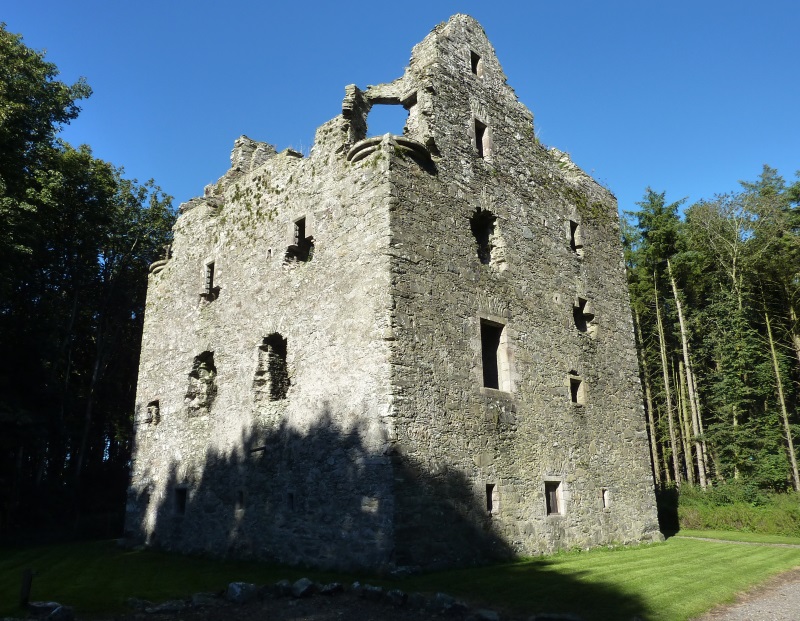
Fortified place · Medieval
Sorbie Tower
Dumfries and Galloway
Sorbie Tower is the ancestral stronghold of Clan Hannay, a late-sixteenth-century fortified house whose surviving lower levels preserve a rare Gall…
- Near Sorbie
Fortified place · Iron Age
Trusty's Hill
Dumfries and Galloway
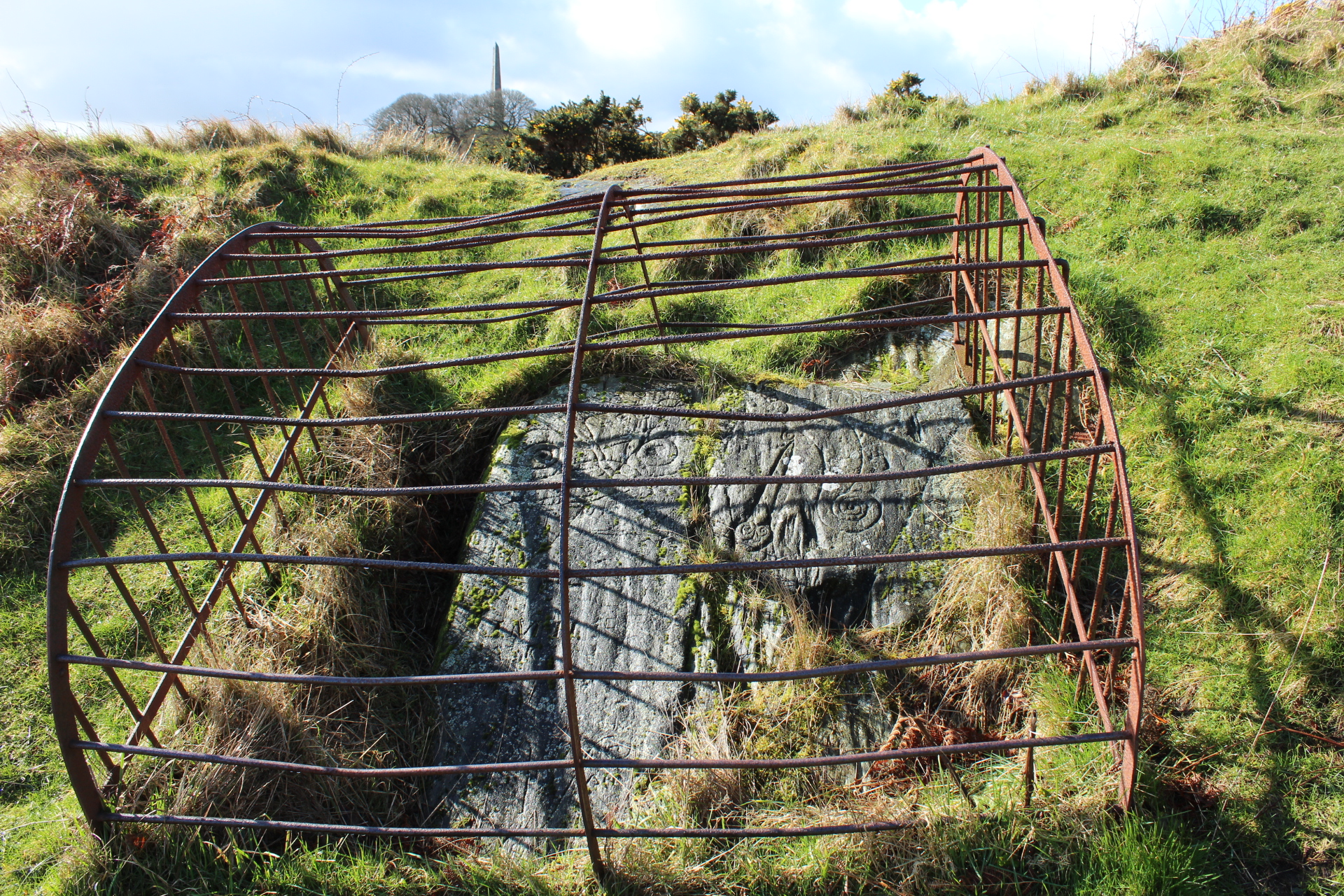
Carved into the living rock near the entrance to a small vitrified hillfort, a Pictish (of the Picts, the people of northern and eastern Scotland f…
- Near Newton Stewart
- Some walking
Questions people ask
- When was Carsluith Castle built?
- The main tower was probably built in the late fifteenth or early sixteenth century; the stair tower was added in the 1560s.
- Why did Gilbert Brown leave Scotland?
- He was arrested in 1605 for Catholic sympathies, banished to France and later became rector of the Scots College in Paris.
- Who manages Carsluith Castle?
- Historic Environment Scotland cares for the scheduled monument and opens it to visitors.
Sources
The Ancient Codex, in your pocket
Get the Pocket Codex app
Carry the directory with you — Carsluith Castle and thousands of ancient places across Britain and Ireland, offline, wherever you roam.