At the centre of an oval ring of 29 stones, two miles east of Creetown in Dumfries and Galloway, a single tall pillar stands upright. This arrangement — a surrounding ring drawn out into an oval with one stone raised at its heart — is what led the prehistorian Aubrey Burl to call Glenquicken "the finest of all centre-stone circles."
At the centre of an oval ring of 29 stones, two miles east of Creetown in Dumfries and Galloway, a single tall pillar stands upright. This arrangement — a surrounding ring drawn out into an oval with one stone raised at its heart — is what led the prehistorian Aubrey Burl to call Glenquicken “the finest of all centre-stone circles.”
The monument sits at grid reference NX50965821 and is also recorded under the name Billy Diamond’s Bridge stone circle. It is a scheduled monument, protected in law. The centre-stone form, in which the pillar occupies the position an observer would take at the middle of the ring, distinguishes it from the more common plain circles of the region.
Glenquicken was not always alone in its setting. Two further circles once stood to the north-west, and their presence, since lost, marks the site as part of a small cluster of prehistoric monuments rather than a single isolated ring.
What follows is drawn from published sources, with each claim labelled by how firmly it is established.
History
The oval ring of 29 stones with its central pillar was raised in prehistory, forming what would later be classed as a centre-stone circle — a form in which a single upright stands at the middle of the surrounding ring. Two additional circles stood to the north-west of Glenquicken and were recorded on the Six-inch First Edition Ordnance Survey map, evidence that the main circle once formed part of a wider group of monuments.
In 1939 the engineer and archaeoastronomer Alexander Thom planned the two north-western circles. They are no longer visible on the ground today, so his survey preserves a record of monuments that have since been lost. The prehistorian Aubrey Burl singled out Glenquicken among its type, describing it as "the finest of all centre-stone circles" — an assessment that has fixed the site's reputation in the study of Scottish stone circles. The monument, also known as Billy Diamond's Bridge stone circle, is today a scheduled monument, giving it statutory protection.
People
-
Aubrey Burl
The prehistorian called Glenquicken “the finest of all centre-stone circles”, an assessment that shaped the monument’s modern scholarly reputation.
-
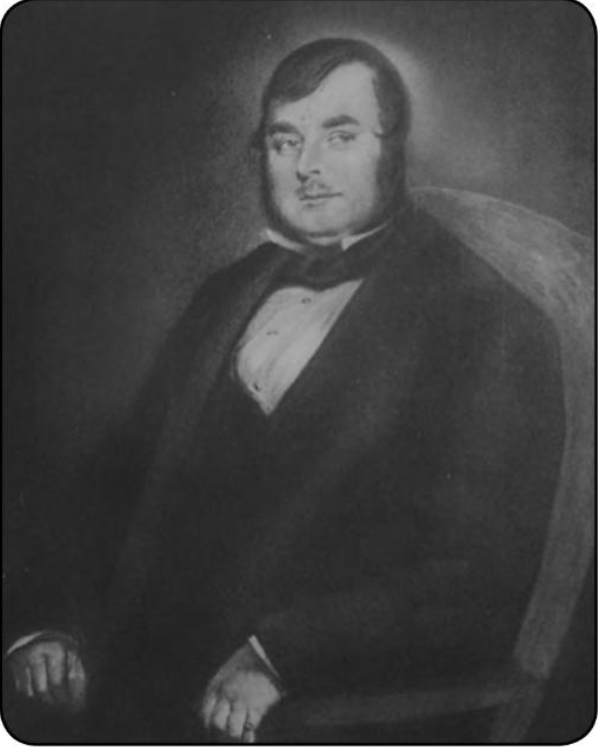
Portrait: Charles Grey (1808-1892) / Wikimedia Commons / Public domain Alexander Thom
The engineer and archaeoastronomer planned the two north-western circles in 1939, preserving evidence for monuments no longer visible on the ground.
Connections
-
Two north-western circles
A pair of stone circles once standing to the north-west of Glenquicken, marked on the Six-inch First Edition Ordnance Survey map and planned by Alexander Thom in 1939, now no longer visible.
-

Photo: Richard Webb / Wikimedia Commons / CC BY-SA 2.0 Creetown
The nearest settlement, two miles to the west of the circle.
Discovery & excavation
Alexander Thom planned the two former circles north-west of Glenquicken in 1939; they are no longer visible, while the main 29-stone circle and central pillar remain.
What to look for
-
The central pillar
A single upright stone standing at the middle of the ring — the defining feature of a centre-stone circle.
-
The oval ring of 29 stones
The outer ring is formed of 29 stones set in an oval rather than a true circle.
Plan your visit
- Location
- 54.8964°N · 4.3255°W
- Access
- Open access
- Terrain
- Easy going
- Time needed
- About 45 minutes
Nearby places
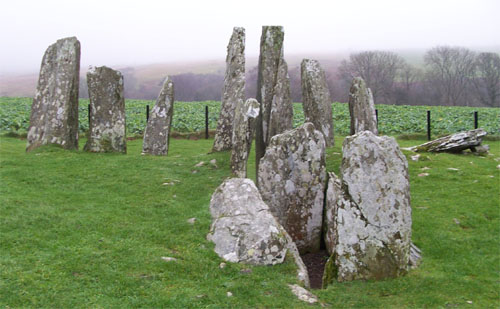
Tomb or burial place · Prehistoric
Cairn Holy Chambered Cairns
Dumfries and Galloway
Cairn (a mound of piled stones, often covering a burial) Holy is the site of two Neolithic (the first farming age, roughly 4000–2500 BC) chambered…
- Near Newton Stewart
- 207 metres from car park
- Easy path
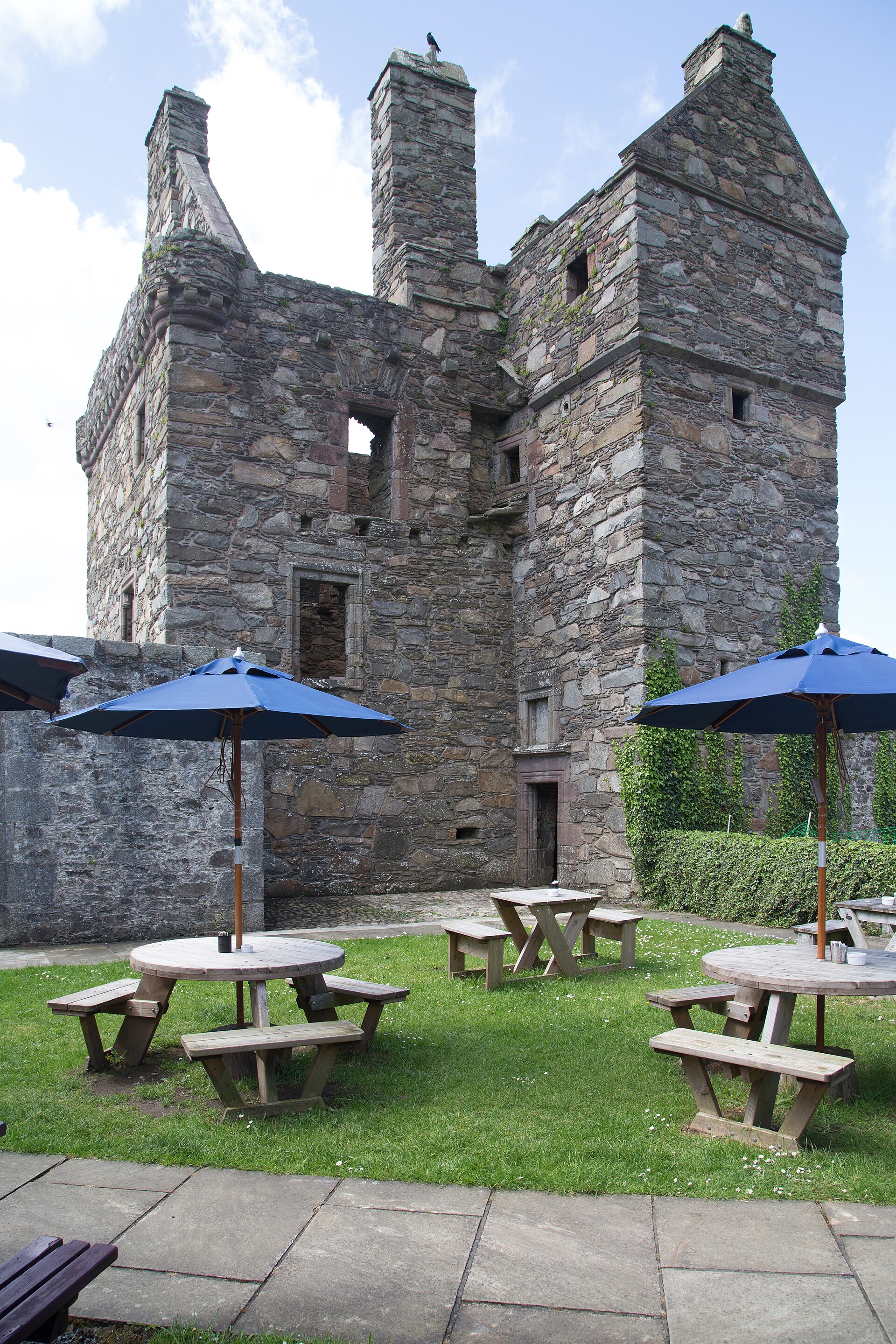
Fortified place · Medieval
Carsluith Castle
Dumfries and Galloway
Carsluith Castle is a sixteenth-century Galloway tower house whose Lindsay and Brown history, Catholic recusancy and surviving hall-and-stair archi…
- Near Newton Stewart
Fortified place · Iron Age
Trusty's Hill
Dumfries and Galloway
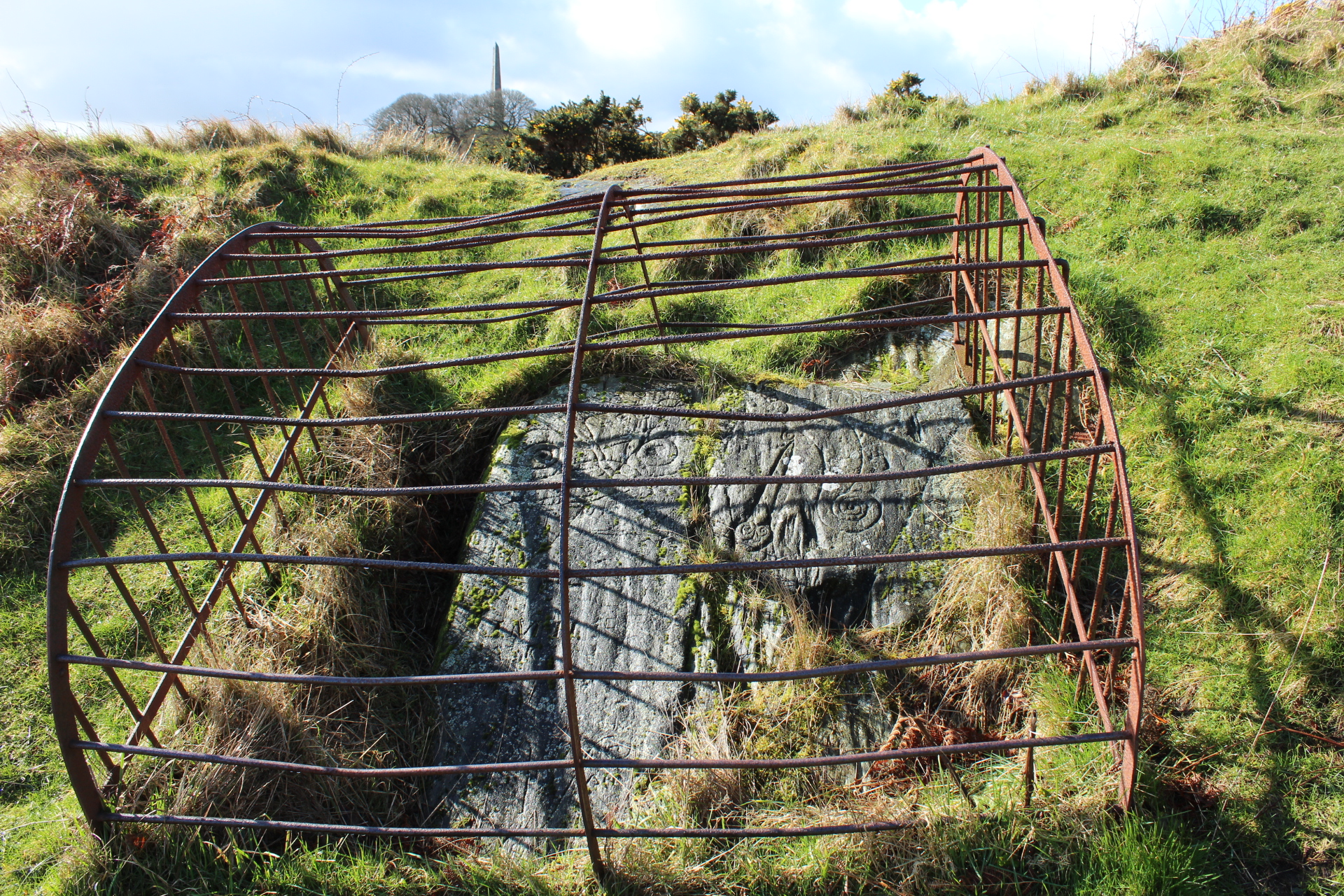
Carved into the living rock near the entrance to a small vitrified hillfort, a Pictish (of the Picts, the people of northern and eastern Scotland f…
- Near Newton Stewart
- Some walking
Fortified place · Medieval
Cardoness Castle
Dumfries and Galloway
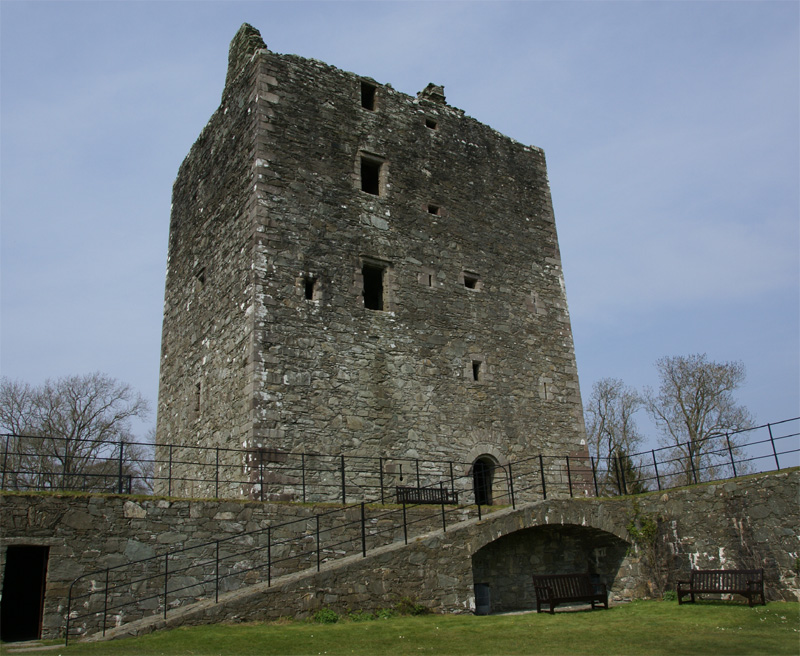
Cardoness Castle is a remarkably preserved fifteenth-century Galloway tower house whose MacCulloch history, Gordon feud and state protection make i…
- Near Newton Stewart
The setting
The old military road south of Glenquicken stone circle; the photograph shows the approach landscape rather than the circle itself.
Photo: Leslie Barrie / Wikimedia Commons / CC BY-SA 2.0
Near Glenquicken stone circle, about 7 metres away.
Photo: David Baird / Wikimedia Commons / CC BY-SA 2.0
Near Glenquicken stone circle, about 120 metres away.
Photo: David Baird / Wikimedia Commons / CC BY-SA 2.0
Questions people ask
- Where is Glenquicken stone circle?
- It stands two miles east of Creetown in Dumfries and Galloway, at grid reference NX50965821.
- Why is it called a centre-stone circle?
- A single tall pillar stands at the centre of the surrounding oval ring, rather than the ring standing on its own. Aubrey Burl called Glenquicken "the finest of all centre-stone circles."
- How many stones does the circle have?
- The outer ring is formed of 29 stones, arranged in an oval, with a further stone raised as the central pillar.
- Does it have another name?
- Yes — it is also recorded as Billy Diamond's Bridge stone circle.
- Were there other circles nearby?
- Two further circles once stood to the north-west, marked on the Six-inch First Edition Ordnance Survey map and planned by Alexander Thom in 1939, but they are no longer visible.
Sources
The Ancient Codex, in your pocket
Get the Pocket Codex app
Carry the directory with you — Glenquicken stone circle and thousands of ancient places across Britain and Ireland, offline, wherever you roam.