Cardoness Castle is a remarkably preserved fifteenth-century Galloway tower house whose MacCulloch history, Gordon feud and state protection make it a vivid record of later medieval lordship.
A tall stone tower stands south-west of Gatehouse of Fleet as Cardoness Castle, a well-preserved fifteenth-century house of the MacCullochs of Myreton. It is now cared for by Historic Environment Scotland.
The present tower rose on lands with a longer history, including a nearby motte-and-bailey and medieval owners recorded as Kerdenes and Fleming. The MacCulloch family held Cardoness by 1466.
A fatal feud with the Gordons ended the family’s residence in the late seventeenth century. Sir Godfrey McCulloch was executed in 1697, and the castle later passed into state care as a scheduled monument.
What follows is drawn from published sources, with each claim labelled by how firmly it is established.
History
The lands of Anwoth, including the area around Cardoness, were granted around 1170 by Malcolm IV to David fitz Teri, a Cumbrian lord. He built a motte-and-bailey castle at Boreland, close to the present castle. Later records name Nicholas de Kerdenes in 1220 and Bertram de Kerdennes in 1277, while Malcolm Fleming received a charter of the lands of Cardoness from David II in 1342. This sequence establishes a long lordly history before the construction of the present tower house.
The lands of Cardoness were in the McCulloch family by 1466. The McCulloch lairds built the present Cardoness Castle in the late fifteenth century, creating the well-preserved tower house seen today. In the 1560s, an English spy reported on it to Elizabeth I in preparation for a planned invasion of Scotland that did not occur. The report confirms the castle’s strategic interest and continued importance in the sixteenth-century border politics of south-west Scotland.
In 1622 the Gordons of Ardwall acquired the mortgaged Cardoness estate. Feuding between the Gordons and McCullochs culminated in 1690 when Sir Godfrey McCulloch shot William Gordon of Buck o’Bield. McCulloch escaped to France, but was recognised in Edinburgh in 1697 and executed on the Maiden. The castle was subsequently uninhabited, marking the end of its use as the MacCullochs’ home.
After the McCullochs left, Cardoness passed through several owners before being placed in state care in 1927. It became a scheduled monument in 1928 and is now maintained by Historic Environment Scotland. The castle is open to the public, preserving a rare accessible example of a fifteenth-century tower house in Kirkcudbrightshire. A later local tradition tells a dramatic story of a Cardoness laird and the Black Loch, but it is a recorded tradition rather than evidence for the documented ownership sequence.
People
-
David fitz Teri
Received the lands of Anwoth around 1170 and built the nearby Boreland motte-and-bailey.
-
Sir Godfrey McCulloch
Shot William Gordon in 1690 and was executed in Edinburgh in 1697.
-
William Gordon of Buck o’Bield
Gordon neighbour killed by Sir Godfrey McCulloch in 1690, an act that brought the McCulloch–Gordon feud to a head.
Cultural influences
-
Cardoness was shaped by the McCulloch family, whose fifteenth-century tower house established the castle as their seat until late-seventeenth-century feuding ended their occupation.
Connections
-

Photo: Chris Newman / Wikimedia Commons / CC BY-SA 2.0 Gatehouse of Fleet
The nearby town is the modern base for visitors to Cardoness, a state-care tower house immediately south-west of Gatehouse of Fleet.
-

Photo: Richard Webb / Wikimedia Commons / CC BY-SA 2.0 Boreland
Boreland’s earlier motte-and-bailey shows that the Cardoness estate had a lordly stronghold before the fifteenth-century tower house.
-
Gordons of Ardwall
The Gordons acquired the mortgaged Cardoness estate in 1622 and became the McCullochs’ rivals in the feud that ended their residence.
What to look for
-
Fifteenth-century tower house
The preserved fifteenth-century tower house is the principal MacCulloch structure, with its tall block and later domestic arrangements still legible.
-
Historic Environment Scotland site
Historic Environment Scotland maintains this scheduled monument, allowing visitors to read a rare accessible Galloway tower house in state care.
-
Boreland context
The nearby Boreland motte-and-bailey places the standing tower in a longer estate history reaching back to the twelfth century.
What is said
Folklore and tradition, recorded as what is said — not as established fact.
-
Local tradition tells of a Cardoness laird whose family fell through the ice on the Black Loch, leaving one daughter to marry a McCulloch.
Plan your visit
- Location
- 54.8723°N · 4.1980°W
- Nearest settlement
- Newton Stewart
- Access
- Open access
- Parking
- A level tarmac car park with marked accessible bays is available.
- Start point
- The visitor-centre reception has ramped access; current public access is to the grounds and visitor centre rather than the castle interior.
- Time needed
- About 45 minutes
- Best time
- Visit during published opening hours and in dry daylight, when the castle tower, grounds and coastal setting can be explored comfortably.
- What survives
- Cardoness is a well-preserved fifteenth-century tower house in the care of Historic Environment Scotland.
- Facilities
- Visitor facilities are centred on the visitor centre; assistance dogs are permitted.
Opening & admission
The grounds and visitor centre are open during published summer hours; the castle itself is currently closed due to conservation work.
- Check current HES opening dates before travelling; the site is closed from 1 November to 31 March.
Nearby places
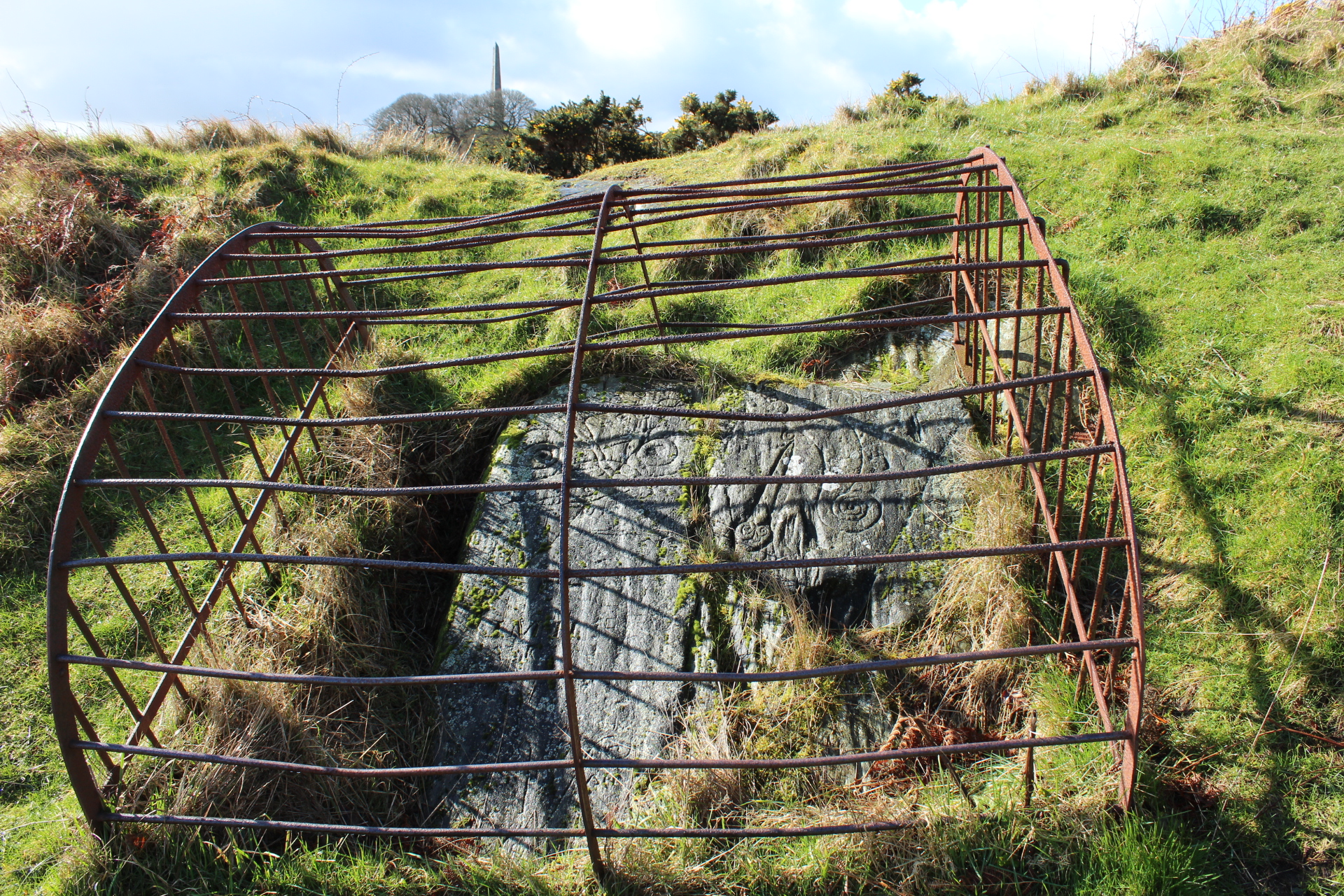
Fortified place · Iron Age
Trusty's Hill
Dumfries and Galloway
Carved into the living rock near the entrance to a small vitrified hillfort, a Pictish (of the Picts, the people of northern and eastern Scotland f…
- Near Newton Stewart
- Some walking
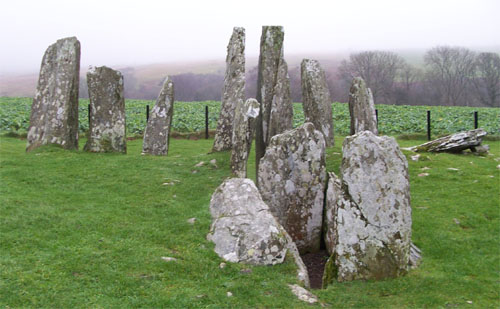
Tomb or burial place · Prehistoric
Cairn Holy Chambered Cairns
Dumfries and Galloway
Cairn (a mound of piled stones, often covering a burial) Holy is the site of two Neolithic (the first farming age, roughly 4000–2500 BC) chambered…
- Near Newton Stewart
- 207 metres from car park
- Easy path
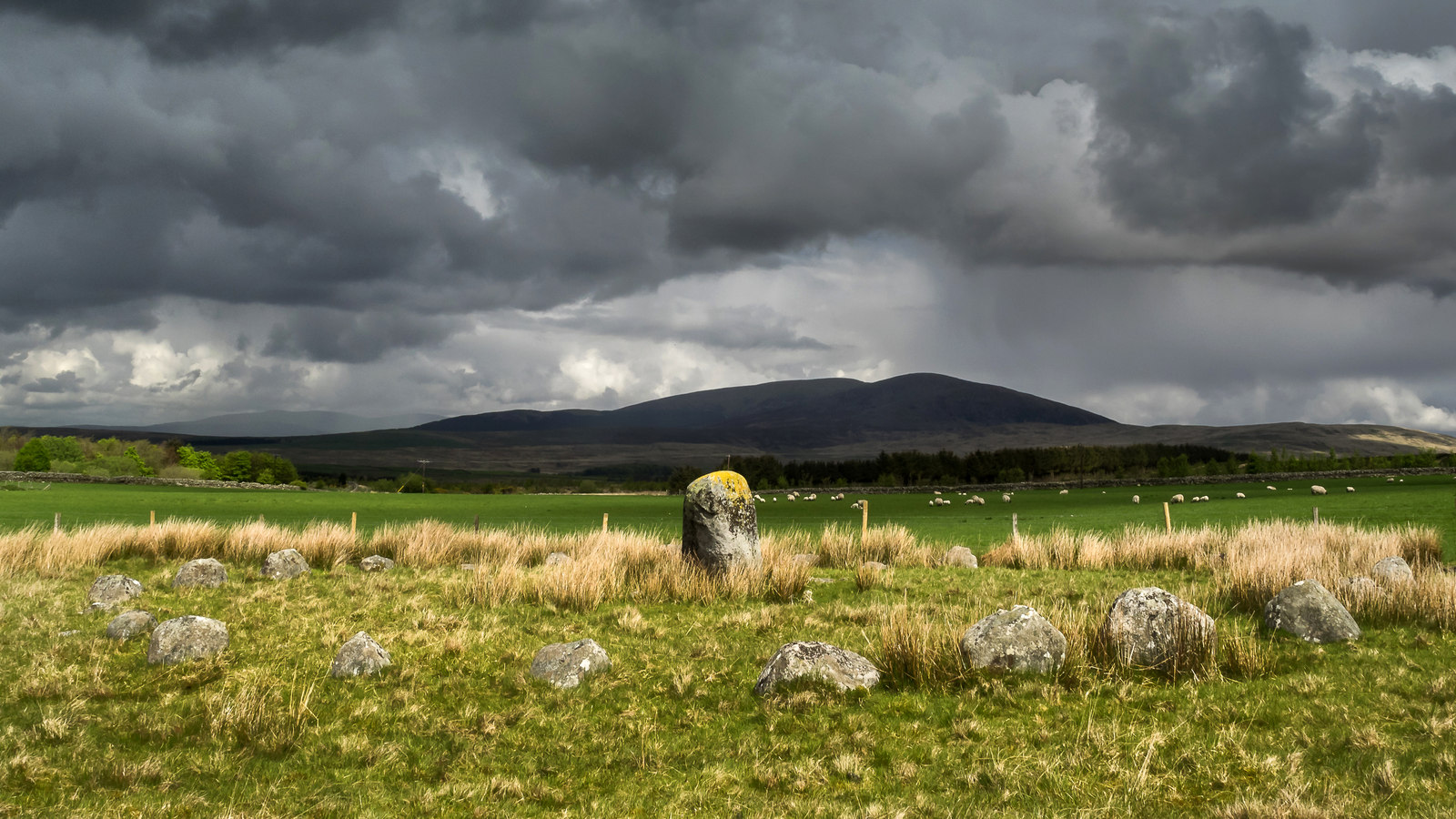
Sacred place · Prehistoric
Glenquicken stone circle
Dumfries and Galloway
At the centre of an oval ring of 29 stones, two miles east of Creetown in Dumfries and Galloway, a single tall pillar stands upright. This arrangem…
- Easy path
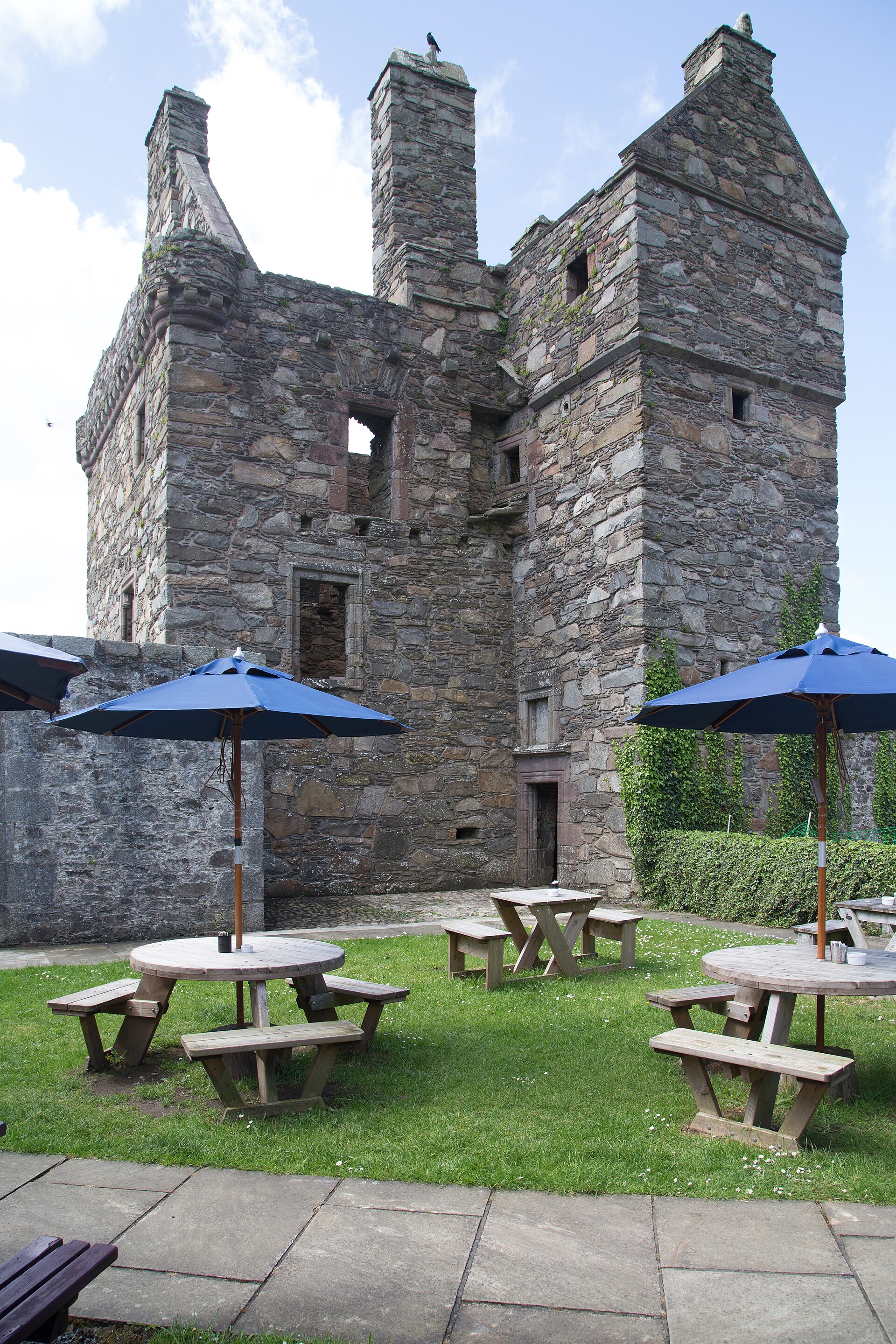
Fortified place · Medieval
Carsluith Castle
Dumfries and Galloway
Carsluith Castle is a sixteenth-century Galloway tower house whose Lindsay and Brown history, Catholic recusancy and surviving hall-and-stair archi…
- Near Newton Stewart
Questions people ask
- When was Cardoness Castle built?
- The McCulloch lairds built the present tower in the late fifteenth century.
- Why did the McCullochs leave Cardoness?
- The family abandoned it after Sir Godfrey McCulloch’s execution following a feud with the Gordons.
- Who manages Cardoness Castle today?
- Historic Environment Scotland maintains it as a scheduled monument.
Sources
The Ancient Codex, in your pocket
Get the Pocket Codex app
Carry the directory with you — Cardoness Castle and thousands of ancient places across Britain and Ireland, offline, wherever you roam.