
A heart of twenty-six quartz pebbles laid in a Loch Fyne field is, on current research, the only known permanent physical memorial to Scotland's Travelling people.
Twenty-five white quartz stones set into the turf beside Loch Fyne form the outline of a heart, with a twenty-sixth pebble placed at its centre. The whole pattern measures barely two metres across, easy to miss from the road, yet it has drawn weddings, protests and a Scottish Parliament petition in its defence.
Scottish Travellers maintain that the heart marks the memory of local tinkers who joined the Jacobite Rising of 1745, and generations of Traveller couples are said to have married on the spot since at least the mid-1800s. The stones sit near Cairndow in Argyll and Bute, a place chosen and kept not by an institution but by the oral tradition of the community it belongs to.
That community had to fight twice to keep it: once when a road scheme dug it up in 1928, and again nearly a century later when heritage officials first decided it did not qualify for legal protection. Both times, ordinary persistence changed the outcome.
What follows is drawn from published sources, with each claim labelled by how firmly it is established.
History
Scottish Travellers hold that the heart-shaped arrangement of stones was laid down to commemorate local tinkers who took part in the Jacobite Rising of 1745, making the monument, on this account, nearly three centuries old. From at least the mid-1800s onward, Traveller couples are said to have married at the site, giving it the alternative names the Gypsy's Heart and the Gypsy's Wedding Heart alongside the Tinkers' Heart.
The monument originally stood at the junction of the Strachur Road (now the A815) and Hell's Glen (the B839). In 1928, roadworks at the junction removed the stones altogether, but local protest was strong enough to force their reinstatement, an early sign of how fiercely the site was defended by people with no formal ownership of it. New road building in the 1960s bypassed the old junction entirely, leaving the heart stranded in an ordinary field rather than at a crossroads. The change in setting did nothing to end the tradition attached to the stones, which continued to be tended informally by local residents for decades afterward.
In 2008 Argyll and Bute Council proposed a formal restoration programme for the site, but local objections to its £34,500 cost led residents to take on the site's care themselves instead. A first attempt to secure scheduled monument status followed in 2012 but was refused, officials judging that the heart did not meet the standard criteria for protection; metal fencing was put up around the stones soon after to keep cattle off them.
In May 2014 the author Jess Smith lodged a petition with the Scottish Parliament calling on Historic Scotland to investigate restoring and preserving the heart. The petition was rejected at first, but by February 2015 Historic Scotland agreed to reconsider, this time weighing equalities issues alongside the usual heritage tests.
Historic Scotland ran a public consultation from March 2015 aimed specifically at the Travelling community and local residents, a process that, unusually, gave weight to oral tradition rather than documentary evidence alone. The research concluded in May 2015, the MSP for Argyll and Bute Michael Russell backed the campaign, and the site was formally added to the Schedule of Monuments in June 2015. In February 2025 a new information panel setting out the monument's history was unveiled at the site by Jess Smith, whose 2025 book Button Bog also tells the story of the Tinkers' Heart.
People
-
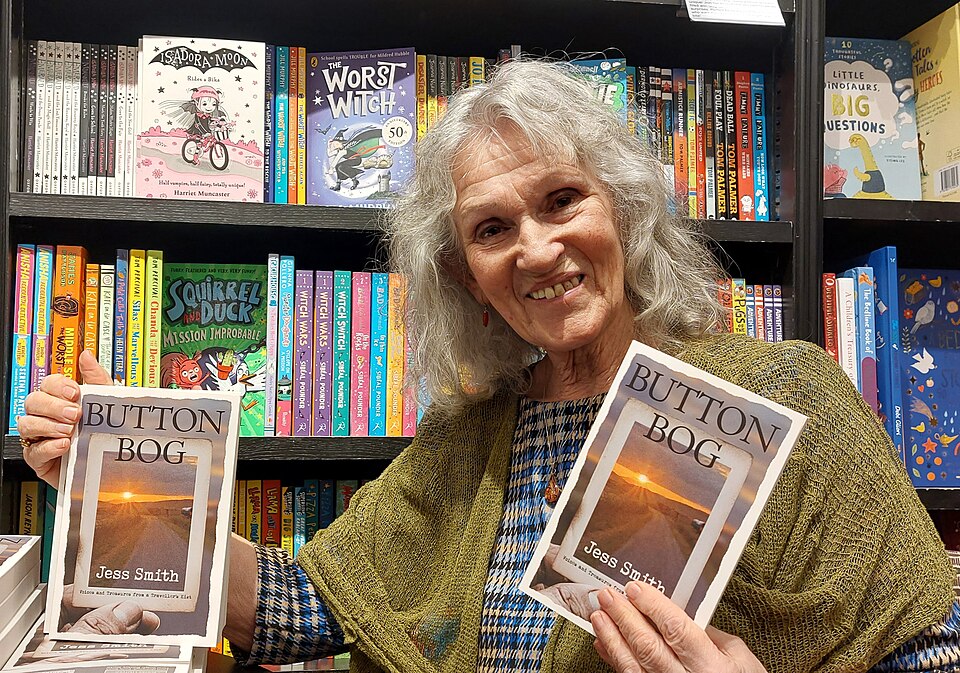
Portrait: Gillaween / Wikimedia Commons / CC BY-SA 4.0 Jess Smith
Author and campaigner who lodged the 2014 Scottish Parliament petition for the heart's preservation and later wrote about it in her 2025 book Button Bog.
-
Michael Russell
MSP for Argyll and Bute who supported the campaign for scheduled monument status.
-
Barbara Cummins
Historic Scotland's Director of Heritage Management, who oversaw the 2015 consultation and described its community-led approach as a model for future practice.
Cultural influences
-
Scottish Traveller heritage
The Tinkers’ Heart is a rare monument whose significance rests on Scottish Traveller marriage, remembrance and community tradition.
Connections
-
Scottish Travellers
The community whose monument this is, and whose oral tradition carried its meaning through the decades when no record protected it.
-
Cairndow
Cairndow is the local settlement on Loch Fyne associated with the roadside site of the Tinkers’ Heart.
-
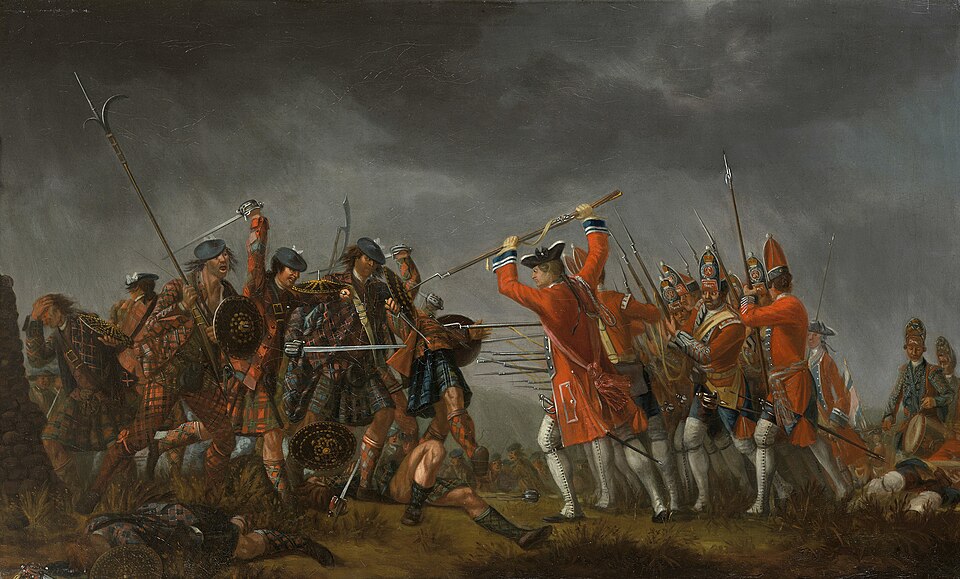
Photo: David Morier / Wikimedia Commons / Public domain Jacobite Rising of 1745
Scottish Travellers hold that the heart-shaped stone arrangement commemorates local tinkers who joined the Jacobite Rising of 1745.
Discovery & excavation
A 2015 consultation with Scottish Travellers and local residents informed the decision to add the Tinkers’ Heart to the Schedule of Monuments.
In culture
-
Button Bog (2025)
Jess Smith's 2025 book Button Bog includes the story of the Tinkers' Heart, drawing on the same campaign that led to the monument's scheduling and its 2025 information panel.
What to look for
-
The pebble heart
A 2012 field visit recorded the monument as a heart shape formed from twenty-five visible white quartz pebbles, with a twenty-sixth pebble set at the centre, measuring about 1.75 by 1.4 metres.
-
Protective fencing
Metal fencing surrounds the stones, put up after the 2012 scheduling refusal to protect the monument from cattle grazing the field in which it now stands.
-
The 2025 information panel
A panel explaining the site's history was unveiled in February 2025 by author Jess Smith, whose campaigning helped secure the monument's protection a decade earlier.
What is said
Folklore and tradition, recorded as what is said — not as established fact.
-
A memorial to Jacobite tinkers
The Scottish travelling community maintains that the heart was laid down as a monument to local tinkers who joined the Jacobite Rising of 1745, though this origin rests on oral tradition rather than documentary record.
-
A place for Traveller weddings
Traveller couples are said to have married at the heart since at least the mid-1800s, a tradition credited with keeping the site cared for long before it had any legal protection.
Plan your visit
- Location
- 56.2327°N · 4.9741°W
- Nearest settlement
- Cairndow
- Access
- Open access
- Terrain
- Easy going
- Time needed
- About 15 minutes
- What survives
- The heart-shaped arrangement of twenty-six quartz pebbles is preserved behind metal fencing beside the former road junction.
Opening & admission
Free to view; check Historic Environment Scotland's listing for current access details.
- Located in a field beside the former road junction, protected by metal fencing
- An information panel explaining its history was installed at the site in 2025
Nearby places
Fortified place · Medieval
Inveraray Castle
Argyll and Bute
One of the first Gothic Revival buildings anywhere, raised by a Highland clan chief to replace a medieval stronghold rather than restore it.
- Near Inveraray
- Easy path
Minor monument · Medieval
Dovecot, Carloonan, Inveraray Castle Estate
Argyll and Bute
The Carloonan dovecot: a stone house for pigeons, kept for winter meat: survives within the designed estate landscape of Inveraray Castle.
- Near Inveraray
Fortified place · Medieval
Carrick Castle
Argyll and Bute
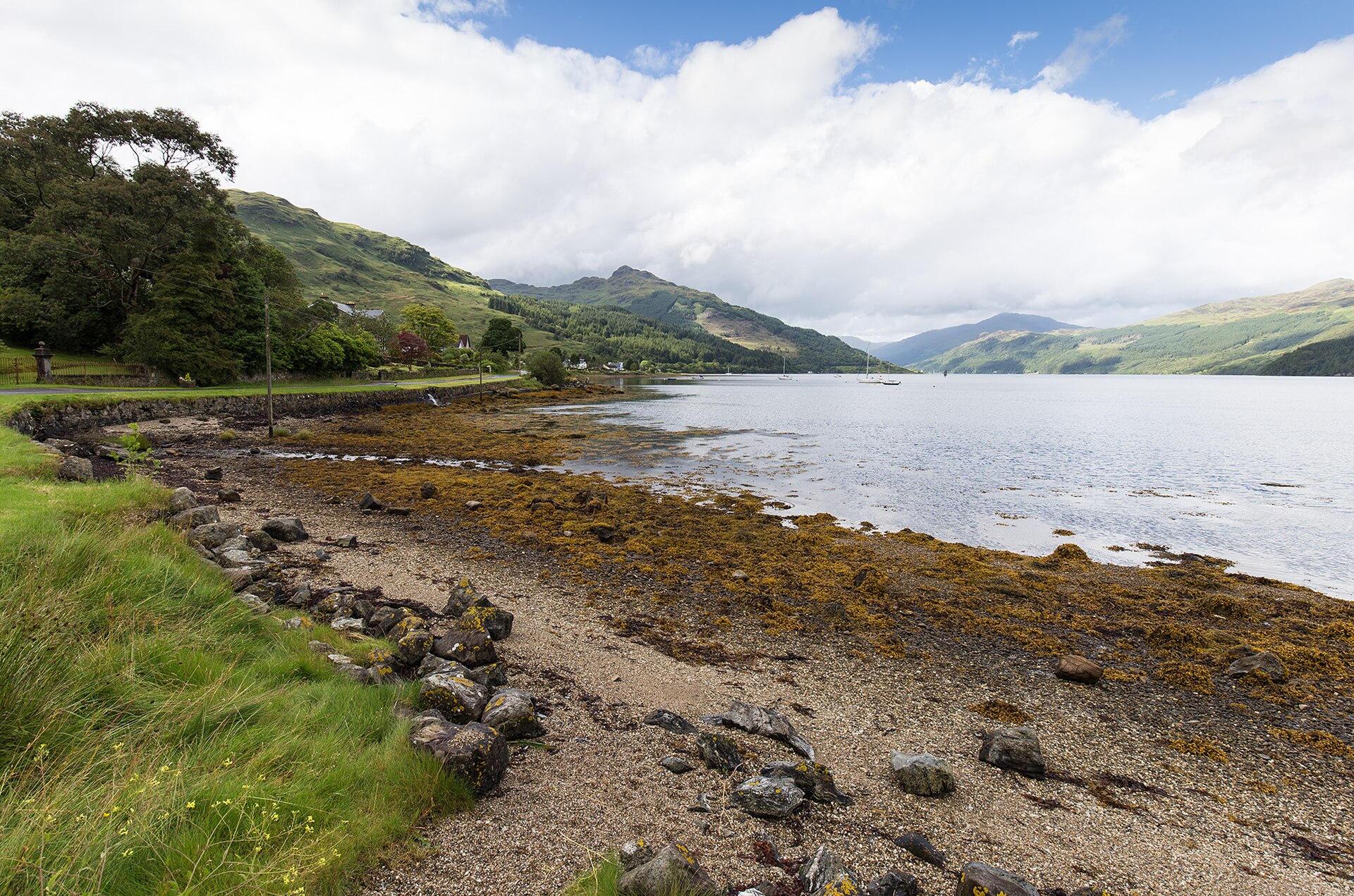
A Campbell stronghold built on a rock in Loch Goil, hosted a hunting king and a queen's overnight stay, then was deliberately burned by a Royal Nav…
- Near Carrick Castle
- Some walking
Sacred place · Medieval
Chapel of St Fyndoca
Argyll and Bute
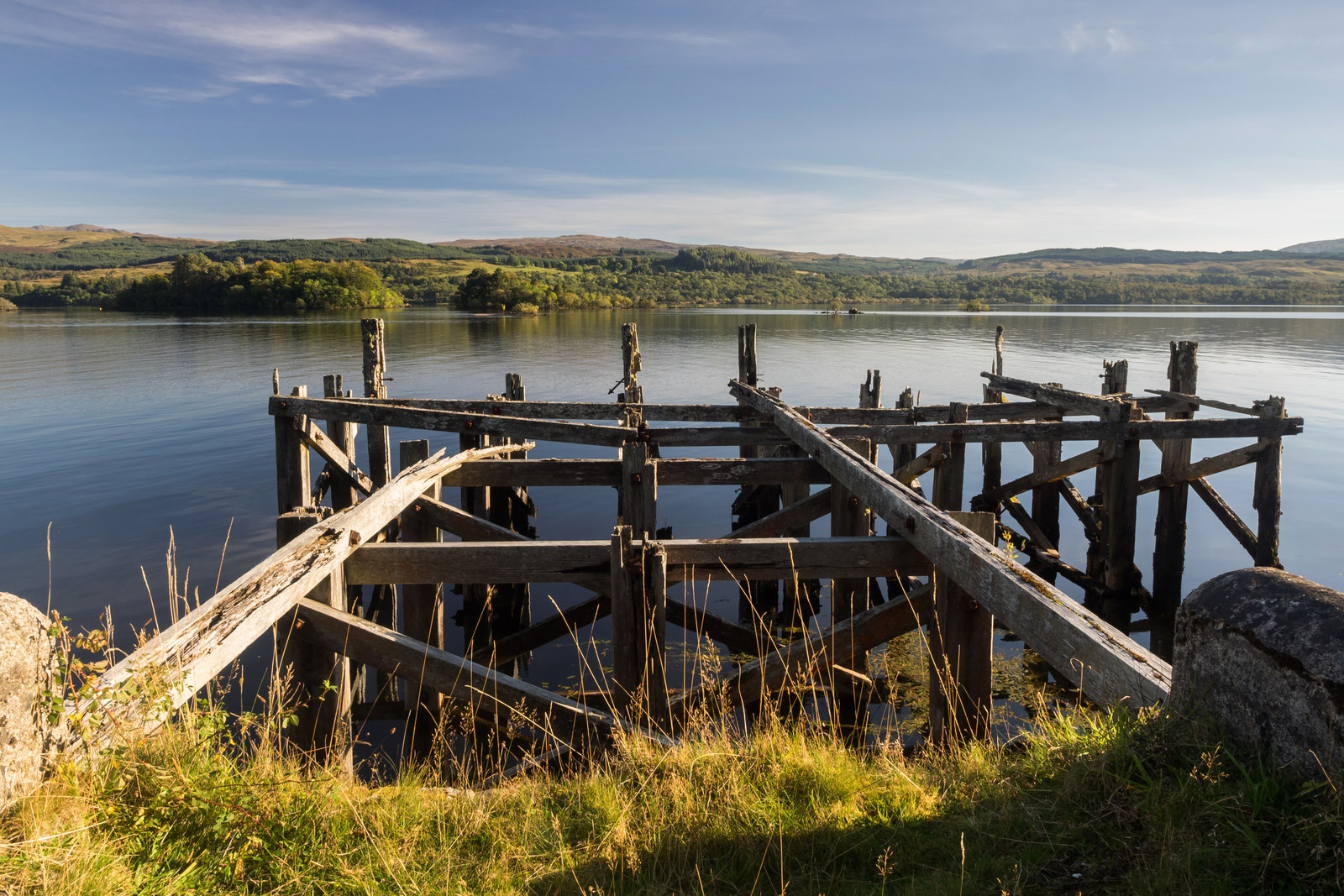
A carved grave-slab bearing arms for a galley and a boar's head ties this island ruin to the Campbells of Lochow, in a graveyard still used eight c…
- Near Cladich
- Rough ground
The setting
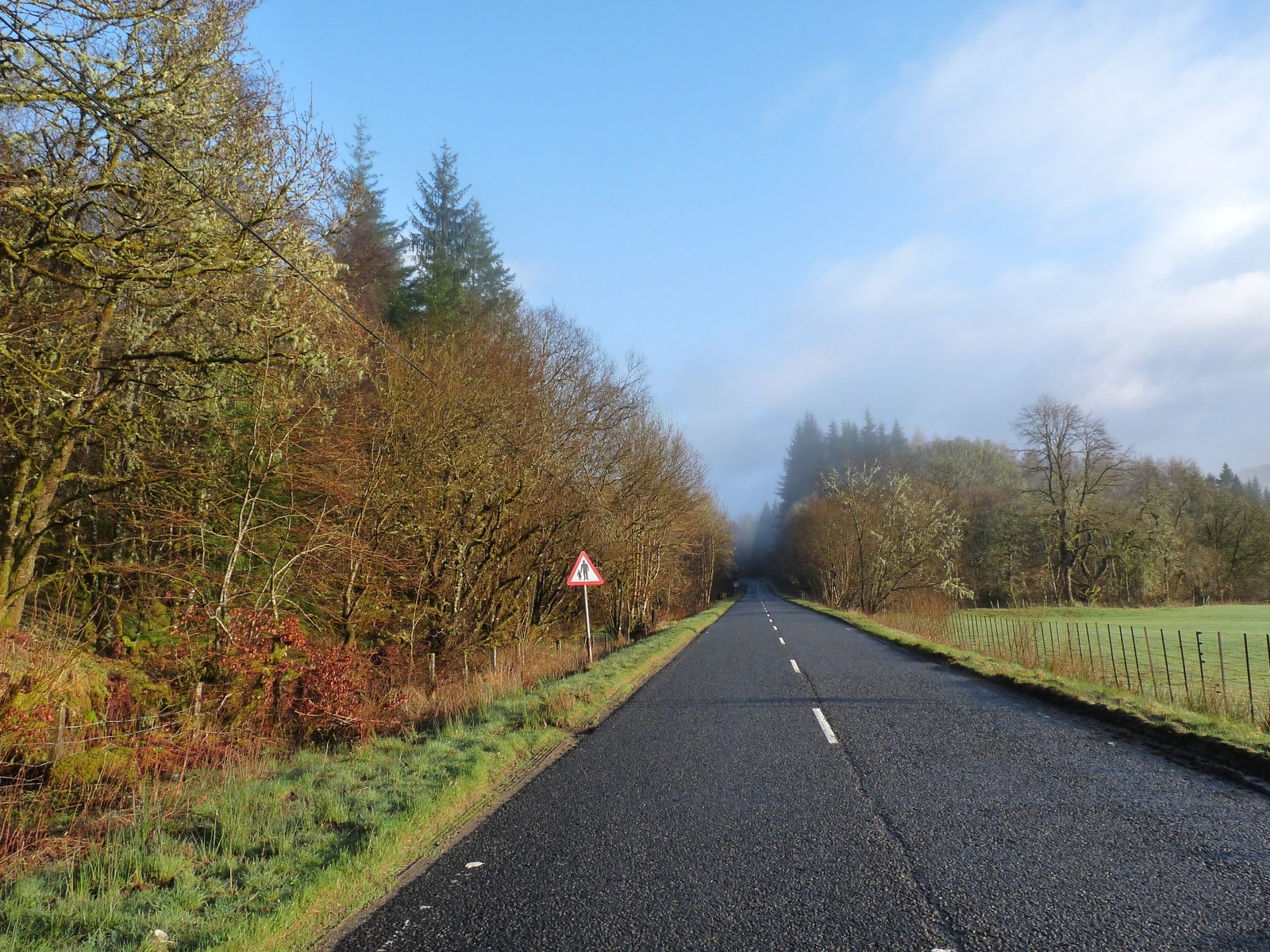
View over Loch Fyne towards Inveraray from the Tinkers’ Heart on the A815.
Photo: steve mclaughlin / Wikimedia Commons / CC BY-SA 2.0
Questions people ask
- What is the Tinkers' Heart?
- A small heart-shaped arrangement of quartz pebbles near Cairndow, Argyll and Bute, regarded as Scotland's only known permanent physical memorial to the Travelling community.
- Why is it also called the Gypsy's Heart?
- Scottish Travellers used several names for the site, including the Gypsy's Heart, Gypsies' Heart and Gypsy's Wedding Heart, reflecting its long use for Traveller weddings.
- When did the Tinkers' Heart become a scheduled monument?
- It was added to the Schedule of Monuments in June 2015, after a 2015 public consultation that, unusually, gave weight to oral tradition rather than documents alone.
- Why did the monument end up standing in a field?
- It originally stood at a road junction, but 1960s road building bypassed that junction, leaving the stones set back in an ordinary field rather than at a crossroads.
- Who campaigned for its protection?
- Author Jess Smith lodged a 2014 Scottish Parliament petition, backed by MSP Michael Russell, leading Historic Scotland to reconsider and schedule the site in 2015.
Sources
The Ancient Codex, in your pocket
Get the Pocket Codex app
Carry the directory with you — The Tinkers' Heart and thousands of ancient places across Britain and Ireland, offline, wherever you roam.