A Campbell stronghold built on a rock in Loch Goil, hosted a hunting king and a queen's overnight stay, then was deliberately burned by a Royal Navy captain to deny it to rebels in 1685.
A narrow rocky spur juts into the still water of Loch Goil, and on it rises a tall grey tower whose upper storeys have watched over the loch for more than six centuries. Approach from landward once meant crossing a ditch and a drawbridge; today the walls, seven feet thick in places, still climb some sixty feet above the shore, their bulk broken only by a small chimney tucked oddly into a window recess.
The tower was raised by the Campbells in the closing decades of the fourteenth century, when the family’s grip on this stretch of Argyll was tightening. It went on to serve a king as a hunting base and to host a queen for two nights, before ending up on the wrong side of a rebellion and being deliberately put beyond use by a naval captain’s men. What stands today is a survivor of that reckoning: a rectangular tower house with a smaller seventeenth-century wing attached, ruined for generations and only now being brought back into private use.
What follows is drawn from published sources, with each claim labelled by how firmly it is established.
History
In the last decades of the fourteenth century the Campbells built the tower on its rocky spur above Loch Goil, at a time when the family's power in this part of Argyll was becoming dominant. The site's natural defences, a peninsula reachable only by a ditch and drawbridge, suited a family consolidating control over the surrounding lands and the sea routes past Cowal. During the reign of James IV the castle found a gentler use as a royal hunting lodge, its position by the loch and the hills above making it a convenient base for pursuing game away from the business of the court, and a mark of the trust placed in the family holding it.
On 20 and 21 June 1563 Mary, Queen of Scots stayed two nights at the castle, a brief royal visit that placed the tower house, for a moment, at the centre of Scottish affairs rather than at their edge, and one of the few personal details recorded of its working life. In 1685, during Argyll's Rising, Archibald Campbell, 9th Earl of Argyll, attempted to overthrow King James VII. In the course of suppressing the rebellion, Captain Thomas Hamilton of HMS Kingfisher reported that the castle had been burnt and its walls reduced enough to make it useless to Campbell forces, a deliberate act of denial rather than incidental damage.
After the rising the castle was occupied only intermittently, its role as a working stronghold effectively over, until it passed by sale to the Murrays, the Earls of Dunmore, who took it on as new owners rather than as a continuing Campbell seat. For many years afterwards the keep stood as a roofless ruin above the loch, its walls surviving the centuries even as its interior fell away, until it passed into private ownership and restoration work began to bring the tower back from ruin.
People
-
James IV of Scotland
Used the castle as a hunting lodge, drawn by its position on Loch Goil near the surrounding hill country.
-
Mary, Queen of Scots
Stayed at the castle on 20 and 21 June 1563.
-
Archibald Campbell, 9th Earl of Argyll
Led Argyll's Rising against James VII in 1685, drawing naval action against Campbell strongholds including this castle.
-
Thomas Hamilton
Captain of HMS Kingfisher who reported the castle burnt and disabled during the 1685 rising.
Connections
-
Clan Campbell / Earls of Argyll
Built the tower house in the late fourteenth century as a symbol of the family's growing power in south Argyll, and held it until the aftermath of the 1685 rising.
-
Murrays, Earls of Dunmore
Acquired the castle by sale after its period of intermittent occupation, becoming its owners in place of the Campbells.
-
HMS Kingfisher
The Royal Navy vessel whose captain, Thomas Hamilton, reported burning and disabling the castle during Argyll's Rising in 1685.
What to look for
-
The rocky peninsula site
The tower stands on a rocky spur projecting into Loch Goil, once defended to landward by a ditch and a drawbridge, a natural stronghold shaped by the loch itself.
-
The tower's proportions
The building measures around 66 by 38 feet and rises up to 64 feet high, with walls up to seven feet thick and two floors set above the central great hall.
-
The chimney in the window recess
A small chimney built into a window recess is an unusual detail inside the tower, a later adaptation squeezed into the original stonework.
-
The seventeenth-century addition
A smaller structure of seventeenth-century date is appended to the original rectangular tower house, marking a later phase of building after the castle's medieval origins.
What is said
Folklore and tradition, recorded as what is said — not as established fact.
-
The bombardment of the keep
Local tradition holds that HMS Kingfisher bombarded the castle directly from the loch in 1685, badly damaging the keep and stripping it of its roof, though the surviving naval report simply describes the castle as burnt and its walls reduced.
Plan your visit
- Location
- 56.1088°N · 4.9056°W
- Nearest settlement
- Carrick Castle
- Access
- Private — no general public access
- Terrain
- Moderate walking
- Time needed
- About 15 minutes
- What survives
- A restored late-medieval tower stands on a rocky peninsula above Loch Goil, but it remains privately owned.
Opening & admission
No current admission details are recorded — check the managing body's site before travelling.
- Now in private ownership and undergoing restoration; no public access route is documented.
- Stands on a rocky peninsula on the shore of Loch Goil.
Nearby places
Building or ruin · Medieval
The Tinkers' Heart
Argyll and Bute
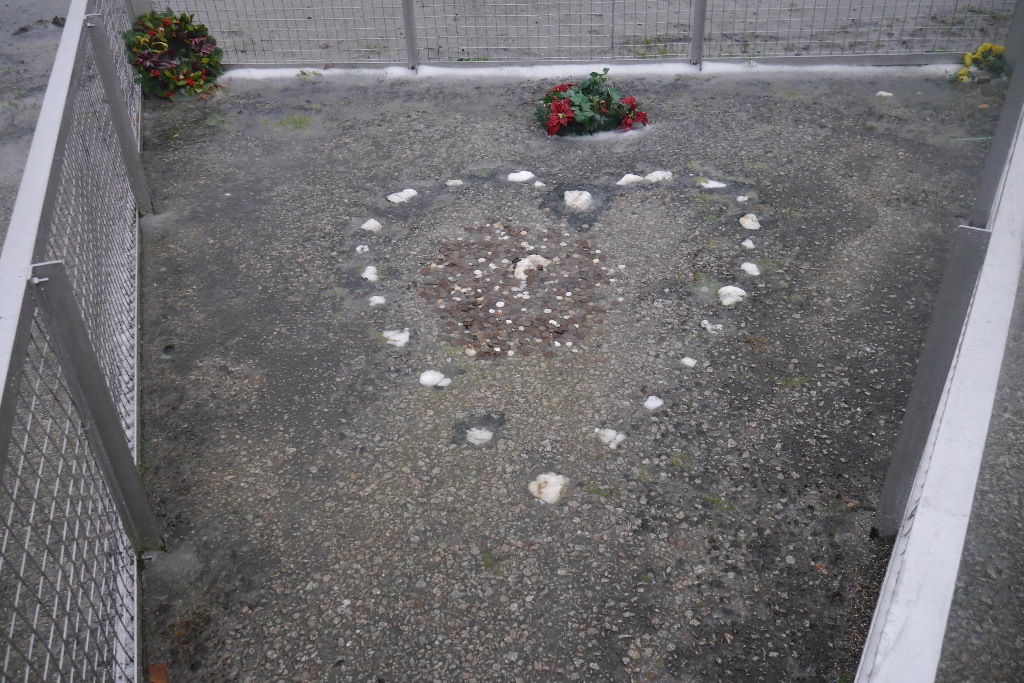
A heart of twenty-six quartz pebbles laid in a Loch Fyne field is, on current research, the only known permanent physical memorial to Scotland's Tr…
- Near Cairndow
- Easy path
Sacred place · Prehistoric
Ardnadam Farm
Argyll and Bute
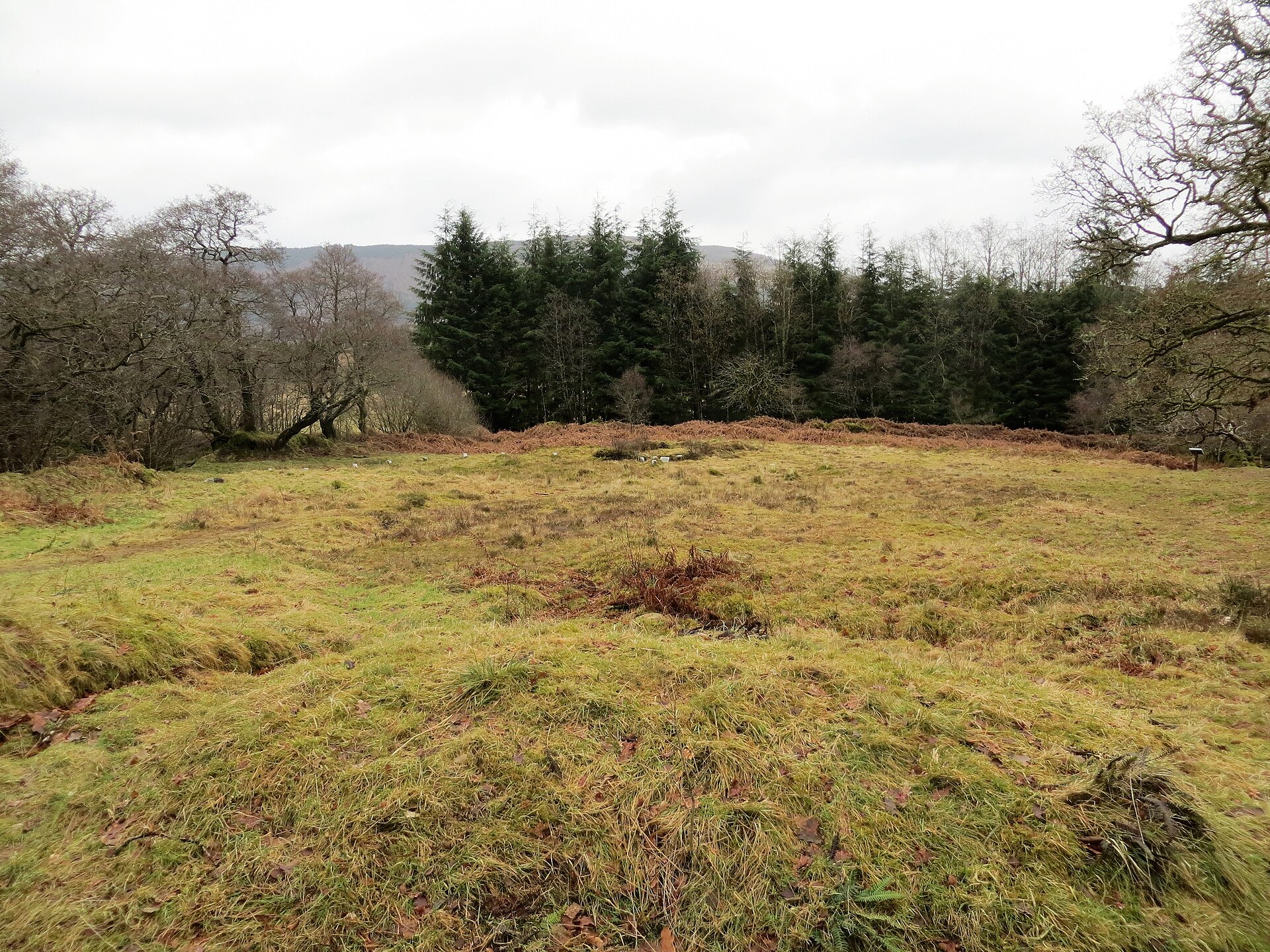
A field on the Cowal shore where a Neolithic tomb was read by nineteenth-century antiquarians as a Druidical altar, and by local tradition as the g…
- Near Dunoon
- Easy path
Ancient tree · Medieval
Robert the Bruce Yew
Argyll and Bute
The Robert the Bruce Yew preserves a royal association in local tradition while clearly separating that enduring landscape memory from any unverifi…
- Near Arrochar

Sacred place · Prehistoric
Granny Kempock Stone
Inverclyde
A weathered mica-schist pillar above a shopping street carries a rare double legacy: a supposed Bronze Age (roughly 2500–800 BC, when metal tools f…
- Some walking
Questions people ask
- When was Carrick Castle built?
- It was probably built by the Campbells in the last decades of the fourteenth century, when the family was becoming dominant in this part of Argyll.
- Did Mary, Queen of Scots really visit?
- Yes. She stayed at the castle on 20 and 21 June 1563, a documented royal visit during her reign.
- Why is Carrick Castle a ruin?
- During Argyll's Rising in 1685, a Royal Navy captain reported the castle burnt and its walls reduced to make it useless to Campbell forces.
- Who owns Carrick Castle today?
- It is in private ownership and undergoing restoration, having passed to the Murrays, Earls of Dunmore, after its period as a Campbell stronghold ended.
- Is Carrick Castle a protected building?
- Yes, it is a scheduled monument and a Category A listed building, recognised by Historic Environment Scotland.
Sources
- Wikipedia: Carrick Castle
- Historic Environment Scotland — Listed Building LB11815
- Ewart, Gordon & Baker, Fiona, "Carrick Castle: symbol and source of Campbell power in south Argyll from the 14th to the 17th century", Proceedings of the Society of Antiquaries of Scotland, 128 (1998)
- Royal Commission on the Ancient and Historical Monuments of Scotland, Argyll: An Inventory of the Monuments, Vol. 7, Mid Argyll & Cowal (1992)
Explore more: Fortified places · Medieval · Argyll and Bute
The Ancient Codex, in your pocket
Get the Pocket Codex app
Carry the directory with you — Carrick Castle and thousands of ancient places across Britain and Ireland, offline, wherever you roam.