
Its walled garden is carved with the only known Scottish set of relief panels depicting planetary deities and the liberal arts, a Renaissance survival unmatched elsewhere in the country.
Set into the sandstone walls of Edzell’s garden are dozens of small carved recesses shaped as a chequered band and topped with seven-pointed stars, some large enough to have served as nesting holes for birds. This walled enclosure, added in 1604 by Sir David Lindsay, Lord Edzell, is what draws most visitors past the castle’s roofless tower house and empty courtyard: a rare surviving Renaissance pleasure garden, carved with figures of virtues, arts and planetary gods in a form found nowhere else in Scotland.
The castle itself began a generation earlier, around 1520, when David Lindsay, 9th Earl of Crawford, abandoned an older timber stronghold on a nearby mound and built a stone tower house on lower, more sheltered ground, a choice that says as much about changing tastes as about defence. Mary, Queen of Scots stayed two nights in 1562, and her son James VI visited twice more before the castle passed out of Lindsay hands in 1715, sold to settle debts run up in the Jacobite cause.
What followed was decline rather than destruction: an English trading company stripped the roofs to pay its creditors, and by the eighteenth century the buildings stood open to the sky. Historic Environment Scotland has cared for the ruin and its garden since the 1930s, and both are now protected, the castle and motte as a Scheduled Monument and the garden as part of the national inventory of historic designed landscapes.
What follows is drawn from published sources, with each claim labelled by how firmly it is established.
History
The first stronghold at Edzell stood not where the present ruin stands but on a mound 300 metres to the south-west, a timber motte and bailey built in the 12th century to guard the mouth of Glenesk, the pass leading north into the Highlands. It was held first by the Abbott family, then by the Stirlings of Glenesk, and in 1358 passed to the Lindsays when Sir Alexander de Lindsay married the Stirling heiress Katherine Stirling; his son David became Earl of Crawford in 1398.
Around 1520 David Lindsay, who inherited Edzell in 1513, abandoned the old motte site and built a new tower house and courtyard on more sheltered ground overlooked by higher ground to the north, a siting that suggests defence mattered less than comfort. He became Earl of Crawford in 1542 and, around 1550, added a large west range with a new entrance gate and hall, while also building Invermark Castle further north, possibly as a hunting lodge.
Mary, Queen of Scots stayed at Edzell for two nights in August 1562 while touring the north to subdue the rebellious Earl of Huntly, convening a meeting of the Privy Council attended by the Scottish nobility during her visit; a room was still remembered as the Queen's chamber in 1573. Her son James VI came twice, in 1580 and again in August 1589, when the Earl of Erroll submitted to him at Edzell and word arrived of the assassination of Henry III of France.
David Lindsay, the 9th Earl's son, was knighted in 1581, became a Lord of Session under the title Lord Edzell in 1593, and joined the Privy Council in 1598. In the late 16th century he added a north range with round corner towers, and in 1604 laid out a walled garden celebrating the recent Union of the Crowns. He died in 1610, heavily in debt from fines over his son's conduct, leaving both the garden and the north range unfinished.
The castle escaped the campaigns of the Marquess of Montrose in the 1640s, but in September 1651, during the Third English Civil War, Oliver Cromwell's invading troops occupied it for a month. By 1689 the Lindsay lord had turned Episcopalian and was barred from the parish church, holding services instead in the great hall; decline set in around the failed Jacobite rising of 1715, when the last Lindsay laird sold Edzell to the 4th Earl of Panmure, himself a Jacobite, for £192,502 Scots.
Panmure's own support for the rising cost him his lands, and the Crown sold Edzell to the York Buildings Company, a London waterworks firm that had branched into trading forfeited estates and proceeded to asset-strip the property. Government troops caused further damage in 1746, and by 1764 the bankrupt company had stripped even the roofs and sold off the contents to pay its creditors; the avenue of beech trees linking castle and village was felled soon afterwards.
The estate passed to William Maule, Earl Panmure, then to his nephew George Ramsay, 8th Earl of Dalhousie, whose family appointed a resident caretaker from the 1870s and built the cottage, now the visitor centre, in 1901. The walled garden entered state care in 1932 and the rest of the castle followed in 1935; Historic Environment Scotland now maintains both as a year-round visitor attraction, with the motte and castle protected as Scheduled Monuments.
People
-
David Lindsay, 9th Earl of Crawford
Inherited Edzell in 1513 and, around 1520, abandoned the old motte to build the present tower house; became Earl of Crawford in 1542.
-
Sir David Lindsay, Lord Edzell
Extended the castle with a new north range and laid out the walled garden in 1604, dying in debt in 1610 with the work unfinished.
-
Mary, Queen of Scots
Stayed at Edzell for two nights in August 1562 during a royal progress to subdue the Earl of Huntly.
-
James VI
Visited Edzell twice, in 1580 and 1589, receiving the submission of the Earl of Erroll during the second visit.
Cultural influences
-
Georg Pencz engravings
The carved planetary deities in the garden derive from a series of engravings of 1528–29 by the German artist Georg Pencz, a pupil of Albrecht Dürer, whose initials appear on the panel of Mars.
-
Marten de Vos and the pattern-book tradition
The virtues and liberal arts panels are based on engravings by Jan Sadeler and Crispijn de Passe after paintings by the Flemish artist Marten de Vos, images that were widely circulated in Scotland at the time.
Connections
-
Invermark Castle
Built by David Lindsay, 9th Earl of Crawford, around the same time as his early extension of Edzell, possibly as a hunting lodge.
-
Earls of Dalhousie
Inherited Edzell through George Ramsay, 8th Earl of Dalhousie, and held the estate until it passed into state care.
-
Tycho Brahe's garden at Uraniborg
Proposed as a possible symbolic influence on Edzell's garden design, a link noted because James VI visited Uraniborg in 1590.
What to look for
-
Chequered corbelling on Stirling Tower
The tower house's four corner bartizans rest on two tiers of corbels arranged so the lower tier is purely decorative, an early example of a style that became widespread later in the 16th century.
-
The carved garden panels
Three sets of seven relief panels around the garden depict the Cardinal Virtues, the Liberal Arts and the Planetary Deities, each about a metre high.
-
The east wall's national motifs
Carved pediments on the east wall show the thistle, fleur-de-lis, shamrock and rose, marking the Union of the Crowns of 1603.
-
The summer house
A two-storey building with a groin-vaulted lower room and, upstairs, the castle's only surviving example of carved-oak wall panelling.
-
The clipped-hedge mottoes
Planting is trimmed into letters spelling the Lindsay family mottoes Dum Spiro Spero and Endure Forte, alongside hedges shaped as thistle, rose and fleur-de-lis.
-
Castlehillock motte
The mound of the original 12th-century castle survives 300 metres south-west of the present ruin, still traceable as a low, partly natural rise.
What is said
Folklore and tradition, recorded as what is said — not as established fact.
-
A Rosicrucian mystery temple
The garden's symbolism has led some historians, including Adam McLean, to suggest it was designed as an early 17th-century Mystery Temple connected to Rosicrucian ideas, though this reading is an interpretation rather than a documented fact.
-
An astrologer's inspiration
It has been suggested that the garden's symbolic design was influenced by Tycho Brahe's garden at Uraniborg in Denmark, which James VI is recorded to have visited in 1590.
Plan your visit
- Location
- 56.8118°N · 2.6800°W
- Access
- Paid entry — managed visitor site
- Terrain
- Easy going
- Time needed
- About 90 minutes
- Best time
- From April to September, when the castle and garden are normally open Friday to Sunday from 10am to 4pm; check Historic Environment Scotland before travelling.
- What survives
- The castle survives as ruins alongside an intact walled Renaissance garden.
- Facilities
- Facilities include car parking, toilets and accessible toilets, a visitor centre, picnic area and bicycle rack.
Opening & admission
Paid admission; Historic Environment Scotland offers standard, concession, child and member tickets.
- Normally open Friday to Sunday, 10am to 4pm, from 1 April to 30 September
- Closed from 1 October to 31 March; last entry is 15 minutes before closing
Nearby places
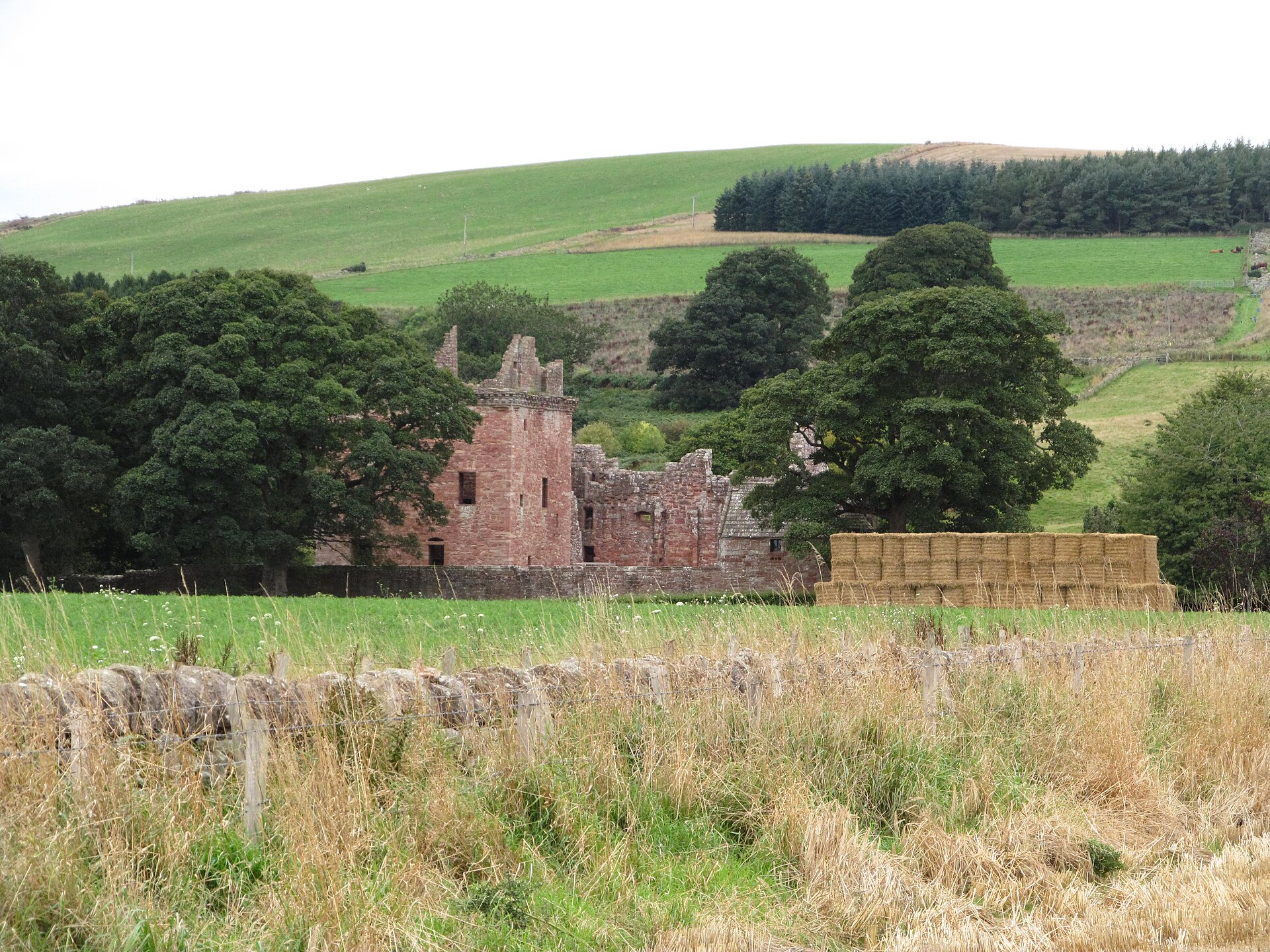
Minor monument · Medieval
Dovecot, Mains Of Edzell
Angus
Edzell’s square pigeon house, with diagonally opposed turrets and a later ruined extension, makes the working architecture and changing needs of th…
- Near Edzell
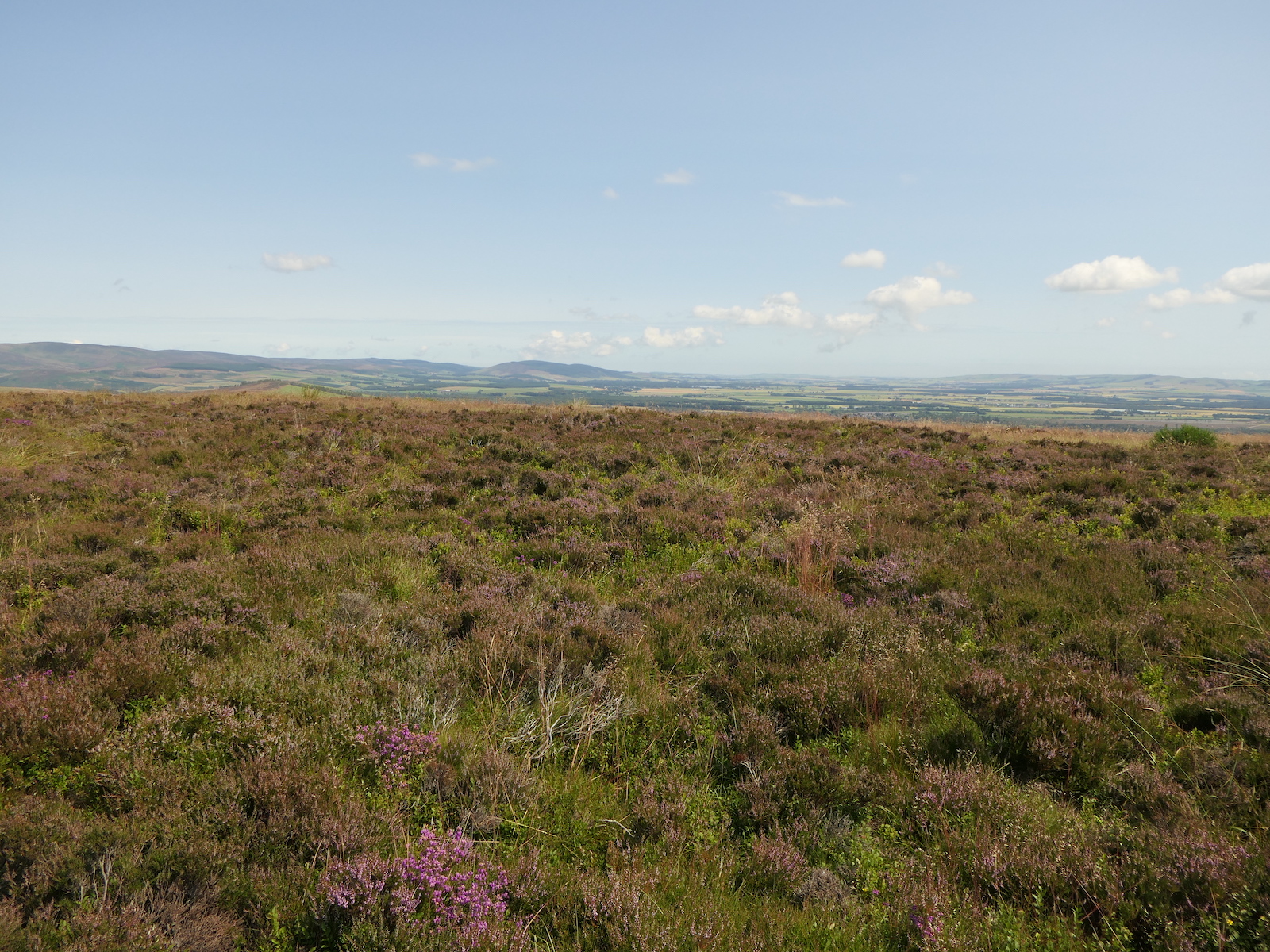
Carved stone · Prehistoric
White Caterthun
Angus
The neighbouring Brown Caterthun was repeatedly altered during the latter half of the first millennium BC; White Caterthun preserves the contrastin…
- Near Brechin
- 15 min walk from car park
- Some walking

Fortified place · Iron Age
Caterthun
Angus
Two Iron Age hillforts crown the same ridge: fortified settlements built by communities living before and during the early centuries of recorded hi…
- Some walking
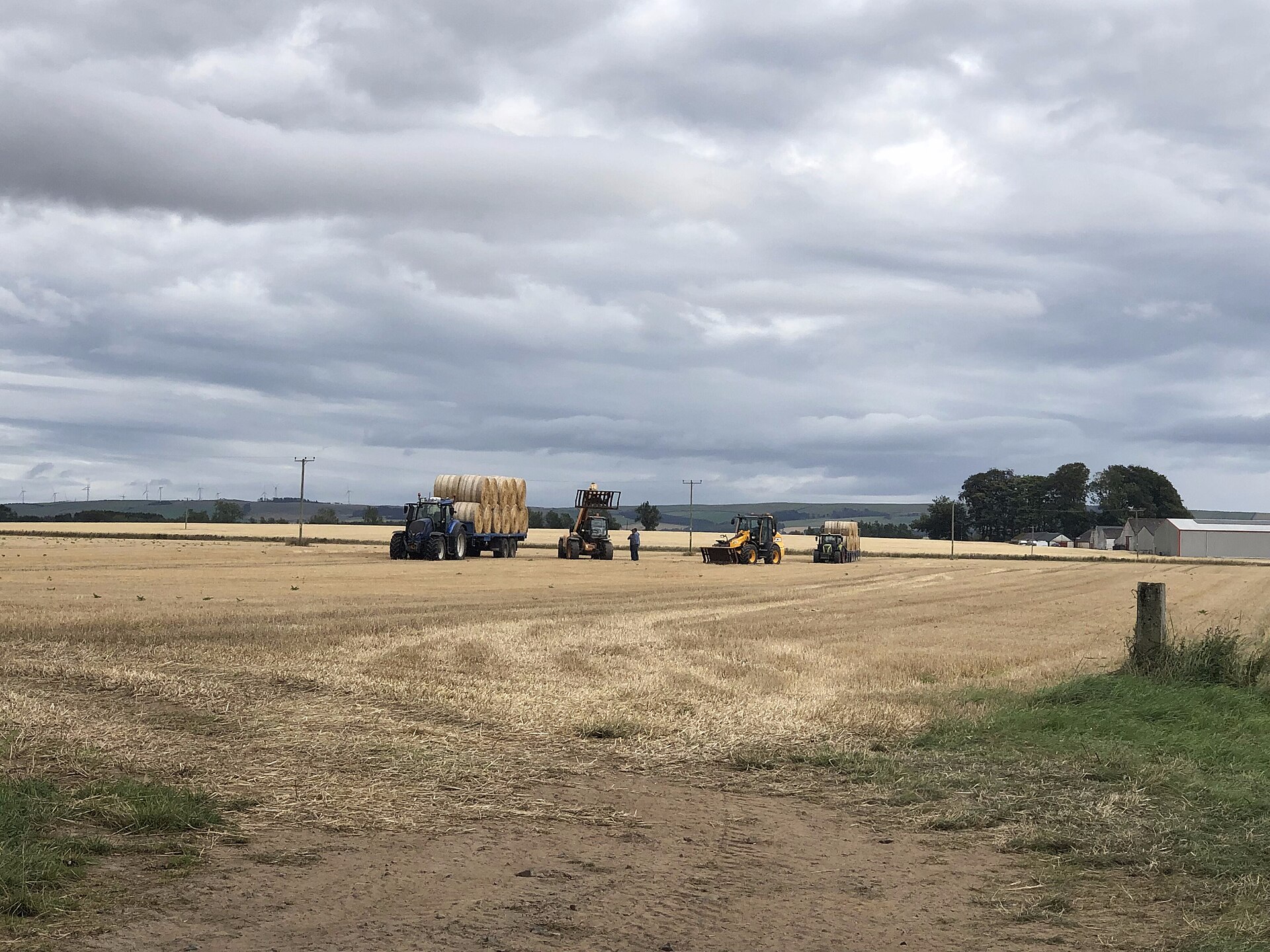
Minor monument · Medieval
Dovecot, Balbegno Castle
Aberdeenshire
This surviving seventeenth-century pigeon house preserves Balbegno Castle’s food infrastructure, from its crowstepped roof to a projecting masonry…
- Near Fettercairn
The setting
Entrance building at Edzell Castle and Garden.
Photo: Michael Dibb / Wikimedia Commons / CC BY-SA 2.0
Questions people ask
- When was Edzell Castle built?
- The present castle was begun around 1520 by David Lindsay, 9th Earl of Crawford, replacing an earlier 12th-century motte and bailey nearby.
- What makes the walled garden unusual?
- Laid out in 1604, it is a rare surviving Renaissance pleasure garden, carved with reliefs of virtues, arts and planetary deities found nowhere else in Scotland.
- Did Mary, Queen of Scots really stay at Edzell?
- Yes. She spent two nights there in August 1562 during a royal progress north, convening a Privy Council meeting during her stay.
- Why did the castle fall into ruin?
- Debt, a 1715 sale linked to the Jacobite rising, and asset-stripping by the York Buildings Company, which removed even the roofs by 1764, left it ruined before state care began in the 1930s.
- Is there proof the garden was used for Rosicrucian rituals?
- No firm evidence exists; the idea is an interpretation some historians have proposed based on the garden's symbolism, not a documented fact.
Sources
- Wikipedia: Edzell Castle
- Historic Environment Scotland — Canmore
- Simpson, W. Douglas, 'Edzell Castle', Proceedings of the Society of Antiquaries of Scotland, Vol. LXV (1930)
- McKean, Charles, The Scottish Chateau (2nd edition, 2004)
Explore more: Fortified places · Medieval · Angus
The Ancient Codex, in your pocket
Get the Pocket Codex app
Carry the directory with you — Edzell Castle and Garden and thousands of ancient places across Britain and Ireland, offline, wherever you roam.