
An 1891 dig aimed at a supposed sheep enclosure found nothing at all — evidence that this mini-henge, a small circular enclosure from before written records reached Britain, has lain undisturbed since its bank and inner ditch were built.
Grass and heather have grown thick over a low, ring-shaped bank tucked into a steep, wooded valley in the Clashindarroch Forest, on a haugh — a stretch of flat ground beside a river — south of the rise known as Wormy Hillock. Only one narrow break interrupts the ring, on its southeast side, where a causeway crosses the ditch inside and lines up with a gap in the bank itself. Local memory calls this quiet clearing by another name too: The Dragon’s Grave.
The earthwork is a henge in miniature — what archaeologists term a ‘mini-henge’ or ‘hengiform’ monument, distinguished from its larger stone-circle relatives mainly by size. Its bank rings an oval hollow holding a raised platform at the centre, itself set inside a shallow ditch crossed by several causeways. A pair of small pits sit on the bank, likely dug long after the henge itself, and a large boulder rests in the ditch directly below one of them.
In 1891 the antiquary James Macdonald opened up the mound, convinced from its shape that it had once served as a pen for sheep. He found nothing to support that theory, nor any trace of earlier activity, and the excavation added no finds to the historical record. More than a century on, the henge survives as a scheduled monument, its earthworks softened by grass and heather but its outline still legible in the forest floor.
What follows is drawn from published sources, with each claim labelled by how firmly it is established.
The name
Both of the monument's names are said to trace back to the same local story: tradition holds that the buried remains of a slain dragon gave the mound its name of Wormy Hillock, and gave the henge itself its alternative title, The Dragon's Grave.
History
Before any date can be fixed to it, Wormy Hillock Henge is placed by its form within the broader tradition of Neolithic henge monuments built across Britain — enclosures generally raised for ceremony or gathering rather than as dwellings or defences. Its causewayed ditch has been compared to several henge monuments at Dorchester-on-Thames in Oxfordshire, suggesting the small Aberdeenshire earthwork shares design ideas carried across long distances in the Neolithic.
In 1891 the antiquary James Macdonald excavated the mound, having concluded from its rounded shape that it was probably a structure built to pen sheep rather than any prehistoric monument. His dig uncovered no artefacts and no evidence of the activity he expected, leaving the henge's original purpose unresolved. The excavation nonetheless remains the only recorded archaeological investigation of the site.
By the time it was recorded as a scheduled monument, Wormy Hillock Henge had already been left to nature for generations: its bank and ditch are overgrown with grass and heather, and the site sits largely unvisited within the working forest of Clashindarroch. A large boulder now lies in the ditch beneath one of two pits cut into the bank, additions thought to be considerably more recent than the henge itself.
People
-
James Macdonald
Antiquary who excavated the mound in 1891, believing it to be a livestock enclosure; his dig found no archaeological material.
Cultural influences
-
Neolithic henge monuments
Wormy Hillock belongs to the broader Neolithic henge tradition of ceremonial enclosures, with design parallels noted at Dorchester-on-Thames.
Connections
-
Henge monuments at Dorchester-on-Thames, Oxfordshire
Wormy Hillock Henge's ditch-and-causeway arrangement is described as similar in form to several henge monuments at Dorchester-on-Thames.
-
Clashindarroch Forest
The henge survives within the working forest of Clashindarroch, where grass and heather now cover its bank and ditch. This setting has helped preserve the small earthwork from cultivation while leaving it comparatively little visited.
Discovery & excavation
The only recorded excavation took place in 1891, when James Macdonald opened the mound in the belief that its rounded shape marked it out as a sheep enclosure. The dig produced no archaeological finds, and no further excavation appears to have followed.
What to look for
-
The encircling bank and its single entrance
A low circular bank, about 16.5 metres across, almost encloses the site but for one gap at the southeast, where a causeway crosses the inner ditch at the same point.
-
The central platform and ditch causeways
Inside the bank, a raised oval platform roughly 6 metres wide sits within a ditch about a metre deep, crossed by several causeways linking it to the surrounding bank.
-
The boulder and paired pits
Two small pits cut into the bank, likely much later additions, sit close to a large boulder resting in the ditch directly below one of them.
What is said
Folklore and tradition, recorded as what is said — not as established fact.
-
The Dragon's Grave
Local tradition holds that a dragon had been attacking villages in the surrounding district until residents succeeded in killing it, after which they are said to have half-buried its body and heaped earth over the remains — the origin, tradition says, of both the mound's names.
Plan your visit
- Location
- 57.3634°N · 2.9176°W
- Access
- Open access
- Terrain
- Rough ground — reasonable boots advised
- Time needed
- About 45 minutes
- What survives
- The henge lies in grass and heather and is reported as overgrown within Clashindarroch Forest.
Opening & admission
No admission is charged; this is not a staffed attraction, so check current access conditions with Forestry and Land Scotland before visiting.
- Located within Clashindarroch Forest on a haugh in a steep valley
- Site is overgrown with grass and heather
- No visitor facilities are recorded
Nearby places
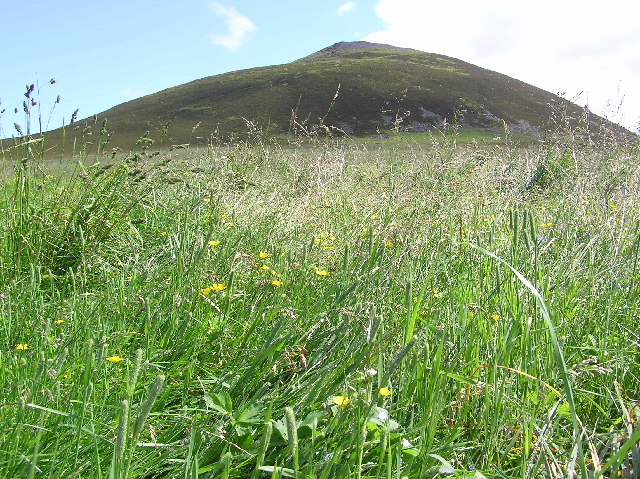
Fortified place · Iron Age
Tap o' Noth
Aberdeenshire
Drone and lidar surveys count as many as 800 huts inside its outer rampart: evidence, researchers say, for the largest known settlement in early-me…
- Near Rhynie
- 50 min walk from car park
- Rough ground
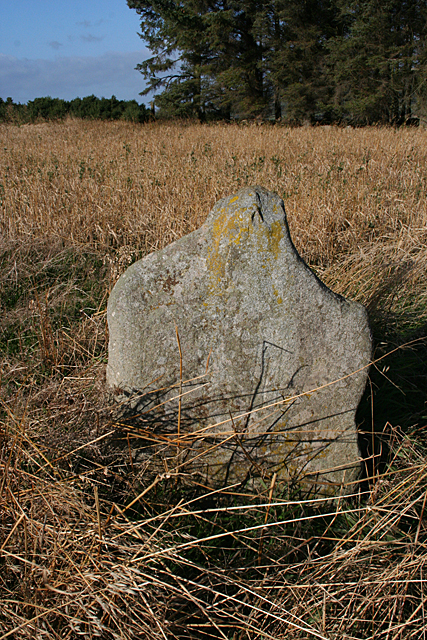
Carved stone · Pictish & early medieval
Ardlair Stone
Aberdeenshire
Carved with the Pictish beast, a tuning fork and a mirror, the stone ties this quiet Aberdeenshire field into the still-unresolved symbol tradition…
- Near Kennethmont
- Easy path
Fortified place · Medieval
Huntly Castle
Aberdeenshire
Four successive castles rose on this one riverside site, each rebuilt by the Gordons after fire, siege or royal demolition: a single ruin holding f…
- Easy path
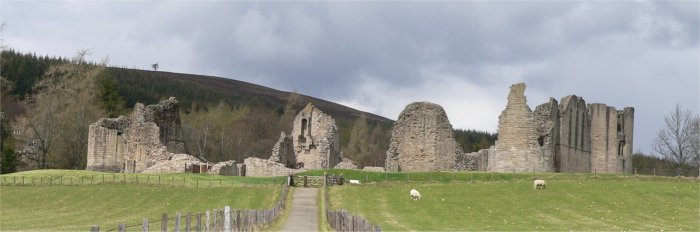
Fortified place · Medieval
Kildrummy Castle
Aberdeenshire
A shield-shaped fortress whose sieges shaped a kingdom: from the capture and execution of Robert the Bruce's brother in 1306 to a countess's defian…
- Some walking
Questions people ask
- What kind of monument is Wormy Hillock Henge?
- It is a small henge, or 'mini-henge,' in Aberdeenshire's Clashindarroch Forest — a circular banked enclosure about 16.5 metres across, with a raised central platform and a single entrance gap.
- Why is it also called The Dragon's Grave?
- Local tradition holds that villagers killed a dragon that had been attacking the district, then buried its body beneath a mound of earth — the legend said to explain both of the site's names.
- Did the 1891 excavation find anything?
- No. Antiquary James Macdonald dug into the mound in 1891, believing it a sheep enclosure, but the excavation produced no archaeological finds and left the monument's origins unexplained.
- How large is the henge?
- The circular bank is 16.5 metres in diameter, enclosing an oval area about 13.5 by 13 metres; the central platform inside measures roughly 6 metres across.
- Can the henge still be seen today?
- Yes, though the earthworks are now overgrown with grass and heather. It survives as a scheduled monument within the working Clashindarroch Forest in Aberdeenshire.
Sources
The Ancient Codex, in your pocket
Get the Pocket Codex app
Carry the directory with you — Wormy Hillock Henge and thousands of ancient places across Britain and Ireland, offline, wherever you roam.