
One of only a handful of recumbent stone circles left with all eleven of its original stones still in place — including a 24-ton granite giant laid on its side.
At Dyce, eleven red-granite uprights make an 18.5-metre ring above Standingstones farm. Along its south-west edge, a slab weighing about 24 tons lies between the two tallest stones; that horizontal centrepiece identifies the monument as a recumbent stone circle, a Bronze Age (roughly 2500–800 BC) form in which the largest stone lies on its side.
The circle’s survival intact is unusual. Farmers once dug out its interior and packed loose stones between the uprights to turn it into a cattle pound, and nineteenth-century surveyors could not even agree on how many stones were left standing. Yet unlike most of its neighbours, this ring kept its full complement of stones rather than losing them to clearance or collapse, making it one of the more complete examples of a monument type found in numbers nowhere else but northeast Scotland and, in a related form, southwest Ireland.
Today the circle stands within sight and sound of the Aberdeen Western Peripheral Route, the bypass built past it in the 2010s — a jarring juxtaposition of a road scheme with a ring of stones raised more than three thousand years earlier for reasons still not fully understood.
What follows is drawn from published sources, with each claim labelled by how firmly it is established.
History
During the early Bronze Age, unidentified builders raised the circle on a spur of high ground above what later became Standingstones farm at Dyce, choosing a site with wide views toward other landmarks, in keeping with the practice seen across the many recumbent stone circles built through lowland Aberdeenshire in the same period, of which more than seventy survive today.
At some point before detailed record-keeping began, the circle was pressed into agricultural use as a cattle pound: its interior was dug out and the gaps between the upright stones were packed with loose stones, converting a monument built for ceremony or burial into a working enclosure for livestock on the farm below. When Ordnance Survey surveyors visited between 1865 and 1866, they recorded only ten stones standing, fewer than the twelve later reported, suggesting that some uprights had already fallen, been removed, or gone unnoticed by the surveying party during that earlier nineteenth-century inspection of the site.
By 1896 the circle was recorded as having twelve stones, alongside two nearby cairns, but that same year one of the two cairns was demolished, permanently removing part of the wider monument complex that had once surrounded the standing stones above Standingstones farm at Dyce, near Aberdeen. In 1900 the antiquarian Frederick Coles published a paper describing the site, which he called the standing stones of Dyce, confirming the count of twelve stones and adding his account to the growing nineteenth and early twentieth-century record of the monument's condition and layout.
The circle was taken into state protection as a scheduled monument in 1925, formally recognising it as a nationally important survival among the recumbent stone circles of northeast Scotland and placing legal safeguards on any future disturbance of the stones or the ground around them. A survey in 1961 found that one of the orthostats had cracked into two separate pieces, damage that stood unaddressed for decades until the broken stone was finally re-erected in 1999, restoring the circle to something closer to its historic appearance after more than a century of recorded change.
During the 2010s the Aberdeen Western Peripheral Route was constructed nearby, bringing a major road scheme close to a monument that had already survived conversion to a cattle pound, cairn demolition, stone loss, and structural damage across more than a century of documented history.
People
-
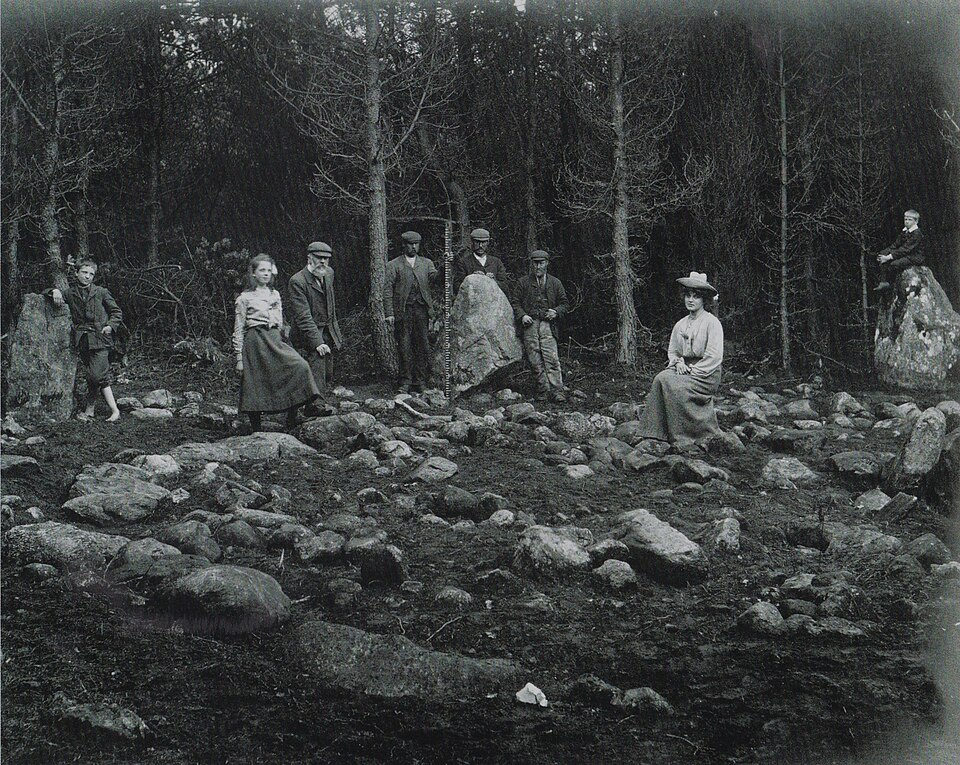
Portrait: James Ritchie / Wikimedia Commons / Public domain Frederick Coles
Antiquarian who published a 1900 paper describing the site as the standing stones of Dyce and recording twelve stones still standing at that time.
-
Aubrey Burl
Prehistorian who believed the circle's stones were quarried from a source near the site itself.
Cultural influences
-
Recumbent stone-circle tradition
Tyrebagger follows the northeast Scotland tradition of a massive recumbent stone and flanking uprights, a distinctive form shared by dozens of circles across lowland Aberdeenshire.
Connections
-

Photo: Elliott Simpson / Wikimedia Commons / CC BY-SA 2.0 Clava cairns (Inverness-shire)
Recumbent stone circles of this type, including Tyrebagger, may have developed from the earlier Clava cairn tradition found in that area.
-
Axial stone circles of southwest Ireland
These are considered the closest parallel monument type to Scotland's recumbent stone circles, and may themselves have followed the recumbent design.
-
_(geograph_4492692).jpg?width=320)
Photo: Anne Burgess / Wikimedia Commons / CC BY-SA 2.0 Recumbent stone circles of lowland Aberdeenshire
Tyrebagger is one of more than seventy such circles built across lowland Aberdeenshire, sharing its layout of a horizontal recumbent stone flanked by tall uprights.
Discovery & excavation
The circle was recorded by Ordnance Survey surveyors in 1865–66 and described in print by the antiquarian Frederick Coles in 1900; later survey recorded the condition of a cracked orthostat in 1961.
What to look for
-
The recumbent stone
A 24-ton block of grey granite laid on its side along the southwest arc of the circle, the defining feature that gives this class of monument its name.
-
The flanker stones
Two uprights standing either side of the recumbent, taller than the rest of the ring, marking the stone circle's principal axis.
-
The graded orthostats
Nine red granite standing stones arranged in decreasing height away from the flankers, completing the eleven-stone ring roughly 18.5 metres across.
-
The re-erected stone
One orthostat, found cracked into two pieces in 1961, was repaired and put back in place in 1999.
Plan your visit
- Location
- 57.2095°N · 2.2342°W
- Nearest settlement
- Dyce
- Access
- Open access
- Terrain
- Easy going
- Time needed
- About 45 minutes
- What survives
- An eleven-stone ring survives, centred on a 24-ton recumbent stone; one formerly broken orthostat was repaired and re-erected in 1999.
Opening & admission
Free to visit, but check current access conditions before travelling.
- Stands on a hill above Standingstones farm at Dyce, near the Aberdeen Western Peripheral Route
Nearby places
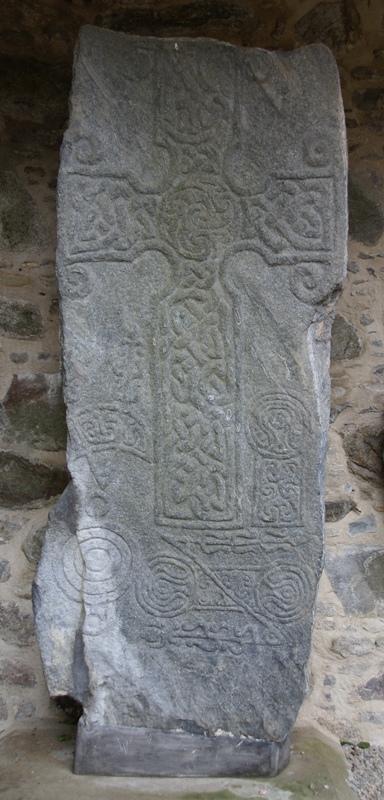
Carved stone · Pictish & early medieval
Dyce Symbol Stones
Aberdeen City
A rare survival: an incised pagan-era stone and a Christian cross-slab stand side by side under one roof, one still carrying an ogham inscription n…
- Near Dyce
- 1 min walk from car park
- Easy path
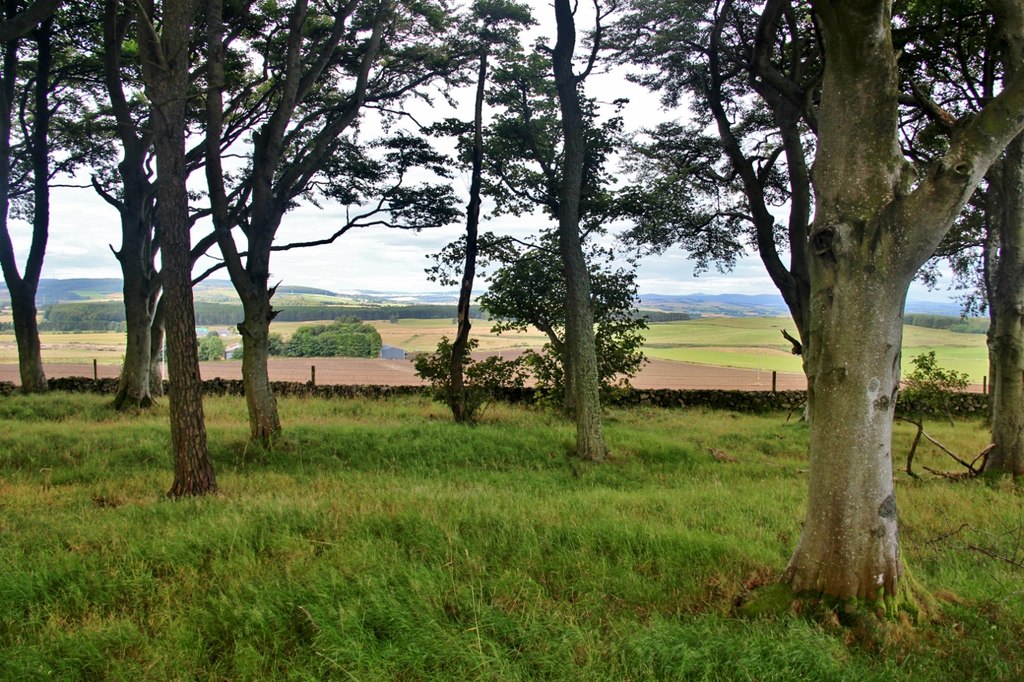
Carved stone · Pictish & early medieval
Cairnton stone
Aberdeenshire
Found in a field-clearance heap in 2001, its incised crescent-and-V-rod and triple disc symbols mark a seventh-century Pictish (of the Picts, the p…
- Near Newmachar
- Easy path
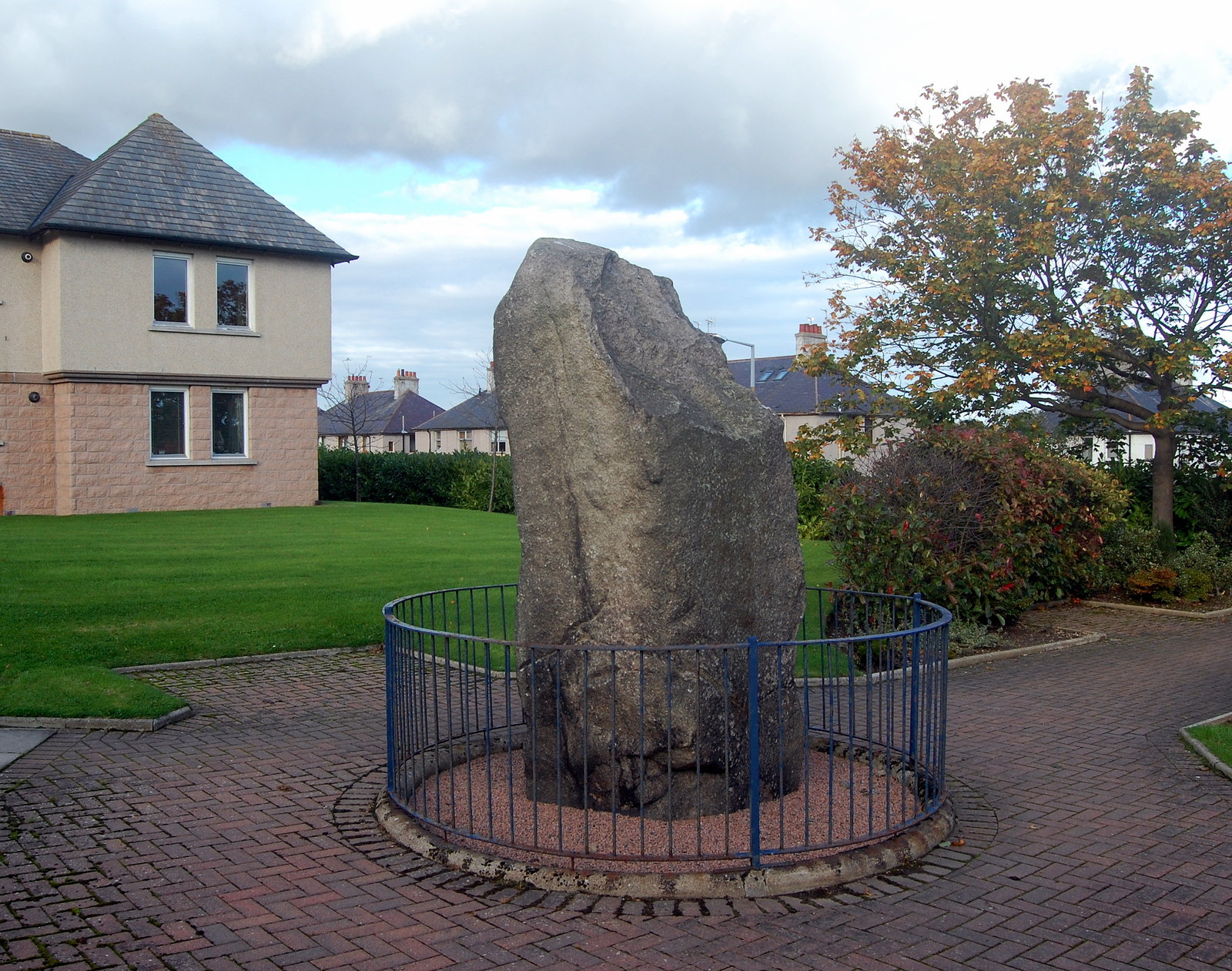
Sacred place · Prehistoric
Lang Stane of Hilton
Aberdeen City
A granite monolith nearly three metres tall standing in Hilton, one of several Aberdeen stones sharing the name Lang Stane: Scots for long stone.
- Near Aberdeen
- Easy path
Building or ruin · Medieval
St Machar's Cathedral
Aberdeen City
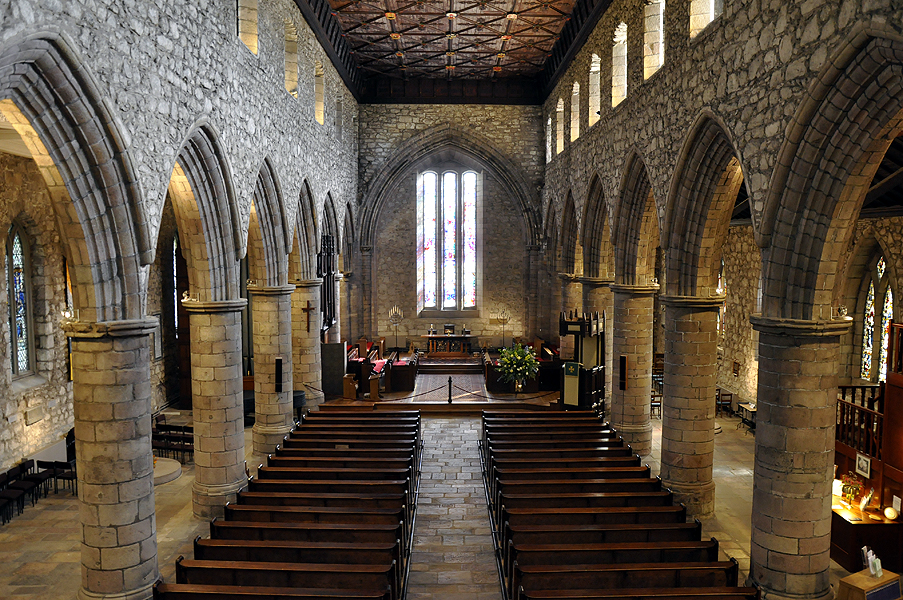
A working Church of Scotland kirk that still keeps William Wallace's quartered remains in its walls and a ceiling of 48 royal and episcopal coats o…
- Easy path
Questions people ask
- What is a recumbent stone circle?
- A monument of the Bronze Age in which a dominant slab lies flat between two tall flankers, while the remaining stones diminish in height around the ring.
- How many stones does Tyrebagger stone circle have?
- Eleven stones survive, making it one of the few complete examples of a recumbent stone circle, though earlier records counted as many as twelve.
- Was Tyrebagger stone circle ever used for anything other than ceremony?
- Yes — in the past its interior was dug out and packed with loose stones so it could serve as a cattle pound on the farm below.
- When did Tyrebagger stone circle become a protected monument?
- It entered the scheduled-monument register in 1925, placing the surviving stones and their setting under legal protection as nationally important archaeology.
- Where is Tyrebagger stone circle located?
- It stands on a hill above Standingstones farm at Dyce, near Aberdeen, close to the Aberdeen Western Peripheral Route.
Sources
- Wikipedia: Tyrebagger stone circle
- Historic Environment Scotland — Canmore
- Wikidata: Tyrebagger stone circle
Explore more: Sacred places · Prehistoric · Aberdeen City
The Ancient Codex, in your pocket
Get the Pocket Codex app
Carry the directory with you — Tyrebagger stone circle and thousands of ancient places across Britain and Ireland, offline, wherever you roam.