A ruin on a rocky headland of the Carrick coast, five miles south of Ayr, on a site of the late thirteenth century.
Dunure Castle stands in ruins on a rocky promontory on the Carrick coast, about five miles south of Ayr, overlooking the small harbour of Dunure.
The site dates from the late thirteenth century — the earliest charter for the lands is of 1256 — though the remains standing are of fifteenth- and sixteenth-century origin. One tradition says the Danes built it. Another claims the Mackinnons held it from Alexander III as a reward for their valour at the Battle of Largs. The Celtic name Dunure or Dunoure is said to mean the hill, or fort, of the yew tree.
It is the point of origin of the Kennedys of Carrick, who once ruled much of south-western Scotland and were granted the lands in 1357. Sir James Balfour described Dunure as a great and pleasant strong house, the most ancient habitation of the surname of Kennedy, Lairds of Dunure, now Earls of Cassillis.
A meeting here in 1429 had consequences well beyond Ayrshire. James Campbell, representing James I of Scotland, met John Mor MacDonald, representing the Lord of the Isles; violence broke out and MacDonald was killed. The king executed Campbell to contain the outrage of the Lords of the Isles, and it did not prevent a subsequent rising by them.
Mary, Queen of Scots, stayed at Dunure for three days from 4 August 1563 on her royal progress down the west coast, as the guest of Gilbert Kennedy, 4th Earl of Cassillis, before going on to Glenluce Abbey and Whithorn Priory.
The castle is best known for what its owner did in the Black Vault in 1570.
A dispute had arisen between Gilbert Kennedy and Allan Stewart, the succeeding lay commendator of Crossraguel Abbey, over the ownership of some abbey lands and their rental income. The earl’s uncle Quintin Kennedy had been the last true abbot of Crossraguel, and had challenged John Knox to a debate on the Mass. Gilbert had expected to secure the commendatorship himself; Allan obtained it through the influence of his relative Captain James Stewart of Cardonald.
Gilbert took sixteen men, caught Stewart unexpectedly in Crossraguel Woods while he was a guest of the Laird of Bargany, and tricked him into travelling to Dunure. There he was stripped of horse and weapons and guarded by six of the earl’s men. Gilbert left him two days to consider his position, and when he remained obstinate and refused to sign over the lands and rentals, tortured him twice — roasting and basting his feet and body over a brazier in the Black Vault, assisted by his cook, baker and pantrymen. Between the first and seventh of September 1570 the lands were signed over.
Stewart was rescued by the Laird of Bargany, his brother-in-law, who came with a body of men, first hiding in the chapel and then storming the castle. The rights to the abbey lands were settled partly by the earl providing Stewart with enough money to live comfortably for the rest of his life. Stewart had meanwhile been taken to the Cross of Ayr, where he denounced the earl. The Privy Council never fully brought Cassillis to book. Allan Stewart never walked again.
Sir Thomas Kennedy of Kirkhill bought the castle and estate, along with Dalquharran, in the late seventeenth century.
The castle was in two distinct parts: an irregular keep on top of a precipitous rock, and further buildings at a lower level. The keep walls are about five feet thick and the basement vaults are well preserved, though most of the superstructure is entirely demolished. The keep represents the original castle, much altered. The central portion may be fifteenth century and was intended to defend the approach to the keep. The later buildings contain two kitchens at ground level, one for the castle and one for the retainers. A detached wall to the north-east may have led to a gateway, with a drawbridge perhaps nearby, and the chapel may have stood against the thick wall of the central part. A moat, or fosse, protected the approach, and there may have been a wall as well. Excavation in the 1990s showed that a hall house had been built across the thirteenth-century court in the fourteenth.
Beneath the castle is a cavern called the Browney’s Cave, which may have been a sally-port — a concealed passage giving access to the castle.
The late medieval beehive-shaped dovecot probably dates from the fifteenth century. It would have held some 200 nesting boxes, supplying the castle with fresh eggs and meat.
The decline began in the mid seventeenth century, and by 1694 the castle was described as wholly ruined. Whether that can be tied to the Civil War is unclear, though local tradition says Dunure was burnt or blown up, and a major collapse of the south-eastern part of the keep might be connected. Recovery of building material for the Cromwellian citadel at Ayr may equally account for it, as happened at Ardrossan Castle. There is much evidence of systematic dismantling for recoverable materials: slates, stone and glass removed in an orderly way, and the windows comprehensively stripped of their lead.
What follows is drawn from published sources, with each claim labelled by how firmly it is established.
The name
The name is said to mean “the hill”, or “fort”, of the yew tree.
History
The site dates from the late thirteenth century — the earliest charter for the lands is of 1256 — though the standing remains are of fifteenth- and sixteenth-century origin. One tradition says the Danes built it; another claims the Mackinnons held it from Alexander III as a reward for their valour at the Battle of Largs. The name is said to mean the hill, or fort, of the yew tree.
It is the point of origin of the Kennedys of Carrick, who once ruled much of south-western Scotland and were granted the lands in 1357. Sir James Balfour described Dunure as a great and pleasant strong house, the most ancient habitation of the surname of Kennedy, Lairds of Dunure, now Earls of Cassillis.
A meeting here in 1429 had consequences well beyond Ayrshire. James Campbell, representing James I of Scotland, met John Mor MacDonald, representing the Lord of the Isles; violence broke out and MacDonald was killed. The king executed Campbell to contain the outrage of the Lords of the Isles, and it did not prevent a subsequent rising by them. Mary, Queen of Scots, stayed at Dunure for three days from 4 August 1563 on her royal progress down the west coast, as the guest of Gilbert Kennedy, 4th Earl of Cassillis, before going on to Glenluce Abbey and Whithorn Priory.
In 1570 a dispute arose between Gilbert Kennedy and Allan Stewart, the succeeding lay commendator of Crossraguel Abbey, over the ownership of some abbey lands and their rental income. Gilbert had expected to secure the commendatorship himself; Allan obtained it through the influence of his relative Captain James Stewart of Cardonald.
Gilbert took sixteen men, caught Stewart unexpectedly in Crossraguel Woods while he was a guest of the Laird of Bargany, and tricked him into travelling to Dunure. There he was stripped of horse and weapons and guarded by six of the earl's men. Gilbert left him two days to consider his position, and when he remained obstinate and refused to sign over the lands and rentals, tortured him twice — roasting and basting his feet and body over a brazier in the Black Vault, assisted by his cook, baker and pantrymen. Between the first and seventh of September 1570 the lands were signed over.
Stewart was rescued by the Laird of Bargany, his brother-in-law, who came with a body of men, first hiding in the chapel and then storming the castle. The rights to the abbey lands were settled partly by the earl providing Stewart with enough money to live comfortably for the rest of his life, and Stewart was taken to the Cross of Ayr where he denounced the earl. The Privy Council never fully brought Cassillis to book. Allan Stewart never walked again.
The castle was in two distinct parts: an irregular keep on top of a precipitous rock, and further buildings at a lower level. The keep walls are about five feet thick and the basement vaults are well preserved, though most of the superstructure is demolished. The later buildings contain two kitchens at ground level, one for the castle and one for the retainers, and excavation in the 1990s showed that a hall house had been built across the thirteenth-century court in the fourteenth. Beneath the castle is a cavern called the Browney's Cave, which may have been a sally-port.
The decline began in the mid seventeenth century, and by 1694 the castle was described as wholly ruined. Whether that can be tied to the Civil War is unclear, though local tradition says Dunure was burnt or blown up. Recovery of building material for the Cromwellian citadel at Ayr may equally account for it, as happened at Ardrossan Castle: there is much evidence of systematic dismantling, with slates, stone and glass removed in an orderly way and the windows comprehensively stripped of their lead.
People
-
Gilbert Kennedy, 4th Earl of Cassillis
Hosted Mary, Queen of Scots in 1563 and, in 1570, held Allan Stewart at Dunure while forcing him to surrender Crossraguel Abbey’s lands and revenues.
-
Allan Stewart
Lay commendator of Crossraguel Abbey, tortured in Dunure’s Black Vault during the dispute over abbey lands before his rescue by the Laird of Bargany.
-
Mary, Queen of Scots
Stayed for three days from 4 August 1563 during her west-coast progress, as Gilbert Kennedy’s guest before travelling to Glenluce and Whithorn.
Connections
-
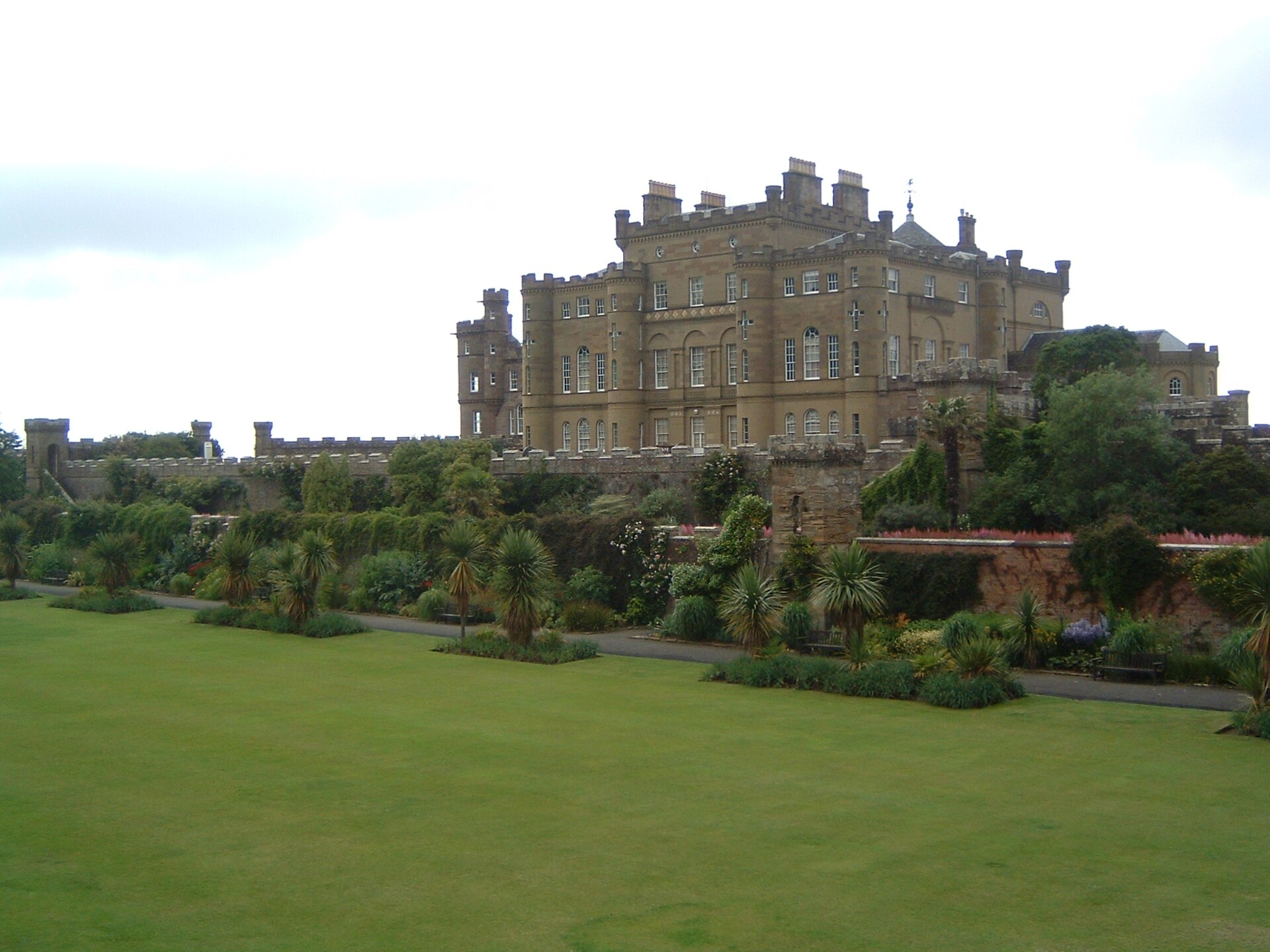
Photo: Unknown / Wikimedia Commons / CC BY-SA 3.0 Culzean Castle is a later Kennedy residence on the Ayrshire coast, continuing the family’s regional lordship after Dunure’s decline and systematic dismantling.
-
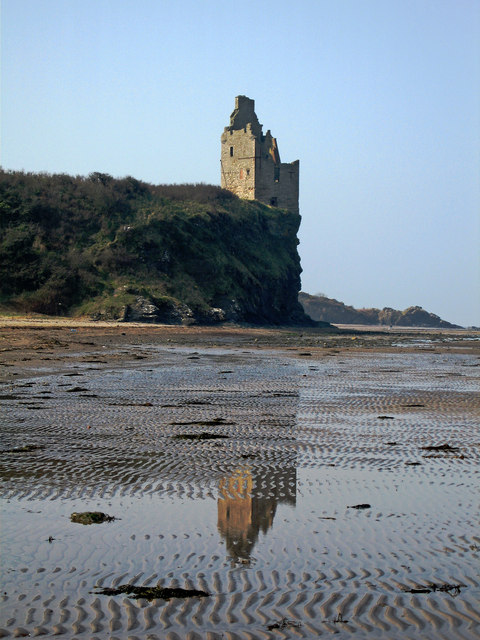
Photo: wfmillar / Wikimedia Commons / CC BY-SA 2.0 Greenan Castle is another medieval Ayrshire coastal ruin; its position above the sea provides a comparison for Dunure’s irregular keep on a precipitous rock.
-
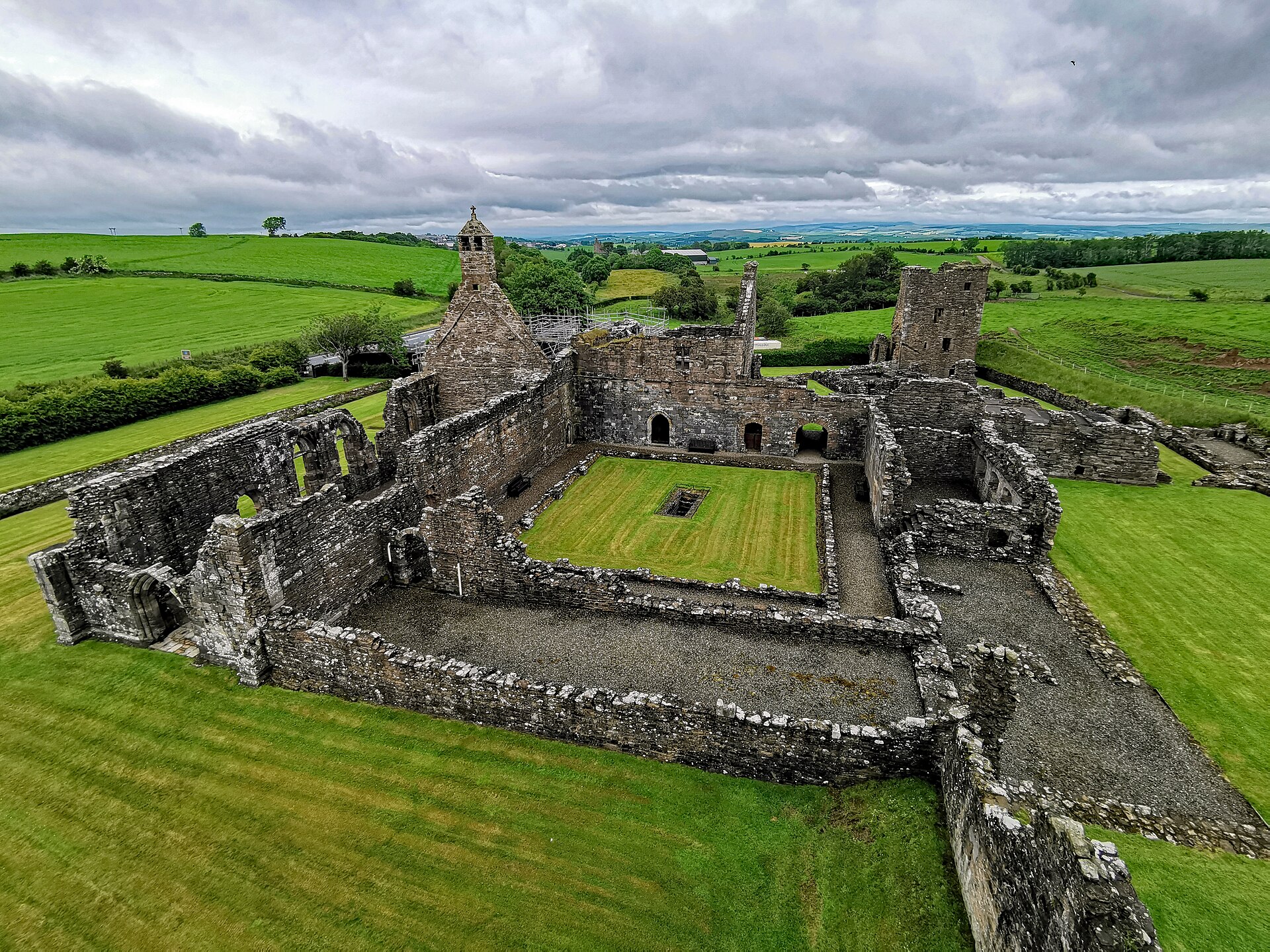
Photo: PaulT (Gunther Tschuch) / Wikimedia Commons / CC BY-SA 4.0 Crossraguel Abbey was the source of the disputed lands and revenues for which Allan Stewart was imprisoned and tortured in Dunure’s Black Vault in 1570.
Discovery & excavation
Excavation in the 1990s showed that a fourteenth-century hall house had been built across the earlier thirteenth-century court, clarifying how the castle’s lower ward changed after the first keep was established.
What to look for
-
Black Vault
The preserved basement vaults include the room associated with Allan Stewart’s imprisonment and torture during the 1570 struggle for Crossraguel Abbey’s lands.
-
Two kitchens
The lower buildings contained separate ground-floor kitchens for the castle household and retainers, revealing the scale of service needed for a Kennedy stronghold.
-
Browney’s Cave
The cavern beneath the castle may have served as a sally-port, a concealed way out from the rocky promontory.
What is said
Folklore and tradition, recorded as what is said — not as established fact.
-
Founding traditions
According to local traditions, the Danes built the castle or Alexander III granted it to the Mackinnons after the Battle of Largs; the surviving fabric and documentary evidence instead begin in the late thirteenth century.
Plan your visit
- Location
- 55.4050°N · 4.7618°W
- Time needed
- About 45 minutes
- What survives
- A roofless coastal ruin: the basement vaults remain well preserved, but much of the keep’s upper structure has been demolished.
Nearby places
Fortified place · Medieval
Culzean Castle
South Ayrshire
Eisenhower was given an apartment at the top of this castle in 1945, as a condition of the family handing it to the nation.
Fortified place · Medieval
Greenan Castle
South Ayrshire
A sixteenth-century tower on a headland fortified since before the Romans, and the place a Kennedy set out from on the morning he was murdered.
Sacred place · Medieval
Crossraguel Abbey
South Ayrshire
A ruined Cluniac monastery near Maybole that still keeps its church, covered walkways and dovecote.
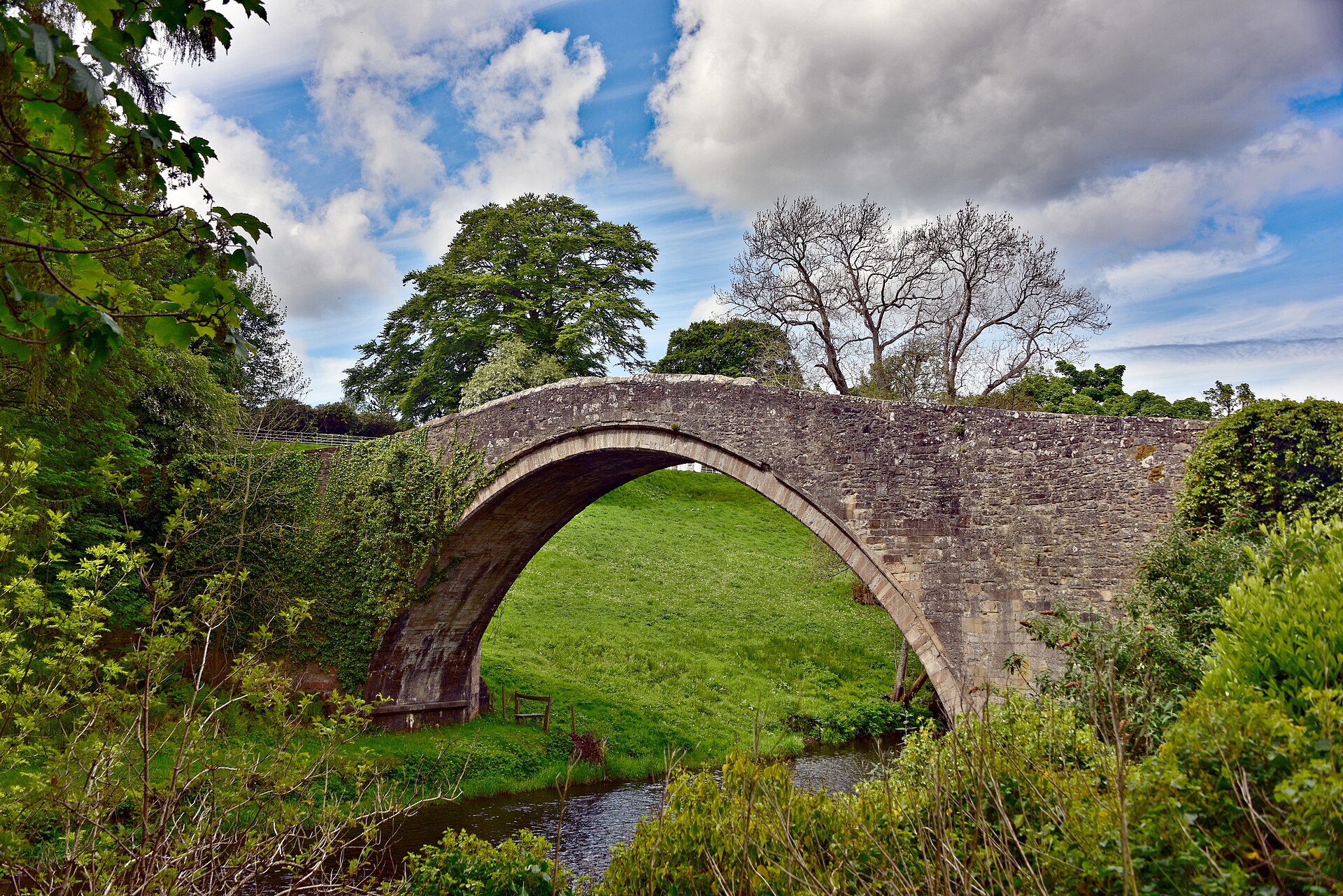
Building or ruin · Medieval
Brig o' Doon
South Ayrshire
Sold as a quarry to the builders of its replacement, then bought back before they could take it apart.
Questions people ask
- How old is Dunure Castle?
- The site dates from the late thirteenth century — the earliest charter for the lands is of 1256 — though the standing remains are of fifteenth- and sixteenth-century origin. One tradition says the Danes built it; another that the Mackinnons held it from Alexander III as a reward for their valour at the Battle of Largs.
- Whose castle was it?
- The Kennedys of Carrick, who once ruled much of south-western Scotland and were granted the lands in 1357. Sir James Balfour described Dunure as a great and pleasant strong house, the most ancient habitation of the surname of Kennedy, Lairds of Dunure, now Earls of Cassillis.
- What happened here in 1429?
- James Campbell, representing James I of Scotland, met John Mor MacDonald, representing the Lord of the Isles. Violence broke out and MacDonald was killed. The king executed Campbell to contain the outrage of the Lords of the Isles, and it did not prevent a subsequent rising by them.
- What was the roasting of the Commendator?
- In 1570 Gilbert Kennedy, 4th Earl of Cassillis, seized Allan Stewart, lay commendator of Crossraguel Abbey, in a dispute over abbey lands and rents. Stewart was tricked into travelling to Dunure, stripped of horse and weapons and held; when he refused to sign the lands over he was tortured. He was rescued by the Laird of Bargany, who stormed the castle, and afterwards denounced the earl at the Cross of Ayr.
- How was the castle built, and how did it end?
- In two distinct parts: an irregular keep on a precipitous rock, with further buildings at a lower level holding two ground-floor kitchens, one for the castle and one for the retainers. Keep walls are about five feet thick and the basement vaults survive well. Decline began in the mid seventeenth century, and by 1694 it was described as wholly ruined.
Sources
The Ancient Codex, in your pocket
Get the Pocket Codex app
Carry the directory with you — Dunure Castle and thousands of ancient places across Britain and Ireland, offline, wherever you roam.