A ruined Cluniac monastery near Maybole that still keeps its church, covered walkways and dovecote.
The ruins of Crossraguel are among the most complete of any medieval religious house surviving in Scotland. The monks’ church, their cloister (the covered walkway round a monastery’s central courtyard) and their dovecote all stand; the chapter house is still complete, with benches for the monks and an arched seat for the abbot; and fine architectural detail of the fifteenth century survives within. Visitors can climb the stairs to the top of the gatehouse tower.
The name refers to the ancient Cross of Riaghail — St Regulus in Latin form — which stood on the spot. The house was Cluniac, a branch of the Benedictines, and its monks were known as the Black Monks after the colour of their habits.
Duncan, 1st Earl of Carrick, founded the abbey in 1244, seeking help from the abbot and monks of Paisley Abbey and giving them land and funds for the purpose. Paisley built only a small chapel at Crossraguel and kept the rest for itself. The earl went to law over it, appealing to the Bishop of Glasgow, who ruled in his favour: Paisley was required not only to build the monastery but to transfer some of its own monks there, and those monks were given authority to elect their own abbot. The abbot of Paisley was not to interfere in Crossraguel’s affairs, though he was allowed one visit a year, and all of Paisley’s possessions in Carrick were to be handed over. Paisley appealed to the pope in 1265, without success.
The army of Edward I sacked the abbey in 1307. The opportunity was taken to rebuild on a grander scale, work that occupied much of the rest of the Middle Ages.
Its position was chosen for pilgrims. Like Paisley, Crossraguel belonged to the Order of Cluny, whose mission was to encourage pilgrimage, and the abbey stands halfway between Paisley and Whithorn on the Ayrshire pilgrims’ trail to the shrine of St Ninian in the Machars of Galloway.
In autumn 1506 Montjoie — Gilbert Chauveau, French King of Arms — visited Crossraguel, probably in connection with his diplomatic missions over Scottish military support for King Hans of Denmark. He had already spent time at the court of Henry VII of England before moving to Scotland and going on to Denmark. The visit is recorded in the Treasurer’s Accounts of James IV, in a payment to John Beg, messenger, to go to Corsragwell and other places with writings to warn of Montjoie’s coming.
Around 1510 the monks, directed by David Kennedy, 1st Earl of Cassillis and encouraged by James IV, developed the production of salt by boiling sea water in pans, and the grinding of charcoal for gunpowder.
The abbey’s lands changed hands by torture. In 1570 the Kennedys, Earls of Cassillis, obtained them after Gilbert Kennedy, 4th Earl, tortured Allan Stewart, the commendator, at his castle of Dunure. A feud followed involving a number of families and lasting until at least 1611.
The Reformation of around 1560 destroyed many Scottish abbeys but did not badly damage this one. Monastic life ended here only when the last monk died in 1601.
James VI intended in 1603 to rebuild the abbey, or the abbot’s house, for the use of his son Prince Henry. In December 1612 he instead granted the former abbey to Peter Hewat, minister at St Giles Cathedral in Edinburgh, who held it until his death in 1645. Some of the stone has been removed for local construction since the Reformation.
The site is maintained by Historic Environment Scotland as a scheduled monument and is open to the public with an entrance charge.
What follows is drawn from published sources, with each claim labelled by how firmly it is established.
History
Duncan, 1st Earl of Carrick, founded the abbey in 1244, seeking help from the abbot and monks of Paisley Abbey and giving them land and funds for the purpose. Paisley built only a small chapel at Crossraguel and kept the rest for itself, so the earl went to law, appealing to the Bishop of Glasgow.
The bishop ruled in the earl's favour. Paisley was required not only to build the monastery but to transfer some of its own monks there, and those monks were given authority to elect their own abbot. The abbot of Paisley was not to interfere in Crossraguel's affairs, though he was allowed one visit a year, and all of Paisley's possessions in Carrick were to be handed over. Paisley appealed to the pope in 1265, without success.
The army of Edward I sacked the abbey in 1307. The opportunity was taken to rebuild on a grander scale, work that occupied much of the rest of the Middle Ages. Like Paisley, Crossraguel belonged to the Order of Cluny, whose mission was to encourage pilgrimage, and it stands halfway between Paisley and Whithorn on the Ayrshire pilgrims' trail to the shrine of St Ninian in the Machars of Galloway.
In autumn 1506 Montjoie — Gilbert Chauveau, French King of Arms — visited Crossraguel, probably in connection with his diplomatic missions over Scottish military support for King Hans of Denmark. The visit is recorded in the Treasurer's Accounts of James IV, in a payment to John Beg, messenger, to go to Corsragwell and other places with writings to warn of Montjoie's coming. Around 1510 the monks, directed by David Kennedy, 1st Earl of Cassillis and encouraged by James IV, developed the production of salt by boiling sea water in pans, and the grinding of charcoal for gunpowder.
The abbey's lands changed hands by torture. In 1570 the Kennedys, Earls of Cassillis, obtained them after Gilbert Kennedy, 4th Earl, tortured Allan Stewart, the commendator, at his castle of Dunure. A feud followed involving a number of families and lasting until at least 1611.
The Reformation of around 1560 destroyed many Scottish abbeys but did not badly damage this one, and monastic life ended here only when the last monk died in 1601. James VI intended in 1603 to rebuild the abbey, or the abbot's house, for his son Prince Henry, but in December 1612 granted it instead to Peter Hewat, minister at St Giles Cathedral in Edinburgh, who held it until his death in 1645.
Some of the stone has been removed for local construction since the Reformation, but the ruins remain among the most complete of any medieval religious house surviving in Scotland. The site is maintained by Historic Environment Scotland as a scheduled monument and is open to the public with an entrance charge.
People
-
Duncan, 1st Earl of Carrick
Founded Crossraguel in 1244 and successfully challenged Paisley Abbey when it failed to establish the promised monastery, securing an independent community of monks.
-
David Kennedy, 1st Earl of Cassillis
Directed the abbey’s early-sixteenth-century salt and gunpowder enterprises, linking the monastic precinct to Carrick’s coastal industry.
-
Gilbert Kennedy, 4th Earl of Cassillis
Forced Allan Stewart to surrender Crossraguel’s lands in 1570 after imprisoning and torturing him at Dunure Castle, an episode that widened the Kennedy feud.
Cultural influences
-
Cluniac pilgrimage
As a daughter house of Paisley Abbey, Crossraguel belonged to the Order of Cluny and stood on the Ayrshire route between Paisley and Whithorn, encouraging pilgrimage towards St Ninian’s shrine.
-
Reformation and secular lordship
The Reformation ended the monastic community, but the buildings remained substantially intact while the Kennedy earls fought over the abbey’s lands and revenues.
Connections
-
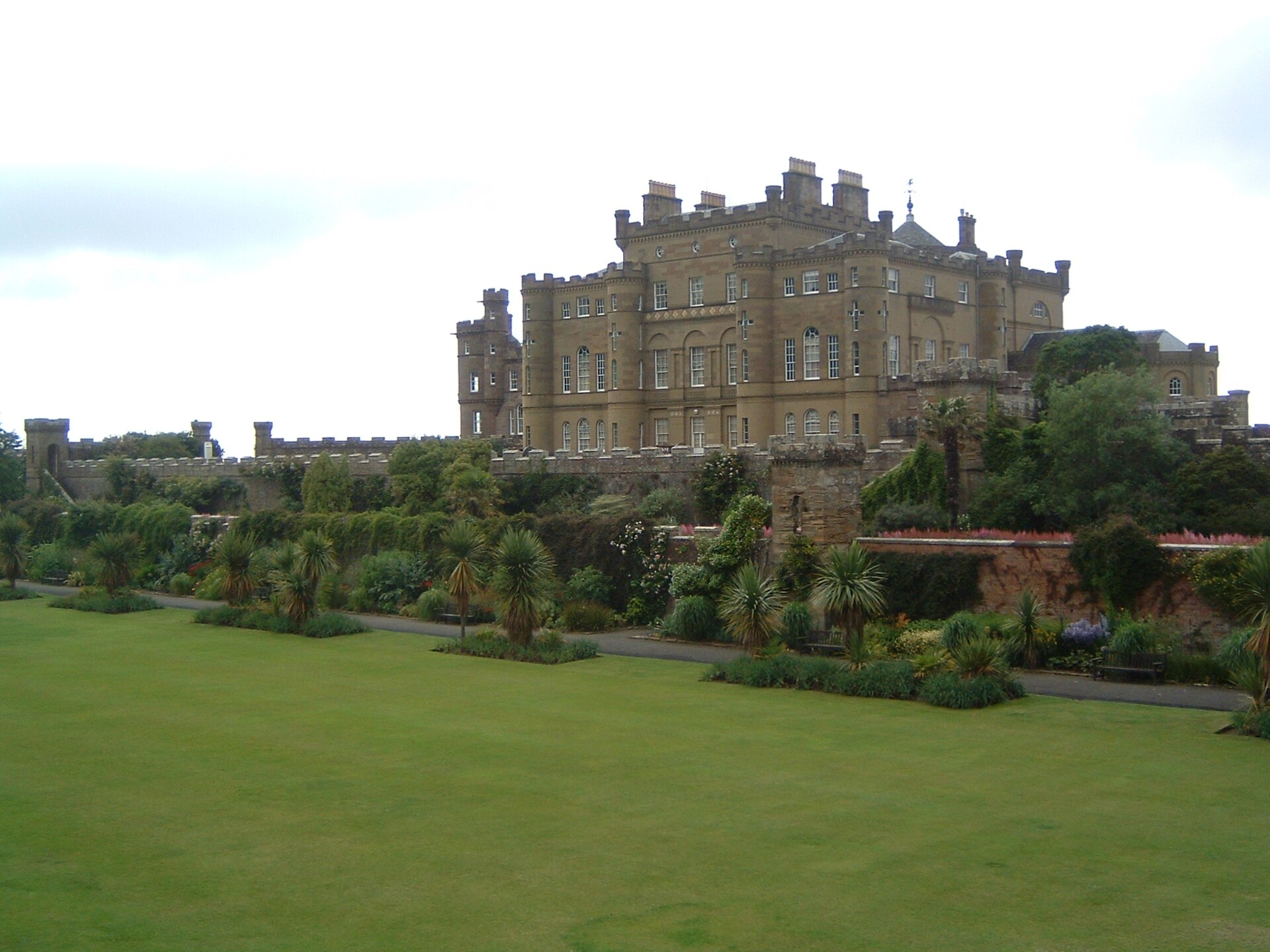
Photo: Unknown / Wikimedia Commons / CC BY-SA 3.0 Culzean Castle is a later fortified residence on the Ayrshire coast, part of the Kennedy earls’ Carrick landscape after they took control of Crossraguel’s lands and revenues.
-
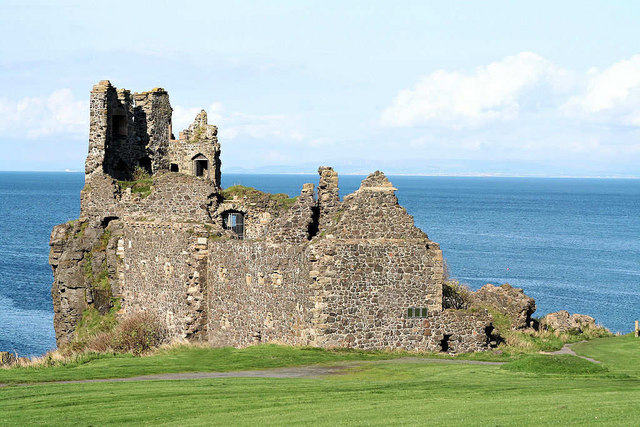
Photo: John McLeish / Wikimedia Commons / CC BY-SA 2.0 Dunure Castle was the Kennedy stronghold where Gilbert Kennedy tortured Allan Stewart in 1570 to force the surrender of Crossraguel Abbey’s lands.
-
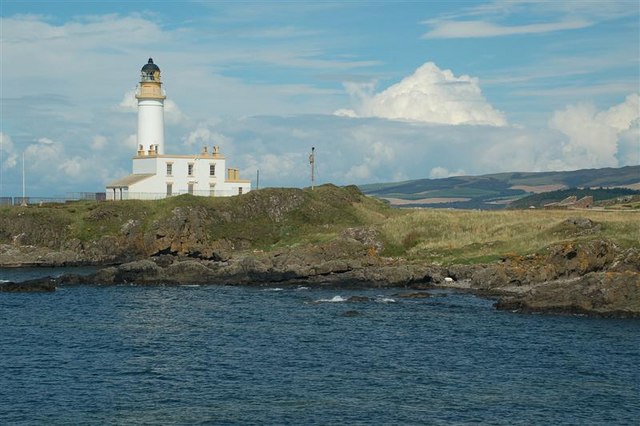
Photo: Mary and Angus Hogg / Wikimedia Commons / CC BY-SA 2.0 Turnberry Castle is a medieval stronghold on the Ayrshire coast, within the Carrick lordship whose first earl founded Crossraguel and defended its independence from Paisley.
What to look for
-
Church and cloister range
The roofless church, cloister and domestic ranges preserve the compact plan of a medieval Cluniac house, unusually complete despite later stone removal.
-
Abbot’s lodging
The later medieval domestic rooms show how the abbey developed beyond its first small chapel after rebuilding following Edward I’s raid of 1307.
Plan your visit
- Location
- 55.3385°N · 4.7207°W
- Time needed
- About 90 minutes
Nearby places
Fortified place · Medieval
Culzean Castle
South Ayrshire
Eisenhower was given an apartment at the top of this castle in 1945, as a condition of the family handing it to the nation.
Fortified place · Medieval
Dunure Castle
South Ayrshire
A ruin on a rocky headland of the Carrick coast, five miles south of Ayr, on a site of the late thirteenth century.
Fortified place · Medieval
Turnberry Castle
South Ayrshire
Robert the Bruce grew up here and ordered it destroyed in 1310, so the English could not have it. Nobody rebuilt it.
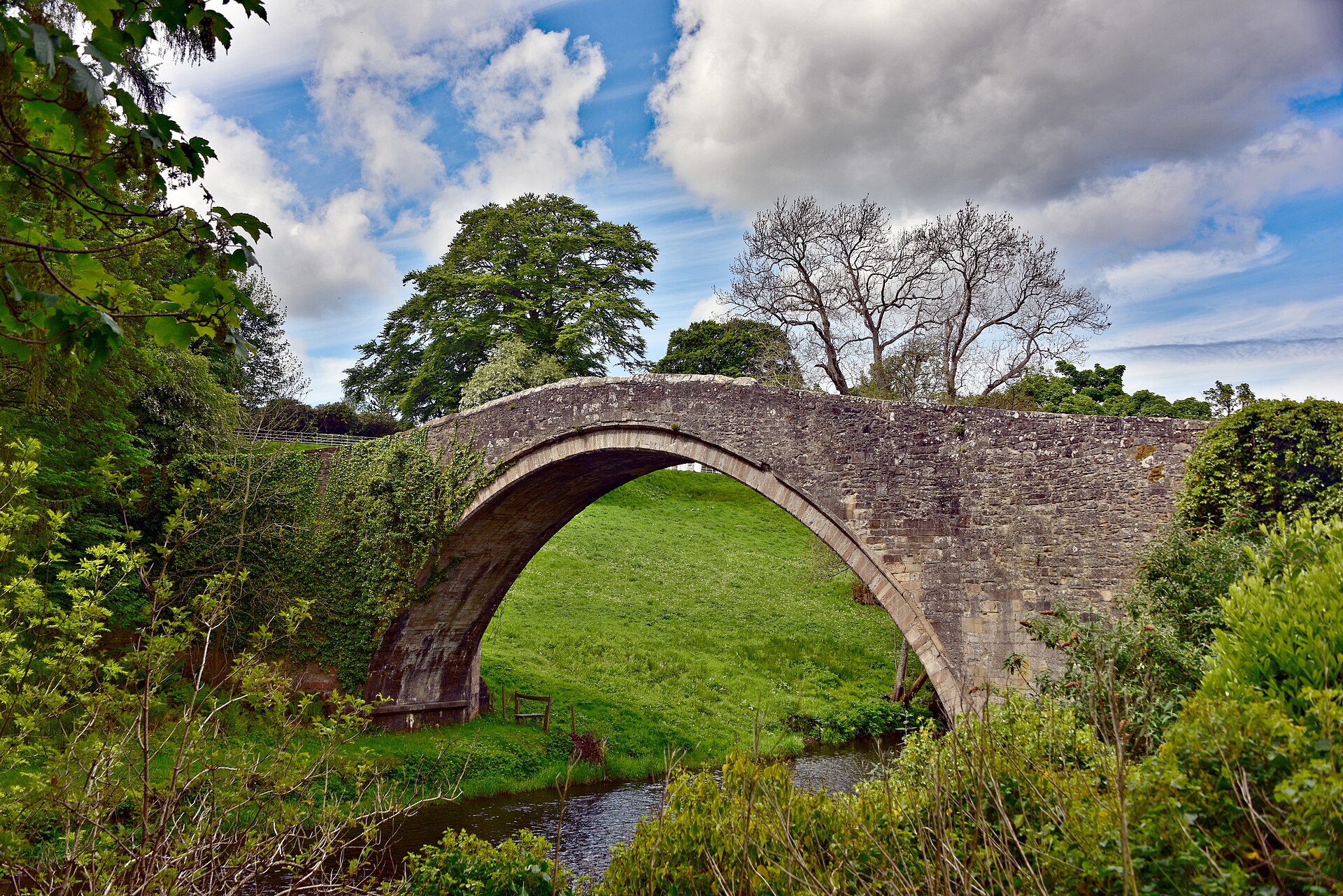
Building or ruin · Medieval
Brig o' Doon
South Ayrshire
Sold as a quarry to the builders of its replacement, then bought back before they could take it apart.
Questions people ask
- Who founded Crossraguel Abbey?
- Duncan, 1st Earl of Carrick, in 1244. He sought help from the abbot and monks of Paisley Abbey and gave them land and funds for the purpose, but Paisley built only a small chapel here and kept the rest, so the earl went to law before the Bishop of Glasgow.
- How was the dispute settled?
- In the earl's favour. Paisley was required to build the monastery and to transfer some of its own monks, who were given authority to elect their own abbot. The abbot of Paisley was not to interfere in Crossraguel's affairs beyond one visit a year, and all of Paisley's possessions in Carrick were to be handed over.
- What was the abbey's place on the pilgrim route?
- Like Paisley it belonged to the Order of Cluny, whose mission was to encourage pilgrimage, and it stands halfway between Paisley and Whithorn on the Ayrshire pilgrims' trail to the shrine of St Ninian in the Machars of Galloway. The army of Edward I sacked it in 1307, and the opportunity was taken to rebuild on a grander scale.
- How did the Kennedys acquire its lands?
- By torture. In 1570 Gilbert Kennedy, 4th Earl of Cassillis, tortured Allan Stewart, the commendator, at his castle of Dunure, and the Kennedys obtained the lands. A feud followed involving a number of families and lasting until at least 1611.
- How much of it is left?
- Among the most complete ruins of any medieval religious house in Scotland. The Reformation of around 1560 did not badly damage it, and monastic life ended only when the last monk died in 1601. Historic Environment Scotland maintains it as a scheduled monument, open to the public with an entrance charge.
Sources
The Ancient Codex, in your pocket
Get the Pocket Codex app
Carry the directory with you — Crossraguel Abbey and thousands of ancient places across Britain and Ireland, offline, wherever you roam.