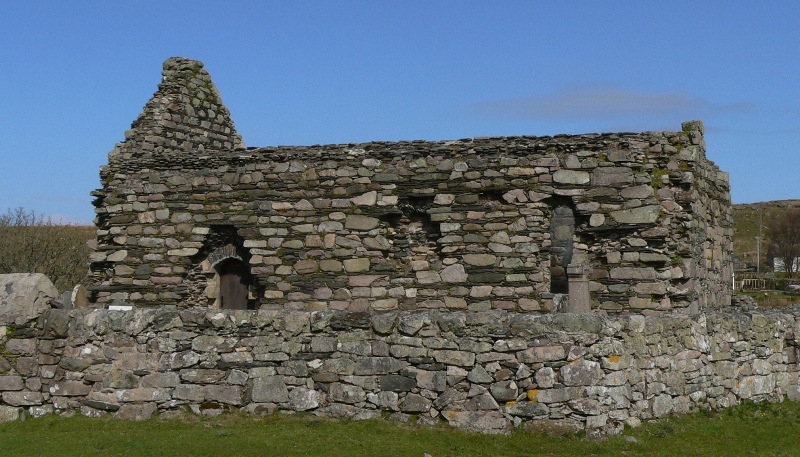
The chapel dates from the 11th century. Its now re-roofed structure houses an important collection of early stone sculpture, and the original Keills Cross has been moved inside to protect it from the…
The name Keills comes from the Gaelic keeill, meaning chapel — and the 11th-century building it names now shelters the Keills Cross, moved indoors to protect its carving from the weather. Carved from local grey-green epidiorite in the late 8th or early 9th century, the cross shows the archangel Michael standing over a serpent.
What follows is drawn from published sources, with each claim labelled by how firmly it is established.
The name
The name Keills originates from the word keeill, meaning 'chapel'.
History
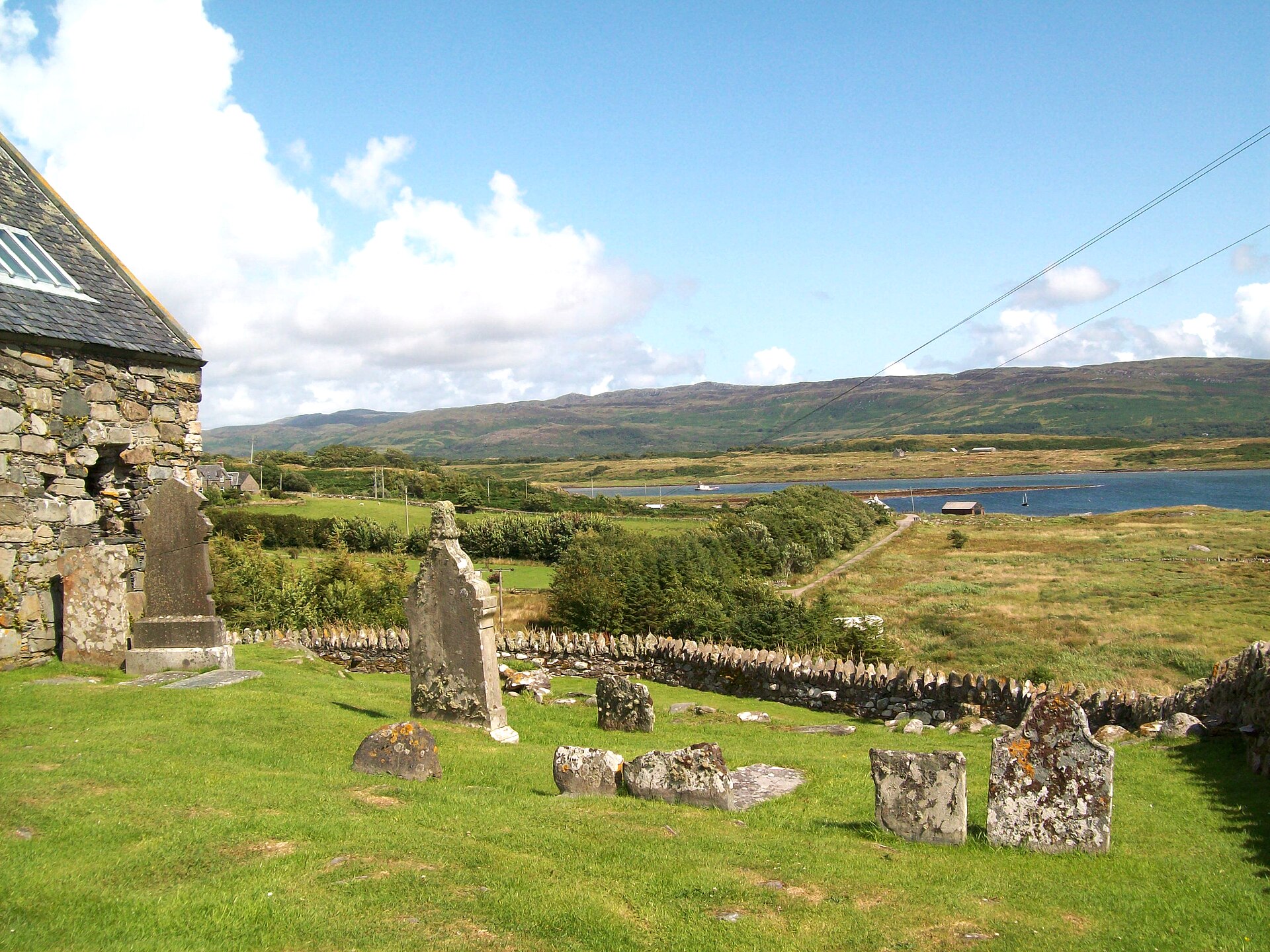
The chapel dates from the 11th century. Its now re-roofed structure houses an important collection of early stone sculpture, and the original Keills Cross has been moved inside to protect it from the elements, with a blank modern replacement standing where it once stood outside.
The Keills Cross is a complete late eighth- or early ninth-century monument carved from local grey-green epidiorite. Its unusually short arms are broader than the shaft, and its single carved face brings several Christian images together: St Michael stands over a serpent, Christ sits in judgement holding a book and a flail, and a circular motif with four animals has been interpreted as a Trinity and the Evangelists. Moving the original cross inside the chapel protects these carvings from weather while leaving a plain replacement at its former outdoor position.
The chapel’s collection reaches beyond the standing cross. Six early Christian cross-slabs and around forty late-medieval grave slabs recovered from the chapel and churchyard are kept inside the re-roofed building. Together they show that the site remained a place of commemoration over many centuries, and they let visitors compare formal sculpture with the more personal marks left on later burial stones.
Cultural influences
-
The Keills Cross belongs to the early Christian sculptural tradition of the west Highlands; its iconography draws on standard medieval Christian imagery — the Judgement, the evangelists, and the triumph of St Michael over the serpent.
Connections
-
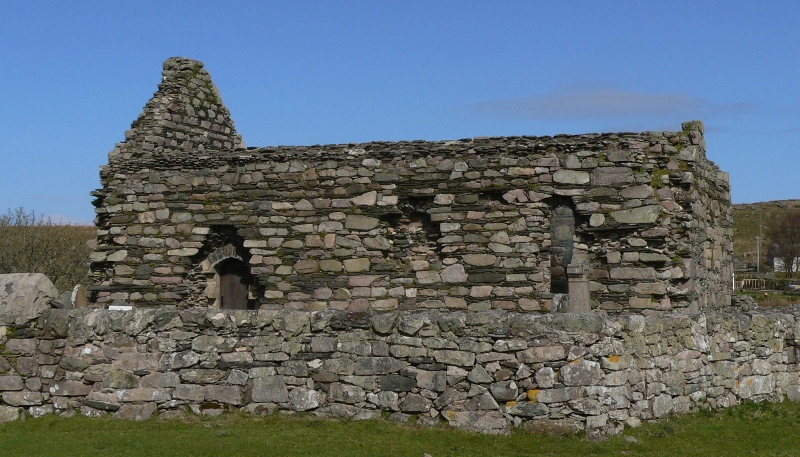
Photo: Otter / Wikimedia Commons / CC BY-SA 3.0 Both chapels are HES-managed Christian sites on Loch Sween, allowing visitors to compare their early medieval crosses, later grave slabs and continuing coastal setting. Kilmory Knap provides a useful regional counterpart for understanding Keills as a place where carved monuments were collected, protected and reinterpreted over centuries. The connection turns two separate stops into a coherent reading of the loch’s Christian heritage. It also gives the visitor a concrete comparison for the scale and changing use of each chapel site.
-
Loch Sween Christian sites
Keills is part of a wider coastal group of early Christian places around Loch Sween. Reading it alongside nearby chapels and carved stones helps explain why the cross, chapel and grave-slab collection belong to a connected sacred landscape rather than an isolated roadside monument.
What to look for
-
The Keills Cross
The Keills Cross — a complete, well-preserved late 8th to early 9th century cross carved from local grey-green epidiorite, decorated on one face only, with unusually short side-arms broader than the shaft.
-
St Michael and Christ enthroned
On the cross's upper limb, the archangel St Michael standing over a serpent (a symbol of triumph over the devil); on the lower limb, Christ on the Judgement Seat holding a book (mercy) in his left hand and a flail (judgement) in his right.
-
The crossing and its beasts
At the crossing, a circular design with three round objects that may symbolise the Holy Trinity, surrounded by four animals representing the four evangelists.
-
The chapel's collected slabs
The chapel's collection of six early Christian cross-slabs and around forty late medieval grave slabs recovered from the chapel or churchyard.
Plan your visit
- Location
- 55.9626°N · 5.7027°W
- Nearest settlement
- Tayvallich
- Access
- Open access
- Parking
- No formal car park is named; the HES directions place the site at the road end south-west of Tayvallich off the B8025. Parking arrangements should be checked locally.
- Start point
- 6m south west of Tayvallich off the B8025
- Time needed
- About 30 minutes
- Best time
- During daylight hours, when the chapel and cross can be viewed.
- What survives
- The 11th-century chapel has been re-roofed, and the original Keills Cross is housed inside to protect it from weathering.
- Facilities
- Check the official visitor page for current facilities and access arrangements.
- Start point
- Keills road-end (end of the B8025 minor road) (parking unconfirmed) — The minor road south-west of Tayvallich (off the B8025) terminates close to the chapel; a short footway leads the rest of the way. No formal car park is named by HES or mapped in OpenStreetMap — visitors park at the road end. Verify parking arrangements locally before travel.
Opening & admission
Free entry
Nearby places
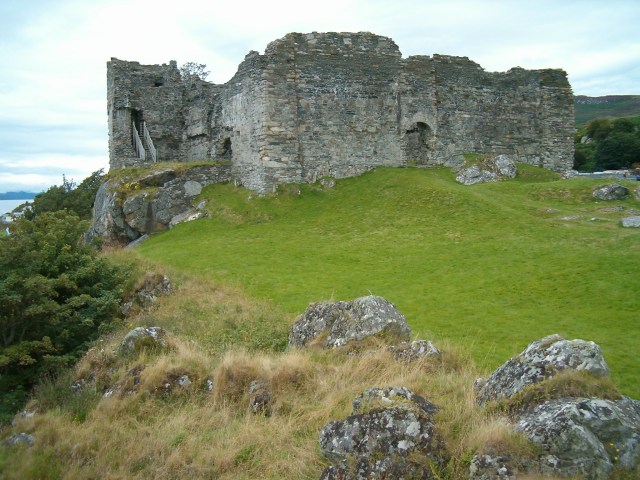
Fortified place · Medieval
Castle Sween
Argyll and Bute
Castle Sween, on the eastern shore of Loch Sween in Knapdale, Argyll, is thought to be one of the earliest stone castles built in Scotland: and is…
- Near Achnamara
- 466 metres from car park
Tomb or burial place · Pictish & early medieval
Kilmory Knap Chapel
Argyll and Bute
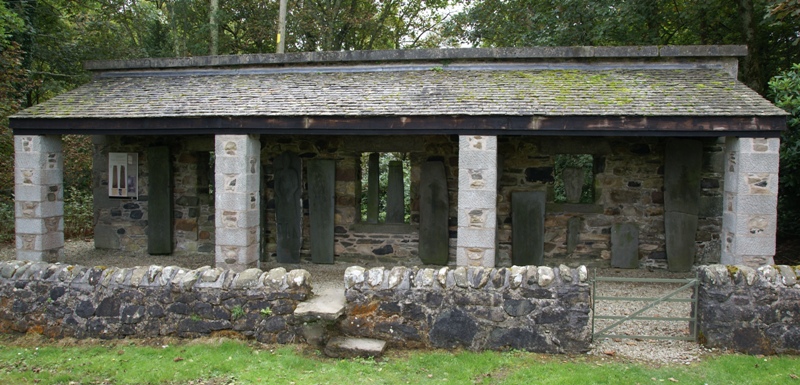
Macmillan's Cross survives inside as one of the finest West Highland carvings anywhere: a clan chief and his hunting dogs cut into stone over six c…
- Near Kilmory, Knapdale
Carved stone · Medieval
Kilberry Sculptured Stones
Argyll and Bute
The Kilberry Sculptured Stones preserve medieval cross-slabs and grave markers from a parish church destroyed in the 17th century, keeping a disper…
- Near Kilberry
- Easy path
Crossing or structure · Medieval
Loch a' Bharain
Argyll and Bute
Loch a’ Bharain is a purpose-built Crinan Canal reservoir whose 1801 dam stabilised the summit reach and whose recent drainage exposed traces of an…
- Near Cairnbaan
- Easy path
Questions people ask
- What is preserved at Keills Chapel?
- The chapel protects the carved Keills Cross, six early Christian cross-slabs and around forty late-medieval grave slabs.
Sources
- Canmore site record 38654 (accessed 2026-06-13)
- Trove (HES) record (accessed 2026-06-13)
- Wikipedia: Keills Chapel (accessed 2026-06-13)
- Wikidata Q2780450 (accessed 2026-06-13)
Explore more: Tomb or burial places · Pictish & early medieval · Argyll and Bute
The Ancient Codex, in your pocket
Get the Pocket Codex app
Carry the directory with you — Keills Chapel and Cross and thousands of ancient places across Britain and Ireland, offline, wherever you roam.