
A royal stronghold fought over by kings, besieged with English ships and troops, and hosted Mary, Queen of Scots for three days in 1563.
Castle stone has almost vanished from Dunoon’s cone-shaped mound above the Firth of Clyde. The remaining hill marks a royal stronghold that watched the approach to Cowal for about four centuries, while kings, earls and Campbells competed for its control.
What looks now like a quiet green knoll, with the Georgian villa of Castle House standing a few yards to its north, was once a prize worth sending fleets and armies to capture. Armies crossed from England to take it, a queen stayed within its walls, and a clan massacre unfolded nearby. The castle’s decline into ruin by the seventeenth century did not end its usefulness: two world wars later, its hill was pressed back into service to help defend the shipbuilding yards of the Clyde.
What follows is drawn from published sources, with each claim labelled by how firmly it is established.
History
Dunoon Castle first appears in written record in the thirteenth century, and its origins may lie in the growing authority the Stewart family was building across Cowal at the time. A hill fort or earlier stronghold may have stood on the same cone-shaped mound before the stone castle rose, but the documentary trail begins only with the Stewarts' rise to power in the region.
In 1333 the castle was besieged and captured by Edward Balliol, the rival claimant to the Scottish throne, who promptly surrendered it to Edward III of England. The occupation provoked an insurrection that drove Balliol out of Scotland, and Robert the Steward, later crowned King Robert II, arrived in Cowal and, with the help of Colin Campbell of Lochow, retook the castle for the Scottish crown.
By 1468 the castle was in Campbell hands in all but name: James III agreed to repay his Master of Household, Colin Campbell, 1st Earl of Argyll, for repairs he had carried out, and in 1472 made him keeper of the castle outright. From this point Dunoon functioned as a royal castle with the Earls of Argyll and their Campbell heirs holding the keepership as a hereditary right through the fifteenth century.
In 1544 Matthew Stewart, 4th Earl of Lennox, besieged the castle with eighteen ships and 800 soldiers supplied by Henry VIII of England, part of the wider English campaigns against Scotland known as the Rough Wooing. Lennox succeeded in taking both Dunoon and Rothesay Castles, driving out Archibald Campbell, 4th Earl of Argyll, who sustained heavy losses in the defeat.
Mary, Queen of Scots, stayed at Dunoon Castle from 27 to 29 July 1563 while visiting her half-sister, Jean Stewart, Countess of Argyll, granting several charters during her short residence; the food served to her household during the visit was recorded in her household accounts. Two years later, in August 1565, her rebel lords gathered at Dunoon during the Chaseabout Raid, among them the Duke of Châtelherault and the Earls of Argyll and Rothes, before the faction left for Ayrshire on 18 August 1565.
In 1646 the Dunoon massacre took place nearby, in which Campbell forces killed men, women, children and infants of Clan Lamont, one of the bloodiest episodes of the long feuding between the two clans in Cowal. After the Restoration and the return of episcopacy under Charles II, the castle briefly served as a residence for the bishops of Argyll before slipping into permanent ruin during the seventeenth century.
During both the First and Second World Wars, military fortifications were built on and around the castle hill to help defend the River Clyde and its shipbuilding industry, giving the site a final, twentieth-century military role long after its medieval defences had crumbled.
People
-
Robert the Steward (later Robert II)
Recaptured the castle from Edward Balliol's forces in 1333 with the help of Colin Campbell of Lochow.
-
Colin Campbell, 1st Earl of Argyll
Was repaid by James III for castle repairs in 1468 and made keeper of Dunoon Castle in 1472, founding the Campbell hereditary keepership.
-
Archibald Campbell, 4th Earl of Argyll
Was driven out of Dunoon Castle with heavy losses during Lennox's siege of 1544.
-
Matthew Stewart, 4th Earl of Lennox
Led the 1544 siege of Dunoon and Rothesay Castles with ships and troops supplied by Henry VIII of England.
-
Mary, Queen of Scots
Stayed at Dunoon Castle from 27 to 29 July 1563 while visiting her half-sister and granted several charters there.
Cultural influences
-
Cowal stronghold
The castle’s hill above Dunoon and its position on the Clyde approaches made it a strategic focus for Stewart, Campbell and later military control of Cowal.
Connections
-
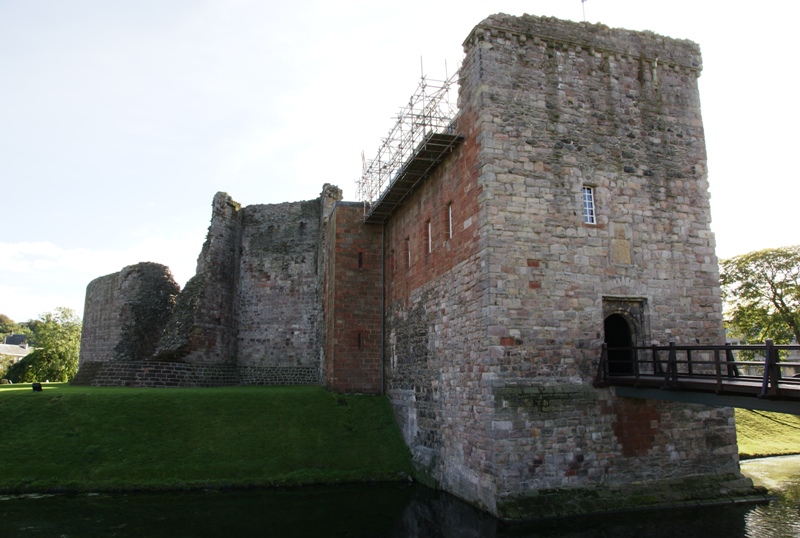
Photo: Otter / Wikimedia Commons / CC BY-SA 3.0 Was captured alongside Dunoon Castle in the same 1544 siege led by the Earl of Lennox with English ships and troops.
-
Clan Lamont
Suffered the 1646 Dunoon massacre, in which Campbell forces killed Lamont men, women and children near the castle.
-
Clan Campbell / Earls of Argyll
Held the hereditary keepership of Dunoon Castle from the fifteenth century after Colin Campbell was appointed keeper in 1472.
-
Jean Stewart, Countess of Argyll
Was the half-sister Mary, Queen of Scots, visited during her 1563 stay at Dunoon Castle.
What to look for
-
The castle mound
A cone-shaped hill roughly 80 feet (24 metres) high still marks where the castle stood, though very little of its stonework survives above ground.
-
Castle House
A villa built in 1822 stands just a few yards north of the castle ruins, on the edge of the scheduled monument area.
-
Scheduled monument area
Historic Environment Scotland scheduled the castle on 18 November 1992 and amended the entry on 14 June 2016, in the parish of Dunoon and Kilmun. The protected area covers about 5,275 square metres, so the scheduling takes in the whole castle hill and the ground around it, not only the fragments of wall on the summit.
Plan your visit
- Location
- 55.9456°N · 4.9239°W
- Nearest settlement
- Dunoon
- Access
- Open access
- Terrain
- Moderate walking
- Time needed
- About 30 minutes
- Best time
- Daylight, when the short climb and the remaining traces on the mound can be viewed clearly.
- What survives
- Little of the medieval structure survives above ground; the scheduled mound preserves the site’s position.
- Facilities
- Use facilities in Dunoon town; none are recorded on the castle mound itself.
Opening & admission
No admission is charged; check the local council or Visit Scotland listing for any current visitor notices.
- Little of the structure survives beyond the scheduled monument site
- Perched on a hill above the town, reached via a short climb
Nearby places
Sacred place · Prehistoric
Ardnadam Farm
Argyll and Bute
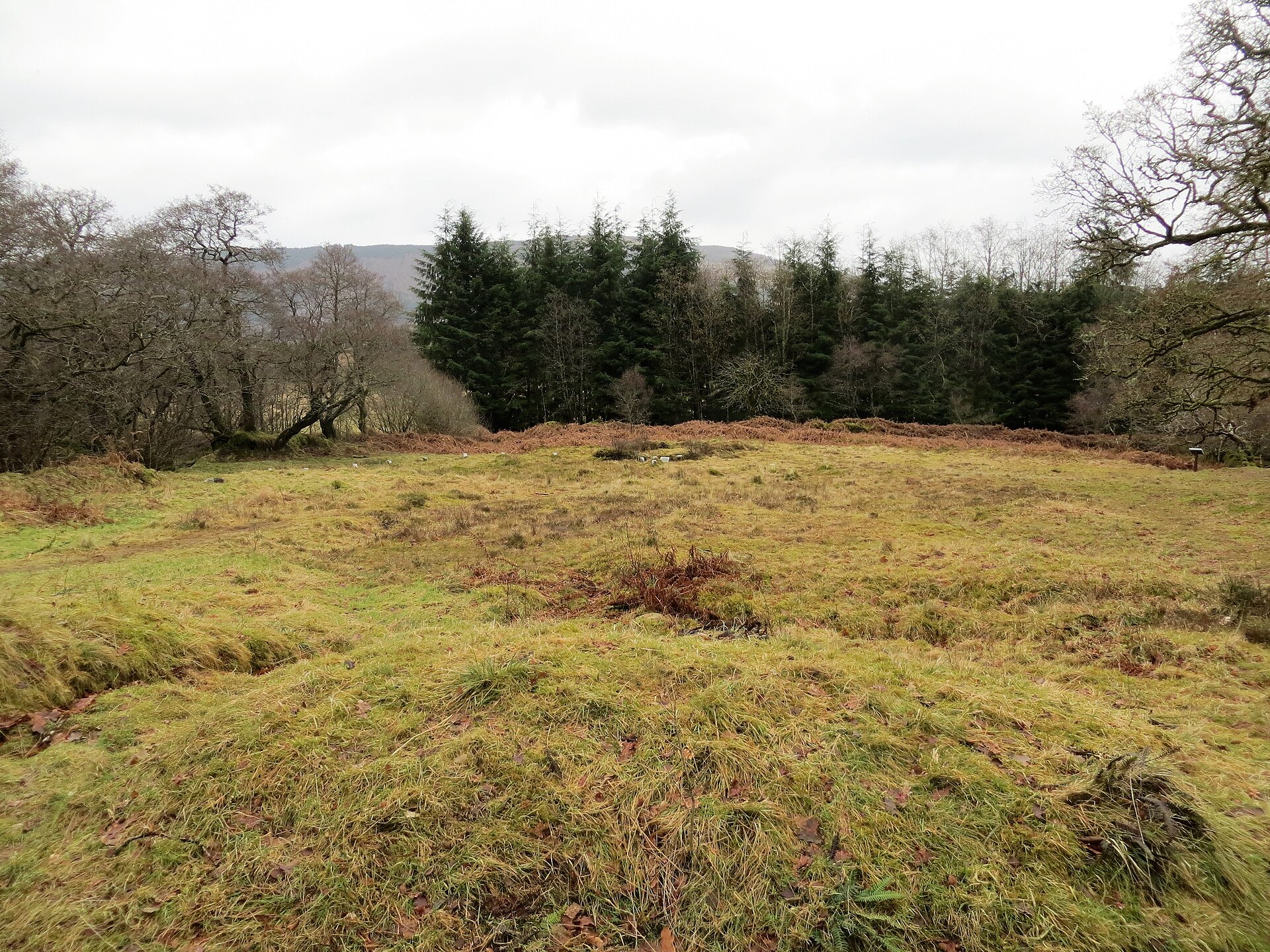
A field on the Cowal shore where a Neolithic tomb was read by nineteenth-century antiquarians as a Druidical altar, and by local tradition as the g…
- Near Dunoon
- Easy path

Sacred place · Prehistoric
Granny Kempock Stone
Inverclyde
A weathered mica-schist pillar above a shopping street carries a rare double legacy: a supposed Bronze Age (roughly 2500–800 BC, when metal tools f…
- Some walking
Fortified place · Medieval
Rothesay Castle
Argyll and Bute
A huge circular curtain wall, some 42 metres in diameter and originally around 7.9 metres high, still stands on a low mound above the town of Rothe…
- Some walking
Fortified place · Medieval
Newark Castle, Port Glasgow
Inverclyde
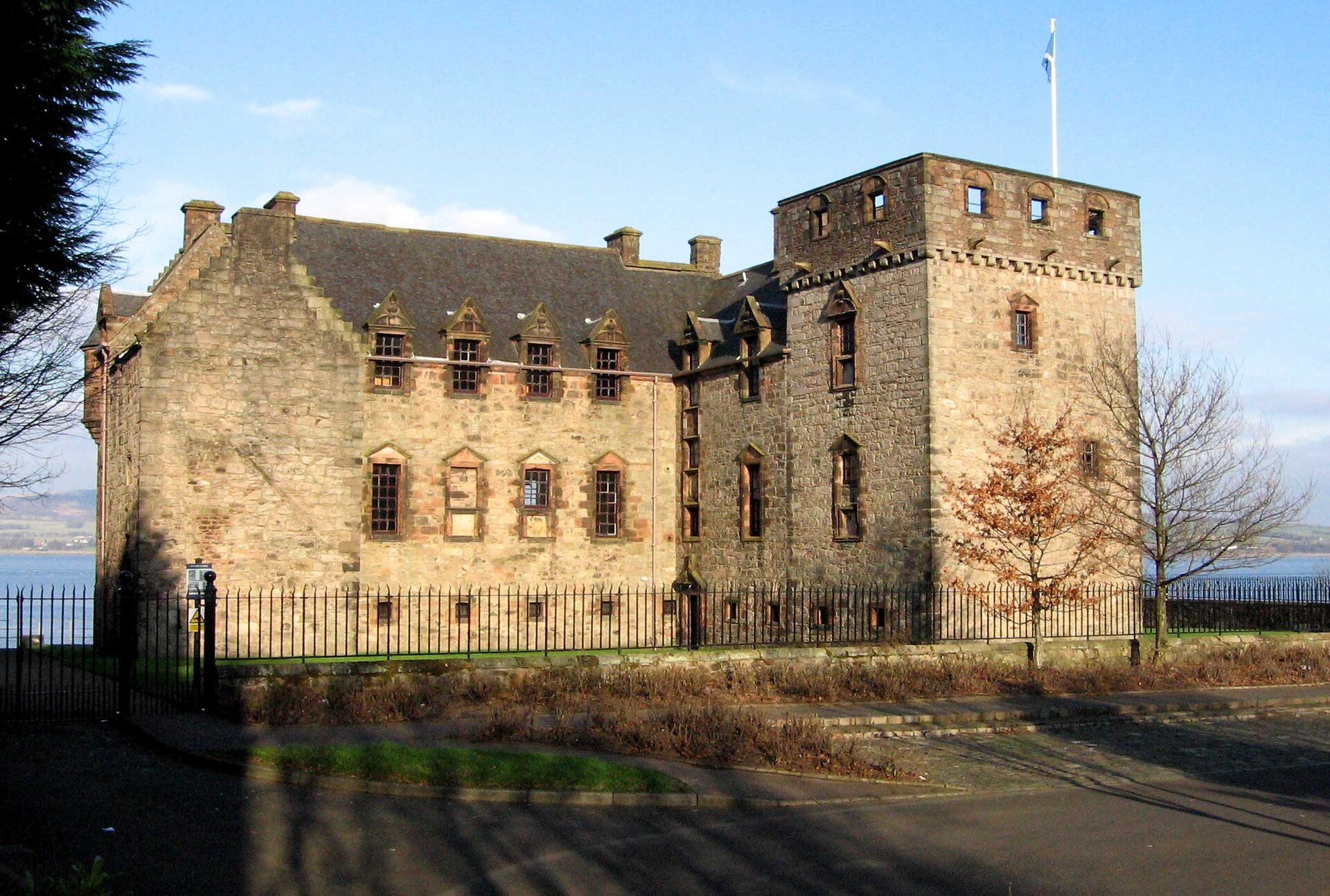
Newark exposes the transformation of a defensive Maxwell tower into a Renaissance mansion, then into the harbour-side landmark around which Port Gl…
- Near Port Glasgow
- Easy path
The setting
Dunoon Pier viewed from Castle Hill in the setting around Dunoon Castle; the castle ruins are not visible.
Photo: Russel Wills / Wikimedia Commons / CC BY-SA 2.0
The Waverley leaving Dunoon Pier in the coastal setting around Dunoon Castle; the castle is not visible.
Photo: Alan Reid / Wikimedia Commons / CC BY-SA 2.0
Questions people ask
- What remains of Dunoon Castle today?
- Very little structure survives; mainly the cone-shaped hill it stood on, about 80 feet high, with Castle House built nearby in 1822.
- Why was Dunoon Castle important?
- It was a royal castle held by the Campbells as hereditary keepers, fought over repeatedly and visited by Mary, Queen of Scots, in 1563.
- Did Mary, Queen of Scots, really stay at Dunoon Castle?
- Yes, she stayed from 27 to 29 July 1563 while visiting her half-sister, Jean Stewart, Countess of Argyll, and granted charters there.
- What was the Dunoon massacre?
- In 1646 Campbell forces killed men, women and children of Clan Lamont near the castle, one of the bloodiest episodes of Cowal's clan feuds.
- Was Dunoon Castle used in modern warfare?
- Yes, military fortifications were built on the castle hill during both World Wars to help defend the River Clyde's shipbuilding industry.
Sources
- Canmore: Dunoon Castle
- Wikipedia: Dunoon Castle
- Wikidata: Dunoon Castle
- Historic Environment Scotland designation SM5450: Dunoon Castle (accessed 2026-08-03)
Explore more: Fortified places · Medieval · Argyll and Bute
The Ancient Codex, in your pocket
Get the Pocket Codex app
Carry the directory with you — Dunoon Castle and thousands of ancient places across Britain and Ireland, offline, wherever you roam.