
Legend says the lord of Hermitage Castle was boiled alive here in 1320, in a cauldron slung between the two big stones.
Local legend has it that in 1320 the tenants of Hermitage Castle arrested their lord, William II de Soules, brought him to this circle, slung a cauldron between the two large stones and boiled him alive in it. The stated reason was that he had been a particularly oppressive and cruel landlord.
Some of the surrounding detail is true. De Soules did conspire against Robert the Bruce, and by local reputation he was a sorcerer. John Leyden’s ballad Lord Soulis takes the story further: his command of the black arts, got from a redcap familiar and learned from Michael Scot, was such that no rope could hold him and no steel could harm him — so after True Thomas had tried and failed to make magical ropes of sand, he was wrapped in a sheet of lead and boiled. In Leyden’s own time, between 1775 and 1811, local people were still showing visitors the cauldron said to have been used.
The circle itself is some three thousand years older than any of that. It was probably raised between 2000 BC and 1250 BC, bronze technology having reached the Borders around 1750 BC, and it is slightly oval rather than truly round. Eight stones are fast in the earth and a ninth has fallen inwards and lies flat, but six of the eight are now stumps of two feet or less. Only two stand to anything like their height — a monolith a little under seven feet, and a pointed stone a little over four. Those are the two the legend uses.
Other circles once stood nearby. The Royal Commission records that their stones have been removed but that the hollow at the centre of each, and the marks showing where the stones stood, remain visible. There is also a street of circular pits eight to ten feet deep in the area, which may have sheltered the people who set the circles up, though that is not certain.
Ninestane Rig is properly the name of the hill — 943 feet high, four miles long, a mile broad — rather than of the circle on it. The site is scheduled and forms a group with the Buck Stone and another standing stone at Greystone Hill.
What follows is drawn from published sources, with each claim labelled by how firmly it is established.
History
Ninestane Rig is a small stone circle in Roxburghshire near the English border, close to Hermitage Castle. It was probably made between 2000 BC and 1250 BC, in the Late Neolithic or early Bronze Age. The circle is slightly oval rather than truly round and consists of eight stones fast in the earth, with a ninth fallen inwards and lying flat. Six of the eight are now no more than stumps of two feet or less. Of the two large standing stones remaining, one is a regular monolith a little under seven feet tall and the other, a pointed stone, a little over four feet.
Several similar circles formerly existed in the immediate area; their stones have been removed, but the hollows at their centres and marks in the earth remain visible. A street of circular pits in the vicinity, eight to ten feet deep, may have formed shelters for the people who set up the circles, though that interpretation is uncertain. Ninestane Rig is properly the name of the low hill on which the circle stands. It is a scheduled monument and forms a group with the nearby Buck Stone standing stone and another standing stone at Greystone Hill.
Local legend holds that William II de Soules, lord of Hermitage Castle, was arrested by his tenants in 1320 and boiled alive here in a cauldron suspended from the two large stones.
People
-
William II de Soules
Lord of Hermitage Castle, said by legend to have been boiled alive here by his tenants in 1320; a real conspirator against Robert the Bruce.
-
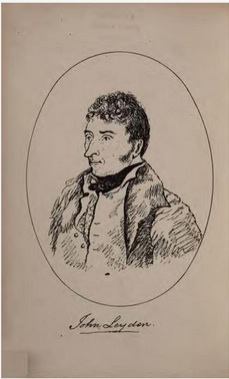
Portrait: Stickertime / Wikimedia Commons / CC BY-SA 4.0 John Leyden
Author of the ballad Lord Soulis, which gives the fullest version of the legend and records that a supposed cauldron was still shown locally in his lifetime.
Connections
-
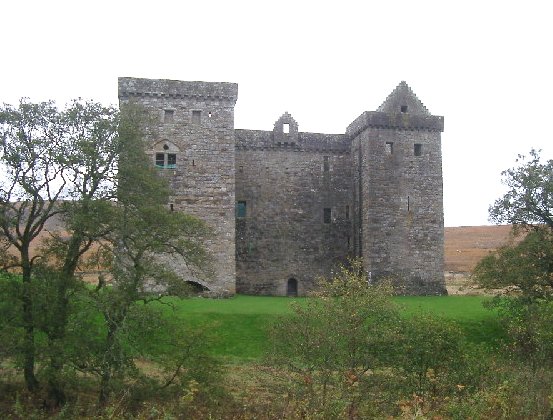
Photo: Kirsty Smith / Wikimedia Commons / CC BY-SA 2.0 Hermitage Castle was the seat of William II de Soules, whose legendary death is set at the circle; the story links the medieval stronghold to a monument more than three thousand years older.
-
Buck Stone
Buck Stone is one of two nearby standing-stone sites grouped with Ninestane Rig as a scheduled prehistoric landscape. Their association shows that the circle was not an isolated monument on the ridge.
In culture
-
Lord Soulis
John Leyden's ballad, in which de Soules cannot be held by rope nor harmed by steel and is therefore wrapped in lead and boiled.
What to look for
-
The two large stones
A monolith just under seven feet and a pointed stone just over four — the pair from which the legendary cauldron was slung.
-
The stumps
Six of the eight standing stones are now reduced to two feet or less.
-
The vanished circles nearby
Their stones have gone, but the central hollows and the marks where the stones stood can still be made out.
What is said
Folklore and tradition, recorded as what is said — not as established fact.
-
The boiling of Lord Soulis
Legend holds that William II de Soules was arrested by his tenants in 1320 and boiled alive in a cauldron slung between the two large stones of the circle, for being an oppressive and cruel landlord.
Plan your visit
- Location
- 55.2675°N · 2.7609°W
- Access
- Open access
- Terrain
- Rough ground — reasonable boots advised
- Time needed
- About 30 minutes
Opening & admission
- Rural stone circle near Hermitage Castle; use responsible access and expect uneven ground.
Nearby places
Fortified place · Medieval
Hermitage Castle
Scottish Borders
A single Border stronghold ties together a witchcraft forfeiture, Mary Queen of Scots' most reckless ride, and generations of Douglas and Hepburn p…
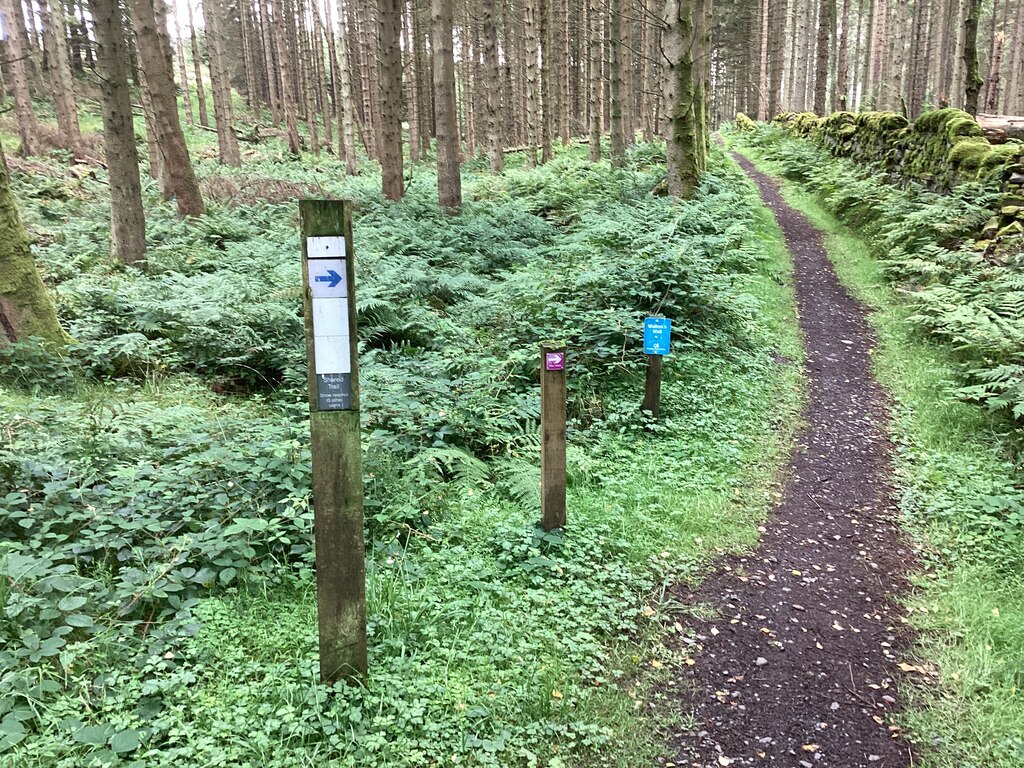
Tomb or burial place · Prehistoric
Devil's Lapful
Northumberland
Devil’s Lapful is one of the few surviving long cairns in Northumberland, preserving a large Stone Age communal burial monument within Kielder Forest.
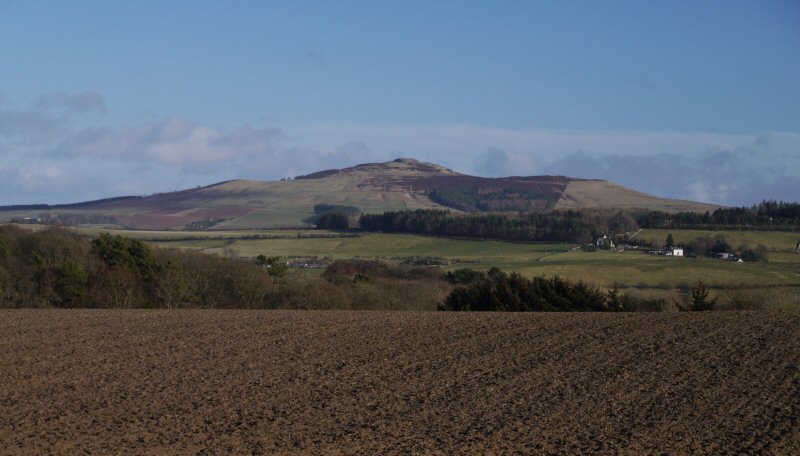
Fortified place · Iron Age
Rubers Law
Scottish Borders
Three separate strongholds - an Iron Age (the centuries before Rome arrived, from about 800 BC) hillfort, a Roman signal station and an Early Medie…
- Rough ground
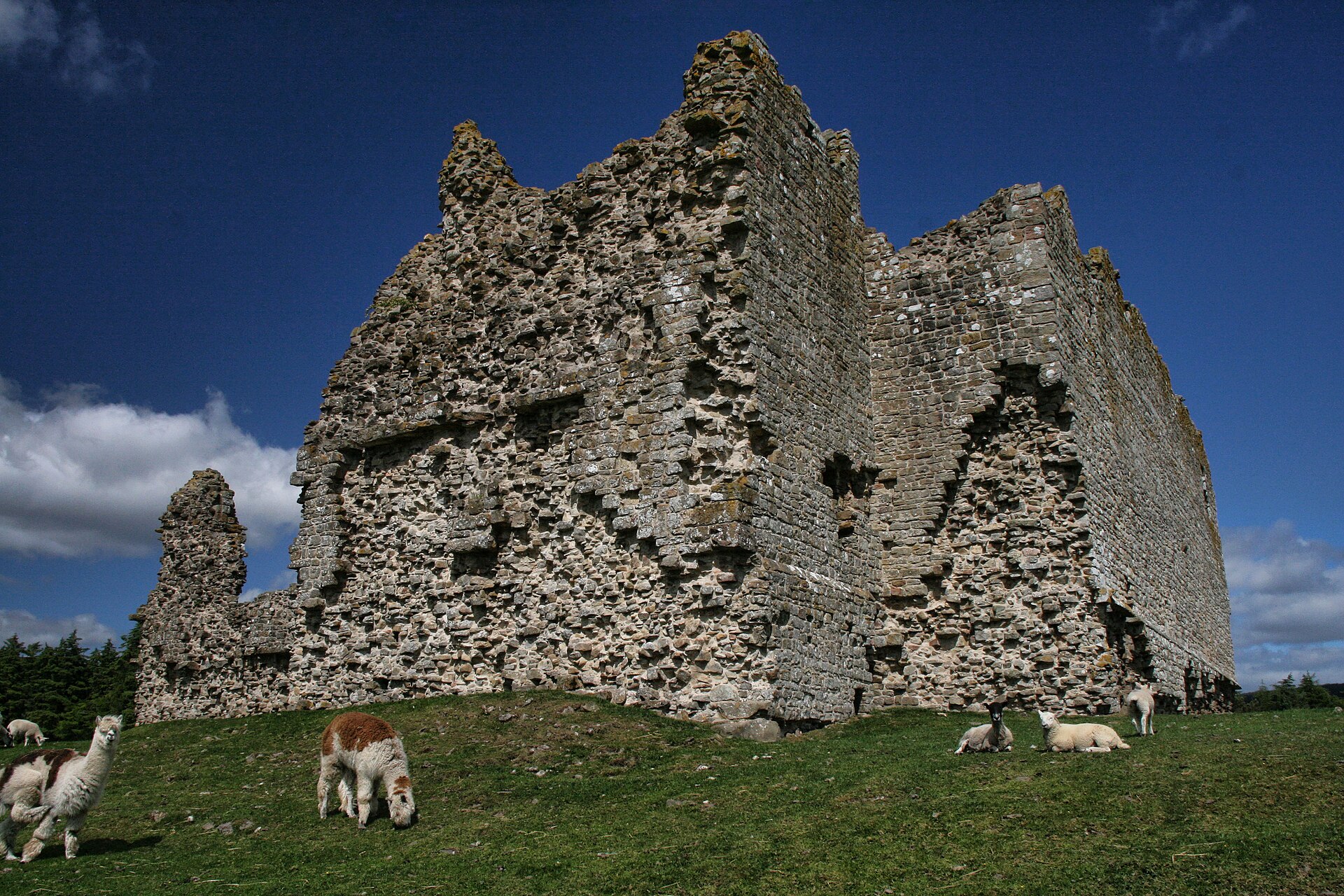
Fortified place · Medieval
Bewcastle Castle
Cumbria
Its dry moat still follows the ditch of the Roman fort it replaced, and a rigged football match here once became the trigger for a Border reiver am…
- Near Brampton
- Rough ground
Questions people ask
- How old is the circle?
- Probably made between 2000 BC and 1250 BC, in the Late Neolithic or early Bronze Age.
- What is the legend attached to it?
- That William II de Soules, lord of Hermitage Castle, was arrested by his tenants in 1320 and boiled alive in a cauldron suspended from the two large stones.
- How many stones survive?
- Eight are fast in the earth and a ninth has fallen inwards, but six of the eight are now stumps of two feet or less.
- Is Ninestane Rig the circle or the hill?
- Properly the hill — 943 feet high, four miles long and a mile broad — though the name is usually used for the circle on top of it.
Sources
The Ancient Codex, in your pocket
Get the Pocket Codex app
Carry the directory with you — Ninestane Rig and thousands of ancient places across Britain and Ireland, offline, wherever you roam.